
Texas, the Lone Star State, is a land of vast landscapes, vibrant cities, and a distinct culture that attracts visitors and new residents from across the globe. Whether you’re moving to Texas for a new chapter, embarking on an extended stay, or planning a long-term travel adventure through its diverse regions, understanding the essentials of local bureaucracy is paramount. Among these, obtaining license plates for your vehicle is a fundamental step that ensures smooth navigation through the state’s roads and compliance with its regulations. This guide is tailored not just for those settling down, but also for the discerning traveler or long-term guest who needs to integrate their vehicle into the Texas system, ensuring their journey through iconic destinations like Austin, Houston, Dallas, and San Antonio is hassle-free. From the bustling urban centers with their luxury hotels and gourmet dining to the serene natural parks offering unparalleled outdoor experiences, having your vehicle properly registered means you’re truly ready to embrace the Texas lifestyle.

Understanding the Texas Vehicle Registration Landscape
Navigating the administrative requirements for vehicle registration can seem daunting, but in Texas, the process is straightforward once you know the key players and steps involved. This section clarifies who needs to register a vehicle and introduces the primary agencies that facilitate this essential service, laying the groundwork for your seamless transition or extended stay in the state. For those accustomed to luxury travel or curated experiences, consider this an indispensable guide to a practical aspect of life that underpins any comprehensive Texas lifestyle.
Who Needs to Register a Vehicle in Texas?
The requirement for Texas license plates primarily applies to residents and those establishing domicile within the state. If you’re moving to Texas and plan to reside here permanently, you are generally required to register your out-of-state vehicle within 30 days of establishing residency. This isn’t just a legal obligation; it’s a necessary step to ensure your vehicle is compliant with local safety and environmental standards, contributing to the overall well-being of the community. Even if your stay is long-term but not permanent, such as for an extended work assignment or a sabbatical, understanding these rules is crucial.
For travelers enjoying a prolonged exploration of Texas’s wonders, from the historic Alamo in San Antonio to the pristine beaches of South Padre Island, knowing when your vehicle transitions from a tourist status to requiring local registration can save considerable inconvenience. While short-term visitors typically don’t need to re-register, establishing residency, which can be indicated by actions like gaining employment, enrolling children in school, or leasing an apartment, triggers this requirement. This ensures that every vehicle contributing to the road infrastructure and environmental footprint is accounted for, allowing everyone to enjoy the state’s offerings, whether it’s a family trip to Space Center Houston or a budget-friendly road trip through the Big Bend National Park.
Key Agencies Involved
The process of obtaining Texas license plates involves primarily two state agencies, working in concert to ensure efficiency and compliance. Understanding their roles will significantly streamline your experience.
-
Texas Department of Motor Vehicles (DMV): The Texas DMV is the overarching authority for vehicle registration and titling in the state. While they set the policies and provide forms, the actual processing of registrations and issuance of plates is largely decentralized. You won’t typically visit a “DMV office” directly for registration in Texas as you might in other states. Instead, local county offices handle the direct interaction. However, the Texas DMV website is an invaluable resource for information, forms, and general guidelines.
-
County Tax Assessor-Collector Offices: These local county offices are where you will conduct the bulk of your vehicle registration business. Each of Texas’s 254 counties has a County Tax Assessor-Collector office responsible for collecting motor vehicle sales tax, titling vehicles, and issuing license plates and registration stickers. This localized approach means that while the general requirements are statewide, specific office hours, waiting times, and minor procedural details might vary slightly from one county to another, such as in Harris County (for Houston) or Travis County (for Austin). It’s always advisable to check your specific county’s website before visiting.
-
Texas Department of Public Safety (DPS): While not directly involved in issuing plates, the Texas DPS oversees vehicle safety inspections, which are a prerequisite for registration. This agency also handles driver’s licenses, another crucial document for any resident or long-term visitor.
The Step-by-Step Process for Obtaining Texas License Plates
Securing your Texas license plates is a methodical process involving several key steps. For new residents or those planning an extended stay, integrating this into your arrival itinerary – alongside booking your initial accommodation at a luxurious Four Seasons Hotel Austin or a charming boutique like Hotel Emma in San Antonio – will ensure a smooth transition.
Step 1: Vehicle Inspection (Safety and Emissions)
Before you can register your vehicle in Texas, it must pass a state inspection. This dual inspection assesses both safety and emissions, ensuring all vehicles on Texas roads meet state standards.
- Safety Inspection: This covers basic vehicle components such as brakes, lights, tires, steering, horn, mirrors, and windshield wipers. It’s designed to ensure your vehicle is safe for you and others on the road, whether you’re commuting through Dallas traffic or exploring the scenic routes around Guadalupe Mountains National Park.
- Emissions Inspection: Required in certain counties to combat air pollution, primarily in major metropolitan areas like Dallas/Fort Worth, Houston, and Austin. This part of the inspection checks your vehicle’s exhaust system to ensure it meets environmental standards. Vehicles less than two years old or older than 24 years, and certain types of vehicles (e.g., motorcycles, diesel-powered vehicles manufactured before 1996), may be exempt from the emissions test, though a safety inspection is still required.
You can get your vehicle inspected at any certified inspection station in Texas. These are typically auto repair shops or dealerships displaying an official “Official Vehicle Inspection Station” sign. Once your vehicle passes, you’ll receive a Vehicle Inspection Report (VIR), which is electronically transmitted to the state and is required for registration. Keep a copy for your records. The cost for the inspection is usually around $7-$25, depending on the type of vehicle and whether an emissions test is required.
Step 2: Proof of Insurance
Texas law mandates that all registered vehicles must carry minimum liability insurance. Before you head to the County Tax Assessor-Collector office, ensure you have proof of current, valid Texas vehicle liability insurance. The minimum coverage requirements are $30,000 for injury or death to one person, $60,000 for injury or death to two or more persons, and $25,000 for property damage.
If you’re moving from another state, you might need to update your policy to meet Texas requirements or obtain a new policy from an insurer licensed to operate in Texas. Many insurance companies offer competitive rates, and it’s wise to shop around. Having your insurance in order is not just a legal requirement but also provides peace of mind, especially when venturing out to explore destinations like the historic Riverwalk or attending a lively event like South by Southwest (SXSW).
Step 3: Vehicle Title and Proof of Ownership
You must provide proof of ownership for your vehicle. For most individuals, this will be the vehicle’s original title. If you have a loan on your vehicle, your lienholder (the bank or financing company) may hold the physical title. In such cases, you will typically need to provide a copy of your current out-of-state registration and documentation from your lienholder verifying ownership and the lien.
If you’ve recently purchased a vehicle, you’ll need the original Manufacturer’s Certificate of Origin (MCO) if it’s new, or the properly assigned title if it’s used. For vehicles purchased out-of-state, ensure all necessary signatures and assignments are completed correctly. The process also involves paying Texas sales tax, which is 6.25% of the sales price, less any trade-in allowance. If you paid sales tax in another state, you might receive a credit, but you’ll still pay the difference if Texas’s tax is higher. This is a critical step in establishing your vehicle’s legal status within the state, much like ensuring your long-term accommodation bookings are confirmed, whether it’s an extended stay at a serviced apartment or a prolonged retreat at a resort like the JW Marriott San Antonio Hill Country Resort & Spa.
Step 4: Visiting Your Local County Tax Assessor-Collector Office
With your vehicle inspected, insured, and title/ownership documents in hand, you’re ready for the main event: visiting your local County Tax Assessor-Collector office. It’s advisable to check their website for specific hours, required documents, and any options for appointments or online pre-registration, which can significantly reduce waiting times.
When you go, make sure you have the following documents:
- Proof of Inspection: Your Vehicle Inspection Report (VIR). While typically electronic, having a printed copy can’t hurt.
- Proof of Insurance: Your current Texas liability insurance card or policy.
- Proof of Ownership: The original title, or other acceptable documentation if held by a lienholder.
- Proof of Identity: A valid driver’s license (preferably a Texas driver’s license, if you’ve already obtained one from the DPS).
- Application for Texas Certificate of Title (Form 130-U): This form can often be downloaded and filled out in advance from the Texas DMV website or obtained at the office.
- Payment for Fees: Be prepared to pay for registration fees, title fees, and sales tax (if applicable). Accepted payment methods vary by county but typically include cash, check, or credit/debit cards.
The staff at the County Tax Assessor-Collector office will review your documents, verify compliance, and process your application.
Step 5: Paying Fees and Receiving Your Plates and Stickers
Once your application is approved, you will pay the necessary fees. These typically include:
- Registration Fee: This includes a base fee, local fees, and various small surcharges. The base fee for most passenger vehicles is currently around $50.75, plus county and other fees.
- Title Fee: A relatively small fee for processing the vehicle’s title, usually around $33.
- Sales Tax: As mentioned earlier, 6.25% of the vehicle’s sales price, less any trade-in value, if applicable.
- Inspection Fee: While paid at the inspection station, it’s part of the overall cost of getting your vehicle ready.
Upon payment, you will typically receive your new Texas license plates and a registration sticker on the spot. The sticker must be affixed to the lower right corner of your vehicle’s windshield, and the plates attached to the front and rear (for most passenger vehicles). You will also receive a new Texas vehicle registration receipt. The actual Certificate of Title will be mailed to you by the Texas DMV at a later date, usually within a few weeks. With your new plates, you’re now fully equipped to explore every corner of Texas, from the historic architecture of The Driskill Hotel to the vibrant nightlife of Gruene Hall.
Special Considerations for New Texas Residents and Travelers
Moving to a new state or embarking on an extended journey brings its own set of unique circumstances. Texas, with its vastness and diverse appeal, has tailored provisions for new residents and offers exciting opportunities for vehicle personalization, allowing you to reflect your lifestyle on your plates.
Moving to Texas: Timelines and Exemptions
As noted, if you are a new resident, you generally have 30 days from the date you establish residency to register your vehicle. This timeline allows for a practical adjustment period after your arrival. Establishing residency can be defined by various factors, including obtaining a Texas driver’s license, enrolling children in public school, or gaining employment. Military personnel stationed in Texas may have specific exemptions or different requirements regarding vehicle registration, often retaining their home state’s registration as long as they are not establishing permanent residency in Texas. It’s always best for military members to check with their base’s legal assistance office or the Texas DMV for precise guidelines. This initial phase of settling in is often accompanied by securing long-term accommodation, be it a rental apartment in Houston or a furnished suite catering to business stays in Dallas.
Temporary Plates and Out-of-State Vehicles
If you’ve just purchased a vehicle or are moving to Texas without immediate access to all necessary documents, temporary plates may be an option. Dealers typically issue temporary tags when you purchase a vehicle, allowing you to drive it legally while waiting for permanent plates. For out-of-state vehicles being brought into Texas that cannot be immediately registered, it’s possible to apply for a 30-day temporary permit through the DMV or online. This permit gives you time to complete inspections and gather all required documentation without risking penalties. These temporary measures ensure that your travel and new life in Texas can continue uninterrupted, whether you’re relocating to a new job or simply enjoying the attractions of El Paso.
Custom Plates and Specialty Options
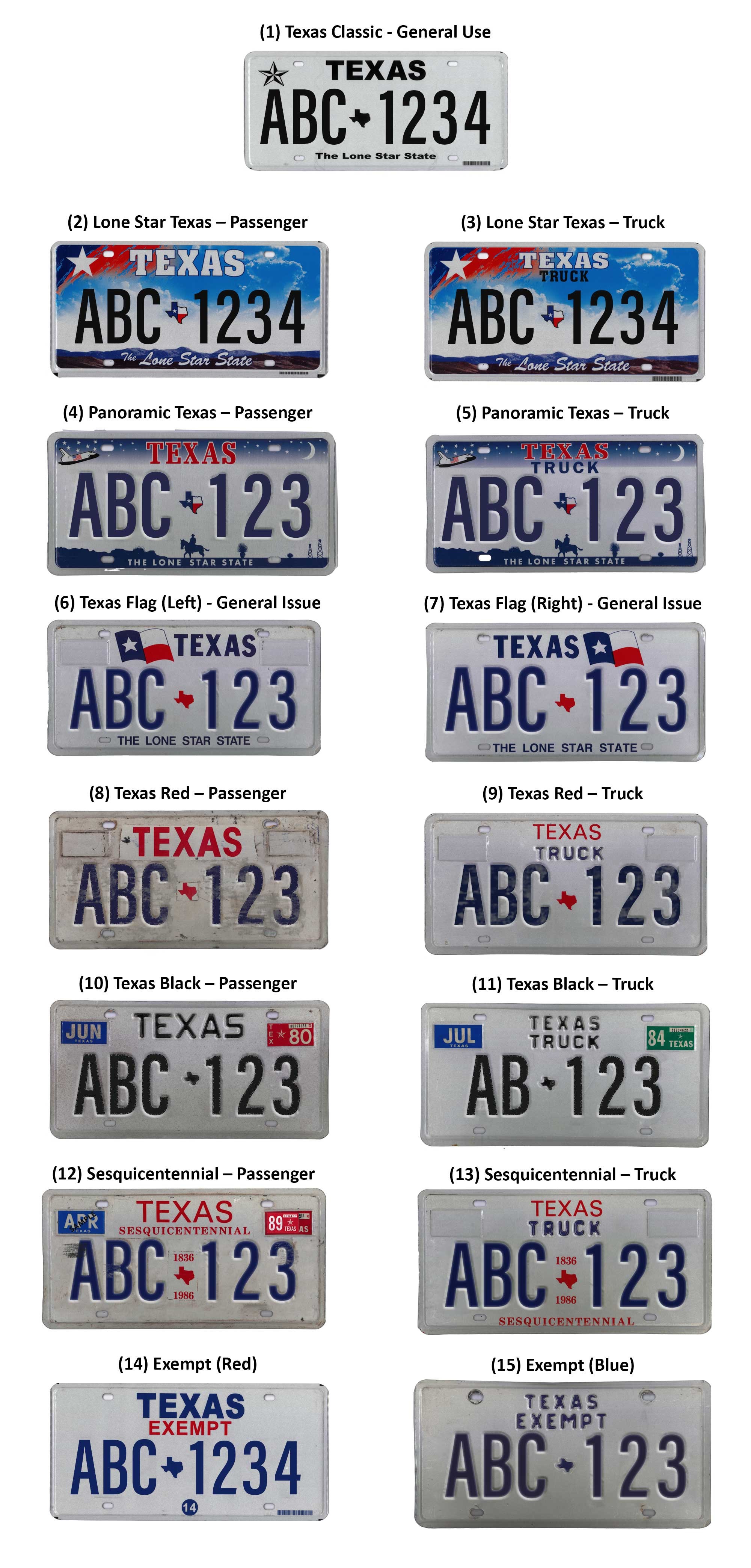
Texas offers a wide array of specialty license plates, allowing vehicle owners to express their personality, support a cause, or showcase their affiliations. From plates celebrating universities and military branches to those benefiting charitable organizations, environmental causes, or specific Texas landmarks, the options are extensive. You can also opt for personalized (vanity) plates with custom lettering and numbering, as long as they meet state guidelines and are not offensive.
These specialty plates often come with an additional annual fee, a portion of which may go towards the cause or organization depicted on the plate. Applying for custom or specialty plates can usually be done online through the Texas DMV website or at your County Tax Assessor-Collector office. For those who appreciate luxury travel and bespoke experiences, a custom license plate can be a small but significant way to personalize your journey through the Lone Star State, from attending Rodeo Houston to driving along scenic byways.
Navigating Texas with Confidence: Beyond License Plates
Obtaining your Texas license plates is more than just a regulatory hurdle; it’s a gateway to fully experiencing the state. With your vehicle legally registered, you unlock the freedom to explore, whether your journey is a local commute or an epic road trip spanning hundreds of miles.
Exploring Texas’s Vastness
Texas boasts an incredible array of destinations and attractions. From the historical richness of the Alamo and the vibrant culture of Austin’s live music scene, to the cosmopolitan allure of Dallas’s Sixth Floor Museum at Dealey Plaza and Houston’s Space Center Houston, there’s something for every traveler. Your newly plated vehicle becomes an essential tool for discovering the state’s natural wonders, from the majestic mountains of Big Bend National Park to the Gulf Coast’s sandy shores of Galveston. Road trips across Texas are legendary, offering glimpses into diverse landscapes, local cultures, and unique culinary experiences that range from upscale dining to authentic BBQ joints.

Accommodation and Travel Logistics
Understanding vehicle registration also ties into your broader travel and accommodation strategy. For long-term stays, having your vehicle legally registered means you can comfortably settle into serviced apartments or extended-stay hotels without concern. It facilitates easier access to local amenities, supermarkets, and healthcare, making any long-term accommodation feel more like home. Whether you’re staying in a luxury resort in the Texas Hill Country or a budget-friendly hotel for a family trip, your registered vehicle simplifies logistics, allowing you to focus on the experiences that make Texas so special. Furthermore, for business stays, the ease of having a fully compliant vehicle ensures that professional engagements across the state are met with maximum efficiency and minimal administrative distraction.
In conclusion, obtaining license plates in Texas is a crucial, yet manageable, process for any new resident or long-term visitor. By understanding the steps involved—from vehicle inspection and insurance to visiting your local County Tax Assessor-Collector office—you can seamlessly integrate your vehicle into your Texas lifestyle. This fundamental step not only ensures legal compliance but also empowers you to fully embrace the freedom and vast opportunities for travel, exploration, and enjoyment that the Lone Star State has to offer. So, get your plates, and embark on your Texas adventure with confidence!
LifeOutOfTheBox is a participant in the Amazon Services LLC Associates Program, an affiliate advertising program designed to provide a means for sites to earn advertising fees by advertising and linking to Amazon.com. Amazon, the Amazon logo, AmazonSupply, and the AmazonSupply logo are trademarks of Amazon.com, Inc. or its affiliates. As an Amazon Associate we earn affiliate commissions from qualifying purchases.