
Embarking on the journey of marriage is an exciting chapter, and in the great state of Texas, obtaining your marriage license is a straightforward yet essential step. This guide is designed to demystify the process, ensuring you have all the information you need to confidently secure your license and move forward with your wedding plans. Whether you’re planning a grand ceremony in Austin or an intimate elopement in the Texas Hill Country, understanding the legal requirements is paramount.
This article aims to be your comprehensive companion, covering everything from eligibility requirements to the actual application process, and even what to expect after you’ve received your license. We’ll also touch upon how this crucial document integrates with your overall Texas wedding experience, from booking your dream accommodation to exploring the vibrant local culture.

Understanding the Prerequisites: Who Can Get Married in Texas?
Before you even consider applying for a marriage license, it’s important to ensure you meet the fundamental eligibility criteria set forth by Texas law. These requirements are in place to ensure that marriages are entered into voluntarily and by individuals who are legally able to do so.
Age Requirements
In Texas, individuals must be at least 18 years old to marry without parental consent or a court order.
- 18 Years or Older: If both applicants are 18 or older, they can proceed with the application process as usual.
- 16 or 17 Years Old: If one or both applicants are between 16 and 17 years old, they require either:
- Written consent from the non-applicant parent or legal guardian.
- A court order granting permission to marry.
It’s crucial to note that marriage for individuals under the age of 16 is generally prohibited, with very limited exceptions granted by court order.
- Under 16: Marriages involving individuals younger than 16 are not permitted in Texas.
Relationship Restrictions
Texas law prohibits marriage between individuals who are closely related by blood. This includes:
- Parents and children
- Ancestors and descendants of every degree
- Brothers and sisters
- Half-brothers and half-sisters
- Uncles and nieces
- Aunts and nephews
These restrictions are in place to uphold societal norms and prevent incestuous relationships.
Previous Marriages
If either applicant has been previously married, Texas law requires that the previous marriage has been legally terminated. This termination can occur through:
- Divorce: The divorce decree must be final.
- Annulment: The marriage must have been declared void.
- Death of a Spouse: The applicant must be able to provide proof of the former spouse’s death.
When applying for your marriage license, you will be asked to affirm that any previous marriages have been legally dissolved. It’s a good idea to have documentation of your divorce or annulment readily available, although it’s not always required at the time of application.
The Application Process: What You Need and Where to Go
Securing your marriage license involves a visit to your local county clerk’s office. While the core requirements are consistent across the state, there might be minor variations in specific procedures or required documentation depending on the county.
Where to Apply
You can obtain a marriage license from any county clerk’s office in Texas, regardless of where you plan to hold your wedding ceremony within the state. This offers flexibility, especially if you are planning a destination wedding within Texas. For example, if you are planning a romantic getaway to San Antonio and want to get married there, you can obtain your license from the Bexar County Clerk’s office.
Required Documentation and Information
Both individuals applying for the marriage license must be present at the county clerk’s office. You will need to provide:
-
Proof of Identity and Age: This is typically established through government-issued identification. Accepted forms of identification generally include:
- A valid driver’s license
- A state-issued identification card
- A U.S. passport
- A military identification card
- A birth certificate (sometimes required in addition to other forms of ID, especially for younger applicants)
The county clerk’s office will be able to provide a definitive list of acceptable documents.
-
Social Security Numbers: You will be asked to provide your Social Security numbers. You do not need to bring your Social Security cards; the numbers are sufficient.
-
Information About Previous Marriages (if applicable): As mentioned earlier, if you have been married before, you will need to provide information regarding the termination of those marriages. This may include the date of divorce, annulment, or death of a spouse.
-
Information About Parents (sometimes requested): Some counties may ask for your parents’ full names, including your mother’s maiden name, and their places of birth.
The Application Form
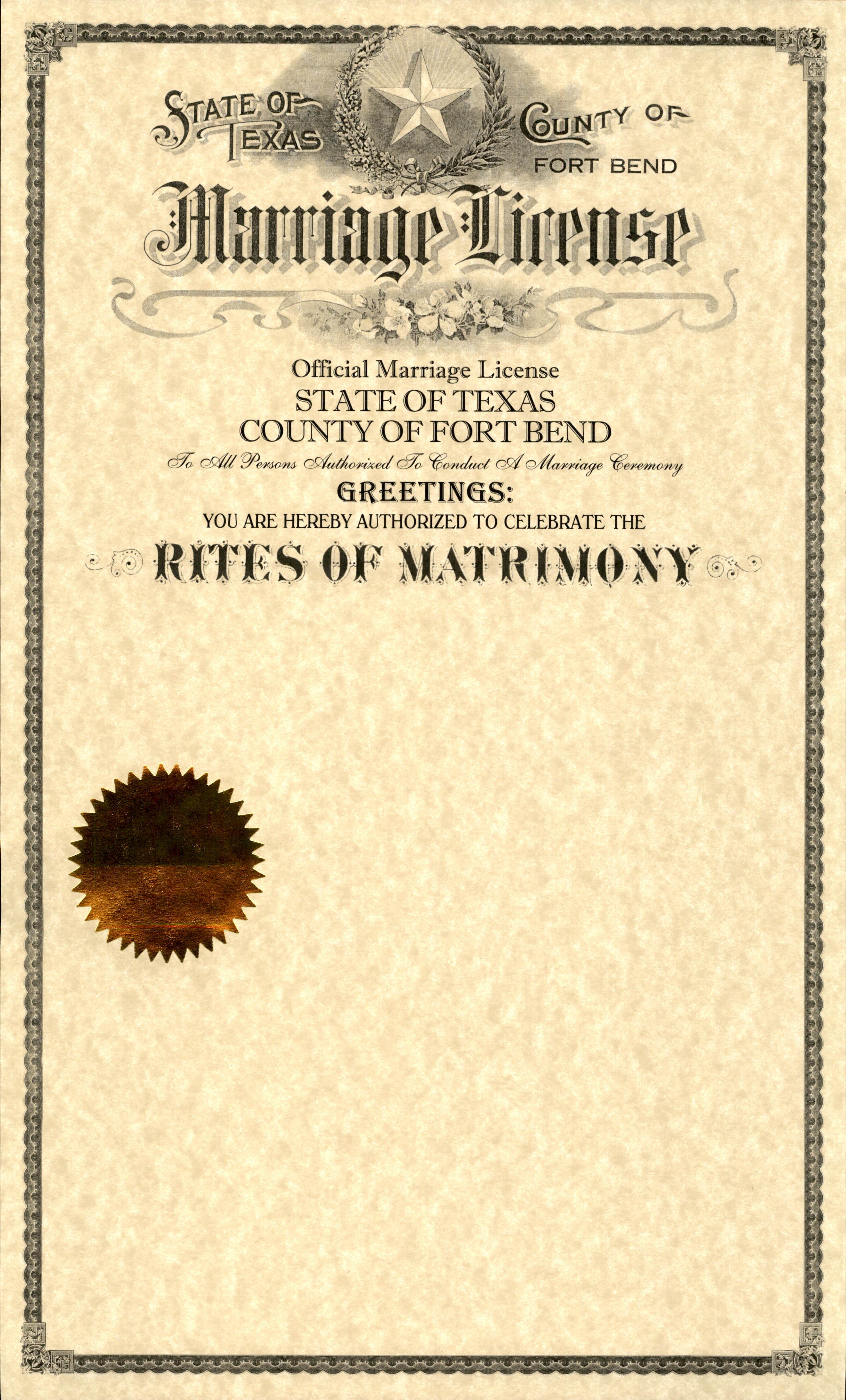
You will be required to complete a marriage license application form. This form will request personal details for both applicants, including full names, dates of birth, places of birth, addresses, and information regarding any previous marriages. It’s crucial to fill out this form accurately and completely. Any errors could potentially lead to issues with the validity of your license.
The Marriage License Fee
There is a fee associated with obtaining a marriage license in Texas. The exact amount can vary slightly from county to county, but it generally ranges from $60 to $85. Some counties may offer a discount on the fee if you complete a premarital education course. This is a fantastic way to save money while also gaining valuable insights into building a strong and lasting marriage.
The Waiting Period
Once you have obtained your marriage license, there is a mandatory waiting period of 72 hours before the license becomes effective and you can legally marry. This waiting period is designed to provide a final opportunity for reflection before marriage.
- Exceptions to the Waiting Period: There are a few specific circumstances that can waive the 72-hour waiting period:
- Active Duty Military Personnel: If either applicant is an active duty member of the armed forces, the waiting period can be waived. Proof of active duty status will be required.
- Completion of a Premarital Education Course: If you have completed a state-approved premarital education course, you can present the completion certificate to the county clerk, and they may waive the waiting period. This course is typically 8 hours long and covers topics such as conflict resolution, communication, and financial planning.
- Court Order: In rare and specific circumstances, a court may grant an order waiving the waiting period.
The Validity of the License
A Texas marriage license is valid for 90 days from the date it is issued. This means you must have your wedding ceremony performed within this 90-day window. If you do not marry within 90 days, the license will expire, and you will need to apply for and purchase a new one.
The Ceremony and Beyond: Making Your Marriage Official
Once you have your marriage license in hand and the 72-hour waiting period has passed, you are ready to exchange vows and make your union official.
The Officiant
Your wedding ceremony must be performed by an authorized officiant. In Texas, this includes:
- Licensed or Ordained Ministers: Any minister of religion duly authorized by the organization to which he belongs.
- Priests: Any priest or rabbi.
- Judges: A judge of a federal court, a state supreme court, a court of appeals, a district court, a county court, a statutory county court, a probate court, or a justice court.
- Retired Judges: A retired judge or justice of any of these courts.
- Justices of the Peace: A justice of the peace.
It is the officiant’s responsibility to complete the marriage license after the ceremony and return it to the county clerk’s office.
Signing and Returning the License
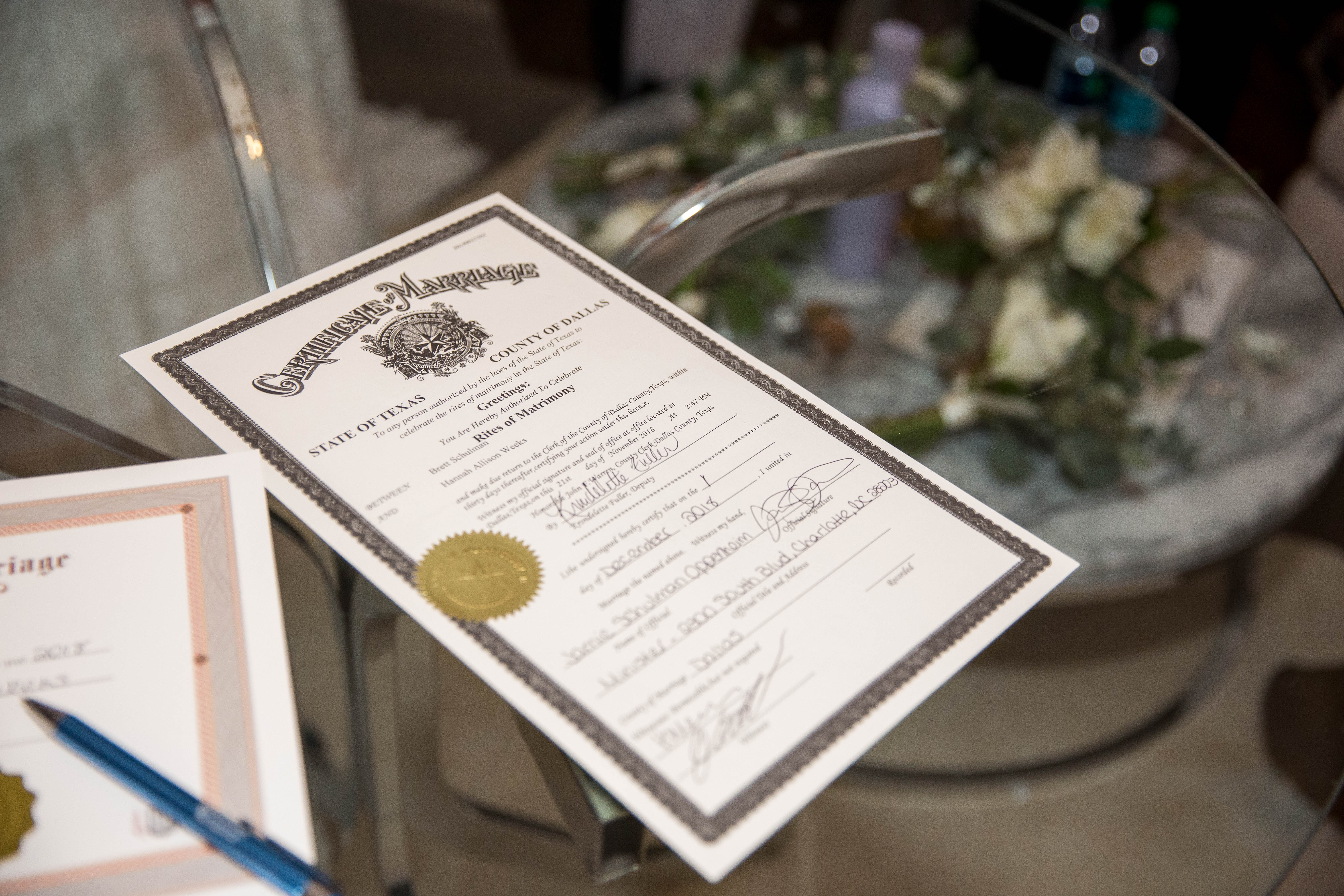
After the ceremony, both you, your spouse, and your officiant will need to sign the marriage license. The officiant is then responsible for returning the signed license to the county clerk’s office within a specified timeframe (usually within a reasonable period, though specific county regulations may apply). Once the county clerk receives and records the license, your marriage is officially registered with the state of Texas.
Obtaining Certified Copies of Your Marriage Certificate
After your marriage license has been recorded by the county clerk, you will want to obtain certified copies of your marriage certificate. These official documents are essential for various legal and administrative purposes, such as:
- Changing your name on your driver’s license, Social Security card, or passport.
- Updating your name on insurance policies.
- Applying for benefits as a married couple.
- Proving your marital status for other legal matters.
You can usually request certified copies from the same county clerk’s office where you obtained your license. There will be a small fee for each certified copy.
Integrating Your Marriage License with Your Texas Wedding Experience
The process of obtaining a marriage license is intrinsically linked to the broader experience of planning your Texas wedding. Once you have your license secured, you can focus on the other exciting aspects of your special day.
-
Choosing Your Venue: Whether you envision a rustic barn wedding in Fredericksburg, a beachfront ceremony on Galveston Island, or a chic urban celebration in downtown Dallas, your marriage license allows you to finalize bookings with venues like the Hotel Zaza or a charming boutique hotel in Marfa.
-
Planning Your Honeymoon: With the legalities out of the way, you can fully immerse yourselves in planning your dream honeymoon. Texas itself offers incredible honeymoon destinations, from the scenic beauty of Big Bend National Park to the vibrant energy of Houston. Or, you might be planning an international escape to a romantic European city or a tropical paradise.
-
Lifestyle Choices for Your Wedding: The lifestyle you wish to portray on your wedding day can influence your choices. A luxury travel experience might involve a lavish resort for your guests, while a budget travel approach could lean towards a more intimate gathering in a charming Texas town. Your marriage license is the foundational legal step that allows you to plan every detail of these experiences.
-
Embracing Local Culture and Attractions: Texas is rich in local culture, from its renowned barbecue and live music scene to its historical landmarks. As you prepare for your wedding, consider incorporating elements of Texas charm into your celebration. Perhaps a pre-wedding dinner at a classic Texas steakhouse or a post-ceremony tour of a historical landmark for your guests. Your marriage license signifies your commitment to building a life together, and doing so in a place with such diverse attractions and experiences can add a unique layer to your union.
By understanding and navigating the marriage license process in Texas, you are laying the groundwork for a seamless and joyful wedding experience. This legal document is not just a formality; it’s the first official step in your shared journey as a married couple, allowing you to fully embrace all the travel, accommodation, and lifestyle possibilities that await you.