
Courthouse weddings in Texas offer a charmingly simple and budget-friendly alternative to elaborate ceremonies. This guide delves into the essentials of securing your marriage license and exchanging vows at a Texas courthouse, focusing on the practicalities and the unique appeal of this straightforward approach to matrimony. While the concept is consistent across the state, understanding the specific requirements of individual county courthouses ensures a seamless experience.
Securing Your Texas Marriage License
The journey to a courthouse wedding begins with obtaining a marriage license. This is a mandatory step in Texas and requires careful attention to detail to ensure all legal prerequisites are met.

Eligibility Requirements
To obtain a marriage license in Texas, both individuals must meet specific criteria:
- Age: Both applicants must be at least 18 years old. If an applicant is under 18, parental consent and a court order are typically required, though Texas law has specific provisions for minors seeking to marry.
- Relationship: The individuals cannot be related by blood closer than second cousins.
- Current Marital Status: Neither applicant can be currently married to someone else. If divorced, the divorce must be final. A waiting period may apply after a divorce is granted before a new marriage license can be issued.
Documentation and Information Needed
When you visit the county clerk’s office to apply for your marriage license, you will need to present specific documents and provide certain information:
- Proof of Identity and Age: This typically includes a valid driver’s license, state-issued ID card, passport, or birth certificate. For applicants under 18, additional documentation will be required.
- Social Security Numbers: You will need to provide your Social Security numbers.
- Information about Previous Marriages: If either applicant has been previously married, you will need to provide the date the last marriage ended (divorce, annulment, or death). Some counties may require a certified copy of the final divorce decree if the divorce was recent.
The Application Process
The application process itself is generally straightforward. You and your partner will go to the county clerk’s office in any Texas county. You do not have to reside in the county where you apply, nor do you have to get married in that same county.
- In-Person Application: Both applicants must appear in person at the county clerk’s office.
- Affidavit: You will fill out an application form, which includes an affidavit attesting to the truthfulness of the information provided.
- Fees: There is a fee for the marriage license, which varies by county but is generally in the range of $70 to $90. Some counties offer a discount on the marriage license fee if you provide proof of completing a premarital counseling course approved by the state.
- Waiting Period: Once the marriage license is issued, there is a mandatory 72-hour waiting period before the marriage ceremony can take place. This waiting period can be waived under certain circumstances, such as if one applicant is an active duty member of the armed forces or if the couple completes a premarital counseling course.
Validity of the Marriage License
A Texas marriage license is valid for 90 days from the date it is issued. This means you must have your wedding ceremony performed and the license returned to the county clerk’s office for recording within this 90-day window. If the license expires, you will need to apply for and purchase a new one.
The Courthouse Wedding Ceremony
The actual wedding ceremony at a Texas courthouse is often conducted by a county judge or a justice of the peace. These ceremonies are typically brief, civil, and deeply personal in their simplicity.
Officiants and Locations
- Justice of the Peace Courts: Many courthouse weddings take place in a justice of the peace court. These judges are authorized to perform marriage ceremonies.
- County Clerks’ Offices: Some county clerks’ offices may have designated areas or rooms where small civil ceremonies can be held.
- Judges’ Chambers: In some instances, a judge may be willing to perform the ceremony in their chambers.
It is advisable to contact the specific county clerk’s office or justice of the peace court you plan to use in advance to inquire about their policies, availability, and any specific procedures they may have for conducting wedding ceremonies. Some judges may require an appointment.
Ceremony Essentials
The ceremony itself is typically a short, legal proceeding.

- Witnesses: While not always strictly required for the ceremony itself, you will typically need at least one witness to sign your marriage license after the ceremony. Some courthouses may provide a courthouse employee as a witness if you do not bring one.
- Vows: You can often exchange simple vows, though the format is usually dictated by the officiant.
- The Legal Declaration: The officiant will declare you legally married after the vows and the signing of the license.
The beauty of a courthouse wedding lies in its efficiency and focus on the legal union. It strips away much of the pomp and circumstance, leaving the core commitment at the forefront.
Post-Ceremony Procedures
Once you’ve exchanged vows and your marriage license is signed, there are a few crucial steps to ensure your marriage is legally recognized.
Returning the Marriage License
After the ceremony, the officiant, the couple, and the witness(es) will sign the marriage license. It is the officiant’s responsibility to return the signed license to the county clerk’s office within a specified timeframe, usually within 10 days of the ceremony. This ensures the marriage is officially recorded.
Obtaining Certified Copies of Your Marriage Certificate
Once the marriage license has been recorded, it becomes your official marriage certificate. You will want to obtain certified copies of this document for various legal and administrative purposes.
- Purpose: Certified copies are necessary for name changes (on Social Security cards, driver’s licenses, passports), insurance purposes, updating bank accounts, and any other situation where proof of marriage is required.
- How to Obtain: You can typically request certified copies from the same county clerk’s office where your marriage license was recorded. There will be a fee for each certified copy.
The Appeal of a Texas Courthouse Wedding
Beyond the practical benefits, courthouse weddings in Texas hold a unique charm and appeal for many couples.
Affordability and Simplicity
The most significant draw is the cost-effectiveness. Compared to traditional weddings that can run into tens of thousands of dollars, a courthouse wedding is remarkably affordable. The primary costs are the marriage license fee and the officiant’s fee (if any). This allows couples to allocate their financial resources towards other important goals, such as a down payment on a home, travel, or starting a family. The simplicity also means less stress in planning and execution.
Intimacy and Focus on the Union
A courthouse wedding is inherently intimate. It often involves just the couple and a few close friends or family members as witnesses. This focus on the immediate couple and their commitment can be incredibly meaningful. The ceremony is stripped down to its essence: two people declaring their love and commitment to one another in the eyes of the law.
Flexibility and Spontaneity
While planning is still recommended, courthouse weddings offer a degree of flexibility. You can often arrange a ceremony with relatively short notice, making it an option for couples who want to get married quickly or for those who decide on a courthouse wedding after initially planning a larger event. This spontaneity can be a refreshing aspect of the process.
A Personal and Meaningful Experience
For many, the charm of a courthouse wedding lies in its unpretentious nature. It’s a genuine and personal declaration of love, free from the pressures of societal expectations or elaborate traditions. The legal sanctity of the union is the primary focus, making it a deeply meaningful choice for couples who prioritize their commitment above all else.
Exploring the Local Courthouse
Each Texas county courthouse has its own character and architectural style. While the legal process is standard, the setting for your vows can add a touch of local flavor. From the historic courthouses in Dallas to the modern administrative buildings in growing cities like Austin, the backdrop for your ceremony can be as unique as your love story. Some couples choose a courthouse in a city they love, a place that holds special memories for them, adding another layer of personal significance to their wedding day.
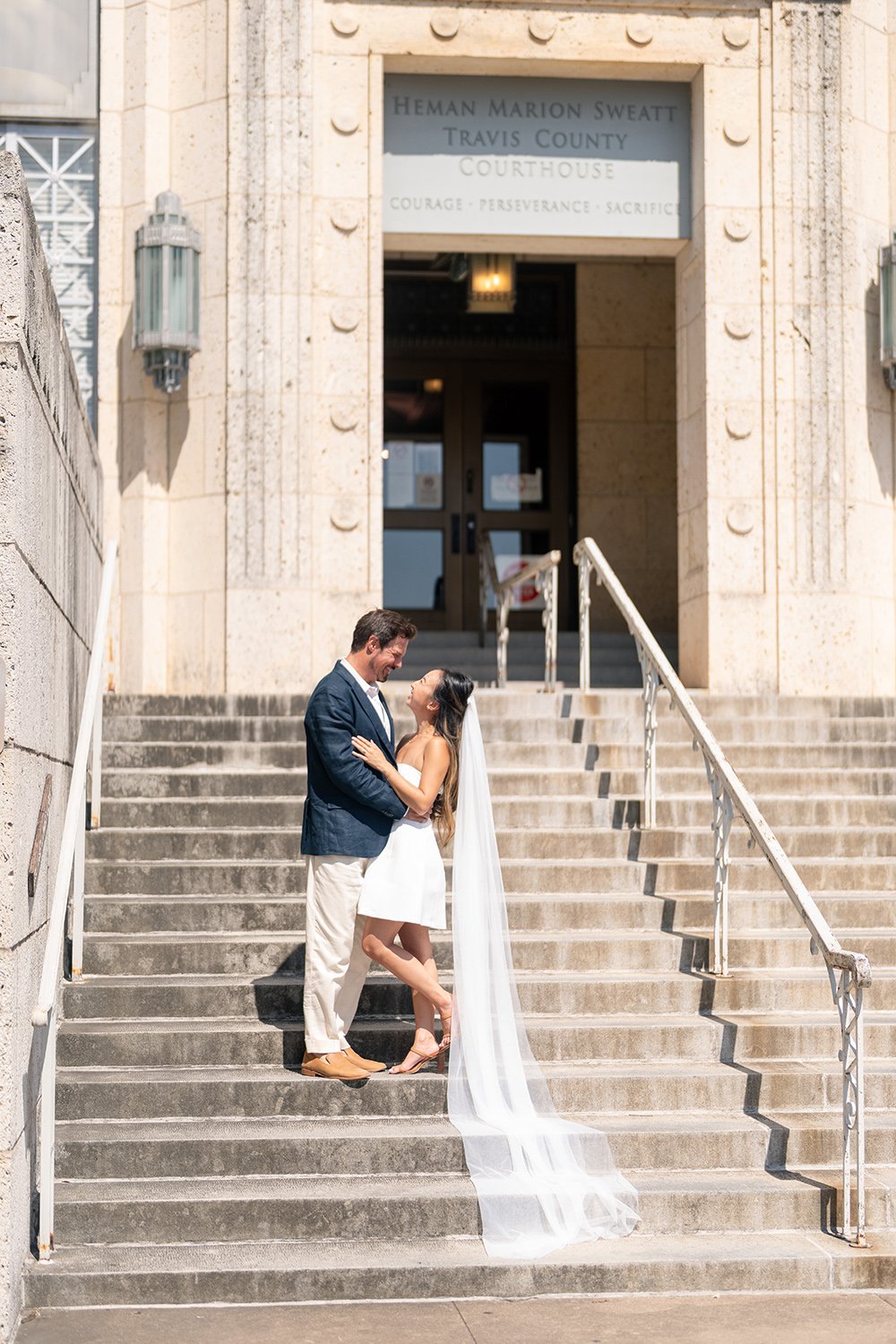
Embracing the Experience
A courthouse wedding in Texas is more than just a legal formality; it’s an experience. It’s about celebrating love in its purest form, embracing simplicity, and starting your married life together on a foundation of thoughtful decision-making and genuine connection.
LifeOutOfTheBox is a participant in the Amazon Services LLC Associates Program, an affiliate advertising program designed to provide a means for sites to earn advertising fees by advertising and linking to Amazon.com. Amazon, the Amazon logo, AmazonSupply, and the AmazonSupply logo are trademarks of Amazon.com, Inc. or its affiliates. As an Amazon Associate we earn affiliate commissions from qualifying purchases.