
Navigating the landscape of medical insurance can often feel like a complex journey, especially when you’re looking to secure coverage in a specific region like Texas. Whether you’re a long-time resident, a recent transplant, or planning a significant stay, understanding the options available is crucial for your health and financial well-being. This guide aims to demystify the process of obtaining medical insurance in the Lone Star State, outlining the various avenues you can explore to ensure you have the protection you need. From employer-sponsored plans to individual marketplace options and government-assisted programs, we’ll break down the key considerations and steps involved in securing comprehensive health coverage.
Understanding Your Health Insurance Options in Texas
In Texas, as in other states, individuals have several primary pathways to acquire health insurance. The most suitable option often depends on your employment status, income level, age, and specific health needs.
Employer-Sponsored Health Insurance
For many Texans, the most common and often most affordable way to get health insurance is through their employer. Many companies, particularly larger ones, offer group health insurance plans as a benefit to their employees. These plans are typically negotiated in bulk by the employer, which can lead to lower premiums and a wider selection of coverage options compared to individual plans.
- Types of Employer Plans: Employers may offer a variety of plan types, including:
- Health Maintenance Organization (HMO): These plans often require you to choose a primary care physician (PCP) and get referrals from them to see specialists. You generally must use doctors within the HMO’s network, except in emergencies.
- Preferred Provider Organization (PPO): PPOs offer more flexibility. You don’t need to choose a PCP, and you can see specialists without a referral. You’ll pay less if you use doctors and hospitals within the PPO network, but you can go out-of-network for a higher cost.
- Exclusive Provider Organization (EPO): An EPO combines features of HMOs and PPOs. You typically don’t need a referral to see a specialist, but you must stay within the plan’s network for coverage, except in emergencies.
- Point of Service (POS): A POS plan is a hybrid of HMO and PPO plans. You choose a PCP and get referrals for specialists, but you can also go out-of-network for care, though it will cost more.
- Enrollment Periods: Typically, you can enroll in an employer-sponsored plan when you first start a new job or during an annual open enrollment period. However, certain life events, such as marriage, divorce, or the birth of a child, can trigger a special enrollment period, allowing you to make changes outside of these standard times.
- Cost Sharing: With employer plans, the cost is usually shared between the employer and the employee. You’ll typically have a portion of the premium deducted from your paycheck, and you’ll also be responsible for deductibles, copayments, and coinsurance for the medical services you use.
The Health Insurance Marketplace (Affordable Care Act – ACA)
For individuals and families who do not have access to employer-sponsored insurance, or if that coverage is deemed unaffordable or insufficient, the Health Insurance Marketplace, established under the Affordable Care Act (ACA), is a vital resource. In Texas, the Marketplace is operated by the federal government through Healthcare.gov.
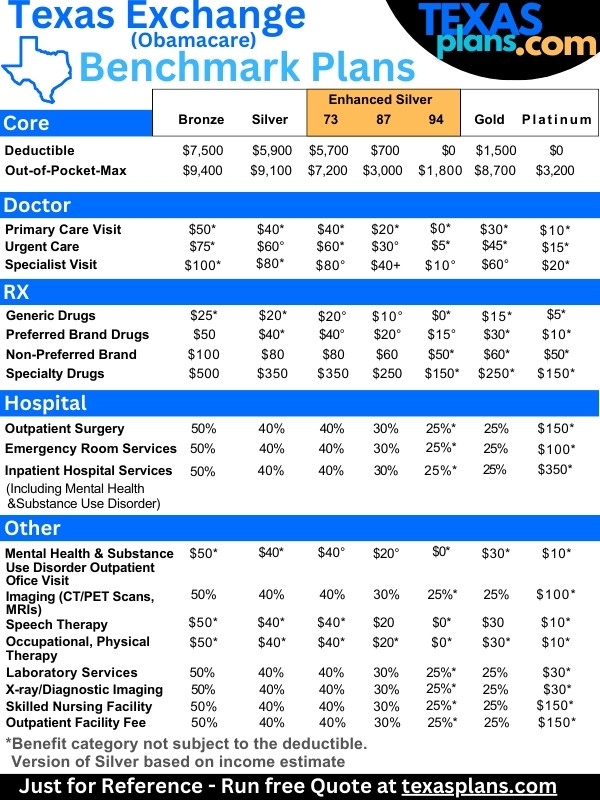
- How it Works: The Marketplace allows individuals to compare different health insurance plans from various private insurance companies and enroll in coverage. These plans are categorized into metal levels (Bronze, Silver, Gold, Platinum) which reflect the balance between monthly premiums and out-of-pocket costs.
- Premium Tax Credits and Cost-Sharing Reductions: One of the most significant benefits of using the Marketplace is the potential to receive financial assistance.
- Premium Tax Credits: These credits can be used to lower your monthly premium. Eligibility and the amount of the credit are based on your household income and the cost of health insurance in your area.
- Cost-Sharing Reductions: If you enroll in a Silver plan and meet certain income requirements, you may also qualify for cost-sharing reductions, which lower your deductibles, copayments, and coinsurance.
- Special Enrollment Periods: Outside of the annual open enrollment period (typically from November 1st to January 15th each year), you may be eligible for a Special Enrollment Period (SEP) if you experience a qualifying life event. Common qualifying events include losing other health coverage, getting married or divorced, having a baby, or moving.
- Eligibility: Generally, anyone who is not incarcerated and not eligible for Medicare or Medicaid can enroll in a Marketplace plan.
Medicaid and the Children’s Health Insurance Program (CHIP)
Medicaid and the Children’s Health Insurance Program (CHIP) are government-funded programs designed to provide health coverage to low-income individuals, families, pregnant women, the elderly, and people with disabilities. Texas operates its own Medicaid program through the Texas Health and Human Services Commission.
- Medicaid Eligibility: Eligibility for Medicaid in Texas is generally based on income, household size, disability status, family status, and other factors. It’s important to note that Texas has not expanded its Medicaid program under the ACA, meaning eligibility is more restrictive than in states that have adopted expansion. Generally, only specific groups, such as pregnant women, children, and individuals receiving Supplemental Security Income (SSI), are eligible for Medicaid.
- CHIP Eligibility: CHIP provides low-cost health coverage to children in families who earn too much to qualify for Medicaid but cannot afford private insurance. There are specific income guidelines for CHIP in Texas.
- Enrollment: Applications for Medicaid and CHIP can be submitted online through the Your Texas Benefits website or by mail.
Medicare
Medicare is a federal health insurance program primarily for people aged 65 or older. It also covers younger people with certain disabilities and people with End-Stage Renal Disease (ESRD). Texas residents eligible for Medicare can access it through various parts.
- Part A (Hospital Insurance): Helps cover inpatient hospital stays, care at a skilled nursing facility, hospice care, and some home health care.
- Part B (Medical Insurance): Helps cover doctors’ services, outpatient care, medical supplies, and preventive services.
- Part C (Medicare Advantage): An alternative to Original Medicare (Parts A and B). These plans are offered by private companies approved by Medicare and often include prescription drug coverage (Part D) as well as extra benefits like vision and dental.
- Part D (Prescription Drug Coverage): Helps cover the cost of prescription drugs. This coverage is offered through private insurance companies that have been approved by Medicare.
- Enrollment: Initial enrollment for Medicare typically occurs around your 65th birthday. There are specific enrollment periods, and failure to enroll when first eligible may result in late enrollment penalties.
Key Factors to Consider When Choosing Insurance
Selecting the right health insurance plan involves careful consideration of several factors to ensure it meets your individual and family needs.
Premiums, Deductibles, Copayments, and Coinsurance
Understanding the cost-sharing aspects of a plan is paramount.
- Premiums: This is the amount you pay each month for your health insurance policy.
- Deductibles: This is the amount you pay out-of-pocket for covered health care services before your insurance plan starts to pay.
- Copayments: A fixed amount you pay for a covered health care service after you’ve met your deductible (e.g., $25 for a doctor’s visit).
- Coinsurance: Your share of the costs of a covered health care service, calculated as a percentage of the allowed amount for the service (e.g., 20% of the cost of a procedure).

Network of Providers
The network of doctors, hospitals, and specialists covered by your plan is crucial. Ensure that your preferred healthcare providers are in-network to minimize out-of-pocket expenses. If you have specific doctors or hospitals you wish to continue seeing, verify their inclusion in any prospective plan.
Coverage for Specific Needs
Consider any specific health conditions or anticipated medical needs. Does the plan cover the medications you take? Are the specialists you need to see covered? Does it offer benefits for services like mental health care, physical therapy, or maternity services?
Prescription Drug Coverage
If you regularly take prescription medications, it’s essential to check the plan’s formulary, which is a list of prescription drugs covered by the plan. Note any tiering of drugs, which can affect your copayment or coinsurance.
Steps to Obtaining Medical Insurance in Texas
The process of acquiring health insurance in Texas can be streamlined by following a systematic approach.
1. Assess Your Eligibility and Needs
Begin by determining which category of insurance you likely fall into: employer-sponsored, Marketplace, Medicaid, CHIP, or Medicare. Consider your current financial situation, income level, and any specific health requirements.
2. Explore Your Options Within Each Category
- Employer: If you are employed, inquire with your HR department about the health insurance benefits offered. Obtain details on plan types, premiums, and coverage.
- Marketplace: Visit Healthcare.gov to view available plans in your area. Use the online tools to compare premiums, deductibles, and covered services. Be sure to explore eligibility for premium tax credits and cost-sharing reductions by entering your estimated household income.
- Medicaid/CHIP: Visit Your Texas Benefits to check eligibility and apply.
- Medicare: If you are approaching age 65 or have a qualifying disability, visit Medicare.gov to understand your options and enrollment periods.
3. Compare Plans Carefully
Once you have identified potential plans, conduct a thorough comparison. Look beyond just the monthly premium. Consider the total potential cost, including deductibles, copayments, and coinsurance, especially if you anticipate needing significant medical care. Review the network of providers and ensure it aligns with your preferences.
4. Understand Enrollment Periods and Deadlines
Be acutely aware of enrollment periods. For employer plans, this is often tied to your start date or an annual open enrollment. For the Marketplace, the annual open enrollment period is critical, though qualifying life events can allow for enrollment at other times. Medicaid and CHIP have different application windows. Medicare has specific initial and annual enrollment periods. Missing these deadlines can leave you without coverage for an extended period.
5. Complete the Application Process
Once you’ve selected a plan, complete the application accurately and honestly. For Marketplace plans, this is done via Healthcare.gov. For employer plans, you’ll work with your HR department. For Medicaid and CHIP, applications are processed through the state.
6. Review Your Policy and Coverage
After enrollment, carefully review your insurance policy documents. Understand your benefits, exclusions, and any limitations. Familiarize yourself with how to use your insurance, including finding in-network providers, obtaining referrals if necessary, and understanding the claims process.
Securing medical insurance in Texas is a fundamental step toward protecting your health and financial stability. By understanding the available options, carefully evaluating your needs, and diligently following the enrollment process, you can find a plan that provides the comprehensive coverage you deserve.
LifeOutOfTheBox is a participant in the Amazon Services LLC Associates Program, an affiliate advertising program designed to provide a means for sites to earn advertising fees by advertising and linking to Amazon.com. Amazon, the Amazon logo, AmazonSupply, and the AmazonSupply logo are trademarks of Amazon.com, Inc. or its affiliates. As an Amazon Associate we earn affiliate commissions from qualifying purchases.