
The allure of the Sunshine State is undeniable. From its pristine beaches and vibrant cities to its world-class attractions and year-round pleasant weather, Florida consistently ranks as a top destination for tourists, snowbirds, and permanent residents alike. This constant influx of people, coupled with a robust economy and diverse lifestyle offerings, fuels one of the most dynamic real estate markets in the United States. For ambitious individuals seeking a career with significant potential for growth, flexibility, and direct impact on people’s lives, obtaining a real estate license in Florida presents a compelling opportunity.
Becoming a licensed real estate agent in Florida isn’t just about facilitating property transactions; it’s about becoming an integral part of the dream for countless individuals and families. Whether assisting a young couple in finding their first home near the bustling streets of Orlando, helping a retiree discover their perfect waterfront sanctuary in Naples, or guiding an investor towards a lucrative vacation rental property in Key West, a real estate professional is a key player in shaping futures and fostering communities. The demand for qualified agents remains strong, making now an excellent time to explore this rewarding profession. This comprehensive guide will walk you through every step of the journey, ensuring you’re well-prepared to embark on your exciting new career in Florida’s real estate landscape.

Unlock Your Sunshine State Career: Why Florida Real Estate?
The Florida real estate market is unique, driven by a powerful combination of factors that make it particularly attractive for both buyers and sellers, and consequently, for real estate professionals. Understanding these dynamics is crucial for anyone considering a career in the state.
Firstly, Florida’s reputation as a premier travel destination translates directly into its housing market. Millions of tourists visit annually, many of whom fall in love with the state and consider purchasing a second home, a vacation rental, or even making a permanent move. This creates a continuous demand for various types of properties, from luxury condos overlooking South Beach in Miami to charming bungalows in St. Petersburg. The state’s appeal isn’t just about tourism; it’s also a magnet for businesses, leading to job growth and an expanding population. Major metropolitan areas like Jacksonville, Tampa, and Fort Lauderdale are experiencing significant development, attracting new residents who need homes, apartments, and investment properties.
Secondly, Florida offers an incredible diversity of lifestyles and environments, catering to a broad spectrum of preferences. From the cosmopolitan energy of Miami-Dade County and Broward County to the family-friendly suburban sprawl around Orlando’s theme parks, or the relaxed, upscale coastal living of Sarasota and Palm Beach, there’s a niche for every agent. This diversity means a broader range of clients and property types, from sprawling estates to cozy townhomes, from bustling commercial properties to tranquil rural acreage. An agent can specialize in a specific niche or serve a general market, depending on their interests and expertise.
Thirdly, the profession offers significant flexibility. While dedication and hard work are essential, real estate agents often have control over their schedules and how they conduct their business. This can be particularly appealing for those seeking a career that aligns with a desired lifestyle, perhaps one that allows for travel or more time with family. The entrepreneurial spirit thrives in real estate, offering the potential for unlimited earning potential based on effort and skill. For individuals who are self-motivated, enjoy interacting with people, and have a passion for sales and service, a real estate career in Florida can be incredibly fulfilling, bridging the gap between professional ambition and a desirable work-life balance in a beautiful setting.
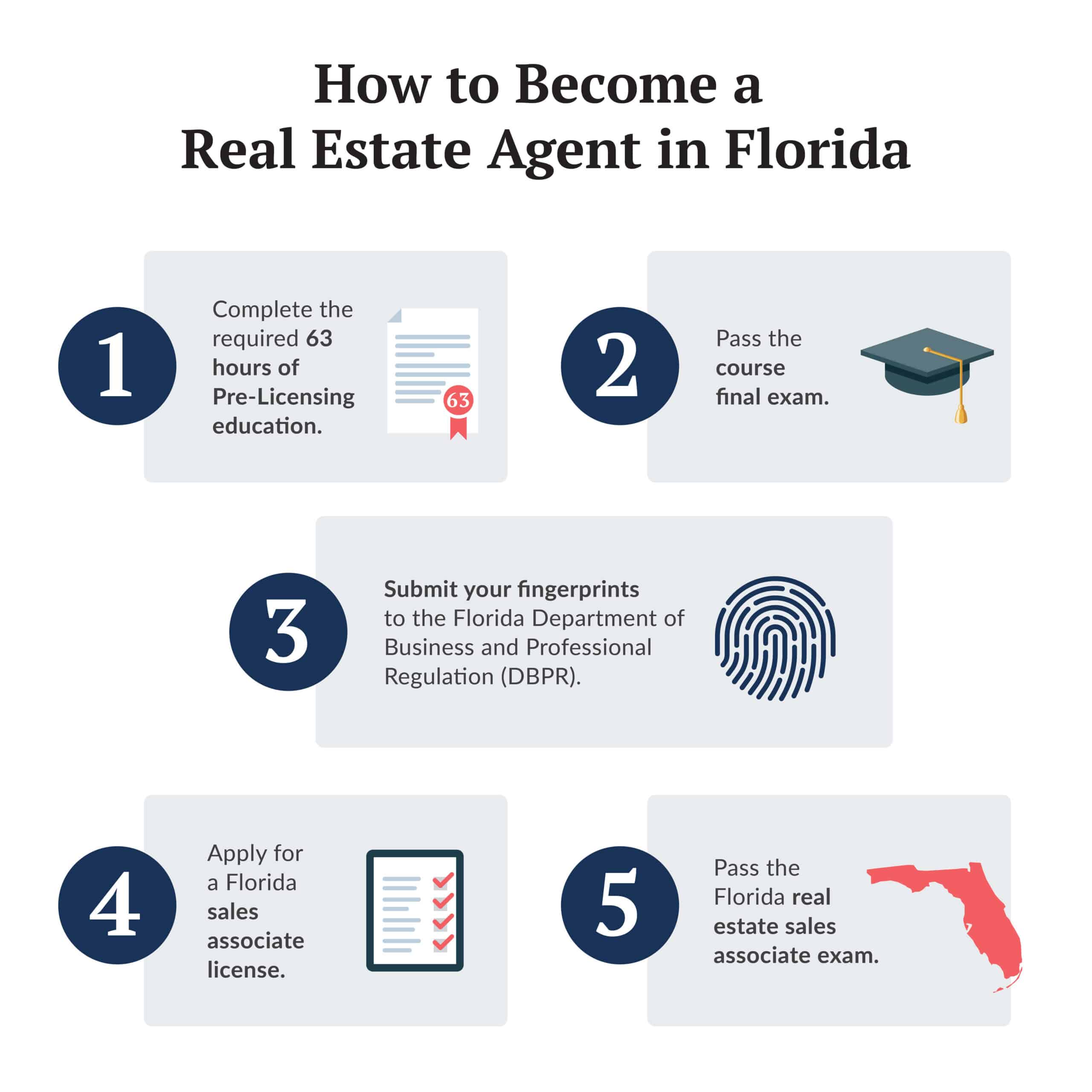
The Essential Steps to Becoming a Licensed Florida Real Estate Agent
Embarking on a real estate career in Florida requires navigating a structured process established by the state to ensure agents are knowledgeable, ethical, and competent. Adhering to these steps is fundamental to obtaining your license and commencing your professional journey.
Step 1: Meet the Eligibility Requirements
Before you even consider enrolling in a course, it’s vital to ensure you meet the fundamental qualifications set by the Florida Department of Business and Professional Regulation (DBPR) and the Florida Real Estate Commission (FREC).
- Age: You must be at least 18 years old.
- Education: A high school diploma or its equivalent (GED) is required.
- Social Security Number: You must possess a Social Security Number. This is crucial for identification and for checking your financial and criminal history.
- Honesty and Integrity: Applicants must disclose any criminal history, even if records have been sealed or expunged. The FREC reviews these disclosures on a case-by-case basis. While a criminal record doesn’t automatically disqualify an applicant, failure to disclose can lead to denial. It’s always best to be upfront and provide all necessary documentation.
Step 2: Complete Your Pre-Licensing Education
This is the cornerstone of your real estate education. Florida requires all prospective sales associates to complete a 63-hour pre-licensing course.
- Course Content: The curriculum covers a wide array of topics essential for real estate practice, including Florida real estate law, property rights, contracts, agency relationships, valuation, financing, and ethical practices. The goal is to provide a solid foundation of knowledge necessary to protect the public and ensure fair dealings.
- Approved Schools: The course must be taken from a FREC-approved real estate school. These schools offer various formats, including in-person classes, online courses, and correspondence options, allowing flexibility to fit different schedules and learning styles. Upon successful completion of the course and passing the school’s end-of-course exam, you’ll receive a certificate of completion.

Step 3: Pass the State Licensing Exam
With your pre-licensing education complete, the next significant hurdle is the state examination.
- Application Process: You must apply to the DBPR to take the state exam. This involves submitting your application, your certificate of course completion, and paying the required fees. The DBPR will conduct a background check during this process, which may take several weeks.
- Scheduling the Exam: Once your application is approved, you’ll receive an authorization to schedule your exam with a state-approved testing vendor, typically Pearson VUE.
- Exam Format: The Florida Real Estate Sales Associate Exam is a computer-based, multiple-choice test. It consists of two main sections: one on general real estate principles and practices, and another specifically on Florida real estate law. You will have a set amount of time (typically 3.5 hours) to complete the exam. A passing score of 75% or higher is required. Don’t be discouraged if you don’t pass on your first attempt; many successful agents take it more than once. Thorough preparation, including practice tests and reviewing course material, is key.
Step 4: Find a Sponsoring Brokerage
Unlike some other professions, a real estate sales associate in Florida cannot operate independently. You must be employed by or registered under a licensed real estate broker.
- Importance of Brokerage: Your sponsoring broker will hold your license and provide supervision, guidance, and resources. They are responsible for your actions as an agent. Choosing the right brokerage is a critical decision that can significantly impact your early career.
- Choosing a Brokerage: Consider factors such as training programs, mentorship opportunities, commission splits, office culture, technology support, and the brokerage’s specialization (e.g., residential, commercial, luxury, vacation rentals). Many newly licensed agents benefit from joining larger brokerages that offer extensive training and a supportive environment. The moment you are associated with a broker, your license becomes active, and you can begin practicing real estate.
Step 5: Complete Post-Licensing Education
Your education doesn’t end after passing the state exam. Florida mandates additional education for new licensees.
- Requirement: Before your first license renewal (which occurs 18-24 months after initial licensure), you must complete a 45-hour post-licensing course. This course delves deeper into practical aspects of real estate practice, going beyond the foundational knowledge.
- Consequence of Non-Compliance: Failure to complete the 45-hour post-licensing course before your first renewal deadline will result in your license becoming null and void. There is no grace period or extension for this requirement, making it absolutely essential to prioritize.
Thriving in Florida’s Diverse Real Estate Market
Once you’ve secured your license, the real adventure begins: understanding and navigating Florida’s incredibly diverse real estate market. The state isn’t a monolith; it’s a collection of distinct regions, each with its own character, economic drivers, and property dynamics.
Understanding Regional Opportunities
Becoming an expert in a specific region or sub-market can provide a significant advantage.
- South Florida: Encompassing vibrant cities like Miami, Fort Lauderdale, and West Palm Beach (part of the larger Palm Beach County), this region is known for its luxury real estate, international buyers, and dynamic urban living. Agents here often deal with high-net-worth individuals, second homes, and sophisticated investment properties. The influence of Latin American culture is strong, and multilingual agents are highly valued. The beautiful beaches of Miami Beach and the upscale boutiques of Worth Avenue in Palm Beach epitomize the luxury lifestyle.
- Central Florida: Dominated by Orlando, the “Theme Park Capital of the World,” this area’s market is heavily influenced by tourism. It’s a hotspot for vacation homes, short-term rentals, and family relocations driven by job growth in the hospitality, tech, and healthcare sectors. Agents here might specialize in properties near attractions like Walt Disney World or Universal Orlando Resort, or help new residents find homes in growing communities like Kissimmee and Lake Mary.
- West Coast: Stretching from Tampa Bay down to Naples and Marco Island, this region is popular for retirees, beachfront properties, and a more laid-back, yet still sophisticated, lifestyle. Cities like Sarasota are renowned for their arts and culture scene, while Naples offers upscale golf communities and exquisite coastal estates. The real estate market in St. Petersburg and Clearwater is experiencing significant revitalization, attracting younger demographics.
- North Florida: Featuring cities like Jacksonville, Gainesville, and historic St. Augustine, this area often feels distinctly different from the southern parts of the state, with more traditional Southern charm and a stronger four-season climate influence. It offers a more affordable cost of living compared to South Florida and has a growing job market, especially in logistics, healthcare, and finance. It appeals to families and those seeking a slightly slower pace of life.
- The Keys: The Florida Keys, particularly Key West, represent a truly unique and highly specialized market. Properties are limited, demand is high, and prices reflect the exclusive island lifestyle. Agents here often work with vacation rentals, luxury homes, and investment properties for those seeking a slice of paradise in a truly unique destination.
Connecting Real Estate to the Florida Lifestyle
As a real estate professional in Florida, your role often transcends simple transactions. You become a guide, helping clients not just find a house, but find their ideal “accommodation” within their chosen “destination.”
- Long-Term Stays vs. Vacation Properties: Understanding the nuances between a primary residence, a seasonal home, or a dedicated vacation rental property is key. Clients moving to Florida permanently will have different needs than those seeking a temporary escape or an income-generating asset.
- Local Culture and Attractions: The value of a property is often intrinsically linked to its surroundings. Knowing the best local restaurants, schools, parks, beaches, or cultural landmarks (like the Ringling Museum in Sarasota or the Vizcaya Museum and Gardens in Miami) can significantly enhance your ability to sell a lifestyle, not just a property. Understanding how nearby amenities or attractions impact property values and desirability is a powerful skill.
- Investment Opportunities: Florida’s booming tourism industry makes it fertile ground for real estate investment, particularly in areas like Orlando and the coastal communities. Agents can advise on properties suitable for short-term rental income, helping clients capitalize on the state’s popularity.
Sustaining Your Career and Maximizing Success in the Sunshine State
Obtaining your license is just the first step. To build a thriving and sustainable career in Florida real estate, continuous learning, networking, and adaptability are paramount.
Beyond the initial post-licensing requirements, Florida agents must complete 14 hours of continuing education every two years to maintain their license. This ensures agents stay updated on changes in real estate law, market trends, ethical standards, and best practices. These courses can be a valuable opportunity to specialize further, learn new skills, or simply refresh foundational knowledge.
Networking is the lifeblood of real estate. Engage with local real estate associations, attend industry events, and build relationships with other agents, brokers, lenders, inspectors, and contractors. Your professional network will be an invaluable source of referrals, mentorship, and support. Actively participating in your local community, attending local festivals, and becoming involved in civic organizations can also broaden your reach and establish you as a trusted local expert. For instance, being active in a community in Coral Gables can lead to referrals from neighbors looking to buy or sell.
Leveraging technology and innovative marketing strategies is also crucial in today’s digital age. A strong online presence, including a professional website, engaging social media content, and high-quality photography and virtual tours, can significantly expand your reach. Understanding how to use CRM (Customer Relationship Management) tools, market analytics software, and digital communication platforms will streamline your operations and enhance client service.
Finally, upholding ethical practices is non-negotiable. The Florida Real Estate Commission (FREC) is dedicated to protecting the public, and agents are held to a high standard of conduct. Transparency, honesty, and acting in the best interest of your clients should always be your guiding principles. A reputation for integrity will serve as your most valuable asset throughout your career.
In conclusion, pursuing a real estate license in Florida opens doors to a dynamic and rewarding career. The journey requires dedication, education, and commitment, but the opportunities in the Sunshine State’s vibrant and ever-evolving market are vast. By understanding the licensing process, appreciating the unique regional characteristics, and committing to continuous professional development, you can build a successful career helping others find their place in this sought-after destination. Welcome to the exciting world of Florida real estate!
LifeOutOfTheBox is a participant in the Amazon Services LLC Associates Program, an affiliate advertising program designed to provide a means for sites to earn advertising fees by advertising and linking to Amazon.com. Amazon, the Amazon logo, AmazonSupply, and the AmazonSupply logo are trademarks of Amazon.com, Inc. or its affiliates. As an Amazon Associate we earn affiliate commissions from qualifying purchases.