
Navigating the complexities of a lease agreement can be daunting, especially when circumstances necessitate an early departure. While a lease is a legally binding contract, various pathways and legal provisions in Florida exist that may allow tenants to terminate their agreement ahead of schedule. Understanding your rights, responsibilities, and the specific nuances of Florida landlord-tenant law is crucial for a smooth and legally sound exit.
Understanding Your Lease Agreement
The first and most critical step in exploring early lease termination is a thorough review of your lease agreement. This document is the cornerstone of your tenancy and outlines the specific terms and conditions governing your stay, including provisions for early termination.

The Importance of Reviewing Your Lease
Your lease is more than just a piece of paper; it’s a legally binding contract between you and your landlord. Within its clauses, you will typically find stipulations regarding the lease term, rent payment, responsibilities for maintenance, and, most importantly for this discussion, any conditions or penalties associated with breaking the lease early. Some leases may include an “early termination clause” that specifies a fee (often two months’ rent) or other requirements, such as a notice period, if you wish to vacate before the lease expires. Understanding these clauses can save you significant trouble and expense. Look for sections detailing “Default,” “Termination,” or “Vacating Premises.” These will provide insights into the landlord’s expectations and potential financial liabilities you might incur.
Florida Landlord-Tenant Law Overview
Florida landlord-tenant law, primarily governed by Florida Statutes Chapter 83, Part II, provides a framework of rights and obligations for both landlords and tenants. While a lease agreement can add specific terms, it cannot override the fundamental protections and provisions established by state law. For instance, the law outlines a landlord’s duty to maintain habitable premises and a tenant’s responsibility to pay rent and keep the property clean. Familiarity with these statutes is essential, as they often dictate the legal grounds for early termination, even if your lease doesn’t explicitly mention them. Knowing these laws helps you identify instances where your landlord might be in breach of contract, potentially freeing you from your obligations without penalty.
Legally Justified Reasons for Early Lease Termination in Florida
Certain circumstances are recognized by Florida law as valid grounds for a tenant to break a lease without incurring severe penalties. These situations generally involve situations beyond the tenant’s control or a significant breach of the landlord’s duties.
Military Service (SCRA)
One of the most robust protections for tenants is the Servicemembers Civil Relief Act (SCRA). This federal law allows active-duty military members to terminate a residential lease without penalty under specific circumstances. To qualify, you must:
- Be a servicemember who enters military service after executing the lease.
- Be on active duty or receive orders for a permanent change of station (PCS) or a deployment for 90 days or more.
You must provide written notice to your landlord and include a copy of your military orders. The termination becomes effective 30 days after the next rent payment is due, provided the notice period aligns. The SCRA is a powerful tool designed to protect military personnel from financial hardship due to service requirements.
Domestic Violence or Sexual Assault
Florida law provides a specific pathway for victims of domestic violence or sexual assault to terminate their lease early. If you are a victim, you may be able to terminate your lease by providing written notice to your landlord, along with documentation such as a copy of a protective order, an injunction, or a report from a qualified third party (e.g., law enforcement or a licensed professional counselor). This provision is designed to ensure the safety and well-being of victims by allowing them to relocate without being bound by a lease agreement.
Landlord Non-Compliance
A landlord’s failure to uphold their end of the lease agreement or state law can provide a tenant with grounds for early termination. This typically involves a “material non-compliance” with the lease or Florida Statutes Chapter 83. Common examples include:
- Failure to maintain habitable premises: This means the landlord does not maintain essential services like plumbing, electricity, heat, or pest control, or fails to fix serious issues that affect health and safety.
- Breach of material provisions: If the landlord violates a significant term of the lease, such as repeatedly entering your unit without proper notice or consent.
Before a tenant can terminate the lease based on landlord non-compliance, they typically must provide the landlord with a written “7-day notice to cure.” This notice must specify the non-compliance and give the landlord an opportunity to fix the issue. If the landlord fails to remedy the situation within seven days, the tenant may have grounds to terminate the lease without penalty.
Unlawful Harassment or Privacy Violations
Tenants in Florida have a right to peaceful enjoyment of their rented property. If a landlord repeatedly violates this right through unlawful harassment or consistent privacy intrusions (e.g., entering the unit without 12-hour notice, unless in an emergency), it could be considered a constructive eviction. While not explicitly defined for lease termination, a pattern of such behavior could argue that the living situation has become untenable, potentially allowing a tenant to break the lease with legal justification. Documenting all instances of such violations is crucial.
Lease Clauses for Early Termination
Some lease agreements explicitly include clauses detailing how a tenant can terminate early. These clauses often require a specified notice period (e.g., 30 or 60 days) and an early termination fee, which is typically equivalent to one or two months’ rent. While paying a fee may not be ideal, it’s a pre-defined and legally sanctioned method to exit the lease, potentially saving you from greater financial liability or legal disputes. Always check your lease for such provisions first.
Strategies for Negotiating Early Lease Termination
If you don’t have a legally justified reason to break your lease, or even if you do, negotiation with your landlord is often the most amicable and cost-effective solution. Landlords are often willing to work with tenants to minimize their losses and avoid the hassle of legal action.
Open Communication with Your Landlord
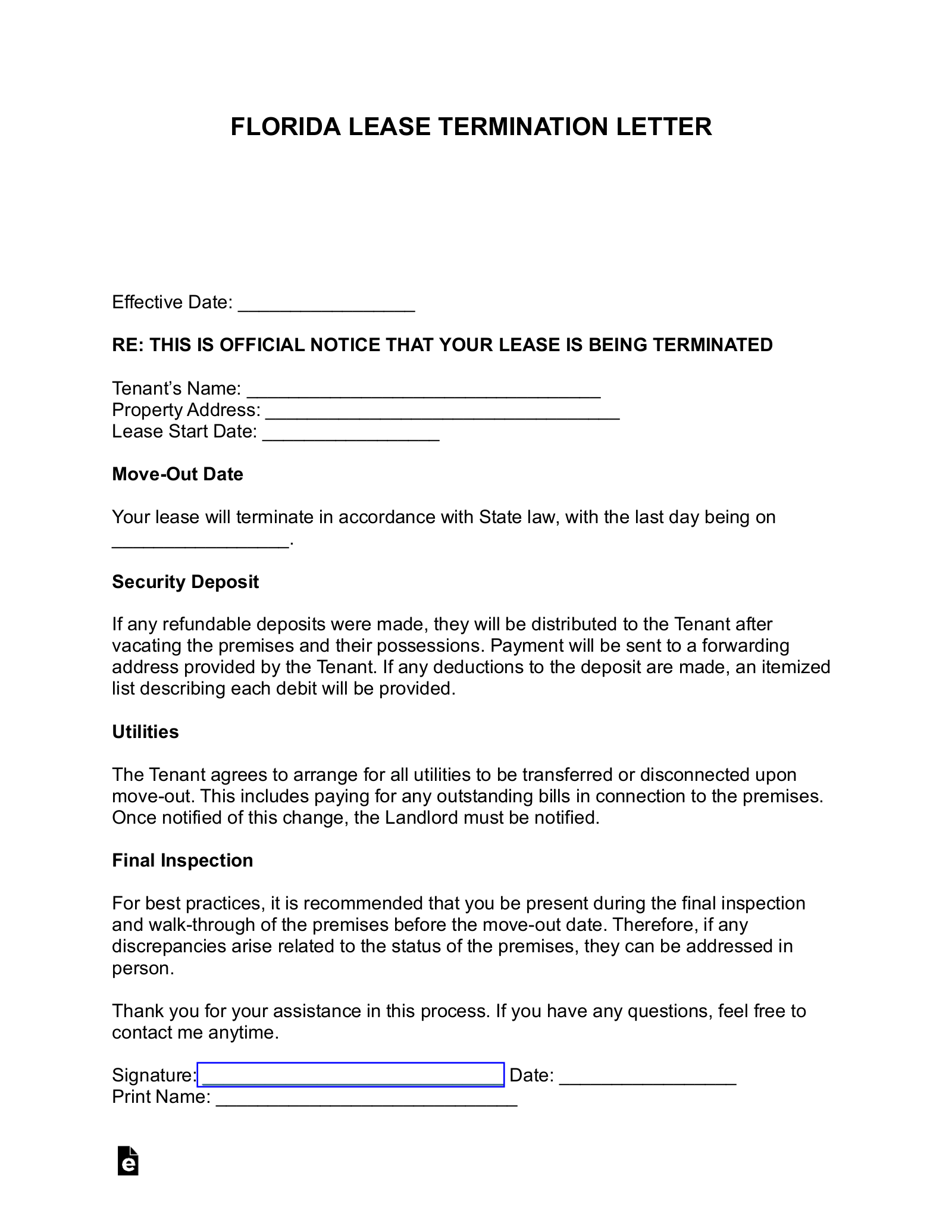
The most effective strategy begins with open, honest, and professional communication. As soon as you know you need to break your lease, inform your landlord in writing. Explain your situation clearly and respectfully, whether it’s a job relocation, family emergency, or other unforeseen circumstance. A landlord is more likely to be understanding and cooperative if they are informed early and can see that you are being proactive and responsible. Propose solutions rather than simply stating your problem. This conversation can set the tone for a mutually agreeable resolution.
Finding a Qualified Replacement Tenant
Under Florida law, landlords have a “duty to mitigate damages.” This means they must make reasonable efforts to re-rent the property if a tenant breaks a lease, rather than letting it sit vacant and charging the departing tenant for all remaining rent. You can significantly help your case by offering to find a qualified replacement tenant. This demonstrates your commitment to minimizing the landlord’s financial loss. You might:
- Help advertise the unit.
- Show the unit to prospective tenants.
- Pre-screen applicants.
Ensure any potential replacement tenant meets the landlord’s criteria (credit score, income, rental history) and that the landlord approves them. If you successfully find a suitable replacement, your liability for future rent payments could end once the new tenant moves in.
Subletting or Assigning Your Lease
Depending on your lease agreement, you might have the option to sublet the unit or assign your lease.
- Subletting: You rent your unit to another person (the subtenant) for a portion of your lease term. You remain the primary tenant and are still ultimately responsible for the rent and any damages caused by the subtenant.
- Assigning: You transfer your entire lease agreement to a new tenant (the assignee), who then assumes full responsibility for the lease. While you are typically released from future obligations, landlords often require explicit consent for assignment.
Most leases require landlord consent for subletting or assignment. If your lease prohibits it, you cannot proceed without the landlord’s written permission. If allowed, this can be an excellent way to get out of your lease without financial penalty, as the new occupant takes over your financial responsibilities.
Offering a Settlement
If other options aren’t feasible, offering a financial settlement can be a way to negotiate an early exit. This might involve:
- Paying an early termination fee: If one is stipulated in your lease.
- Forfeiting your security deposit: While not ideal, it might be a small price to pay to avoid larger liabilities.
- Offering a lump sum payment: Proposing to pay an agreed-upon amount (e.g., one or two months’ rent) in exchange for being released from all further obligations.
This approach provides the landlord with immediate compensation for their anticipated losses, making it a more attractive option than pursuing you for ongoing rent. Always get any settlement agreement in writing, signed by both parties, to ensure a clean break.
Consequences and Considerations of Breaking a Lease
Breaking a lease, especially without a legally justified reason or a negotiated agreement, can have significant financial and credit implications. Understanding these potential repercussions is vital before taking action.
Financial Ramifications
The primary consequence of breaking a lease without proper justification is financial liability. You could be responsible for:
- Loss of your security deposit: Landlords typically have the right to retain your security deposit to cover unpaid rent or damages beyond normal wear and tear.
- Remaining rent payments: Until the landlord finds a new tenant, you could be liable for the full amount of rent for the remainder of your lease term. Remember, the landlord has a duty to mitigate, but this doesn’t absolve you of responsibility until they do so.
- Early termination fees: If an early termination clause exists and you choose to exercise it, you’ll be responsible for this fee.
- Costs associated with re-renting: These can include advertising costs, cleaning fees, and even a portion of a real estate agent’s commission, depending on the lease and local laws.
These costs can quickly accumulate, making a negotiated settlement a potentially cheaper alternative in the long run.
Impact on Credit Score and Rental History
A landlord can report unpaid rent or outstanding lease termination fees to credit bureaus. This can result in a negative mark on your credit report, lowering your credit score and making it more difficult to secure future loans, credit cards, or even other rental properties. Furthermore, a broken lease can appear on your rental history, potentially leading to future landlords denying your applications or requiring higher security deposits. Maintaining a good rental history is crucial for future housing opportunities.
Legal Recourse for Landlords
If you abandon your lease without fulfilling your financial obligations, your landlord may pursue legal action. This could involve:
- Small claims court: For amounts typically under $8,000 in Florida, landlords can sue for unpaid rent, damages, and re-rental costs.
- Eviction filings: Even if you’ve moved out, a landlord might file for eviction to formally regain possession of the property and obtain a judgment for unpaid amounts. An eviction on your record is a significant red flag for future landlords.
A judgment against you can result in wage garnishment, bank account levies, or liens on other assets.
Document Everything
Regardless of how you choose to proceed, maintaining meticulous records is paramount. Keep copies of:
- Your signed lease agreement and any addendums.
- All written communication with your landlord (emails, letters, notices).
- Photos or videos of the property’s condition before you move in and after you move out.
- Proof of rent payments.
- Any military orders or protective orders relevant to your situation.
- Records of your efforts to find a replacement tenant or assist with re-renting.
This documentation serves as vital evidence in case of a dispute and can protect you from unsubstantiated claims by the landlord.
Seeking Professional Guidance
Given the legal complexities and potential financial ramifications, consulting with a professional can be an invaluable step in navigating early lease termination.
Consulting a Florida Real Estate Attorney
For complex situations, disputes with your landlord, or if you simply want to ensure you’re acting within your legal rights, consulting a Florida real estate attorney is highly recommended. An attorney can:
- Review your lease agreement and advise you on your specific rights and obligations under Florida law.
- Help you understand if you have legally justifiable grounds for early termination.
- Assist in drafting notices or negotiating a settlement with your landlord.
- Represent you if legal action becomes necessary.
Their expertise can help you avoid costly mistakes and secure the best possible outcome.

Utilizing Tenant Rights Organizations
Several non-profit organizations and government agencies in Florida offer free or low-cost advice and resources for tenants. These tenant rights organizations can provide guidance on Florida landlord-tenant law, help you understand your options, and sometimes offer mediation services. Local housing authorities or legal aid societies can be excellent resources for tenants seeking assistance with lease-related issues. They can offer practical advice and steer you towards the most appropriate course of action for your unique circumstances.
LifeOutOfTheBox is a participant in the Amazon Services LLC Associates Program, an affiliate advertising program designed to provide a means for sites to earn advertising fees by advertising and linking to Amazon.com. Amazon, the Amazon logo, AmazonSupply, and the AmazonSupply logo are trademarks of Amazon.com, Inc. or its affiliates. As an Amazon Associate we earn affiliate commissions from qualifying purchases.