
Navigating the process of registering a vehicle in Texas can seem like a daunting task for newcomers and even seasoned residents alike. This guide aims to demystify the requirements, steps, and essential information needed to ensure your car is legally registered and ready to hit the Lone Star State’s diverse roadways. Understanding these procedures is crucial for avoiding penalties and ensuring compliance with state laws, allowing you to fully enjoy your travels throughout Texas, from the bustling streets of Dallas to the historic charm of San Antonio.
Understanding the Core Requirements for Vehicle Registration
Before you embark on the registration journey, it’s imperative to gather all the necessary documentation. The Texas Department of Motor Vehicles (TxDMV) has specific requirements to ensure every vehicle operating on its roads is properly identified and insured. Failure to meet these standards can result in fines and other legal repercussions.
Proof of Ownership
The most fundamental requirement is establishing proof of ownership for the vehicle. This typically involves presenting the original title. If you recently purchased the vehicle, this will be the title transferred to your name. For newly purchased vehicles from a dealership, they will often handle much of the initial title transfer paperwork. If you purchased from a private seller, ensure you receive a properly signed-over title.
Vehicle Inspection Certificate
In Texas, all vehicles must pass a state-mandated safety inspection before they can be registered. This inspection ensures the vehicle meets minimum safety standards, including brakes, lights, tires, and exhaust systems. Once the inspection is passed, you will receive an inspection certificate, which you will need to present during the registration process. Some counties also require emissions testing, particularly in the Houston and Dallas-Fort Worth metropolitan areas. It is essential to check the specific requirements for your county of residence.
Proof of Insurance
Texas law mandates that all registered vehicles must carry a minimum level of liability insurance. You will need to provide proof of this insurance, typically in the form of an insurance card or policy declaration page, when you apply for registration. The minimum coverage requirements are 30/60/25: $30,000 of bodily injury liability per person, $60,000 of bodily injury liability per accident, and $25,000 of property damage liability per accident.
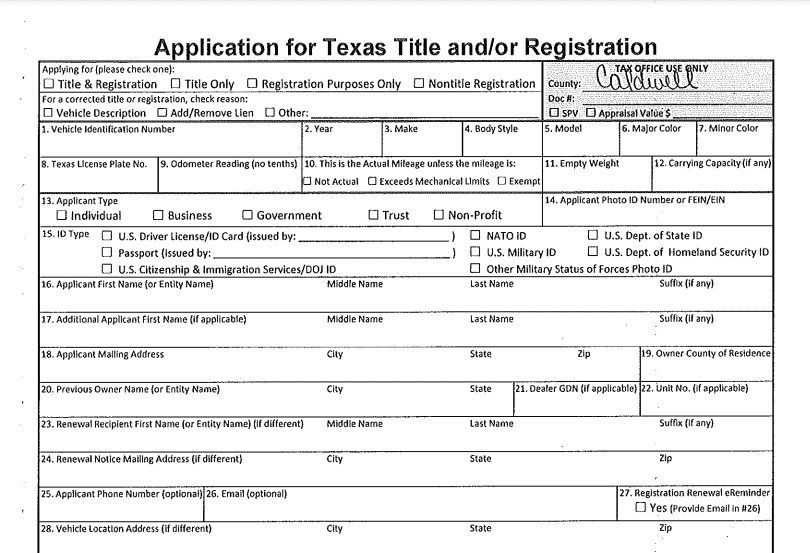
Application for Texas Title and/or Registration (Form 130-U)
This is the primary form you will need to complete. This application gathers all the necessary information about you, the vehicle, and the transaction. It can be downloaded from the TxDMV website or obtained from your local county tax assessor-collector’s office. Ensure all sections are filled out accurately and completely to avoid delays.
Residency Verification
As a resident of Texas, you will need to provide proof of your residency. This can include a utility bill, a lease agreement, or a mortgage statement in your name, with your Texas address clearly indicated.
Lienholder Information (if applicable)
If there is a loan on the vehicle, meaning a lienholder is listed on the title, you will need to provide their information. The lienholder typically holds the title until the loan is fully paid off. The registration process will still proceed, but the lienholder’s information will be noted.
The Step-by-Step Registration Process
Once you have all your documents in order, the next step is to complete the actual registration. This is primarily handled at your local county tax assessor-collector’s office.
Step 1: Obtain Vehicle Identification Number (VIN) Inspection
For vehicles that are being brought into Texas from out of state, or if the title is not from Texas, a VIN inspection is required. This inspection verifies the vehicle’s VIN against the documentation you have. This can be done at a licensed VIN inspection station or by a law enforcement officer. For vehicles purchased in Texas with a Texas title, this step is usually not necessary.
Step 2: Complete the Safety and Emissions Inspection
As mentioned earlier, before you can register, your vehicle must pass a safety inspection. In some counties, an emissions test is also required. These inspections are performed by certified stations throughout the state. Once your vehicle passes, you will receive a certificate of completion. Make sure to get this done well in advance of your registration expiration date to avoid last-minute rushes.
Step 3: Visit Your Local County Tax Assessor-Collector’s Office
This is where the official registration takes place. You will need to bring all the required documents:
- Proof of Ownership (Title)
- Vehicle Inspection Certificate
- Proof of Insurance
- Completed Application for Texas Title and/or Registration (Form 130-U)
- Residency Verification
- Lienholder Information (if applicable)
- Previous Registration (if renewing)
Be prepared for potential wait times, especially during peak periods. Some counties offer online appointment scheduling, which can save you time.
Step 4: Pay the Registration Fees
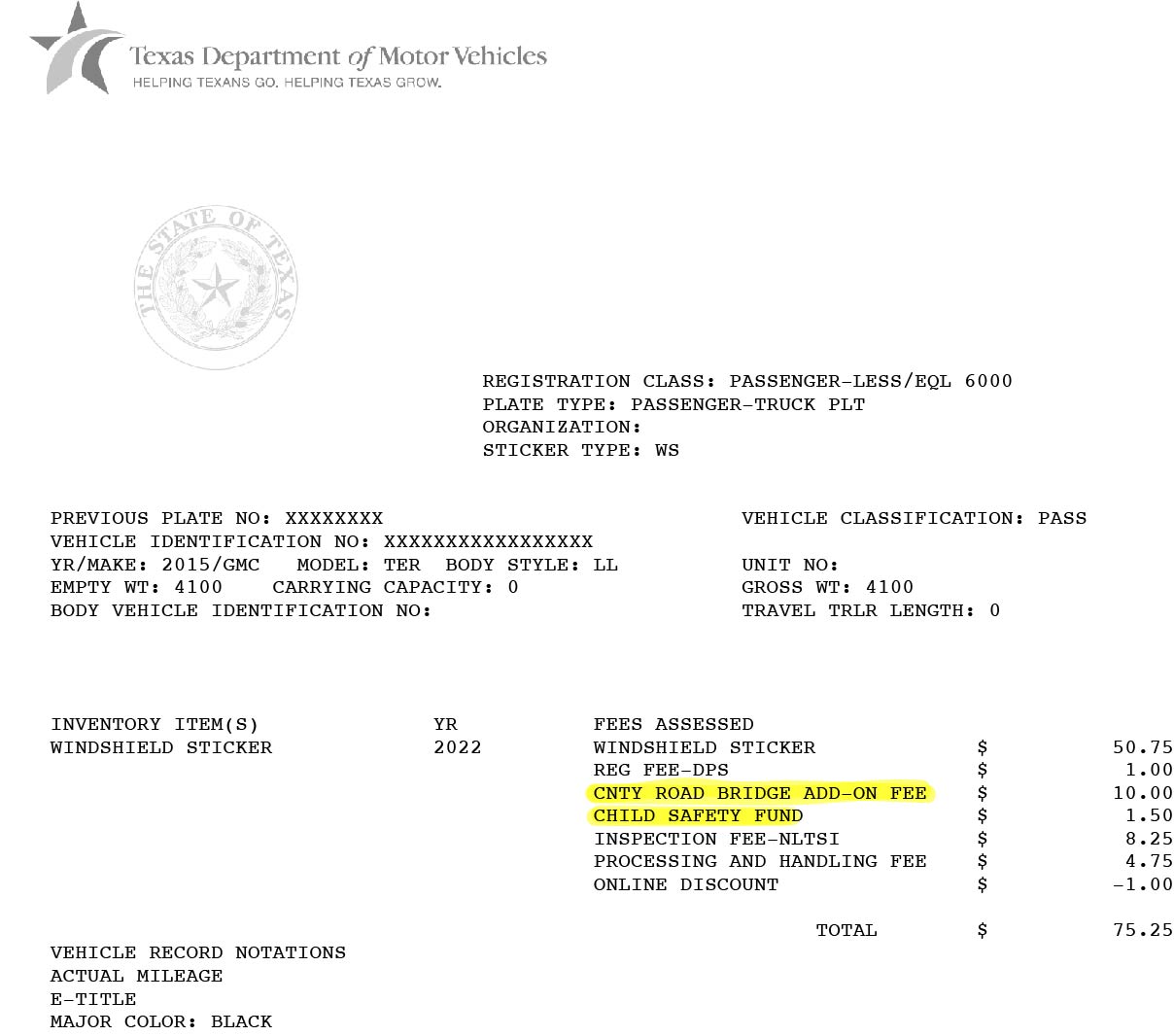
There are various fees associated with vehicle registration in Texas, including registration fees, title fees, and potentially county-specific fees. The total cost will depend on the type of vehicle, its weight, and the county in which you are registering. The tax assessor-collector’s office will calculate the exact amount due.
Step 5: Receive Your Registration Sticker and License Plates
Upon successful completion of the process and payment of fees, you will be issued your official Texas license plates and a registration sticker. The sticker should be affixed to your rear license plate. You will also receive your registration receipt, which you should keep with your vehicle as proof of registration.
Renewing Your Vehicle Registration
Vehicle registration in Texas is typically valid for one year. You will receive a renewal notice from the TxDMV in the mail before your current registration expires. Renewing your registration is generally a more straightforward process than initial registration.
Renewal Options
- Online: The TxDMV offers a convenient online renewal system. You will need your license plate number and renewal identification code (found on your renewal notice) to access the system.
- Mail: You can mail your renewal payment and required documents to the address specified on the renewal notice.
- In Person: You can visit your local county tax assessor-collector’s office to renew your registration in person.
- At an Authorized Renewal Station: Many grocery stores and other retail locations are authorized to process vehicle registration renewals.
Required Documents for Renewal
For renewal, you will generally need:
- Your renewal notice
- Proof of current vehicle inspection (if required in your county)
- Proof of current liability insurance
- Payment for the renewal fees
It’s important to note that if your vehicle requires an inspection or emissions test, you must have passed it before you can renew your registration.
Special Considerations for New Residents and Used Vehicle Purchases
Moving to Texas or buying a used vehicle comes with specific registration nuances that are important to understand.
New Residents
If you are moving to Texas from another state, you have 30 days from the date you establish residency to register your vehicle here. You will need to:
- Obtain a Texas vehicle inspection.
- Obtain proof of Texas liability insurance.
- Complete an Application for Texas Title and/or Registration (Form 130-U).
- Provide your out-of-state title.
- Visit your local county tax assessor-collector’s office within 30 days to complete the registration and title transfer.
You will also need to surrender your out-of-state license plates to your previous state’s motor vehicle agency to avoid future registration fees or penalties there.
Purchasing a Used Vehicle
When buying a used vehicle, whether from a dealership or a private seller, the process for titling and registration is similar for both.
- From a Dealership: Dealerships typically handle most of the paperwork for titling and registration as part of the sale. They will collect the necessary fees and submit the paperwork to the county. You will usually receive your new license plates and registration sticker directly from them or through the mail shortly after.
- From a Private Seller: If you buy from a private seller, the responsibility falls on you to transfer the title and register the vehicle. Ensure the seller provides you with a properly signed-over title. You will then need to take this title, along with the other required documents (inspection, insurance, Form 130-U), to your county tax assessor-collector’s office to complete the title transfer and registration. It is crucial to do this promptly to avoid penalties.
By understanding and adhering to these guidelines, registering your car in Texas will be a smooth and efficient experience, allowing you to focus on enjoying your drives through the vast and beautiful landscapes of the state.
LifeOutOfTheBox is a participant in the Amazon Services LLC Associates Program, an affiliate advertising program designed to provide a means for sites to earn advertising fees by advertising and linking to Amazon.com. Amazon, the Amazon logo, AmazonSupply, and the AmazonSupply logo are trademarks of Amazon.com, Inc. or its affiliates. As an Amazon Associate we earn affiliate commissions from qualifying purchases.