
When traveling for business or leisure, staying at a reputable establishment such as the Hilton Hotel in New York City or a boutique resort in Paris provides comfort, but personal security should always remain a top priority. While modern hospitality properties implement rigorous security protocols, mastering the mechanics of your temporary room’s entryway ensures total peace of mind. Knowing how to properly secure your room goes beyond simply turning a key; it involves understanding standard locking mechanisms, leveraging supplementary travel safety devices, and adopting daily security habits. Whether you are checking into a high-end suite at the Ritz-Carlton or a standard room during a cross-country road trip across United States, understanding your room’s entry protection is essential for a restful stay.
Understanding Standard Hotel Room Locking Mechanisms
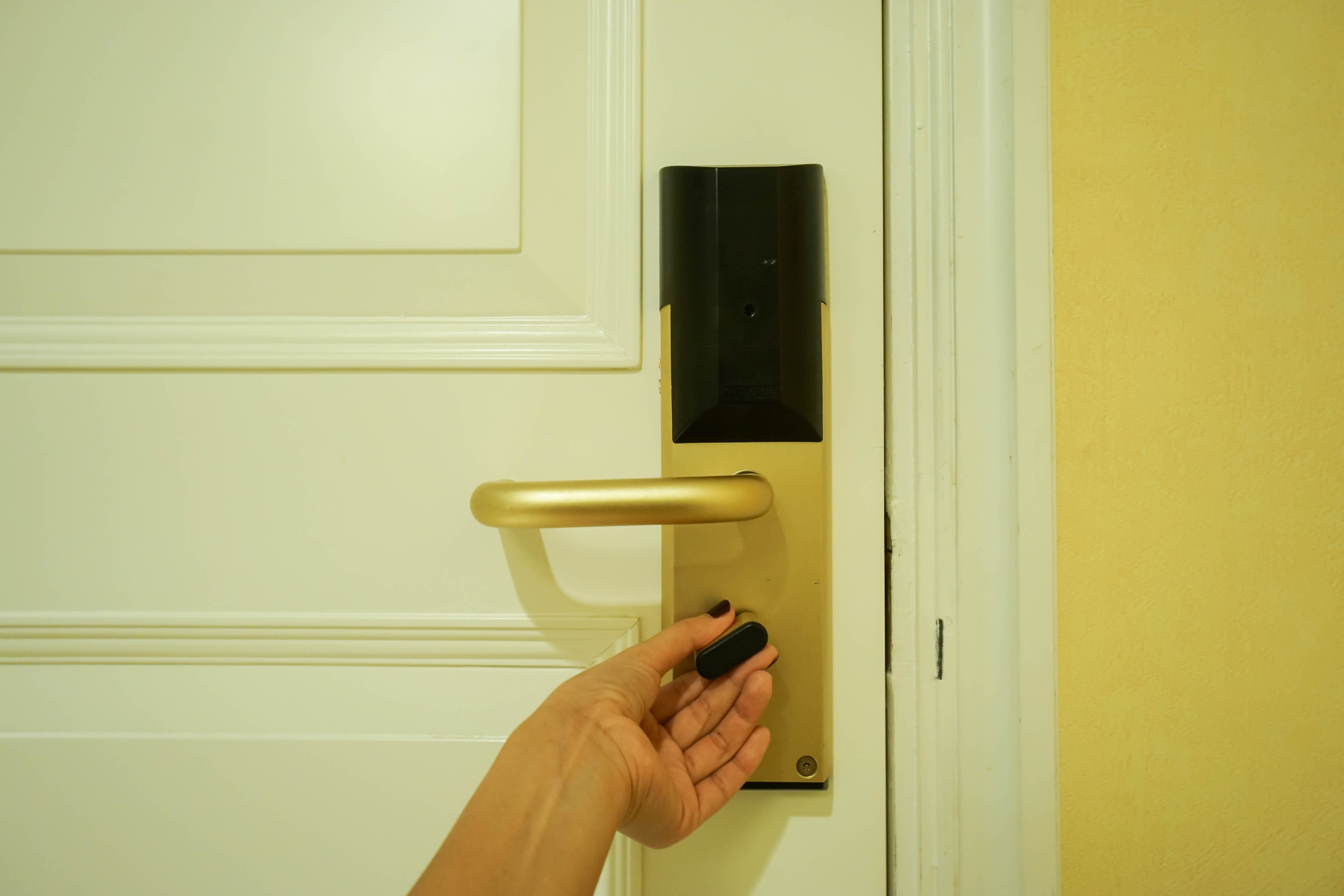
Most modern hospitality accommodations rely on electronic card keys or RFID fobs. When you tap or insert your keycard into the reader, it communicates with the lock’s internal computer to retract the latch bolt momentarily.
The Electronic Latch and Deadbolt
Once the door closes behind you, the primary latch bolt automatically engages with the strike plate. However, many travelers assume this fully secures the room. While the latch prevents the door from blowing open or pushing inward easily, it is not a deadbolt. To fully engage the primary security feature:
- Listen for the mechanical click of the heavy deadbolt throwing automatically, or manually throw the deadbolt using the interior thumb-turn.
- Verify that the green or blue indicator light on the exterior reader changes (often turning red) to signify that the deadbolt is securely locked from the inside.
Secondary Mechanical Locks
Virtually every guest room features at least one secondary mechanical backup designed to prevent unauthorized entry even if a keycard is compromised.
- The Swing Bar or Flip Guard: This hinged metal arm allows you to open the entryway a few inches to look outside or speak to staff while preventing anyone from pushing the door open fully.
- The Security Chain: Similar to the swing bar, a heavy chain limits the door’s opening angle. Always ensure these devices are engaged whenever you are inside the room, particularly while sleeping or showering.
Advanced Techniques and Portable Door Security Devices
While built-in locks are generally reliable, frequent travelers often prefer an extra layer of defense. Whether staying at a historic property in London or a modern skyscraper in Tokyo, portable security tools offer unmatched protection against unwanted intrusion.

Portable Door Locks
Portable door locks are compact, lightweight devices made of steel or heavy-duty plastic that install in seconds without tools. They work by anchoring into the strike plate hole on the door frame and bracing against the interior of the door. Even if someone manages to bypass the electronic lock with a master keycard, a portable door lock prevents the door from opening inward.
Door Jammers and Wedges
Heavy-duty door jams utilize the principle of friction and triangulation to secure an entryway. Placed firmly on the floor beneath the door handle, a jammer absorbs downward force and stops the door from being forced open. Rubber door stops can also be placed tightly under the door to alert you with noise and resistance if anyone attempts to turn the handle from the outside.
Check the Connecting Doors
Many properties offer adjoining rooms for families or groups traveling together. If you are not using the connecting room, inspect that door immediately upon arrival.
- Ensure the door is locked securely from your side using its dedicated deadbolt or latch.
- Report any faulty or loose locks on connecting doors to management immediately, and request a room change if the door cannot be securely fastened.
Best Practices for Hotel Room Safety
Locking your door correctly is only one component of comprehensive travel safety. Cultivating mindful habits from the moment you check in at the front desk helps safeguard your personal belongings and well-being throughout your stay.
Verify Your Room Assignment at Check-In
When checking into destinations like Las Vegas or Sydney, maintain situational awareness when receiving your keys.
- Ensure the front desk agent states your room number clearly rather than speaking it aloud where others can overhear.
- If the agent writes your room number on the keycard sleeve, dispose of the sleeve securely or memorize the number immediately.
Maintain Vigilance Regarding Access
Never open your door to unexpected visitors, whether they claim to be room service, maintenance, or hotel management, without verifying their identity.
- Call the front desk to confirm that maintenance was intentionally dispatched to your room.
- Keep the swing bar engaged if you must speak to someone briefly through a partially opened entryway.

Store Valuables Securely
Even with a securely locked door, utilize the in-room safe for passports, extra cash, electronics, and jewelry. Most room safes feature a programmable digital keypad where you can set your own PIN. For ultimate security, larger valuables can often be stored in the primary safety deposit boxes located at the front desk.
By familiarizing yourself with the standard mechanisms, utilizing supplemental travel security tools, and maintaining proactive awareness, you can ensure that your temporary lodging remains a safe, secure sanctuary during your travels.
LifeOutOfTheBox is a participant in the Amazon Services LLC Associates Program, an affiliate advertising program designed to provide a means for sites to earn advertising fees by advertising and linking to Amazon.com. Amazon, the Amazon logo, AmazonSupply, and the AmazonSupply logo are trademarks of Amazon.com, Inc. or its affiliates. As an Amazon Associate we earn affiliate commissions from qualifying purchases.