
The California Roll stands as a testament to culinary innovation, a delightful fusion that has captivated palates worldwide. Far from the ancient traditions of Japanese sushi, this iconic roll originated in the vibrant culinary landscape of North America, often credited to Los Angeles, California. It represents a perfect entry point for sushi novices and a beloved classic for seasoned enthusiasts, bridging the gap between traditional raw fish preparations and more familiar Western tastes. For those who love to explore culture through cuisine, mastering the California Roll at home offers a rewarding experience, transforming your kitchen into a global culinary studio. This article will guide you through the process of creating this celebrated inside-out roll, turning a seemingly complex dish into an achievable culinary adventure, perfect for entertaining guests or simply enjoying a taste of California wherever you are. Beyond the recipe, we’ll explore how food preparation can be an integral part of understanding a destination’s unique lifestyle and tourism offerings, whether you’re recreating a dish from a memorable trip or preparing for a future one.
The Allure of the California Roll: A Culinary Journey
The California Roll is more than just a dish; it’s a story of adaptation, global influence, and a testament to how food evolves across cultures. Its mild flavors and cooked ingredients made it an instant hit, especially in regions where raw fish was initially met with skepticism.
A Taste of the West Coast: Origins and Popularity
The exact origin of the California Roll is a subject of friendly debate, but its roots are firmly planted in the Golden State. One popular theory attributes its invention to Noritoshi Kanai of the Nakanoya restaurant in Little Tokyo, Los Angeles, in the late 1960s. Another credits Hidekazu Tojo, a chef in Vancouver, Canada, who created a similar roll, initially without nori on the outside, to appeal to Western clientele who were unfamiliar with seaweed. Regardless of its precise birthplace, the roll quickly gained immense popularity, becoming a staple in sushi restaurants across North America and eventually worldwide.
What made the California Roll so successful was its ingenious design. By placing the rice on the outside (an uramaki style) and the nori (seaweed) on the inside, it presented a less intimidating appearance. The primary fillings—imitation crab meat (surimi), creamy avocado, and crisp cucumber—offered a delightful textural contrast and approachable flavors that resonated with a broader audience. It became a gateway sushi, introducing countless individuals to the joys of Japanese cuisine and paving the way for further culinary exploration. For travelers, encountering the California Roll in its supposed birthplace of Los Angeles can be a charming part of experiencing the city’s diverse food scene and lifestyle.

More Than Just Food: A Cultural Experience
Making sushi, especially a dish as globally recognized as the California Roll, transcends mere cooking; it becomes a cultural immersion. It’s an activity that connects you to the culinary traditions, albeit adapted, of a faraway land, all from the comfort of your own home or even a charming accommodation during a travel adventure. Imagine taking a cooking class in Kyoto, Japan, learning traditional sushi techniques, and then applying that knowledge to craft your own California Roll with a deeper appreciation for the artistry involved.
This hands-on approach to food fosters a deeper understanding of the ingredients, the techniques, and the cultural significance behind each dish. It encourages mindfulness, patience, and a sense of accomplishment. Sharing your homemade sushi with friends or family elevates a simple meal into a memorable event, fostering connections and creating shared experiences. For a lifestyle blog focused on travel and tourism, teaching readers how to make an iconic dish like this is about bringing the world’s flavors and cultural richness directly into their lives, encouraging a more engaged and experiential approach to both food and travel.

Essential Ingredients and Tools: Preparing Your Sushi Sanctuary
Before you embark on your sushi-making journey, gathering the right ingredients and tools is paramount. Quality components make all the difference, ensuring your California Rolls are not only delicious but also beautiful to behold.
Gathering Your Fresh Ingredients
The simplicity of the California Roll belies the importance of fresh, high-quality ingredients. Each component plays a crucial role in the final flavor and texture.
- Sushi Rice: This is the foundation of any good sushi. Look for short-grain Japanese rice, sometimes labeled “sushi rice.” It has a higher starch content, which makes it sticky enough to hold its shape when rolled.
- Nori (Seaweed Sheets): These edible dried seaweed sheets are essential. Choose toasted nori that is crisp and has a deep green color.
- Imitation Crab Meat (Surimi): This is the traditional filling for a California Roll. It’s readily available and offers a sweet, crab-like flavor. If you prefer, you can substitute it with real crab meat (lump crab is excellent) for a more luxurious experience, perhaps inspired by a luxury travel dining experience.
- Avocado: Ripe but firm avocado is key. It provides a creamy texture and rich, buttery flavor that complements the other ingredients beautifully. Look for avocados from Mexico or California for optimal freshness.
- Cucumber: Choose a crisp, seedless cucumber, such as an English or Persian cucumber. It adds a refreshing crunch and balances the richness of the avocado and crab.
- Sesame Seeds: Toasted white or black sesame seeds are typically used to garnish the outside of the roll, adding a nutty flavor and visual appeal.
- Rice Vinegar: Used for seasoning the cooked sushi rice. Look for seasoned rice vinegar, which already contains sugar and salt, or unseasoned and add your own.
- Sugar and Salt: For seasoning unseasoned rice vinegar, if applicable.
Tools of the Trade for Perfect Rolls
While sushi making might seem specialized, the essential tools are straightforward and widely available.
- Bamboo Rolling Mat (Makisu): This flexible mat is indispensable for shaping and tightening your sushi rolls. It comes in various sizes; a standard mat works best.
- Sharp Knife: A very sharp knife is crucial for clean, even slices. A long, thin-bladed knife, like a sushi knife or a chef’s knife, works best. Keep it wet to prevent rice from sticking.
- Large Bowl (Hangiri or similar): A wooden hangiri is traditionally used for cooling and seasoning sushi rice, as wood absorbs excess moisture. A large non-metallic bowl will also suffice.
- Rice Paddle: A flat wooden or plastic paddle is ideal for gently mixing and folding the rice without mashing it.
- Small Bowl of Water: Keep this handy for wetting your hands to prevent rice from sticking.
- Cutting Board: A clean, stable surface for assembling and slicing your rolls.
Having these items ready will streamline your sushi-making process, making it a more enjoyable and less daunting activity within your home lifestyle.
Step-by-Step Guide: Crafting Your Own California Rolls
With your ingredients prepped and tools at the ready, it’s time to dive into the art of making California Rolls. Patience and a light touch are your best allies.
Perfecting Your Sushi Rice
The rice is arguably the most critical component of sushi. Getting it right is essential.
- Rinse the Rice: Place 2 cups of sushi rice in a fine-mesh sieve and rinse under cold running water until the water runs clear. This removes excess starch, preventing the rice from becoming overly sticky or gummy.
- Cook the Rice: Transfer the rinsed rice to a medium saucepan with a tight-fitting lid. Add 2.5 cups of cold water. Bring to a boil over medium-high heat, then immediately reduce heat to low, cover, and simmer for 15 minutes, or until all the water is absorbed. Do not lift the lid during cooking.
- Steam: Once cooked, remove the saucepan from the heat and let it sit, still covered, for another 10-15 minutes. This allows the rice to steam thoroughly.
- Season the Rice: Transfer the hot rice to your large non-metallic bowl. In a small bowl, whisk together 1/4 cup rice vinegar, 2 tablespoons sugar, and 1 teaspoon salt until dissolved. Gradually drizzle this seasoning over the rice while gently folding it with a rice paddle. Use a fanning motion (with a small fan or piece of cardboard) to cool the rice quickly while mixing. This helps the rice become glossy and separates the grains, giving it that perfect sushi texture. Cool the rice to room temperature before using.
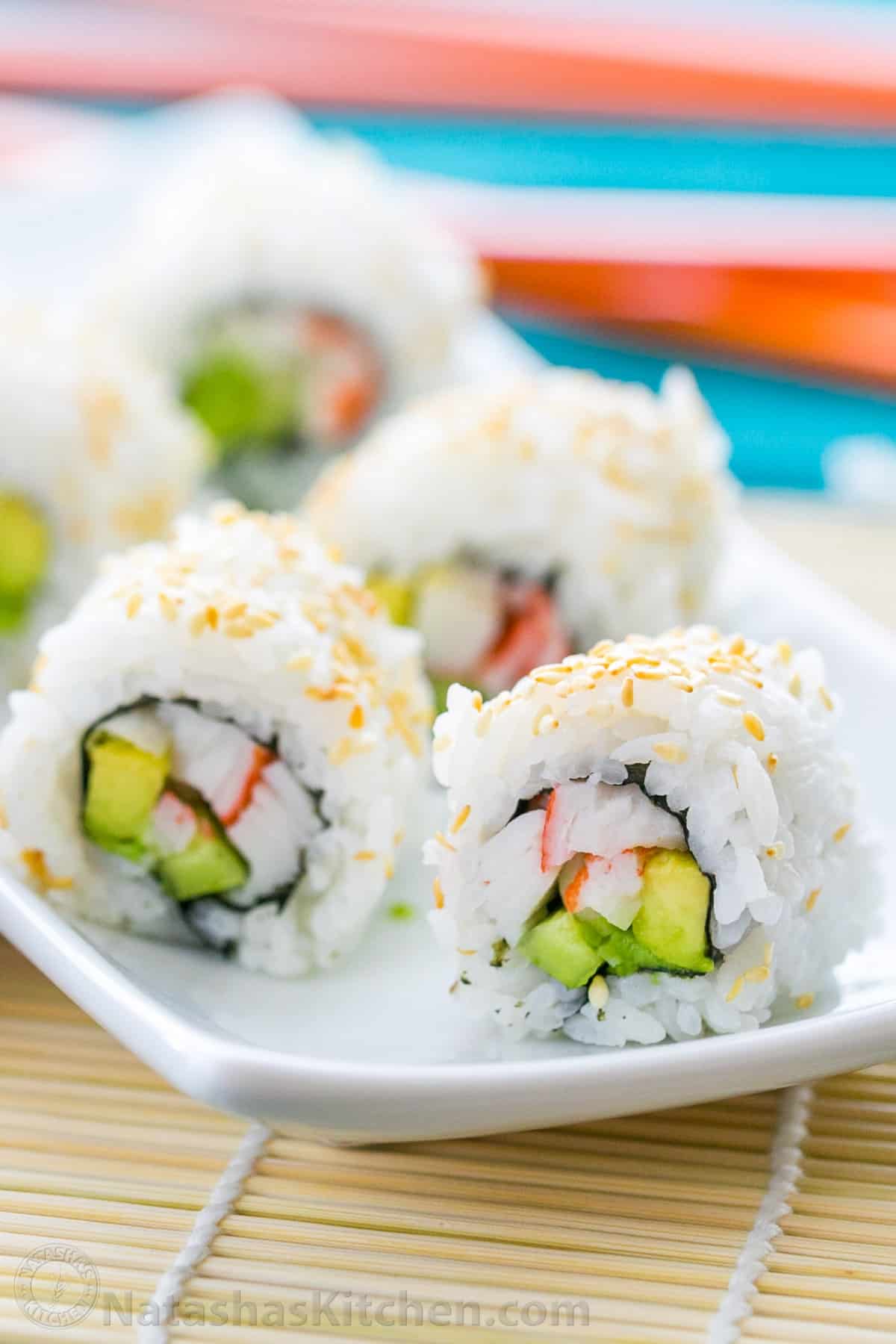
Assembling Your Inside-Out Masterpiece
This is where the magic happens! The “inside-out” (uramaki) technique for the California Roll requires a specific approach.
- Prepare Your Workspace: Cover your bamboo mat with a piece of plastic wrap. This prevents rice from sticking to the mat and makes cleanup easier. Have a small bowl of water nearby for moistening your hands.
- Lay the Nori: Place one sheet of nori, shiny side down, on the plastic-wrapped bamboo mat.
- Spread the Rice: Moisten your hands with water. Take about 3/4 to 1 cup of seasoned sushi rice and gently spread it evenly over the entire surface of the nori, leaving no gaps. Avoid pressing down too hard, as this can compress the rice.
- Flip the Nori: Carefully sprinkle a generous amount of toasted sesame seeds over the rice. Then, gently flip the nori sheet over so the rice-covered side is now face down on the plastic wrap, and the nori side is facing up.
- Add Fillings: Arrange your fillings horizontally across the center of the nori. Start with a thin line of imitation crab meat, then add slices of avocado and cucumber next to it. Don’t overfill, as this makes rolling difficult.
- Roll It Up: Grasp the edge of the bamboo mat closest to you, bringing it up and over the fillings, pressing them gently with your fingers to keep them in place. Roll forward, applying gentle, even pressure to form a tight cylinder. Use the mat to shape and compress the roll as you go, ensuring a uniform log. Continue rolling until the seam is sealed.
- Shape and Slice: Once rolled, you can gently reshape the roll with the mat if needed, making sure it’s a perfect cylinder. Now, remove the plastic wrap. Moisten your sharp knife with water to prevent sticking. Slice the roll in half, then slice each half into 3 or 4 equal pieces (typically 6 or 8 pieces per roll). Wipe your knife clean and re-moisten between slices for the cleanest cuts.
Serving Suggestions and Pairings
Presentation is key for sushi. Arrange your beautifully crafted California Rolls on a serving platter. Garnish with a sprinkle of extra sesame seeds or a small dollop of masago (capelin roe) for an authentic touch.
Serve your California Rolls with traditional accompaniments:
- Soy Sauce: A small dish for dipping.
- Pickled Ginger (Gari): To cleanse your palate between different rolls.
- Wasabi: For a touch of spicy heat.
For beverages, consider a chilled sake, a refreshing green tea, or even a crisp California white wine, a perfect nod to the roll’s origins. This complete dining experience is a wonderful way to embrace the lifestyle of global cuisine, whether you’re at home or enjoying a staycation in a charming Santa Barbara hotel.
Beyond the Roll: Exploring Sushi and Travel Connections
Making a California Roll is just the beginning. The world of sushi is vast and varied, offering countless opportunities for culinary discovery and connecting with diverse cultures.
Sushi Adventures Around the Globe
While the California Roll is a fantastic start, real travel offers a deeper dive into the nuances of sushi. Imagine visiting Tokyo, Japan, where sushi is an art form, perfected over centuries. Here, you can experience an omakase meal at a world-renowned sushi counter in Ginza, where master chefs like Jiro Ono (from the famous documentary “Jiro Dreams of Sushi”) craft each piece with precision and passion. This is not just a meal; it’s a cultural attraction and a luxury travel experience.
Beyond Japan, other cities have developed their unique sushi scenes. Vancouver, as mentioned earlier, has a vibrant sushi culture with innovative rolls and fresh Pacific seafood. New York City boasts an incredible array of sushi establishments, from casual takeout spots to Michelin-starred restaurants, reflecting the city’s diverse lifestyle and culinary prowess. Even in coastal cities of California, like San Francisco or San Diego, you’ll find sushi restaurants that celebrate local seafood and unique Western influences. Each destination offers a slightly different take on this beloved dish, making sushi exploration a compelling reason to travel.
Integrating Culinary Exploration into Your Travels
For any discerning traveler, food is an indispensable part of understanding a local culture. When planning your next destination or experience, consider incorporating culinary activities. Many hotels and resorts worldwide, from a boutique hotel in Kyoto to a sprawling resort in Maui, offer cooking classes. These classes provide hands-on learning, allowing you to master local dishes, discover regional ingredients, and connect with local chefs and communities. It’s an immersive way to engage with tourism beyond just sightseeing landmarks.
Booking a food tour in a bustling city like Seoul, South Korea, or exploring vibrant markets in Marrakech, Morocco, can unlock a deeper appreciation for the culinary traditions and daily lifestyle of its inhabitants. Such activities transform a typical vacation into a rich, sensory journey, leaving you with not just memories but also new skills and recipes to bring back home.
Sustainable Practices and Local Sourcing
As you delve deeper into the world of food, especially seafood like that used in sushi, considering sustainable practices becomes increasingly important. Many travel and lifestyle blogs, including ours, advocate for responsible tourism and conscious consumption. When selecting ingredients for your California Rolls or any dish, look for sustainably sourced seafood and locally grown produce. This not only supports environmental health but often results in fresher, higher-quality ingredients that enhance your culinary creations.
Choosing to eat at restaurants that prioritize sustainable sourcing or staying at accommodation that champions local produce contributes positively to the communities you visit. It’s a way to ensure that the delicious food and rich culture you experience today will be available for future generations of travelers and food lovers alike.
In conclusion, making a California Roll is more than just following a recipe; it’s an invitation to explore the interconnectedness of food, culture, and travel. It’s an accessible way to bring a piece of California‘s innovative spirit into your home and ignite a passion for global culinary adventures. So, gather your ingredients, sharpen your knife, and embark on this delightful journey. Your palate, and perhaps your next travel itinerary, will thank you.
LifeOutOfTheBox is a participant in the Amazon Services LLC Associates Program, an affiliate advertising program designed to provide a means for sites to earn advertising fees by advertising and linking to Amazon.com. Amazon, the Amazon logo, AmazonSupply, and the AmazonSupply logo are trademarks of Amazon.com, Inc. or its affiliates. As an Amazon Associate we earn affiliate commissions from qualifying purchases.