
The Marchman Act in Florida is a powerful legal tool designed to help individuals who are suffering from substance abuse and addiction. It allows for involuntary assessment and treatment when a person is unwilling or unable to seek help themselves. While the process can be complex and emotionally taxing, understanding its legal framework is crucial for those considering initiating it. This article aims to provide a comprehensive overview of how to navigate the Marchman Act in Florida, focusing on the legal requirements, procedural steps, and the importance of professional guidance.
Understanding the Marchman Act: Legal Framework and Eligibility
The Marchman Act, formally known as the Hal S. Marchman Comprehensive Alcohol and Other Drug Abuse Prevention and Treatment Act, was enacted to address the escalating crisis of substance abuse. It provides a legal pathway for involuntary commitment for assessment and treatment for individuals who meet specific criteria. The primary goal is not punitive, but rather to intervene before a substance use disorder leads to severe harm to the individual or others.
Who Can Be Subject to the Marchman Act?
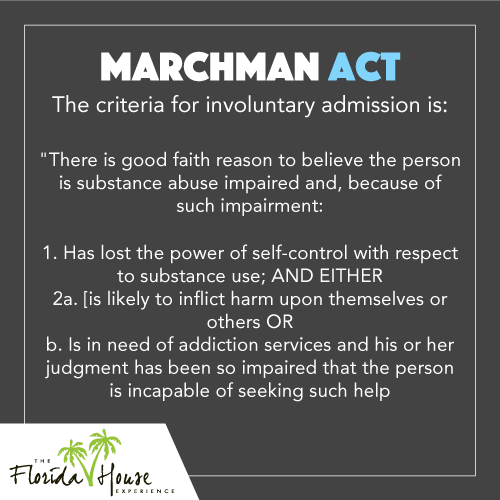
To petition for a Marchman Act involuntary assessment, the individual must meet stringent eligibility requirements. These are not arbitrary standards but are rooted in demonstrating the severity and impact of their substance use.
- Substance Abuse or Dependence: The individual must be demonstrably abusing or be dependent on alcohol or other controlled substances. This is not merely about occasional use but a pattern of use that causes significant impairment or distress.
- Likelihood of Harm: A critical element is the likelihood of substantial harm to themselves or others if left untreated. This harm can manifest in various ways:
- Self-Harm: This includes potential for overdose, self-neglect, or engaging in dangerous behaviors due to intoxication.
- Harm to Others: This could involve endangering children, engaging in violence or criminal activity related to substance use, or posing a risk in professional settings, such as pilots or surgeons whose impairment could be catastrophic.
- Health and Welfare: This encompasses severe deterioration of physical or mental health directly attributable to substance use, or the inability to care for basic needs like food, shelter, and hygiene.
- Unwillingness or Inability to Obtain Treatment: A key component is that the individual must be unwilling or unable to voluntarily seek and participate in treatment. This often means they deny the problem, resist help, or are so impaired they cannot make rational decisions about their care.
Who Can File a Petition?
The Marchman Act allows specific individuals, known as “petitioners,” to initiate the process. These are typically people who have direct knowledge of the respondent’s substance use and its detrimental effects.
- Law Enforcement Officers: In many cases, a law enforcement officer can initiate the process if they witness the individual’s intoxication or behavior directly related to substance abuse.
- Family Members and Relatives: Spouses, parents, adult children, siblings, or other relatives who have a close personal relationship and direct knowledge of the individual’s struggle can file.
- Three Private Citizens: In certain situations, three private citizens who have direct personal knowledge of the respondent’s substance use and its harmful consequences can collectively file a petition. This scenario is less common and requires a high degree of certainty and shared observation.
It is important to note that the petitioner must have direct, personal knowledge of the respondent’s condition. Hearsay or information obtained from third parties, while potentially concerning, is generally not sufficient on its own to initiate legal action under the Marchman Act.
The Petition and Initial Assessment Process
Initiating a Marchman Act case begins with filing a formal petition with the court. This is a legal document that requires specific information to be presented accurately and truthfully.
Filing the Petition
The petition is typically filed in the county where the individual resides or where the substance abuse is occurring. The petitioner will need to provide detailed information, including:
- Respondent’s Information: Full name, date of birth, address, and any other identifying details.
- Petitioner’s Information: Full name, address, relationship to the respondent, and contact information.
- Nature of Substance Abuse: A detailed description of the substances being abused and the pattern of use. This should include specific examples of behaviors, incidents, and consequences.
- Evidence of Likelihood of Harm: This is the most critical section. The petitioner must clearly articulate why they believe the respondent is likely to cause substantial harm to themselves or others if treatment is not provided. This might involve citing specific incidents, medical records, or observations of behavior.
- Statement of Unwillingness/Inability to Obtain Treatment: The petition must explain why the respondent is not seeking or is unable to obtain treatment voluntarily.
It is highly recommended that petitioners seek legal counsel from an attorney experienced in Marchman Act cases. An attorney can ensure the petition is drafted correctly, all necessary information is included, and the legal standards are met, significantly increasing the likelihood of a successful outcome.
The Ex Parte Order for Immediate Assessment
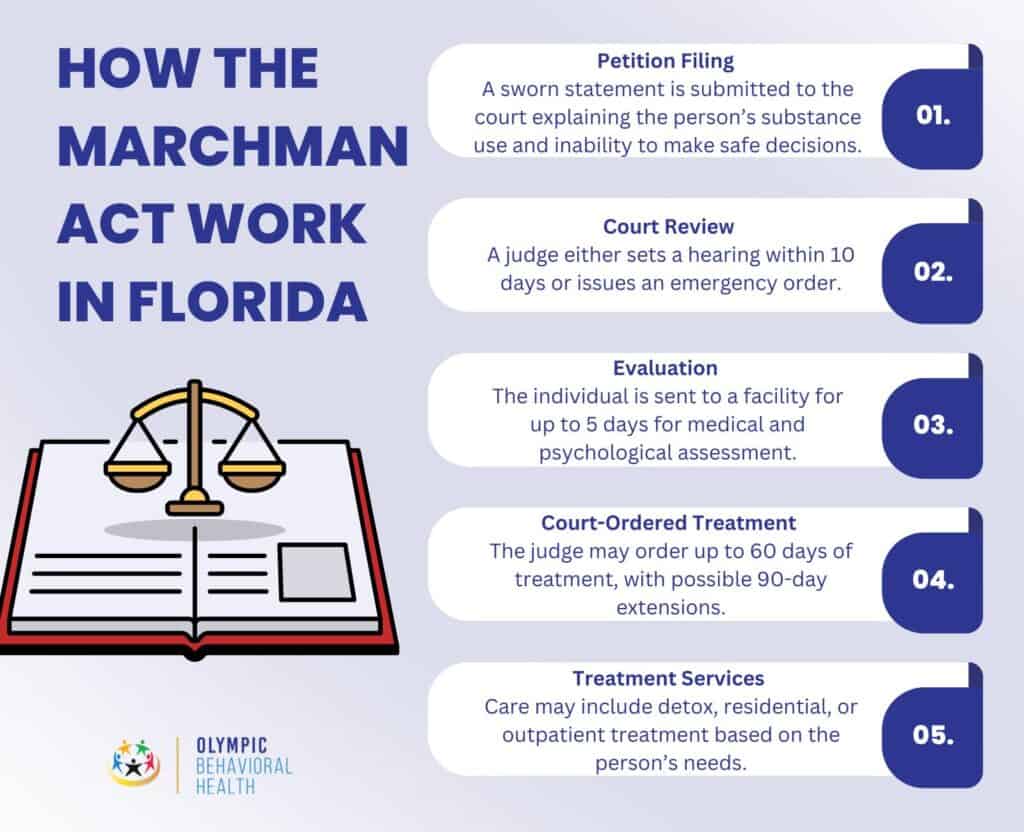
Once the petition is filed, a judge will review it. If the petition, along with any supporting affidavits, demonstrates probable cause that the respondent meets the criteria for involuntary assessment, the judge may issue an ex parte order for immediate assessment. An ex parte order means the order is issued without the respondent being present or having had a formal opportunity to be heard.
This order authorizes law enforcement officers to take the respondent into protective custody and transport them to a designated facility for an immediate assessment. The assessment is conducted by qualified healthcare professionals, typically within a 24-hour period of being taken into custody.
The Professional Assessment
The purpose of the assessment is to determine whether the respondent meets the criteria for involuntary treatment under the Marchman Act. This is not a diagnosis of addiction but a clinical evaluation of the current state of substance use and its immediate impact.
- Clinical Evaluation: Healthcare professionals will conduct interviews, review any available medical history, and perform physical and mental examinations.
- Substance Use Evaluation: The focus is on identifying current use, the type of substances, the frequency and severity of use, and the presence of withdrawal symptoms.
- Risk Assessment: The professionals will assess the risk of harm to self or others, based on the respondent’s current condition and behavior.
Based on this assessment, the healthcare professionals will make a recommendation to the court regarding whether involuntary treatment is warranted.
The Court Hearings and Treatment Phases
If the professional assessment concludes that the respondent meets the criteria for involuntary treatment, the legal process moves to formal court hearings.
The Probable Cause Hearing
Within a short period after the initial assessment (typically within 5 days), a probable cause hearing is scheduled. At this hearing, the respondent has the right to:
- Be Present: The respondent must be present in court, unless their behavior or medical condition makes it impossible.
- Have Legal Counsel: The respondent has the right to an attorney. If they cannot afford one, the court will appoint a public defender.
- Present Evidence and Witnesses: The respondent can present evidence and call witnesses to argue against involuntary treatment.
- Challenge the Petition and Assessment: The respondent and their attorney can question the petitioner, the law enforcement officers, and the healthcare professionals who conducted the assessment.
The judge will listen to testimony from all parties and review the evidence. If the judge finds probable cause to believe the respondent meets the criteria, they will order a more comprehensive involuntary treatment, typically for a period of up to 30 days.
The Full Hearing
If the respondent contests the probable cause finding, a full hearing will be scheduled, usually within 10 days of the probable cause hearing. This is a more formal trial-like proceeding where both sides present their case in detail.
- Burden of Proof: The petitioner bears the burden of proving by clear and convincing evidence that the respondent meets the criteria for involuntary treatment.
- Evidence Presented: This may include medical records, testimony from family members, friends, employers, law enforcement, and addiction specialists.
- Outcome: If the petitioner successfully proves their case, the judge will order involuntary treatment for a period of up to 90 days. If not, the case will be dismissed, and the respondent will be released.

Involuntary Treatment
If a court orders involuntary treatment, the respondent will be placed in a licensed treatment facility. The type and duration of treatment will depend on the individual’s needs and the court’s order, but it generally includes:
- Inpatient Treatment: This involves living at the facility and receiving intensive care, including detoxification, counseling, therapy, and education.
- Outpatient Treatment: In some cases, especially for less severe situations or as a step-down from inpatient care, outpatient services may be ordered, requiring regular attendance at therapy sessions and support groups.
- Aftercare Planning: As the treatment period nears its end, a comprehensive aftercare plan is developed to support the individual’s continued recovery upon release.
The Marchman Act is a serious legal intervention. It is crucial for petitioners to understand the legal requirements, be prepared for the emotional challenges, and, most importantly, seek professional legal and psychological assistance throughout the process. While the goal is to facilitate recovery and prevent harm, navigating the legal system requires diligence and adherence to strict protocols. For those facing a loved one’s battle with addiction in Florida, understanding the Marchman Act is the first step toward potentially saving a life.
LifeOutOfTheBox is a participant in the Amazon Services LLC Associates Program, an affiliate advertising program designed to provide a means for sites to earn advertising fees by advertising and linking to Amazon.com. Amazon, the Amazon logo, AmazonSupply, and the AmazonSupply logo are trademarks of Amazon.com, Inc. or its affiliates. As an Amazon Associate we earn affiliate commissions from qualifying purchases.