
Navigating the Sunshine State with a disability can be made significantly easier with the proper disabled parking permit. This permit, often referred to as a “handicap placard” or “disabled plate,” provides crucial access to designated parking spots, alleviating the physical strain of longer walks and enhancing the overall travel experience. Whether you’re a resident planning to explore the vibrant attractions of Florida or a visitor seeking accessible accommodations, understanding the process for obtaining a disabled parking permit in Florida is paramount. This guide will walk you through the essential steps, eligibility requirements, and helpful tips to ensure a smooth application process.

The ability to park closer to your destination is more than just a convenience; for many individuals with disabilities, it’s a necessity. It allows for greater independence and participation in all that Florida has to offer, from the bustling theme parks of Orlando to the serene beaches of the Florida Keys, and the historic streets of St. Augustine. This permit not only benefits individuals with mobility impairments but also those with certain medical conditions that limit their ability to walk long distances, such as respiratory or cardiac conditions. By understanding and obtaining this permit, you unlock a more accessible Florida, ensuring your visit to world-class resorts like the Ritz-Carlton, Naples, or enjoying the cultural richness of Miami, becomes a more comfortable and enjoyable affair.
Understanding Eligibility and Application Requirements
Obtaining a disabled parking permit in Florida is a straightforward process, but it requires meeting specific eligibility criteria and completing the necessary paperwork accurately. The primary governing body for issuing these permits is the Florida Department of Highway Safety and Motor Vehicles (FLHSMV). They oversee the issuance of both temporary and permanent disabled parking permits.
Who Qualifies for a Disabled Parking Permit?
Florida law defines specific conditions and disabilities that qualify an individual for a disabled parking permit. Generally, a permit can be issued to any person who:
- Is blind.
- Has lost the use of one or both legs.
- Has lost the use of one or both arms.
- Has a permanent or long-term mobility impairment that substantially limits their ability to walk. This can include conditions such as:
- Severe arthritis.
- Chronic lung disease.
- Neuromuscular disorders.
- Heart conditions.
- Any other medical condition that, as certified by a physician, makes it impossible or extremely difficult to walk without the use of a mechanical device, or severely limits the person’s ability to walk.
It’s important to note that the definition of “substantially limits their ability to walk” is key. This is not solely about having a diagnosed condition, but rather about the impact that condition has on your mobility. For instance, someone with a respiratory condition that causes extreme shortness of breath after minimal exertion would likely qualify.
Necessary Documentation for Your Application
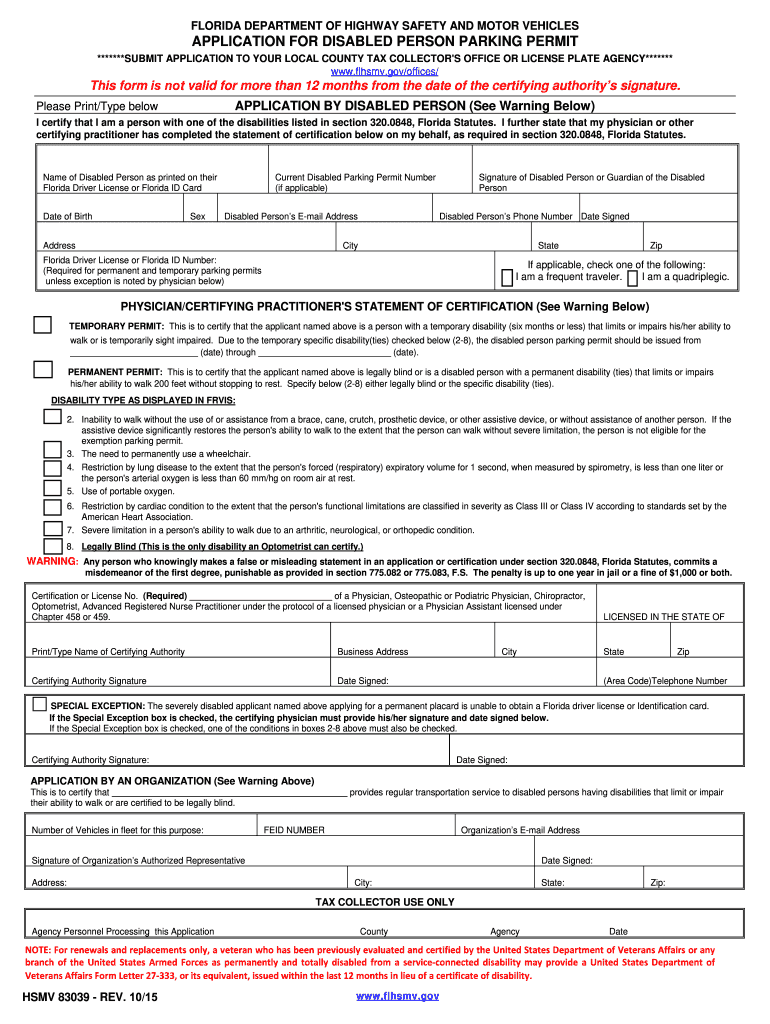
To apply for a disabled parking permit, you will need to complete the Application for Disabled Person Parking Plate/Placard (HSMV 83007) form. This form requires specific information from both the applicant and a certifying medical professional.
The Medical Certification Section
A crucial part of the application is the medical certification section, which must be completed and signed by a licensed physician, osteopathic physician, chiropractor, podiatric physician, or the administrator of a VA medical facility. This medical professional will assess your condition and certify that you meet the eligibility criteria for a disabled parking permit. They will need to document your specific disability and how it impacts your mobility.
It is vital to be upfront with your doctor about the difficulties you face with walking and parking. The more detailed and accurate the medical certification, the smoother your application process will be. This is where your lifestyle choices, such as planning a visit to the Everglades National Park or attending a performance at the Broward Center for the Performing Arts, will be directly impacted by the accessibility provided by the permit.
Proof of Identity and Residency
In addition to the medical certification, you will typically need to provide proof of your identity and Florida residency. Acceptable forms of identification usually include a valid Florida driver’s license, an identification card, or a passport. For proof of residency, documents such as utility bills, rental agreements, or a Florida voter registration card may be accepted.
Types of Disabled Parking Permits
Florida offers several types of disabled parking permits, catering to different needs and durations:
- Permanent Parking Permit: Issued to individuals with a permanent disability. These permits are valid for four years and can be renewed.
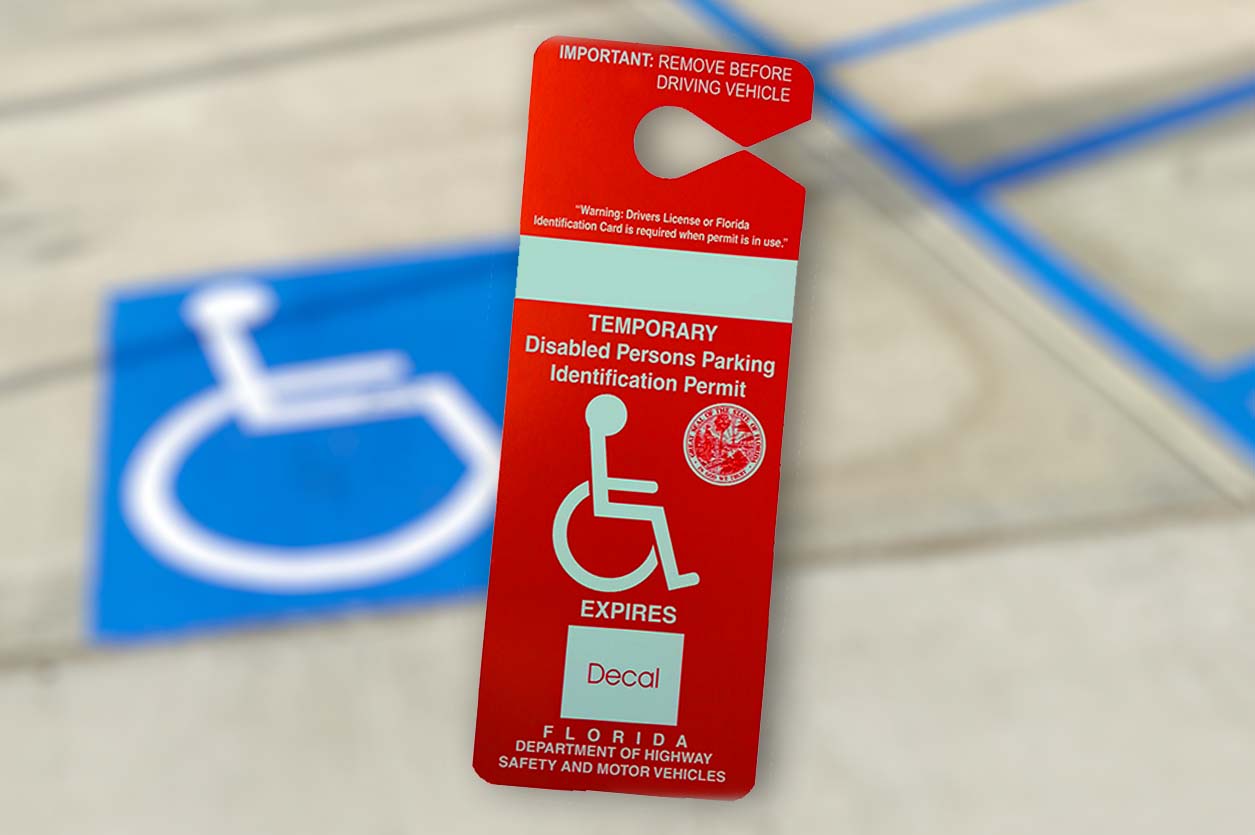
- Temporary Parking Permit: Issued to individuals with a temporary disability expected to last for more than 90 days but less than a year. These permits are valid for a maximum of six months and can be renewed once.
- Disabled Veteran (DV) License Plate: For eligible disabled veterans, a DV license plate can be issued, which exempts the vehicle from toll charges on Florida toll roads and bridges. This is a significant benefit for veterans who frequently travel across the state.
- Long-Term Visitor’s Parking Permit: For non-Florida residents visiting the state for an extended period (up to six months), who possess a valid disabled parking permit from their home jurisdiction, Florida offers a reciprocal arrangement. They can obtain a temporary disabled parking permit.
For individuals planning a longer stay in Florida, perhaps at a resort like the Gaylord Palms Resort & Convention Center or exploring attractions in Tampa, understanding these permit types ensures you have the right documentation for your needs.
The Application Process: Step-by-Step
Applying for your disabled parking permit in Florida involves a few key steps to ensure all requirements are met. While the process is designed to be accessible, careful attention to detail will prevent delays.
Step 1: Obtain the Application Form and Medical Certification
The first step is to download the Application for Disabled Person Parking Plate/Placard (HSMV 83007) form from the FLHSMV website or pick one up at your local county tax collector’s office. Ensure you have the most current version of the form.
Step 2: Visit Your Physician for Medical Certification
Schedule an appointment with your physician or other licensed medical professional. Bring the application form with you and explain your condition and its impact on your mobility. The physician will complete the medical certification section, attesting to your eligibility. This is a crucial step, so be prepared to discuss your limitations thoroughly.
Step 3: Gather Supporting Documents
Collect all necessary supporting documents, including proof of identity and residency, if required by your local county tax collector’s office. Each county may have slightly different requirements for supporting documentation beyond the core state requirements.
Step 4: Submit Your Application
You can submit your completed application and all supporting documents in one of the following ways:
- In Person: Visit your local county tax collector’s office. This is often the quickest way to get your permit, as they can process your application on the spot and issue the permit or plate immediately. Be sure to check the operating hours and any specific requirements of your local office before your visit.
- By Mail: In some cases, you may be able to submit your application by mail. However, this method can take longer for processing and issuance. It’s best to confirm with your local tax collector’s office if this option is available and what the expected turnaround time is.
When submitting in person, you will typically pay a nominal fee for the permit or plate. The fee for a disabled parking placard is typically around $15 for a permanent placard and $15 for a temporary placard. Disabled veteran plates have different fee structures, often including a one-time fee for the plate itself.
Step 5: Receive Your Permit
Once your application is approved, you will receive your disabled parking placard or license plate. Permanent placards are typically mailed within a few weeks if you don’t receive them immediately at the tax collector’s office. Temporary placards are usually issued on the spot.
Utilizing Your Disabled Parking Permit in Florida
Having a disabled parking permit significantly enhances your ability to enjoy Florida‘s diverse attractions and amenities. Understanding how to use your permit correctly and knowing your rights and responsibilities is essential.
Where Can You Park with Your Permit?
Your Florida disabled parking permit allows you to park in any parking space designated with the international symbol of access, commonly known as the wheelchair symbol. These spaces are strategically located to provide the shortest possible walking distance to building entrances. They are typically found in:
- Shopping centers and retail areas: Near entrances to stores and malls.
- Airports: Providing closer access to terminals.
- Tourist attractions: Such as Walt Disney World Resort, Universal Orlando Resort, and SeaWorld Orlando.
- Hotels and resorts: Including properties like the Grand Floridian Resort & Spa or JW Marriott Cancun Resort & Spa (though the latter is in Mexico, it illustrates the type of amenity).
- Restaurants and entertainment venues: Ensuring easier access to dining and cultural experiences.
- Public parks and recreational facilities: Including places like Biscayne National Park or Dry Tortugas National Park.
Understanding the Rules and Regulations
While the permit grants significant privileges, it also comes with responsibilities:
- Displaying the Permit: The placard must be hung from the rearview mirror when the vehicle is parked in a designated disabled parking space. It should not be displayed when the vehicle is in motion. License plates must be clearly visible on the rear of the vehicle.
- Authorized Use: The permit is issued to the individual with the disability and can only be used when that person is driving or being transported in the vehicle. It is illegal to allow someone else to use your permit.
- Reciprocity: Florida recognizes disabled parking permits issued by other states and countries. If you have a valid permit from your home jurisdiction, you can use it in Florida.
- Penalties for Misuse: Misusing a disabled parking permit is a serious offense. It can result in fines, the revocation of the permit, and even criminal charges. Always ensure you are legally parked and using your permit appropriately.
For visitors planning a trip to Florida, familiarize yourself with these rules to avoid any inconveniences. This ensures your stay at a family-friendly resort like the Beaches Turks & Caicos Resort Villages & Spa (though in the Caribbean, it represents the type of family focus) or exploring historical sites in St. Augustine is as seamless as possible.
Tips for a Smoother Travel Experience
- Plan Ahead: When visiting popular destinations like Key West or Miami Beach, research accessible parking options in advance. Many attractions have dedicated accessibility services that can provide further assistance.
- Combine with Accessible Accommodation: When booking hotels or resorts, specifically look for properties that offer accessible rooms and amenities. Websites often have filters for accessibility features.
- Utilize Local Resources: Familiarize yourself with the Florida Department of Economic Opportunity or local disability services organizations. They can provide additional information and resources for travelers with disabilities.
- Communicate Your Needs: Don’t hesitate to communicate your needs to staff at hotels, attractions, or restaurants. Most establishments are eager to accommodate and ensure a positive experience for all guests.
By understanding and correctly utilizing your disabled parking permit, you can fully embrace the beauty, culture, and adventure that Florida has to offer, making your travel experiences more accessible and enjoyable. Whether you’re a snowbird enjoying the winter months or a tourist on a short vacation, this permit is an invaluable tool for navigating the state with greater ease and independence.
LifeOutOfTheBox is a participant in the Amazon Services LLC Associates Program, an affiliate advertising program designed to provide a means for sites to earn advertising fees by advertising and linking to Amazon.com. Amazon, the Amazon logo, AmazonSupply, and the AmazonSupply logo are trademarks of Amazon.com, Inc. or its affiliates. As an Amazon Associate we earn affiliate commissions from qualifying purchases.