
Navigating the intricacies of obtaining a hardship license in Florida can be a complex yet achievable process for those facing specific life circumstances. This specialized driver’s license, often referred to as a “Business Purpose Only” or “Employment Purpose Only” license, allows individuals whose driving privileges have been suspended or revoked to operate a vehicle for essential needs, primarily employment, education, or medical appointments. Understanding the eligibility criteria, the application process, and the supporting documentation required is paramount to a successful outcome.
Understanding Hardship Licenses in Florida
A hardship license is not a standard driver’s license and comes with significant restrictions. It is a temporary relief granted by the Florida Department of Highway Safety and Motor Vehicles (FLHSMV) to individuals who demonstrate a compelling need to drive for legitimate, non-recreational purposes. The primary objective of this license is to prevent undue hardship on individuals who might otherwise be unable to maintain their employment, pursue educational opportunities, or attend critical medical treatments due to the suspension of their regular license.
Eligibility Criteria for a Hardship License
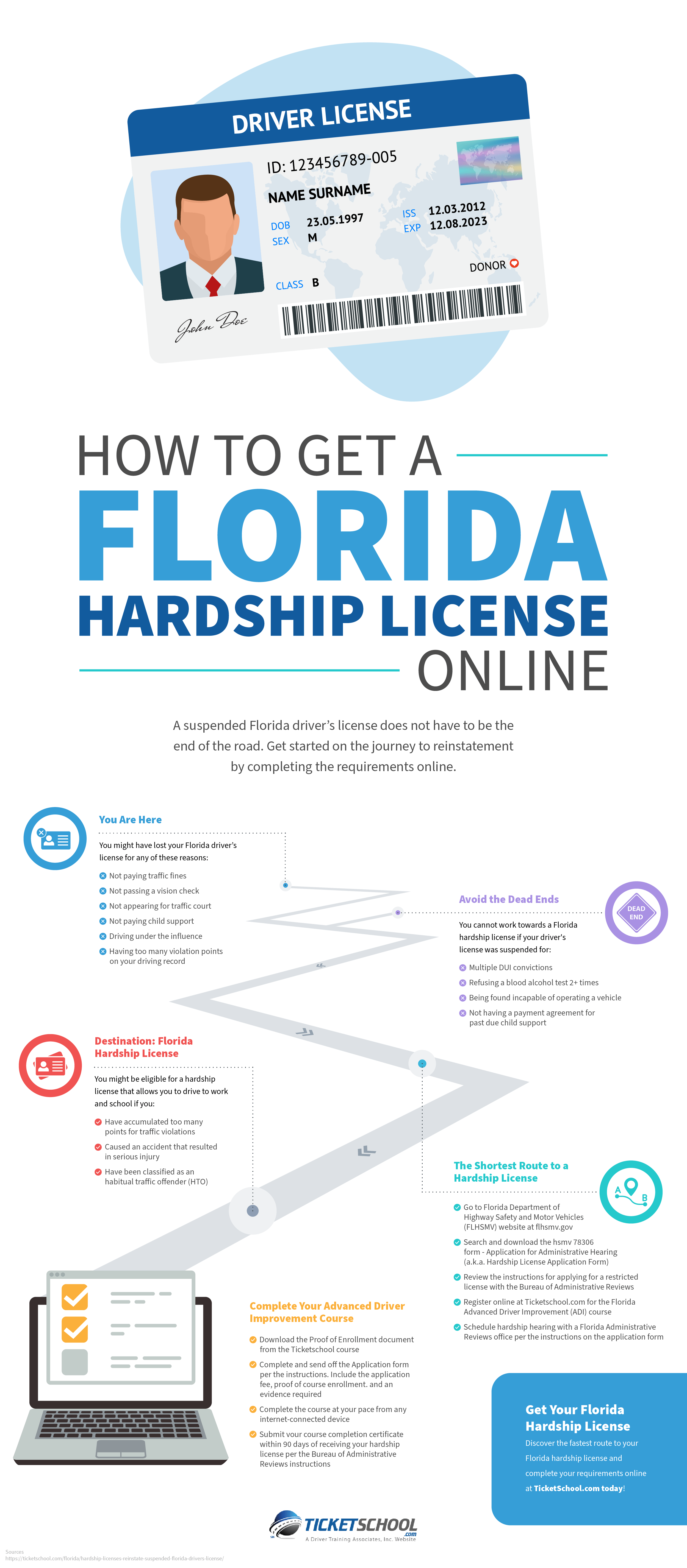
Eligibility for a hardship license in Florida is not automatic and depends on the specific reason for the license suspension or revocation, as well as the applicant’s driving history. Generally, the FLHSMV will consider applications in the following circumstances:
- Employment: The applicant must prove that their ability to maintain employment is directly jeopardized by the suspension of their driver’s license. This often requires demonstrating that public transportation is unavailable or insufficient for their commute.
- Education: If attending school is a requirement for employment advancement or is a primary educational pursuit, a hardship license may be granted. Similar to employment, the applicant must show that alternative transportation is not feasible.
- Medical Appointments: For essential medical treatments, including regular doctor visits or therapy sessions for oneself or a dependent, a hardship license can be issued. Proof of the medical necessity and the inability to access transportation is required.
- Family Support: In certain situations, individuals may qualify if they are the sole provider for a family and require driving to fulfill essential responsibilities, such as taking children to school or necessary appointments.
It is crucial to note that individuals with certain offenses, such as DUI convictions involving serious bodily injury or death, may be ineligible for a hardship license. The severity and nature of the offense leading to the suspension play a significant role in the FLHSMV’s decision.
Types of Hardship Licenses
Florida offers a few variations of hardship licenses, each tailored to specific needs:
- Business Purpose Only (BPO): This is the most common type of hardship license. It permits driving to and from work, work-related activities, and educational institutions.
- Employment Purpose Only (EPO): Similar to BPO, but strictly limited to travel to and from the place of employment and for essential job duties.
- Medical/Educational Purposes: This type of license is specifically for attending necessary medical appointments or educational courses.
The specific type of license granted will be determined by the FLHSMV based on the applicant’s stated needs and the evidence provided.
The Application Process for a Florida Hardship License
Obtaining a hardship license in Florida involves a structured process that requires careful preparation and adherence to specific procedures. Missing even a single step or submitting incomplete documentation can lead to delays or outright denial.
Step 1: Determine Your Eligibility and the Reason for Suspension
Before embarking on the application journey, it’s vital to confirm your eligibility. This involves understanding the exact reason your driver’s license was suspended or revoked. Common reasons include DUIs, accumulating too many points on your driving record, failure to appear in court, or failure to pay traffic fines. Each situation may have different requirements for hardship license eligibility. For example, a first-time DUI offense might allow for a hardship license after a waiting period, while multiple DUIs or other severe infractions could make you ineligible.
Step 2: Gather Necessary Documentation
The FLHSMV requires comprehensive documentation to support your hardship license application. The exact requirements can vary, but generally include:
- Proof of Identity and Residency: Valid Florida identification (e.g., driver’s license or ID card), passport, and proof of Florida residency (e.g., utility bills, lease agreements).
- Proof of Suspension/Revocation: A copy of the suspension or revocation order.
- Supporting Documentation for Hardship:
- For Employment: A letter from your employer on company letterhead stating your job title, the necessity of your driving for employment, your work schedule, and confirming that public transportation is not a viable alternative. If you are self-employed, you may need business registration documents and invoices.
- For Education: A letter from your educational institution confirming enrollment, your course schedule, and the necessity of your presence.
- For Medical Appointments: A letter from your physician or medical provider detailing the necessity of your appointments, their frequency, and any specialized transportation requirements. If you are the sole caregiver for a dependent, documentation supporting this role may also be required.
- SR-22 Form: Proof of financial responsibility, which is an insurance rider that your insurance company files with the state, indicating you have obtained specific coverage.
- Completed Application Forms: The FLHSMV will have specific application forms that must be filled out accurately and completely.
Step 3: Schedule an Appointment and Visit a Driver License Service Center
Once you have gathered all the required documents, the next step is to schedule an appointment at a Florida Driver License Service Center. It is highly recommended to book an appointment in advance, as walk-in services can be significantly delayed. During your appointment, you will submit your application and supporting documents, pay the required fees, and potentially undergo vision and knowledge tests, depending on the nature of your suspension.
Step 4: Attend the Hearing (If Required)
In some cases, particularly for more serious offenses or complex situations, you may be required to attend a formal hearing before an administrative law judge. This hearing allows you to present your case in person and argue why a hardship license should be granted. Proper preparation, including understanding the legal framework and presenting a clear, compelling case, is crucial for success at this stage.
Step 5: Await the Decision and Adhere to Restrictions
After submitting your application and attending any required hearings, the FLHSMV will review your case and make a decision. If approved, you will be issued a hardship license. It is imperative to strictly adhere to all restrictions associated with the license. These typically include limitations on where you can drive, when you can drive, and the purposes for which you can drive. Violating these restrictions can lead to severe penalties, including the permanent denial of a hardship license and further legal consequences.
Navigating Common Challenges and Considerations
The process of obtaining a hardship license can present various challenges, and understanding these potential hurdles can help applicants navigate them more effectively.
Dealing with License Suspensions for DUI Offenses
Driving Under the Influence (DUI) offenses are among the most common reasons for license suspensions in Florida, and they often come with specific pathways to obtaining a hardship license. For a first-time DUI conviction, applicants typically must:
- Complete a DUI program.
- Serve a mandatory period of license suspension (e.g., 30 days without any driving privileges, followed by eligibility for a hardship license).
- File an SR-22 form.
Subsequent DUI offenses may have longer mandatory waiting periods, stricter eligibility requirements, or may even disqualify individuals from obtaining a hardship license altogether. It is essential to consult with an attorney specializing in DUI cases to understand the specific regulations applicable to your situation.
The Importance of Legal Counsel
For individuals facing complex cases, multiple offenses, or significant legal challenges, seeking legal counsel from an attorney experienced in Florida traffic law and driver’s license reinstatement is highly recommended. An attorney can:
- Explain the intricacies of Florida’s driving laws.
- Advise on the best course of action to strengthen your application.
- Assist in gathering the necessary documentation.
- Represent you in hearings before the FLHSMV or an administrative law judge.
- Help you understand the potential consequences of non-compliance.
While the process can be navigated independently, legal representation can significantly increase the likelihood of a successful outcome, especially in cases involving serious infractions.
Understanding the Fees and Costs
There are various fees associated with obtaining a hardship license. These can include:
- Application fees.
- Reinstatement fees for your original license once the suspension period is over.
- Fees for DUI programs and evaluations.
- Costs associated with obtaining an SR-22 insurance policy.
- Legal fees, if you choose to hire an attorney.
It’s important to budget for these expenses as part of the hardship license application process.
Maintaining Compliance and Reinstatement
Once a hardship license is granted, maintaining strict compliance with all its terms and conditions is paramount. Any violation can result in the immediate revocation of the hardship license and further legal penalties. After the suspension period for your original license has concluded, you will typically need to pay additional reinstatement fees to regain full driving privileges. Successfully navigating the hardship license process is a step towards reclaiming your full driving rights, but it requires diligence, honesty, and a commitment to following all regulations.
LifeOutOfTheBox is a participant in the Amazon Services LLC Associates Program, an affiliate advertising program designed to provide a means for sites to earn advertising fees by advertising and linking to Amazon.com. Amazon, the Amazon logo, AmazonSupply, and the AmazonSupply logo are trademarks of Amazon.com, Inc. or its affiliates. As an Amazon Associate we earn affiliate commissions from qualifying purchases.