
Navigating the process of obtaining a Florida driver’s license can seem like a complex undertaking, especially for those new to the state or new to driving. Whether you are a seasoned driver relocating from another state or a teenager embarking on your driving journey, understanding the requirements, necessary documentation, and the steps involved is crucial for a smooth and efficient experience. This guide aims to demystify the process, providing a comprehensive overview of how to obtain your Florida license, ensuring you’re well-prepared for your visit to a Florida Department of Highway Safety and Motor Vehicles (FLHSMV) service center.
Understanding Florida Driver’s License Requirements
The requirements for obtaining a Florida driver’s license vary based on your age, whether you are a new driver or transferring an existing license, and your immigration status. The FLHSMV oversees all licensing procedures in the Sunshine State. It’s essential to gather the correct documentation beforehand to avoid unnecessary delays.
New Drivers Under 18 Years Old (Graduated Driver Licensing Program)
For individuals under the age of 18, Florida implements a Graduated Driver Licensing (GDL) program designed to gradually introduce young drivers to the responsibilities of driving. This program consists of three stages:
Stage 1: Learner’s Permit
To obtain a learner’s permit, applicants must:
- Be at least 15 years old.
- Complete a certified traffic law and substance abuse education course (TLSAE). This course can often be completed online.
- Pass a knowledge (written) exam covering traffic laws and road signs.
- Pass a vision exam.
- Provide required identification and Social Security number.
- Have a parent or legal guardian present to sign the application.
Once the learner’s permit is issued, the permit holder must adhere to specific restrictions:
- The permit holder must drive with a licensed driver who is at least 21 years old and occupies the front passenger seat.
- The permit holder cannot drive between 11 p.m. and 6 a.m., unless accompanied by a licensed driver who is 21 years or older and occupies the front passenger seat, or if the driving is for work or school-related activities with proper documentation.
Stage 2: Restricted Driver License
After holding a learner’s permit for at least 12 months (or until turning 18, whichever comes first), and if the applicant is at least 16 years old, they can apply for a restricted driver’s license. This stage requires:
- Completion of at least 50 hours of supervised driving experience, with 10 of those hours being at night. A licensed driver aged 21 or older must supervise.
- Passing a driving skills test (road test).
- Maintaining a clean driving record during the permit phase.
With a restricted license, individuals under 17 can drive unsupervised but are prohibited from driving between 11 p.m. and 6 a.m., except for work or school-related purposes with documentation. Those 17 and older can drive without these time restrictions.
Stage 3: Unrestricted Driver License
Once an individual turns 18 years old, their restricted driver’s license automatically converts to a Class E (unrestricted) driver’s license, provided all previous requirements have been met.
New Drivers 18 Years and Older
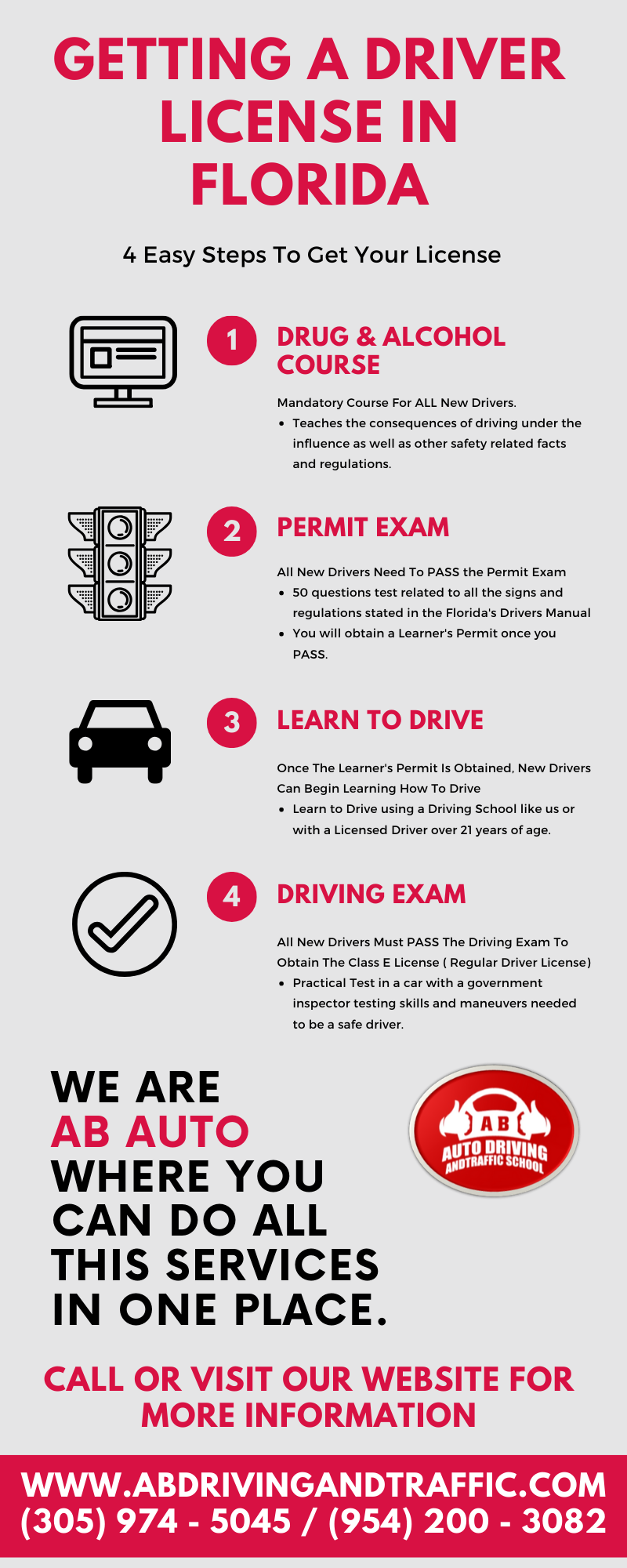
For adults obtaining a Florida driver’s license for the first time, the process is more streamlined, though still requires diligence in preparation. The primary requirements include:
- Completing a certified traffic law and substance abuse education course (TLSAE).
- Passing a knowledge (written) exam.
- Passing a vision exam.
- Providing required identification and Social Security number.
- Passing a driving skills test (road test).
Upon successful completion of all these steps, you will be issued a Class E driver’s license.
Transferring an Out-of-State Driver’s License
If you are moving to Florida from another U.S. state or territory, you have 30 days to obtain a Florida driver’s license. The process is generally simpler than obtaining a new license:
- You will need to surrender your valid out-of-state driver’s license.
- Provide proof of identity, Social Security number, and residential address in Florida.
- Pass a vision exam.
- You are typically exempt from taking the written knowledge exam and the driving skills test if your out-of-state license is valid and current.
You will need to visit an FLHSMV service center to complete the transfer.
Transferring an International Driver’s License
Individuals with a valid driver’s license issued by a foreign country will have different requirements. Generally, you will need to:
- Provide proof of identity, Social Security number, and residential address in Florida.
- Pass a vision exam.
- Pass a knowledge (written) exam.
- Pass a driving skills test (road test).
If your international license is not in English, you may need to provide a certified translation. It’s advisable to check the specific requirements for your country of origin with the FLHSMV as there can be reciprocity agreements with certain countries that might alter the testing requirements.
Documentation Required for Your Florida License Application
Gathering the correct documentation is paramount to a successful application. The FLHSMV requires proof of identity, residential address, and Social Security number. You will need to present original documents; photocopies are generally not accepted.
Proof of Identity
You will need to provide one acceptable proof of identity document. Examples include:
- Original or certified copy of a birth certificate (issued by a government agency).
- Valid U.S. Passport.
- Certificate of Citizenship or Naturalization.
Proof of Social Security Number
You must present one document that shows your Social Security number. This can be:
- A Social Security card.
- A W-2 form.
- A pay stub with your Social Security number.
Proof of Residential Address
You will need to present two different documents showing your current residential address in Florida. Examples include:
- Utility bills (water, electricity, gas, landline phone).
- Bank statements.
- Mortgage statements or rental agreements.
- Deeds or titles to residential property.
- Mail from a federal or state government agency.
Ensure that the documents are current, typically dated within the last 60 days for utility bills and bank statements.
Proof of U.S. Citizenship or Legal Presence
In addition to proof of identity, you must provide proof of your lawful presence in the United States. This can include:
- U.S. Birth Certificate.
- Valid U.S. Passport.
- Consular Report of Birth Abroad.
- Certificate of Citizenship or Naturalization.
- Valid Permanent Resident Card.
- Alien Registration Receipt Card.
For non-U.S. citizens, specific documentation related to your visa or immigration status will be required. It is highly recommended to visit the FLHSMV website or contact them directly to confirm the most up-to-date list of acceptable documents for your specific situation.
The Licensing Process: Steps to Take
Once you have gathered all necessary documentation and completed any required courses, the next step is to visit an FLHSMV service center. It’s advisable to schedule an appointment online beforehand to minimize wait times.
Step 1: Visit an FLHSMV Service Center
Locate the nearest FLHSMV service center or a contracted third-party provider. Be prepared for potential wait times, especially during peak hours.
Step 2: Present Your Documentation and Application
At the service center, you will present your completed application form (if not filled out online) and all required original documents for verification. A customer service representative will review your paperwork.
Step 3: Pass the Vision Exam
A vision screening will be conducted to ensure your eyesight meets the minimum requirements for driving. If you wear corrective lenses, ensure you have them with you.
Step 4: Take the Knowledge (Written) Exam
This exam tests your understanding of Florida traffic laws, road signs, and safe driving practices. Study the official Florida Driver’s Handbook, which is available online and at service centers. The exam is typically administered on a computer. For those who do not pass on the first attempt, there is usually a waiting period before a re-test is permitted.
Step 5: Pass the Driving Skills Test (Road Test)
The road test evaluates your ability to safely operate a vehicle. You will need to provide a vehicle that is properly registered, insured, and in good working condition for the test. The examiner will assess your maneuvers, adherence to traffic laws, and overall driving competence. Be sure to practice common driving scenarios, including parking, lane changes, and navigating intersections.
Step 6: Receive Your Driver’s License
Upon successful completion of all exams and verification of your documents, you will be issued a temporary driver’s license. Your permanent driver’s license will be mailed to your Florida address within a few weeks. Ensure your mailing address is correct when applying.
Tips for a Smooth Licensing Experience
Preparing thoroughly can significantly ease the process of obtaining your Florida license.
- Study the Florida Driver’s Handbook: This is your most important resource for understanding traffic laws and preparing for the knowledge exam.
- Practice Driving: For those taking the road test, ample practice in various conditions is essential. Familiarize yourself with the vehicle you will use for the test.
- Gather Documents Early: Collect all necessary original documents well in advance of your visit. Double-check the FLHSMV website for the most current list of acceptable proofs.
- Schedule an Appointment: This can save you a considerable amount of time waiting at the service center.
- Be Patient and Prepared: The process can take time, so allocate sufficient time for your visit. Be polite and cooperative with the staff.
- Understand the GDL Program: For applicants under 18, fully understanding the stages and restrictions of the Graduated Driver Licensing program is crucial for compliance.
Obtaining a Florida driver’s license is a significant step towards independence and mobility. By understanding the requirements, preparing your documentation, and following the outlined steps, you can navigate this process efficiently and confidently, enabling you to enjoy all that the state has to offer.
LifeOutOfTheBox is a participant in the Amazon Services LLC Associates Program, an affiliate advertising program designed to provide a means for sites to earn advertising fees by advertising and linking to Amazon.com. Amazon, the Amazon logo, AmazonSupply, and the AmazonSupply logo are trademarks of Amazon.com, Inc. or its affiliates. As an Amazon Associate we earn affiliate commissions from qualifying purchases.