
For many, the mention of Arizona conjures images of breathtaking desert landscapes, vibrant sunsets, and iconic landmarks like the Grand Canyon. But beyond its natural splendor and the allure for tourists seeking unforgettable experiences, Arizona is also rapidly emerging as a dynamic hub for entrepreneurs, digital nomads, and lifestyle businesses. Whether you dream of launching a boutique short-term rental in Sedona, guiding adventure tours through the Sonoran Desert, or establishing a base for your remote enterprise while enjoying the state’s incredible quality of life, understanding how to legally structure your venture is paramount. The Limited Liability Company (LLC) stands out as an exceptionally popular and versatile business entity, offering a blend of personal asset protection and operational flexibility that aligns perfectly with the agile spirit of modern entrepreneurship. This comprehensive guide will walk you through the essential steps of opening an LLC in Arizona, tailored to individuals looking to merge their travel, lifestyle, and business aspirations within the Grand Canyon State.
Arizona’s Allure for Entrepreneurs and Lifestyle Ventures
Arizona isn’t just a destination; it’s a lifestyle. Its diverse geography, from the saguaro-dotted landscapes around Phoenix and Tucson to the cooler pines of Flagstaff and the mystical red rocks of Sedona, offers a unique backdrop for both personal enrichment and business innovation. The state’s consistent sunshine, growing urban centers, and thriving tourism industry create a fertile ground for a multitude of ventures, particularly those centered around hospitality, experiences, and remote work.
The Grand Canyon State: A Hub for Tourism and Hospitality
The robust tourism sector in Arizona is a major draw for aspiring business owners. Millions flock annually to witness wonders like the Grand Canyon, explore the vibrant arts scene in Scottsdale, or immerse themselves in the rich cultural tapestry of Tucson. This constant influx of visitors fuels demand for everything from unique accommodations and guided excursions to local culinary experiences and specialized travel services. Entrepreneurs can tap into this market by establishing businesses that offer memorable experiences, whether it’s a luxury glamping retreat near Monument Valley, an adventure photography tour of Antelope Canyon, or a concierge service catering to high-end travelers exploring the boutique shops and galleries of Old Town Scottsdale. Major cities like Mesa, Chandler, Glendale, and Tempe also present significant opportunities, with growing populations and diverse economies supporting a wide range of consumer and business services. Historic towns such as Jerome and Bisbee, along with recreational havens like Lake Havasu City, further diversify the business landscape, appealing to niche markets and specialty tourism.
Why an LLC is Your Best Bet for Arizona-Based Businesses
Choosing the right legal structure is a foundational step for any business. For most small to medium-sized enterprises, especially those in the travel, hospitality, or lifestyle sectors, the LLC offers an optimal balance of benefits:
- Personal Asset Protection: This is arguably the most significant advantage. An LLC legally separates your personal assets (your home, car, personal bank accounts) from your business liabilities. Should your business face legal action or debt, your personal wealth is generally protected. This peace of mind is invaluable, especially in service-oriented industries where unforeseen circumstances can arise.
- Credibility and Professionalism: Operating as an LLC can enhance your business’s image. It signals to clients, partners, and suppliers that you are a legitimate and professionally structured entity, which can be particularly beneficial when seeking bookings for accommodation, partnerships with local attractions, or securing funding.
- Tax Flexibility: LLCs enjoy “pass-through” taxation by default, meaning business profits and losses are passed through to the owners’ personal income without being taxed at the company level (avoiding “double taxation”). However, an LLC can also elect to be taxed as an S-corporation or C-corporation, offering strategic tax planning opportunities depending on your business’s profitability and owner compensation structure.
- Simplicity and Ease of Formation: Compared to corporations, LLCs are relatively straightforward to form and maintain, with fewer ongoing compliance requirements. This makes them accessible for first-time entrepreneurs and those who prefer to focus more on their business operations and less on complex administrative tasks.
- Adaptability: An LLC is highly adaptable, suitable for a single owner (single-member LLC), multiple partners, or even a blend of active and passive investors. This flexibility makes it ideal for everything from solo tour guides to multi-property short-term rental operations.
The Step-by-Step Guide to Forming Your Arizona LLC
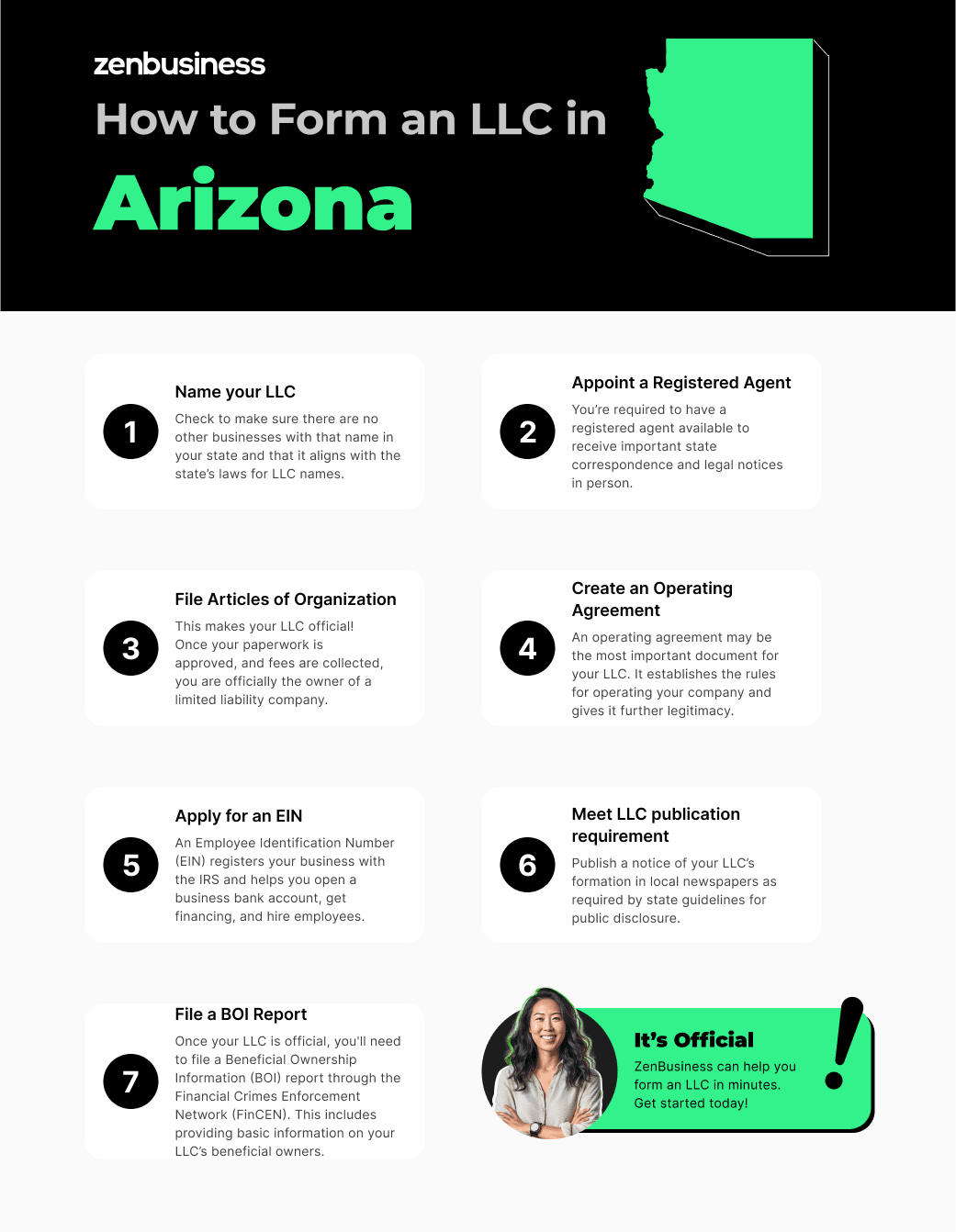
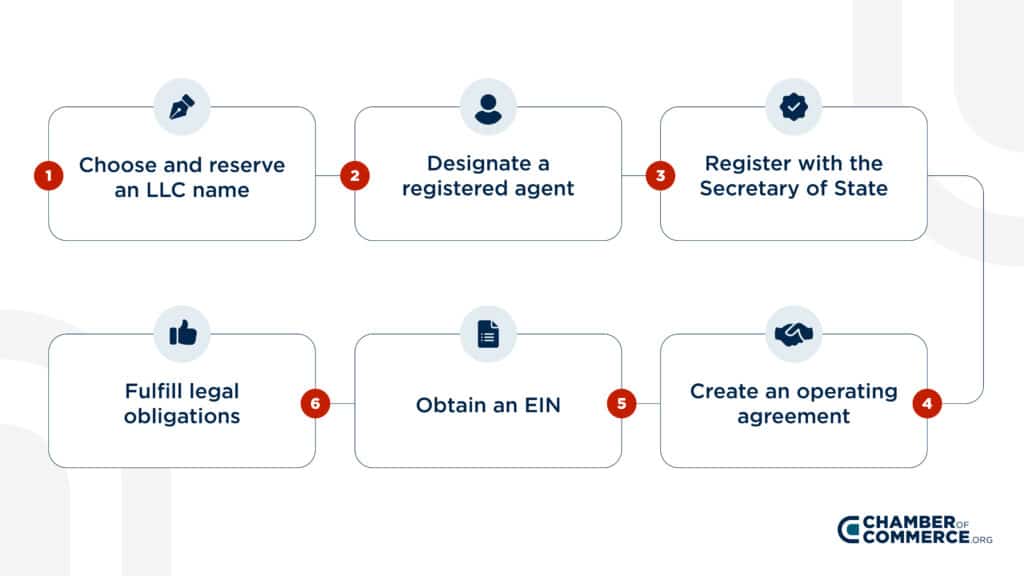
Establishing your LLC in Arizona involves a series of critical steps, each designed to ensure your business is legally compliant and well-positioned for success.
Step 1: Choose a Unique Business Name and File Your Articles of Organization
Your LLC’s name is its identity. It should be memorable, reflect your brand, and comply with Arizona naming conventions. By law, your LLC name must include “Limited Liability Company,” “Limited Company,” or their abbreviations (LLC, L.L.C., LC, L.C.). Crucially, the name must be distinguishable from other registered entities in Arizona. Before settling, you’ll want to perform a name availability search through the Arizona Corporation Commission (ACC) website to ensure your desired name hasn’t already been taken. It’s often wise to have a few options in mind.
Once you have a unique name, the cornerstone of forming your LLC is filing the Articles of Organization with the Arizona Corporation Commission. This document officially registers your LLC with the state and requires basic information such as:
- Your LLC’s name and statutory agent’s name and address.
- The principal address of the LLC.
- Whether the LLC will be managed by its members or by a manager.
- The effective date of the LLC.
Upon filing, a publication requirement is unique to Arizona. All newly formed LLCs in Maricopa and Pima Counties must publish a “Notice of Filing” in an approved newspaper for three consecutive publications. For LLCs outside these two counties, publication is required in the county of the statutory agent’s address. This step ensures public notice of your business’s formation.
Step 2: Appoint a Statutory Agent
Every LLC in Arizona must designate a Statutory Agent (sometimes called a Registered Agent). This individual or entity acts as your LLC’s official point of contact for receiving legal documents, state correspondence, and service of process. The Statutory Agent must have a physical street address in Arizona (not a P.O. Box) and be available during regular business hours. You can serve as your own Statutory Agent if you meet these criteria, but many entrepreneurs opt to use a professional statutory agent service. This offers several benefits, including:
- Privacy: Keeping your personal address off public records.
- Reliability: Ensuring that crucial documents are always received promptly, even if you’re traveling or away from your primary business location.
- Compliance: Avoiding potential penalties for missed mail or deadlines.
This is particularly beneficial for digital nomads or those who frequently travel, ensuring their compliance obligations are consistently met.
Step 3: Craft Your Operating Agreement
While not legally required to file with the Arizona Corporation Commission, an Operating Agreement is arguably the most vital internal document for your LLC. It acts as a contract among the members (owners) of the LLC, outlining the business’s operational guidelines, ownership percentages, member responsibilities, voting rights, profit and loss distribution, and procedures for adding or removing members.
For a single-member LLC, an Operating Agreement is still highly recommended as it reinforces the limited liability protection and provides a clear framework for your business operations, especially when dealing with banks or potential investors. For multi-member LLCs, it’s essential for preventing disputes and ensuring a clear understanding of each member’s role and expectations. Think of it as your LLC’s internal constitution, safeguarding your investment and defining the path forward.
Step 4: Obtain an EIN from the IRS
An Employer Identification Number (EIN), also known as a Federal Tax Identification Number, is a unique nine-digit number assigned by the Internal Revenue Service (IRS). It’s essentially a social security number for your business. You will need an EIN if your LLC has more than one member or if you plan to hire employees. Even if you’re a single-member LLC without employees, obtaining an EIN is often beneficial for:
- Opening a business bank account.
- Filing certain tax forms.
- Building business credit.
You can apply for an EIN for free directly on the IRS website, and the process is typically quick and straightforward.
Step 5: Fulfill State and Local Licensing Requirements
After forming your LLC, your next step is to ensure your business complies with all necessary state and local licensing and permitting requirements. These vary significantly depending on your industry and location within Arizona.
For businesses in the travel and tourism sector, this could involve:
- Arizona Transaction Privilege Tax (TPT) License: If you will be selling goods or services that are subject to sales tax (like accommodations, retail, or certain services), you’ll need to register with the Arizona Department of Revenue to obtain a TPT license. This is crucial for short-term rental operators, tour companies, and souvenir shops.
- City/County Business Licenses: Many cities in Arizona, such as Phoenix, Scottsdale, Tucson, and Flagstaff, require businesses operating within their jurisdictions to obtain a general business license. Always check with the city clerk’s office or planning department of your specific operating location.
- Specific Industry Permits:
- Short-Term Rentals: If you plan to operate vacation rentals, you’ll need to understand local ordinances that regulate short-term rental properties. While Arizona generally supports short-term rentals, individual cities might have specific registration requirements, fees, or occupancy limits.
- Tour Operators: Businesses offering guided tours (hiking, jeep tours, wine tours) may require specific permits, insurance, and possibly certifications depending on the activities involved and the areas of operation (e.g., national parks like Saguaro National Park or state lands).
- Food & Beverage: If your lifestyle business involves serving food or beverages (e.g., a pop-up cafe, catering for events, a small B&B), you’ll need health permits from the county health department.
Always research the specific requirements for your business type and location to avoid future legal issues or fines.
Leveraging Your Arizona LLC for Travel and Lifestyle Opportunities
Once your LLC is properly established, Arizona opens up a world of possibilities for travel and lifestyle-oriented entrepreneurs. The state’s unique charm attracts a diverse audience, providing ample opportunity for innovative businesses.
Short-Term Rentals and Accommodation Ventures
With its year-round appeal, Arizona is a prime market for short-term rental properties. An LLC is the ideal structure for managing these assets, providing liability protection against guest injuries or property damage, and streamlining financial management. Imagine owning a charming casita in Sedona that offers stunning red rock views, a modern condo in Downtown Phoenix catering to business travelers, or a luxurious villa in Scottsdale near world-class resorts like Sanctuary Camelback Mountain, A Gurney’s Resort & Spa or The Boulders Resort & Spa Scottsdale, Curio Collection by Hilton. Your LLC can own and operate these properties, allowing you to build a portfolio of unique accommodations that cater to various travel styles and budgets. From budget-friendly stays near the Petrified Forest National Park to luxury suites in resort towns, the opportunities are vast. Consider the potential for specialized offerings, such as pet-friendly rentals, wellness retreats, or homes equipped for remote work, further enhancing your appeal to specific traveler segments. Iconic establishments like the Fairmont Scottsdale Princess, JW Marriott Scottsdale Camelback Inn Resort & Spa, The Ritz-Carlton, Dove Mountain, Enchantment Resort, L’Auberge de Sedona, and The Wigwam set a high bar, but smaller, unique properties can carve out their own successful niches.
Tour Operations and Experience-Based Businesses
Arizona’s diverse landscapes and rich cultural heritage provide a fantastic canvas for experience-based businesses. An LLC can confidently operate adventure tours, cultural excursions, culinary experiences, or wellness retreats. Imagine organizing guided hikes up Camelback Mountain, photography workshops at Papago Park, personalized art tours to the Heard Museum or Musical Instrument Museum in Phoenix, or botanical explorations of the Desert Botanical Garden. Perhaps you envision a business that takes guests on spiritual journeys through Sedona’s vortexes, or an architectural tour showcasing Frank Lloyd Wright’s Taliesin West. From off-roading adventures near Canyon de Chelly National Monument to stargazing experiences in remote Arizona locations, an LLC provides the legal structure to protect your assets while you focus on delivering unforgettable experiences. This framework allows you to scale your offerings, hire specialized guides, and secure necessary permits and insurance with the backing of a professional entity.

Digital Nomads and Remote Work: Establishing a Base
For the growing number of digital nomads and remote workers, Arizona offers an attractive blend of lifestyle and business advantages. Establishing an Arizona LLC can provide a stable legal and tax base for your online business, regardless of where your travels take you. This is particularly beneficial for consultants, online educators, content creators, or e-commerce entrepreneurs who want to establish a professional identity and bank accounts in a business-friendly state. Even if your primary residence is elsewhere, having an Arizona LLC can offer tax benefits and simplify administrative processes, aligning with a flexible, location-independent lifestyle. You can operate your business from a co-working space in Downtown Phoenix, a quiet cabin in Flagstaff, or while traveling through scenic routes across the state, knowing your business is legally sound.
Maintaining Your Arizona LLC: Key Considerations
Forming your LLC is just the beginning. Ongoing compliance is crucial to maintain your business’s good standing and ensure the continued protection of your personal assets.
Annual Reporting and Compliance
While Arizona LLCs do not have a mandatory annual report filing requirement like many other states, there are still important ongoing obligations:
- Statutory Agent: You must continuously maintain an Arizona Statutory Agent. If your agent changes or their address changes, you must update this information with the Arizona Corporation Commission.
- Keep Your Operating Agreement Up-to-Date: Regularly review and update your Operating Agreement, especially if there are changes in ownership, management structure, or key operational procedures.
- Business Licensing and Permits: Ensure all state and local licenses and permits remain current and are renewed as required. This is particularly vital for short-term rental properties or tour operations, where regulations can evolve.
- Annual Minutes (Recommended): Although not legally required, it’s good practice for LLCs, especially multi-member ones, to hold annual meetings and document key decisions through minutes. This demonstrates adherence to corporate formalities, reinforcing the separation between you and your business.
Tax Obligations for Arizona LLCs
Understanding your tax obligations is paramount for any Arizona LLC.
- Federal Taxes: As a pass-through entity by default, your LLC’s income is reported on your personal federal tax return. You will typically be responsible for self-employment taxes (Social Security and Medicare) in addition to income tax. If you elect for your LLC to be taxed as an S-corporation or C-corporation, your federal tax obligations will change accordingly.
- Arizona State Income Tax: Arizona has a state income tax. As an LLC owner, your share of the profits will be subject to this tax.
- Transaction Privilege Tax (TPT): As mentioned, if your business sells taxable goods or services, you must collect and remit TPT to the Arizona Department of Revenue. This includes revenue from short-term rentals, retail sales, and many service-based businesses. The TPT is often referred to as a sales tax, but it’s legally a tax on the privilege of doing business in Arizona.
- Other Local Taxes: Depending on your specific city and county, there might be additional local taxes or fees applicable to your business.
It is always advisable to consult with a qualified accountant or tax professional who specializes in Arizona business taxation to ensure full compliance and optimize your tax strategy.
Opening an LLC in Arizona is a strategic move for entrepreneurs looking to combine their passion for travel and lifestyle with sound business practices. By carefully navigating the formation process and adhering to ongoing compliance, you can establish a robust foundation for your venture in one of America’s most captivating states, enabling you to explore, innovate, and thrive.
LifeOutOfTheBox is a participant in the Amazon Services LLC Associates Program, an affiliate advertising program designed to provide a means for sites to earn advertising fees by advertising and linking to Amazon.com. Amazon, the Amazon logo, AmazonSupply, and the AmazonSupply logo are trademarks of Amazon.com, Inc. or its affiliates. As an Amazon Associate we earn affiliate commissions from qualifying purchases.