
Navigating the administrative processes following the passing of a loved one can be an emotionally taxing experience. Amidst the grief and the need to settle affairs, obtaining essential legal documents like a death certificate is a crucial step. This guide aims to demystify the process of ordering a death certificate in California, providing clear, actionable steps to help you secure this vital record. While this process is not directly related to travel, hotels, or tourism, understanding these essential logistical tasks can offer a sense of control during a difficult time, much like planning a well-organized trip to a new destination.

Understanding the Death Certificate
A death certificate is an official document that records the death of an individual. It serves a multitude of purposes, from legal and administrative to personal. It is required for various tasks, including:
- Settling the deceased’s estate: This includes probating wills, distributing assets, and managing any financial obligations.
- Claiming life insurance benefits: Insurance companies will invariably require a certified copy of the death certificate to process claims.
- Applying for survivor benefits: This might include social security benefits or other forms of assistance.
- Canceling or transferring accounts: This can range from credit cards and utility bills to driver’s licenses and passports.
- Funeral arrangements: While immediate arrangements might not require it, finalized services and interment often necessitate this document.
- Research and genealogical purposes: For families wishing to document their lineage, death certificates are invaluable historical records.
There are typically two types of death certificates: informational and certified. For most legal and administrative purposes, a certified copy is required. An informational copy, while containing similar details, cannot be used for legal transactions.
Who Can Order a Death Certificate in California?
California has specific regulations regarding who is authorized to obtain a certified copy of a death certificate. This is to protect the privacy of the deceased and their family. Generally, the following individuals are authorized:
- A parent or legal guardian of the deceased.
- A child, grandparent, grandchild, sibling, spouse, or domestic partner of the deceased.
- An attorney representing the deceased or their estate.
- A licensed adoption agency.
- A party empowered by a court order.
- A funeral establishment acting on behalf of an authorized person.
If you are not directly related or legally empowered, you may need to provide additional documentation to prove your relationship or authorization.
The Process of Ordering a Death Certificate in California
The process for ordering a death certificate in California involves several key steps, primarily through the California Department of Public Health (CDPH) or the local County Recorder’s Office where the death occurred. It’s important to note that the CDPH processes requests for deaths that occurred anywhere in California, while county offices typically handle requests for deaths within their specific jurisdiction. For efficiency, especially if the death occurred recently, contacting the county where the death took place is often recommended.
Step 1: Gather Necessary Information
Before you begin the ordering process, ensure you have the following information readily available. The more accurate and complete the details, the smoother the process will be.
- Full legal name of the deceased: This should include any middle names or initials.
- Date of death: The exact date the individual passed away.
- Place of death: The city and county where the death occurred.
- Father’s full legal name: Including mother’s maiden name.
- Mother’s full legal name: Including mother’s maiden name.
- Your relationship to the deceased: Be prepared to state how you are related.
- Your full name and mailing address: This is where the certificate will be sent.
- Your phone number and email address: For any follow-up inquiries.
- Reason for the request: Briefly stating why you need the certificate.
Step 2: Determine Where to Order
As mentioned, you have two primary options:
- California Department of Public Health – Vital Records (CDPH-VR): This is the state-level agency. You can order certificates for deaths that occurred anywhere in California. The CDPH-VR can be a good option if you are unsure of the exact county or if the death occurred some time ago and you are having trouble locating local records. However, processing times at the state level can sometimes be longer than at the county level.
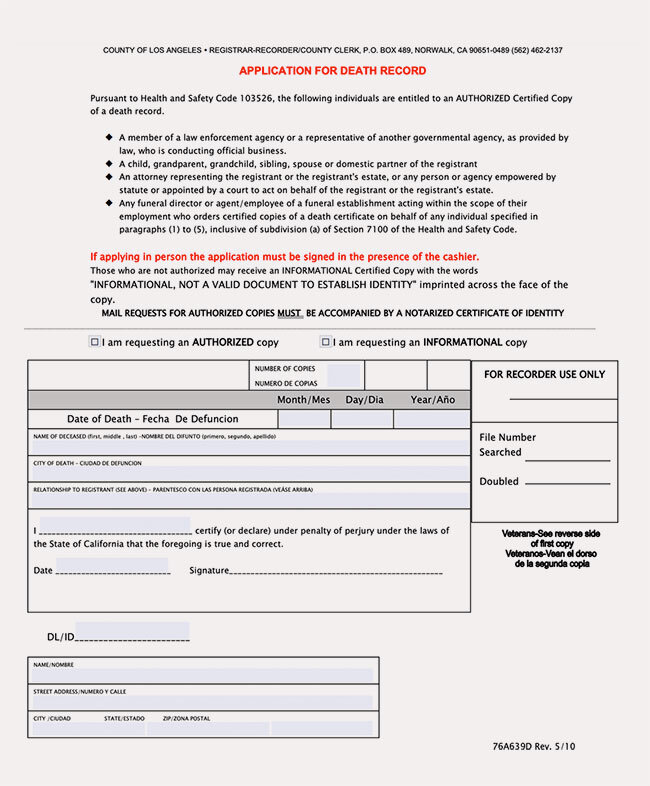
- Local County Recorder’s Office: Each county in California has a Recorder’s Office responsible for maintaining vital records, including death certificates, for events that occurred within that county. Ordering directly from the county where the death occurred can often be faster, especially for recent deaths. You can usually find contact information and specific procedures on the county’s official website. For instance, if the death occurred in Los Angeles County, you would contact the Los Angeles County Registrar-Recorder/County Clerk. If it was in San Francisco County, you would look for the San Francisco Department of Public Health or the County Clerk.
Step 3: Choose Your Ordering Method
Both the CDPH-VR and most county offices offer several methods for ordering a death certificate:

- Online: Many counties and the CDPH-VR partner with authorized third-party vendors for online ordering. This is often the fastest and most convenient method. You will typically fill out an online application, upload any required documentation, and pay by credit card. Be sure you are using a secure and authorized vendor.
- By Mail: You can download an application form from the CDPH-VR website or the relevant county recorder’s website. Complete the form accurately, include a check or money order for the required fee, and mail it to the appropriate address. You may also need to include a notarized sworn statement.
- In Person: If you are local to the county where the death occurred, you may be able to visit the County Recorder’s Office in person. This can sometimes lead to same-day processing, but it’s advisable to check the office’s hours, appointment requirements, and any specific procedures before your visit. You will need to present valid identification.
Notarized Sworn Statement
A crucial element of ordering a certified death certificate in California, especially by mail or online through some channels, is the requirement of a notarized sworn statement. This statement is a legal declaration that you are an authorized person to receive the certificate.
- Content of the Statement: The sworn statement typically includes your name, relationship to the deceased, the deceased’s information, and a declaration that you are legally entitled to a certified copy.
- Notarization: You will need to sign this statement in the presence of a Notary Public. The Notary will then verify your identity and affix their seal and signature. Many banks, shipping stores (like FedEx Office or The UPS Store), and dedicated notary services offer this.
- Mailing with the Application: This notarized statement, along with your completed application and payment, is then mailed to the vital records office.
Step 4: Pay the Required Fees
There are fees associated with obtaining a death certificate. These fees cover the cost of the record search, the creation of the certificate, and mailing. The exact amount can vary slightly by county and over time.
- Current Fees: As of recent information, the fee for a certified copy of a California death certificate is typically around $21-$25. It is always best to check the official website of the California Department of Public Health or the specific county recorder’s office for the most up-to-date fee schedule.
- Payment Methods: Accepted payment methods usually include credit cards (for online or in-person orders), checks, or money orders (for mail or in-person orders). Cash may also be accepted for in-person visits.
Step 5: Wait for Processing and Delivery
Once your application, payment, and required documentation are received, the vital records office will begin processing your request.
- Processing Times: Processing times can vary significantly depending on the volume of requests, the method of application, and the specific office.
- Online (Third-Party Vendors): Often the fastest, with processing and delivery sometimes taking 1-2 weeks, though this can fluctuate.
- Mail: Typically the slowest, potentially taking anywhere from 4-8 weeks or even longer, especially if there are issues with the application or notarized statement.
- In Person: Can often result in same-day or next-day pick-up, or expedited mailing.
- Delivery: Certified death certificates are usually mailed to the address provided on the application via regular postal service. Some online services may offer expedited shipping options for an additional fee.
Special Considerations and Tips
Navigating the death certificate ordering process can sometimes present unique situations. Here are some tips and considerations to keep in mind:
Obtaining a Certified Copy for Genealogy or Historical Research
If you are conducting genealogical research and need a death certificate for someone who died more than a certain number of years ago, the requirements might be slightly different. In California, death records become public after 50 years from the date of death. For records older than 50 years, you may not need to provide proof of relationship. However, you will still need to provide as much information as possible about the deceased and the circumstances of their death. It is always best to confirm the specific requirements with the CDPH or the county recorder’s office.
Deaths Occurring Outside of California
If your loved one passed away in another state, you will need to contact the vital records office of that specific state. Each state has its own procedures and requirements for ordering death certificates. For example, if the death occurred in New York, you would contact the New York State Department of Health. If it was in Texas, you would reach out to the Texas Department of State Health Services.
Expedited Service
If you require the death certificate urgently for critical legal or financial matters, inquire about expedited processing options. Some county recorder’s offices and third-party online vendors offer expedited services for an additional fee. This can significantly reduce the waiting time.
Common Pitfalls to Avoid
- Incomplete Information: Double-check all personal details of the deceased and the applicant for accuracy.
- Incorrect Notarization: Ensure the sworn statement is properly signed and notarized by a recognized Notary Public.
- Insufficient Payment: Verify the correct fee amount and ensure your payment method is accepted.
- Unclear Relationship: If you are not a direct relative, be prepared to provide documentation or a clear explanation of your authorization.
- Using Unofficial Websites: Always use the official websites of the California Department of Public Health or the relevant county recorder’s office, or authorized third-party vendors linked from those sites, to avoid scams or incorrect information.
By following these steps and paying attention to the specific requirements, you can successfully order a death certificate in California. While this task is a somber necessity, completing it efficiently can help you move forward with managing the affairs of your departed loved one and begin the process of healing. Remember to be patient, as administrative processes can take time, and to seek assistance from the relevant government offices if you encounter any difficulties.
LifeOutOfTheBox is a participant in the Amazon Services LLC Associates Program, an affiliate advertising program designed to provide a means for sites to earn advertising fees by advertising and linking to Amazon.com. Amazon, the Amazon logo, AmazonSupply, and the AmazonSupply logo are trademarks of Amazon.com, Inc. or its affiliates. As an Amazon Associate we earn affiliate commissions from qualifying purchases.