
Navigating the bustling streets and scenic routes of New York is an unforgettable experience, whether you’re exploring the iconic landmarks of Manhattan or embarking on an adventure through Upstate New York’s picturesque landscapes. However, for many travelers and residents alike, one aspect often overlooked until the last moment is the system of tolls. New York State, with its extensive network of bridges, tunnels, and expressways, utilizes tolls to fund critical infrastructure projects, manage traffic congestion, and ensure the smooth flow of commerce and tourism. Understanding how to pay these tolls efficiently and without hassle is paramount to a stress-free journey, allowing you to focus on the myriad attractions and experiences the Empire State has to offer.
From the moment you arrive, whether flying into John F. Kennedy International Airport, LaGuardia Airport, or driving in from neighboring states like New Jersey, you’ll quickly discover that tolls are an integral part of the transportation fabric. For the budget-conscious traveler, these costs can add up, impacting the overall expense of a trip. For business travelers, efficiency is key, and delays caused by fumbling for cash or dealing with violation notices are simply not an option. Family trips require meticulous planning, and understanding toll payment methods in advance can save precious time and reduce stress on the road. Even luxury travelers, while perhaps less concerned with the monetary cost, will appreciate the seamless convenience that comes with knowing the best way to navigate toll points. This comprehensive guide aims to demystify the toll payment process in New York, ensuring your travel through this vibrant state is as smooth and enjoyable as possible, whether you’re heading to a charming boutique hotel, a sprawling resort, or a long-term apartment stay.
Navigating the Toll Landscape in New York
New York’s extensive infrastructure, featuring some of the world’s most impressive engineering feats, relies heavily on tolls for its upkeep and expansion. These charges are not merely an inconvenience but a crucial component in maintaining the roads, bridges, and tunnels that connect communities, facilitate trade, and enable millions of tourists to access world-renowned destinations. Understanding the rationale behind these tolls and identifying where you’ll encounter them is the first step toward a hassle-free journey.
Why Tolls Exist in New York
The presence of tolls in New York can be attributed to several key factors, primarily focused on sustaining a robust and modern transportation system. Firstly, tolls provide a dedicated revenue stream for the construction, maintenance, and repair of the state’s vast network of bridges, tunnels, and highways. Iconic structures like the George Washington Bridge and the Verrazzano-Narrows Bridge are monumental achievements that require continuous investment to remain safe and operational. Without tolls, the burden of these costs would fall entirely on taxpayers, or infrastructure would inevitably deteriorate, leading to congestion and economic stagnation.
Secondly, tolls are increasingly used as a tool for congestion management, particularly in densely populated areas like New York City. By placing tolls on major arteries leading into or within urban centers, authorities can subtly influence driving patterns, encouraging the use of public transportation or discouraging unnecessary trips during peak hours. This helps to reduce traffic jams, cut down on pollution, and improve overall travel times for everyone. For travelers, this means that while tolls add to the cost, they contribute to a more efficient and less frustrating driving experience, allowing quicker access to popular attractions, hotels, and business districts. Finally, tolls support the economic vitality of the region, ensuring that goods and services can move efficiently, bolstering New York’s status as a global hub for business and tourism.
Key Toll Facilities You’ll Encounter
When driving in and around New York, you’ll likely encounter tolls at several strategic points. The most prominent are found on the major crossings connecting Manhattan to its neighboring boroughs and New Jersey, as well as on key interstate highways.
In New York City itself, critical toll facilities include:
- Bridges: The George Washington Bridge, connecting Manhattan to New Jersey; the Verrazzano-Narrows Bridge, linking Brooklyn and Staten Island; the Throgs Neck Bridge and Bronx-Whitestone Bridge, which connect The Bronx and Queens over the East River. While the iconic Brooklyn Bridge itself does not have a toll, accessing its approaches may involve toll roads or tunnels depending on your origin.
- Tunnels: The Holland Tunnel and Lincoln Tunnel both connect Manhattan to New Jersey. The Queens Midtown Tunnel links Manhattan and Queens, and the Hugh L. Carey Tunnel (formerly the Brooklyn-Battery Tunnel) connects Manhattan to Brooklyn.
Beyond the immediate metropolitan area, significant toll roads include:
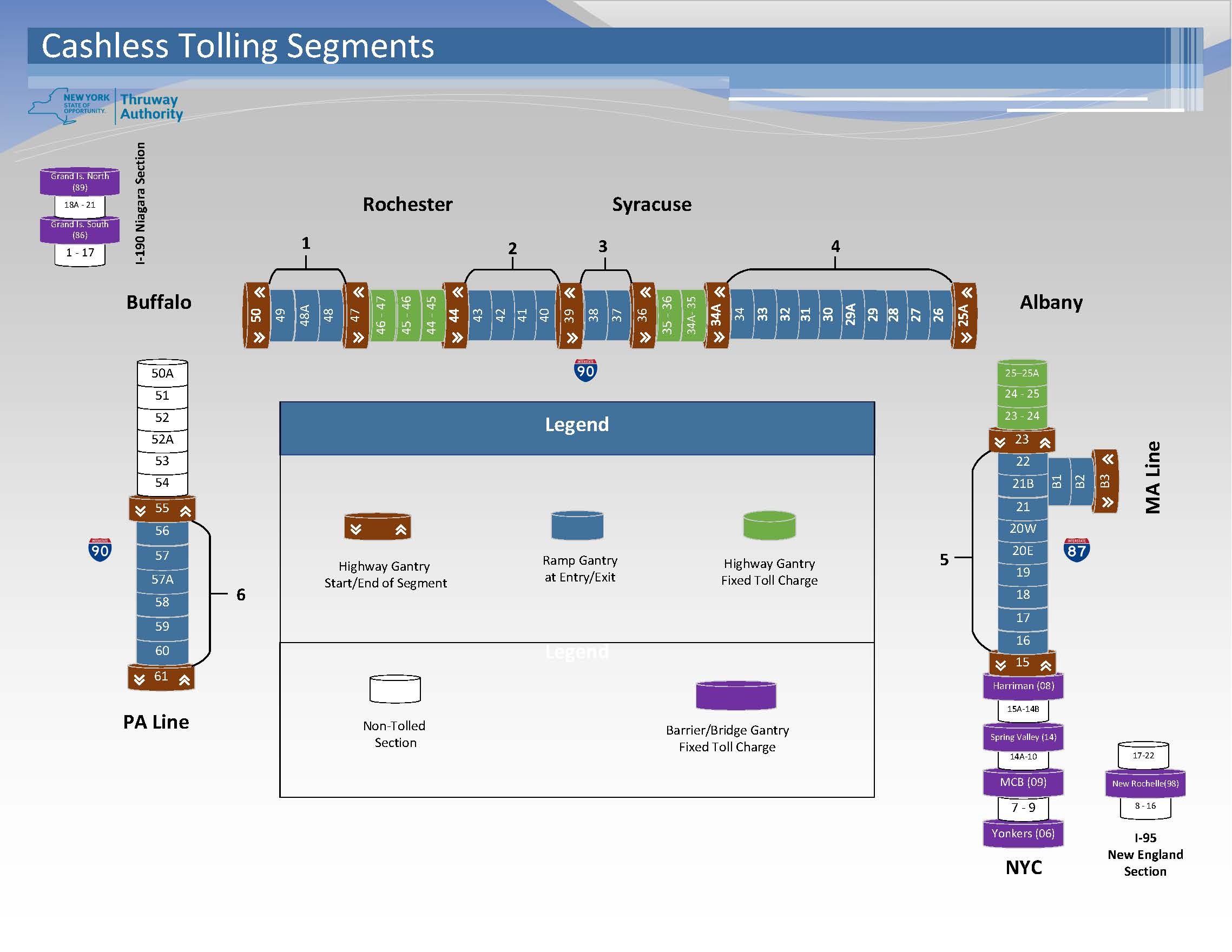
- The New York State Thruway: This extensive highway system spans across the state, connecting New York City to major cities like Albany, Syracuse, Rochester, and Buffalo. It’s a critical route for travelers exploring Upstate New York’s natural beauty or visiting destinations like the Finger Lakes region.
- The Garden State Parkway and New Jersey Turnpike: While technically in New Jersey, these major arteries are frequently used by travelers entering New York from the south and west, particularly those arriving at Newark Liberty International Airport or traveling to destinations on Long Island.
Most of these facilities have transitioned to cashless tolling, meaning there are no toll booths to stop at for cash payments. This system relies on electronic transponders or license plate imaging, making it imperative to understand your payment options to avoid penalties.
Methods of Toll Payment: Your Essential Guide
With the widespread adoption of cashless tolling across New York’s major arteries, traditional cash payments are largely a thing of the past. This shift aims to improve traffic flow, reduce congestion, and enhance safety. For visitors and residents alike, understanding the modern methods of toll payment is crucial for a smooth and uninterrupted journey. The two primary ways to pay tolls are via electronic transponder systems like E-ZPass or through the Toll-By-Mail program.
E-ZPass: The Most Convenient Option
For anyone planning to drive frequently in New York or across the Northeast United States, securing an E-ZPass transponder is by far the most convenient and cost-effective method of paying tolls. E-ZPass is an electronic toll collection system that utilizes a small, battery-powered transponder attached to your vehicle’s windshield. As you pass through designated E-ZPass lanes, an antenna reads your transponder, and the toll amount is automatically deducted from a pre-funded account.
Benefits of E-ZPass:
- Discounts: E-ZPass users often receive significant discounts on tolls compared to Toll-By-Mail rates, especially for facilities operated by MTA Bridges and Tunnels and the New York State Thruway Authority. These savings can be substantial for frequent travelers or those on a budget.
- Speed and Convenience: No need to stop, search for cash, or wait in line. E-ZPass lanes allow for continuous movement, saving valuable time, which is particularly beneficial for business travelers and families on a tight schedule.
- Interstate Compatibility: An E-ZPass from New York is valid in many other states across the eastern and central U.S., including New Jersey, Pennsylvania, Massachusetts, Virginia, and more, making it an invaluable tool for regional travel.
How to get an E-ZPass:
- Online: The easiest way is to apply online through the New York E-ZPass website. You’ll set up an account, link it to a payment method (credit card or bank account), and a transponder will be mailed to you.
- Retail Locations: Many retail stores, including select grocery stores and drugstores, sell E-ZPass On-the-Go tags. These are pre-funded with a small amount and can be registered online afterward.
- Service Centers: You can also visit a customer service center in person, though this is less convenient for most travelers.
There are different types of E-ZPass accounts, including individual and business accounts, and some offer specific residency discounts (e.g., for Staten Island residents on the Verrazzano-Narrows Bridge). It’s worth checking the options to see which best fits your travel patterns.
Toll-By-Mail: For Occasional Visitors
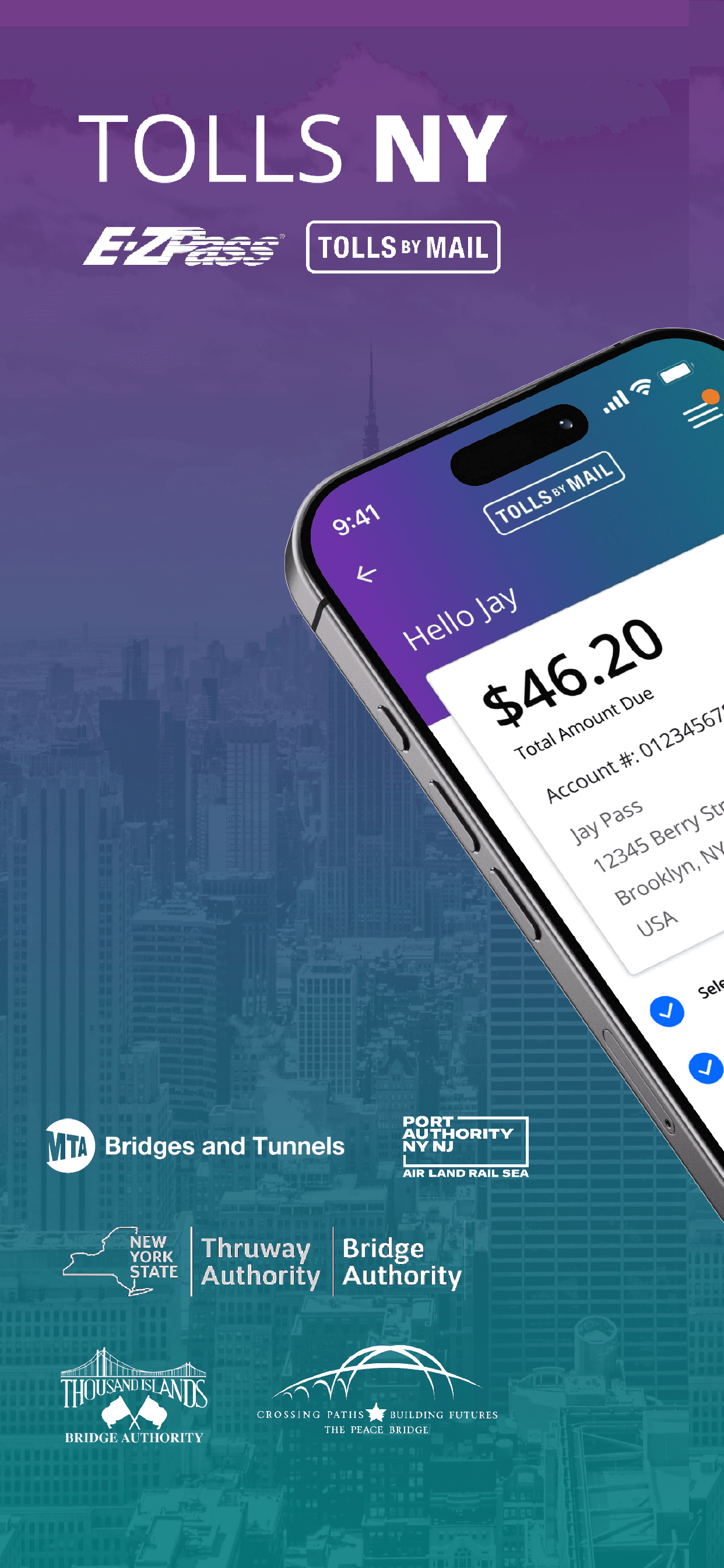
For infrequent visitors to New York or those who simply forget or choose not to get an E-ZPass, the Toll-By-Mail system serves as the default payment method. This system is entirely electronic and requires no advance registration.
How Toll-By-Mail works:
When your vehicle passes through a cashless tolling point without an E-ZPass transponder, cameras capture an image of your license plate. The tolling authority then identifies the registered owner of the vehicle and mails a bill to their address. This bill typically includes instructions on how to pay online, by phone, or by mail.
Pros of Toll-By-Mail:
- No Pre-Registration Required: Ideal for tourists or those making a one-off trip without the hassle of obtaining a transponder.
- Simplicity: Just drive through, and the bill will eventually find its way to you.
Cons of Toll-By-Mail:
- Higher Rates: Toll-By-Mail rates are almost always higher than E-ZPass rates, sometimes significantly so, negating potential savings for budget travelers.
- Potential Delays and Penalties: Bills can take weeks to arrive, especially for out-of-state drivers. If a bill is missed, lost, or not paid on time, it can quickly escalate into violation fees, late penalties, and even potential registration holds, turning a small toll into a much larger expense.
- Rental Car Complications: If you’re driving a rental car, the bill will initially go to the rental company. Most rental companies have their own toll programs and will charge you an administrative fee in addition to the toll itself, often at the higher Toll-By-Mail rate. These fees can sometimes exceed the toll amount, making it a costly option.
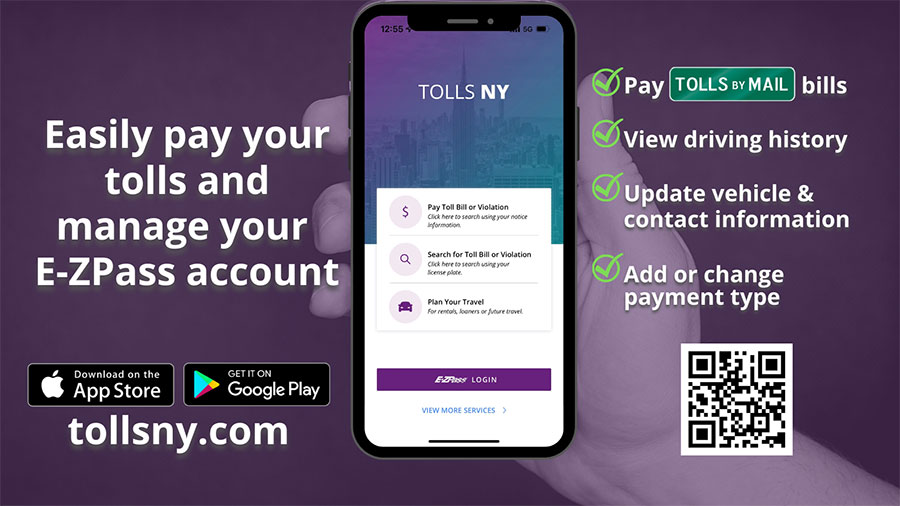
If you know you’ve passed through a cashless toll, it’s advisable to proactively check the relevant toll authority’s website (e.g., MTA Bridges and Tunnels or New York State Thruway Authority) to look up your plate and pay the toll before a bill is mailed, potentially avoiding some delays or late fees.
Cash Payment (Increasingly Rare or Non-Existent)
It’s important to highlight that the vast majority of toll facilities in New York, particularly around New York City and on the New York State Thruway, have transitioned to all-electronic (cashless) tolling. This means that cash toll booths are virtually non-existent at many key crossings. Attempting to pay with cash where it’s not accepted will result in a Toll-By-Mail bill being issued to your vehicle’s registered owner, subject to the higher rates and potential fees mentioned above. Always assume cashless tolling is in effect and plan accordingly with an E-ZPass or be prepared for the Toll-By-Mail process.
Practical Tips for Stress-Free Toll Navigation
Navigating New York’s toll roads doesn’t have to be a source of anxiety. With a bit of foresight and the right tools, you can incorporate tolls seamlessly into your travel plans, ensuring a smooth journey from start to finish. These practical tips are designed to help all types of travelers, from the most budget-conscious to those on a tight business schedule.
Planning Your Route and Budget
Effective planning is the cornerstone of a stress-free trip, and this extends to managing tolls. Before you even set off, take some time to map out your route and understand where tolls might appear.
- Utilize GPS Apps: Modern navigation apps are indispensable for this. Google Maps, Waze, and other GPS services often include options to show tolls on your route or even to avoid them altogether, although avoiding tolls in New York City can lead to significantly longer travel times and more complicated routes. Many apps also provide estimated toll costs, helping you budget accurately. Always verify the most current information, as toll rates can change.
- Estimate Costs: For a more precise budget, visit the official websites of the tolling authorities. The MTA Bridges and Tunnels website (mta.info/bridges-tunnels) and the New York State Thruway Authority website (thruway.ny.gov) provide detailed information on current toll rates for both E-ZPass and Toll-By-Mail customers. This allows budget travelers to factor these expenses into their overall trip cost, preventing any unpleasant surprises. For business travelers, accurate cost estimates are vital for expense reporting.
- Consider an E-ZPass for Savings: If your itinerary involves multiple toll crossings or extends beyond New York into other E-ZPass states, purchasing an E-ZPass beforehand is almost always the most economical choice. The savings from discounted rates often outweigh the initial cost of the transponder and account setup, especially for families or those undertaking longer stays or multi-destination trips.
Avoiding Penalties and Surcharges
Unpaid tolls can quickly accrue late fees and penalties, turning a minor expense into a significant one. Knowing how to manage potential issues is crucial.
- Understanding Toll-By-Mail Violations: If you receive a Toll-By-Mail bill and fail to pay it by the due date, you’ll likely receive a notice of violation. This notice will include additional administrative fees and penalties, which can be substantial. Ignoring these notices can lead to further penalties, including potential vehicle registration suspension in New York and reciprocity with some other states.
- Proactive Payment: If you know you’ve driven through a cashless toll without an E-ZPass, don’t wait for the bill to arrive. Visit the website of the specific toll authority within a few days to look up your license plate and pay the toll online. This proactive approach can sometimes help you avoid the initial administrative fees associated with mailed bills.
- Rental Car Specifics: This is a major point of confusion for many tourists and business travelers. When renting a car, inquire about their toll policy. Most major rental companies offer their own electronic toll collection services, which typically involve a daily administrative fee (even on days you don’t use tolls) plus the cost of the tolls themselves, often at the higher cash/Toll-By-Mail rate. You can decline their service if you have your own personal E-ZPass that you plan to use. Just make sure your transponder is properly mounted and registered to your rental car’s license plate (temporarily, if possible) to avoid any double billing or issues. Failure to address tolls with a rental car can result in hefty charges from the rental company weeks or months after your trip.
- Disputing Charges: If you believe you’ve been unfairly charged or received a violation notice in error, most toll authorities have a dispute process outlined on their websites. Keep records of your travel, receipts, and any correspondence.
By taking these steps, you can significantly reduce the chances of encountering unexpected costs or administrative headaches, allowing you to fully enjoy your New York travel experience.
Tolls and Your New York Experience
Beyond the mechanics of payment, understanding New York’s toll system enriches your overall travel experience. Tolls aren’t just barriers; they are integral to accessing the state’s most cherished landmarks and influence how different travelers plan their adventures, from luxury getaways to budget-friendly explorations.
Connecting to Iconic Landmarks and Attractions
The extensive network of toll bridges, tunnels, and highways in New York plays a pivotal role in connecting visitors to the state’s most iconic destinations. Without these engineering marvels, access to certain areas would be significantly more challenging or even impossible, thus tolls are an indirect investment in experiencing New York’s grandeur.
- Manhattan Access: Whether you’re driving in from New Jersey via the Holland Tunnel, Lincoln Tunnel, or George Washington Bridge, or traversing from Queens or Brooklyn through the Queens Midtown Tunnel or Hugh L. Carey Tunnel, tolls are part of the price of admission to the island’s vibrant culture, world-class museums, and famed districts like Times Square and the area around Central Park.
- Long Island and Beyond: Heading out to Long Island’s beautiful beaches, charming towns, or vineyards? You’ll likely use bridges or parkways that might have tolls, facilitating your journey to places like Coney Island or the Hamptons.
- Upstate New York Adventures: For those venturing north on the New York State Thruway to explore the Catskill Mountains, the Adirondacks, or cities like Albany and Buffalo, tolls are an expected part of connecting New York City residents and tourists to the state’s vast natural beauty and historical sites. Even access to terminals for ferries to the Statue of Liberty or Ellis Island might involve navigating toll roads depending on your starting point. These tolls contribute to the upkeep of the roads that make these journeys possible.
Impact on Different Traveler Types
Tolls affect various traveler types differently, underscoring the importance of tailored planning.
- Luxury Travelers: For those indulging in luxury travel, convenience and speed are paramount. An E-ZPass is an essential accessory, ensuring swift passage through toll points without interruption, allowing them to arrive at their high-end hotel or exclusive dining experience punctually and without fuss. While the cost of tolls might be a minor consideration, the efficiency gained is highly valued.
- Budget Travelers: For budget-conscious travelers, understanding toll costs is critical. The difference between E-ZPass discounts and higher Toll-By-Mail rates can significantly impact a trip’s overall expense. Pre-planning routes to minimize tolls or opting for public transportation when feasible in New York City can help stretch a budget further. Choosing accommodations in areas accessible by public transit or less reliant on toll crossings might also be a strategic decision.
- Family Trips: Traveling with family often means managing multiple schedules, needs, and potential for backseat restlessness. Avoiding unexpected delays at toll points by using an E-ZPass and having a clear understanding of the route (including toll locations) contributes significantly to a smoother, more enjoyable family vacation. Pre-calculating toll costs helps in budgeting for the trip, ensuring funds are available for attractions and experiences rather than unforeseen road fees.
- Business Stays: Efficiency and accountability are key for business travelers. An E-ZPass facilitates quick transit, crucial for making appointments on time. Furthermore, E-ZPass accounts provide detailed statements, simplifying expense reporting and reimbursement processes. Accessing hotels or meeting venues in various boroughs or suburban business parks often involves toll crossings, making a seamless payment method indispensable for productivity.
In essence, whether you’re embarking on a once-in-a-lifetime tourist adventure, a critical business trip, or a family vacation, understanding how to effectively manage New York’s tolls is a small investment of time that yields significant returns in terms of convenience, savings, and peace of mind. It ensures that your focus remains on the incredible experiences New York has to offer, rather than the logistics of getting there.
In conclusion, navigating the toll roads of New York can initially seem daunting, but with the right knowledge and preparation, it becomes a seamless part of your travel experience. From the bustling tunnels of New York City to the expansive New York State Thruway, tolls are an unavoidable reality, funding the very infrastructure that makes travel through this vibrant state possible.
The key takeaway is preparedness. For frequent travelers and residents, an E-ZPass is unequivocally the most efficient, economical, and stress-free option, offering discounts and swift passage. For occasional visitors, while Toll-By-Mail provides a solution, be aware of the higher rates and the critical need to promptly address any mailed bills to avoid escalating penalties. Always assume cashless tolling is in effect, as cash payment options are now exceedingly rare.
Before embarking on your journey, take a few moments to plan your route using GPS apps, estimate potential toll costs, and consider your best payment method, especially if you’re renting a car. By incorporating this simple step into your travel planning, you empower yourself to bypass unnecessary hassles and costs. This proactive approach ensures that your focus remains on enjoying the incredible destinations, rich cultural experiences, and diverse attractions that make New York an unparalleled place to visit, work, or call home. Drive smart, pay smart, and let your New York adventure unfold without a hitch.
LifeOutOfTheBox is a participant in the Amazon Services LLC Associates Program, an affiliate advertising program designed to provide a means for sites to earn advertising fees by advertising and linking to Amazon.com. Amazon, the Amazon logo, AmazonSupply, and the AmazonSupply logo are trademarks of Amazon.com, Inc. or its affiliates. As an Amazon Associate we earn affiliate commissions from qualifying purchases.