
Embarking on a new business venture in the vibrant state of Texas can be an incredibly rewarding experience, especially for entrepreneurs looking to tap into the booming travel, tourism, and hospitality sectors. With its diverse landscapes, rich cultural heritage, and robust economy, Texas offers a fertile ground for everything from boutique hotels and luxury resorts to adventure tour operators and unique accommodation providers. Understanding the process of company registration is your first crucial step towards transforming your vision into a tangible enterprise that caters to discerning travelers and locals alike.
This comprehensive guide will walk you through the essentials of registering your company in Texas, specifically tailored to businesses within the orbit of travel, tourism, and accommodation. We’ll explore why Texas stands out as a prime location, help you navigate the various business structures, detail the step-by-step registration process, and offer insights into post-registration considerations to ensure your new venture thrives.
Why Texas is a Prime Destination for Your Travel and Hospitality Venture
Texas is not just the second-largest state in the United States by both area and population; it’s a dynamic economic powerhouse with a rapidly expanding tourism industry. Its allure for business owners in the travel and hospitality sectors is multifaceted:
A Diverse Tapestry of Destinations and Attractions
From the cosmopolitan skyscrapers of Houston and Dallas to the live music scene of Austin and the historic charm of San Antonio, Texas boasts an incredible array of destinations. The state’s natural landmarks are equally captivating, featuring everything from the rugged beauty of Big Bend National Park to the serene beaches of the Gulf Coast. This diversity creates endless opportunities for businesses specializing in adventure travel, eco-tourism, urban exploration, and cultural experiences. Imagine establishing a company offering guided tours of The Alamo, developing luxury glamping sites near Fredericksburg’s wine country, or launching an exclusive travel agency focusing on Texas Hill Country retreats. The possibilities are truly vast.
Robust Economic Growth and Favorable Business Climate
Texas consistently ranks among the top states for business, characterized by its low taxes, business-friendly regulations, and a skilled workforce. The state’s no-corporate-income-tax policy (though some businesses may be subject to a franchise tax) is particularly appealing. This environment minimizes administrative burdens and allows businesses, especially small to medium-sized enterprises (SMEs) in the hospitality sector, to allocate more resources towards enhancing customer experiences and expanding their reach. The constant influx of new residents and a thriving economy ensure a steady stream of potential customers for hotels, restaurants, attractions, and tour operators.
A Lifestyle That Attracts Both Tourists and Talent
The Texas lifestyle is a major draw. Whether it’s the vibrant music scene in Austin, the cowboy heritage of Fort Worth, or the coastal charm of Galveston, there’s a unique appeal for every taste. This diverse lifestyle not only brings millions of tourists each year seeking everything from luxury travel to budget adventures but also attracts a talented workforce keen to live and work in the state. For a company offering unique stays or specialized tours, having access to both a large customer base and skilled employees dedicated to customer service is invaluable.
Choosing the Right Business Structure for Your Texas Enterprise
Before you delve into the registration paperwork, a critical decision is selecting the appropriate legal structure for your company. This choice impacts everything from liability and taxation to administrative complexity. For travel, tourism, and accommodation businesses, each structure offers distinct advantages and disadvantages.
Sole Proprietorship and General Partnership
These are the simplest structures, often favored by small-scale tour guides, individual travel bloggers, or modest bed and breakfasts.
- Sole Proprietorship: Owned and run by one individual, there’s no legal distinction between the owner and the business. Easy to set up, minimal paperwork. However, the owner is personally liable for all business debts and obligations, which can be a significant risk for any hospitality venture.
- General Partnership: Similar to a sole proprietorship but involves two or more owners. All partners share in profits, losses, and management, and are personally liable for the business’s debts. This structure might be suitable for a small group launching a specific travel experience together.
While easy to establish, the unlimited personal liability associated with these structures makes them less ideal for businesses that involve physical assets (like a hotel or fleet of tour vehicles) or direct customer interaction (where incidents leading to lawsuits are possible).
Limited Liability Company (LLC)
The LLC is perhaps the most popular choice for small to medium-sized businesses in the travel and hospitality sectors due to its balance of flexibility, liability protection, and simpler taxation.
- Key Benefits: LLCs shield the owners (members) from personal liability for business debts and lawsuits, protecting personal assets like homes and savings. This is crucial for operating hotels, vacation rentals, or tour companies where accidents or customer disputes could arise.
- Taxation: An LLC enjoys “pass-through” taxation, meaning profits and losses are reported on the owners’ personal tax returns, avoiding double taxation. LLCs can also elect to be taxed as an S-Corp or C-Corp for specific tax advantages.
- Management: Offers flexible management structures, allowing members to manage the company directly or appoint managers.
- Ideal for: A new bed and breakfast, a tour agency in Big Bend, a company managing several short-term rentals in Austin, or a destination event planner.
Corporations (S-Corp and C-Corp)
Corporations are more complex structures, typically suited for larger businesses, those seeking significant outside investment, or those planning to go public.
- C-Corp: Offers the strongest liability protection and unlimited growth potential through stock sales. However, it faces “double taxation” – the corporation pays tax on its profits, and shareholders pay tax on dividends.
- S-Corp: Avoids double taxation by passing profits and losses directly to the owners’ personal income without being subject to corporate tax rates. It has stricter eligibility requirements (e.g., limited number of shareholders) and more stringent operating rules.
- Ideal for: Large-scale hotel chains, major resort developments, or ambitious travel technology startups looking to attract venture capital.
For most burgeoning travel and hospitality businesses in Texas, the LLC strikes an optimal balance of protection and administrative simplicity.
Step-by-Step Guide to Registering Your Company in Texas
Once you’ve decided on your business structure, you can proceed with the formal registration process. While specific steps may vary slightly depending on your chosen entity, the core requirements remain consistent.
Step 1: Name Your Business and Check Availability
Choosing a memorable and relevant name for your travel or accommodation business is vital for branding. It should evoke the spirit of Texas, the experiences you offer, or the lifestyle you promote. For instance, “Hill Country Homestead B&B” or “Gulf Coast Adventure Tours”.
- Check Availability: You must ensure your desired business name is not already in use. The Texas Secretary of State provides an online tool to search for existing entity names. For LLCs and corporations, the name must typically include a designator like “LLC,” “Inc.,” or “Corp.”
- Domain Name and Social Media: Beyond legal registration, check if the corresponding domain name for your website (
.com,.net, etc.) and social media handles are available. A strong online presence is indispensable for any travel business.
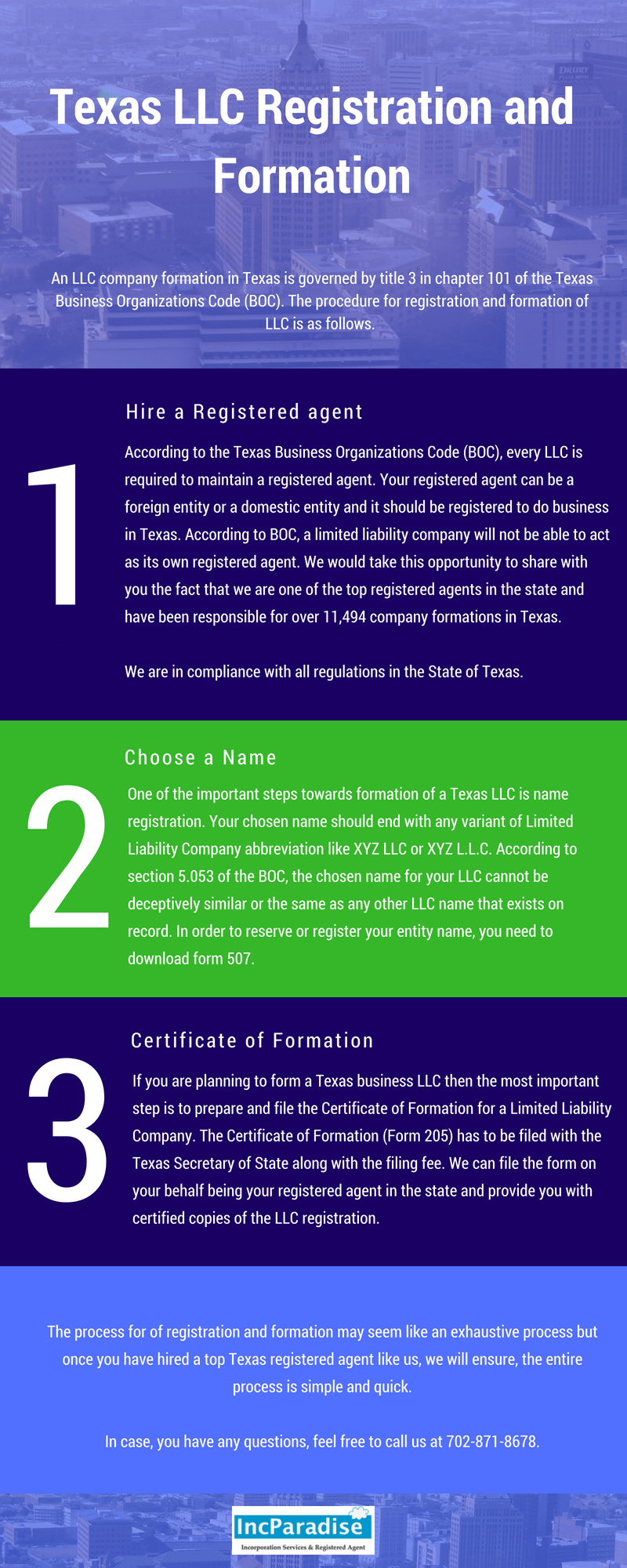
Step 2: Appoint a Registered Agent
All LLCs and corporations in Texas are required to have a registered agent.
- What is a Registered Agent? This is an individual or a company designated to receive official legal and tax documents on behalf of your business. The registered agent must have a physical street address (not a P.O. Box) in Texas and be available during normal business hours.
- Who can be one? You can appoint yourself, another member of your business, or use a professional registered agent service. Professional services are often recommended as they ensure compliance, maintain privacy, and are reliable even if you are traveling or unavailable. This is particularly useful for travel entrepreneurs who might be frequently away from their primary business location.
Step 3: Prepare and File Your Formation Documents
This is the official step to create your legal entity with the state.
- For LLCs: You will file a “Certificate of Formation” with the Texas Secretary of State. This document outlines basic information about your LLC, including its name, registered agent, and purpose.
- For Corporations: You will file “Articles of Incorporation” with the Texas Secretary of State, providing details like the corporate name, registered agent, and shares information.
- Operating Agreement (LLC) or Bylaws (Corporation): While not filed with the state, these internal documents are crucial. An LLC Operating Agreement defines ownership percentages, member responsibilities, and how decisions are made. Corporate Bylaws establish the rules for managing the corporation. These documents are vital for smooth internal operations and dispute resolution, especially for multi-owner hotels or tour agencies.
Step 4: Obtain an Employer Identification Number (EIN)
An EIN (Employer Identification Number), also known as a Federal Tax Identification Number, is like a social security number for your business.
- When do you need one? You’ll need an EIN if you plan to hire employees, operate as a corporation or multi-member LLC, or file excise taxes.
- How to get one? You can apply for an EIN for free directly from the IRS website. This is a quick online process.
Step 5: Fulfill State and Local Licensing Requirements
This is where the unique nature of travel and hospitality businesses becomes particularly important. Beyond state registration, you’ll likely need specific permits and licenses based on your industry and location within Texas.
- State Licenses: Depending on your services, you might need licenses from the Texas Department of Licensing and Regulation (TDLR) or other state agencies. For example, if you’re operating hotels or restaurants, health permits are essential. If you serve alcohol, an Alcoholic Beverage Commission (TABC) permit is required.
- Local Permits: Each city and county in Texas has its own set of regulations. A short-term rental in Austin will have different permit requirements than one in San Antonio or a fishing charter operation in Corpus Christi. This can include zoning permits, occupancy permits, and specific business licenses. It’s crucial to check with the city clerk’s office and county administration where your business will operate.
- Industry-Specific Regulations: Tour operators might need permits for accessing state parks or federal lands (e.g., Big Bend). Travel agencies may have specific bonding requirements. Researching these specific requirements thoroughly is paramount to avoid legal issues.
Beyond Registration: Growing Your Travel Business in Texas
Registering your company is just the beginning. To truly succeed in the competitive Texas travel and hospitality market, you’ll need a strategic approach to growth and operations.
Marketing and Digital Presence
In today’s digital age, a strong online presence is non-negotiable for attracting travelers.
- Website and SEO: Develop a professional website showcasing your accommodation options, tour itineraries, or travel packages. Optimize it for search engines so potential customers can find you when searching for ” Austin hotels” or ” Big Bend tours”.
- Social Media: Engage with potential customers on platforms like Instagram and Facebook, sharing stunning images of Texas destinations and authentic experiences.
- Online Travel Agencies (OTAs): Partnering with booking platforms like Booking.com or Expedia can significantly expand your reach, especially for hotels and vacation rentals.
Networking and Industry Partnerships
Connect with other businesses in the Texas tourism industry.
- Local Chambers of Commerce: Joining local business organizations in cities like Austin, San Antonio, or Dallas can provide valuable networking opportunities.
- Tourism Associations: Engage with the Texas Travel Alliance or regional tourism boards. These connections can lead to partnerships, referrals, and insights into industry trends.
- Collaborate: A boutique hotel could partner with a local winery for package deals, or a tour company might collaborate with a local restaurant for culinary experiences.

Understanding Local Culture and Customer Service
For businesses focused on tourism, providing exceptional service and understanding the local culture are paramount.
- Authentic Experiences: Offer experiences that highlight the unique character of Texas, whether it’s country music nights, Tex-Mex culinary tours, or wildlife observation in the Piney Woods.
- Customer Feedback: Actively seek and respond to customer reviews on platforms like TripAdvisor and Google Reviews. Positive reviews are golden in the hospitality sector.
- Training Staff: Ensure your employees are well-versed in Texas history, local attractions, and exceptional customer service to enhance the overall guest experience.
Registering a company in Texas for a travel, tourism, or accommodation venture is a strategic move that can unlock immense potential. By carefully choosing your business structure, meticulously following the registration steps, and continuously adapting to the market, you can establish a thriving enterprise that contributes to and benefits from the vibrant Texas lifestyle. The journey from a great idea to a successful business requires diligence, passion, and an understanding of both the legal landscape and the needs of your target travelers. With Texas as your base, the possibilities for creating memorable experiences are boundless.
LifeOutOfTheBox is a participant in the Amazon Services LLC Associates Program, an affiliate advertising program designed to provide a means for sites to earn advertising fees by advertising and linking to Amazon.com. Amazon, the Amazon logo, AmazonSupply, and the AmazonSupply logo are trademarks of Amazon.com, Inc. or its affiliates. As an Amazon Associate we earn affiliate commissions from qualifying purchases.