
Navigating the process of registering a vehicle in Oregon can seem like a bureaucratic maze to newcomers and even long-time residents alike. Fortunately, understanding the requirements and steps involved can demystify the procedure, ensuring your vehicle is legally on the road without unnecessary delays or complications. This guide aims to provide a comprehensive overview of what you need to know, from initial paperwork to final plates, focusing on clarity and efficiency. Whether you’ve just moved to the Beaver State or purchased a new or used vehicle, this information is designed to be your essential resource.
Understanding Oregon Vehicle Registration Requirements
Oregon requires all residents who own or operate a vehicle to register it with the Oregon Department of Transportation (ODOT), specifically through the Oregon Driver and Motor Vehicle Services (DMV). This registration confirms the vehicle’s identity and legal status for operation on public roadways. The process typically involves providing proof of ownership, vehicle information, and paying applicable fees. There are specific timelines and requirements depending on whether the vehicle is new, used, being transferred, or if you are a new resident.
New Residents and Vehicle Registration
If you are moving to Oregon, you generally have 30 days from the date you establish residency to register your vehicle. Establishing residency can be proven by various means, such as obtaining an Oregon driver’s license, registering to vote in Oregon, enrolling your children in Oregon schools, or securing employment in the state. You will need to present proof of your vehicle’s status, which can include a title or previous registration.
New Vehicle Purchases
When you purchase a new vehicle from a dealership, the dealership often handles the initial registration process on your behalf. They will collect the necessary taxes and fees and submit the paperwork to the Oregon DMV. You will typically receive temporary plates and registration, with your permanent plates and registration arriving by mail shortly thereafter. It’s always wise to confirm with the dealership what aspects of the registration process they are managing and what, if anything, you will need to do yourself.
Used Vehicle Purchases
Purchasing a used vehicle involves a more hands-on registration process for the buyer. You will need to obtain the vehicle’s title from the seller, ensuring it is properly signed over to you. If the seller is unable to provide a title, you may need to explore alternative methods such as a bonded title, which is a more complex process. You will also need to complete an application for a new title and registration.
Vehicles Purchased Out of State
If you purchase a vehicle out of state and bring it into Oregon, you will generally need to have it inspected before you can register it. This inspection is a safety measure to ensure the vehicle meets Oregon standards. You will then need to complete the same title and registration application process as for a used vehicle purchased within the state, including providing proof of ownership and paying applicable fees.
Essential Documents for Registration
Gathering the correct documentation is the most critical step in ensuring a smooth registration process. Missing a single document can lead to delays and require additional trips to the Oregon DMV.
Proof of Ownership
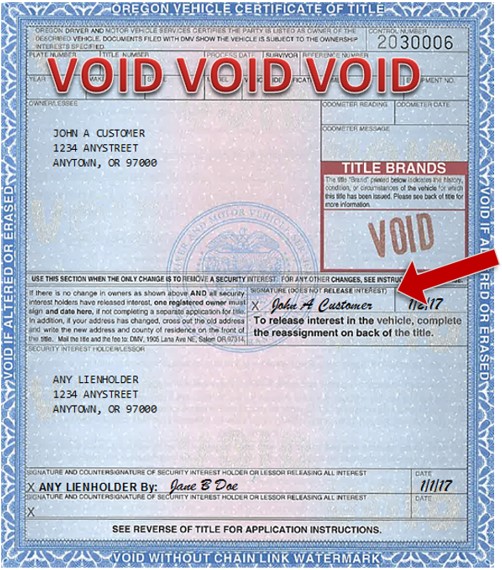
- Title: For most vehicles, the certificate of title is the primary document proving ownership. Ensure it is properly signed over to you by the seller. If you have a lienholder, the lienholder typically holds the title until the loan is paid off; in this case, you will need to provide documentation from the lienholder.
- Bill of Sale: While not always mandatory for registration itself, a bill of sale is highly recommended, especially for private party sales. It serves as a record of the transaction, including the purchase price, date, and vehicle identification number (VIN).
- Previous Registration: If you are registering a vehicle that was previously registered in Oregon, your previous registration document can be useful, particularly if the title is being held by a lienholder.
Proof of Identity and Residency
- Driver’s License: A valid Oregon driver’s license or identification card is usually required. If you are a new resident, you will likely need to obtain an Oregon driver’s license first.
- Proof of Residency: Documents such as utility bills, rental agreements, or voter registration cards can be used to establish Oregon residency.
Vehicle Information
- VIN: The Vehicle Identification Number is crucial for all registration paperwork. Ensure it is accurately recorded.
- Odometer Reading: You will need to provide the current odometer reading for title transfer and registration.
Proof of Insurance
Oregon law requires all drivers to carry a minimum level of liability insurance. You must provide proof of this insurance to register your vehicle. This typically comes in the form of an insurance card or policy declaration page from a licensed Oregon insurance provider. The policy must be in your name and cover the vehicle you are registering.
Emissions Testing (if applicable)
Currently, Oregon does not require emissions testing for most vehicles. However, it’s always a good idea to check the latest ODOT regulations, as requirements can change. Certain older vehicles or vehicles registered in specific counties might have different requirements in the future.
The Registration Process: Step-by-Step
Once you have gathered all the necessary documents, you are ready to proceed with the registration.
Step 1: Complete the Application
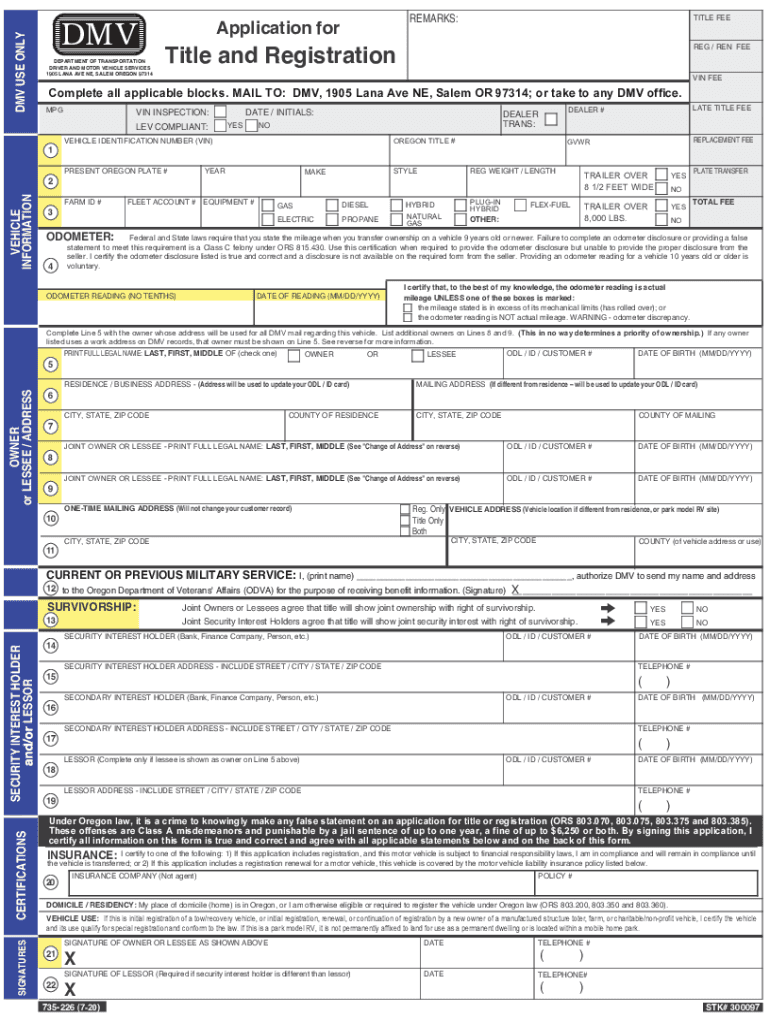
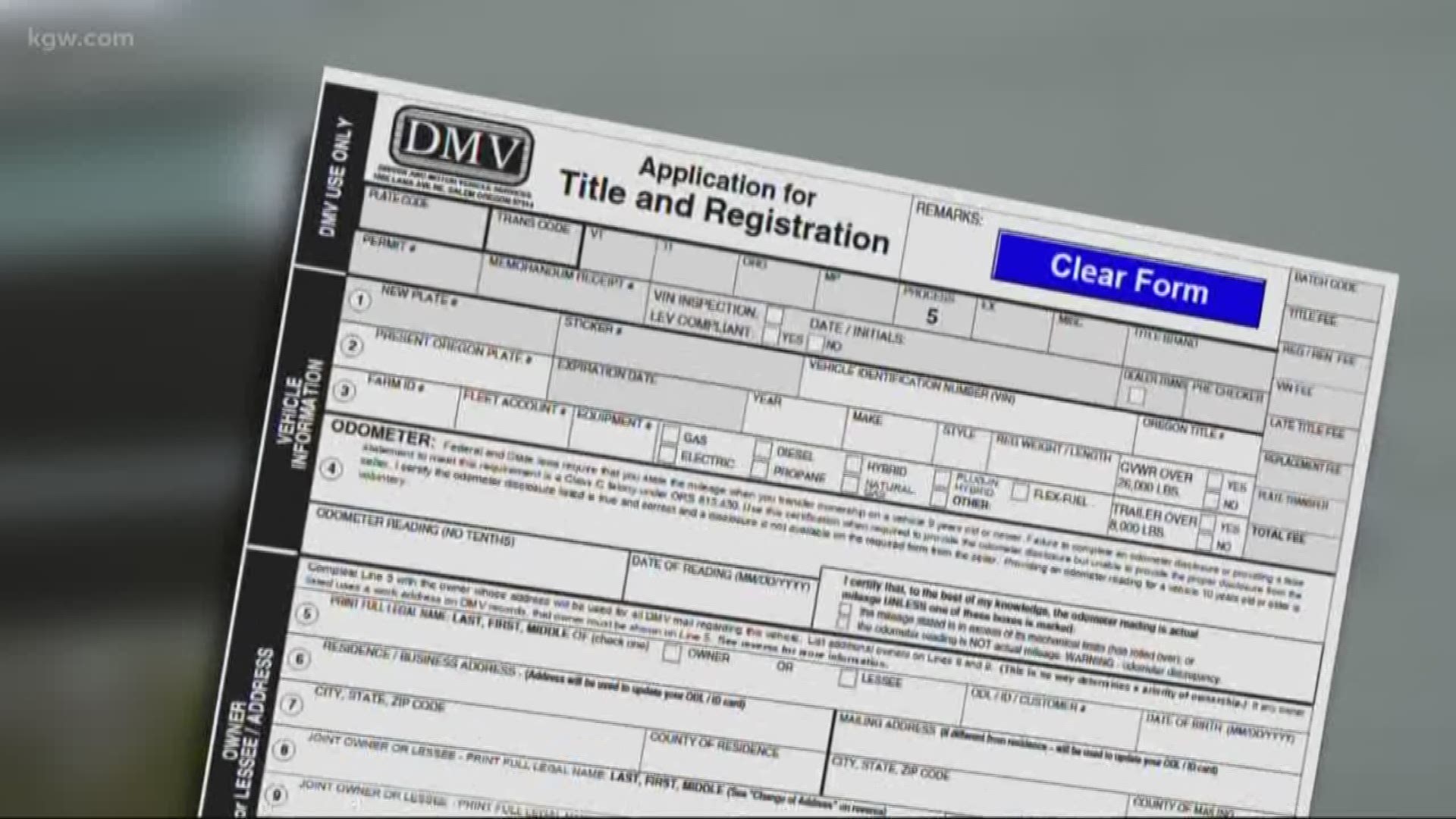
You will need to fill out the Application for Title and Registration (Form 735-237). This form can be downloaded from the Oregon DMV website or obtained at any DMV office. Ensure all information is filled out accurately and completely, including vehicle details, personal information, and odometer reading.
Step 2: Obtain a VIN Inspection (if required)
If your vehicle is from out of state, or if you are applying for a title without a previous title from Oregon, you may need a VIN inspection. This inspection verifies the VIN and ensures the vehicle is not stolen. It can often be performed by law enforcement or authorized inspection stations. Check with the Oregon DMV for specific requirements and approved inspection locations.
Step 3: Visit an Oregon DMV Office
The most common way to complete your registration is by visiting an Oregon DMV office in person. You can find the nearest office on the ODOT website. Be prepared for potential wait times, especially during peak hours.
- What to Bring: Bring all your completed forms, proof of ownership, proof of insurance, driver’s license, and any other required documentation.
- Submitting Documents: A DMV representative will review your paperwork to ensure everything is in order.
Step 4: Pay Fees and Taxes
At the time of registration, you will be required to pay various fees and taxes. These can include:
- Title Fee: A fee for issuing a new title.
- Registration Fee: An annual fee for registering your vehicle. The amount can vary based on the vehicle’s type, weight, and age.
- Sales Tax: If you purchased the vehicle in Oregon and did not pay sales tax at the time of purchase, you will likely need to pay it now. If you purchased the vehicle out of state, you may be subject to an “in-lieu tax” if Oregon would have collected sales tax on a similar vehicle purchased within the state. The Oregon DMV website provides detailed information on tax calculations.
- Plate Fee: A fee for the license plates themselves.
Step 5: Receive Your License Plates and Registration
Once all paperwork is approved and fees are paid, you will receive your Oregon license plates and registration certificate. These are typically issued on the spot at the DMV office. Your stickers, which indicate the expiration month and year, will also be provided. Make sure to affix them correctly to your license plates. The actual registration card should be kept in your vehicle at all times.
Renewing Your Vehicle Registration
Vehicle registration in Oregon is typically valid for one year. You will receive a renewal notice by mail from the Oregon DMV about 45 days before your registration expires.
Renewal Methods
- Online: The fastest and most convenient way to renew is through the Oregon DMV website. You will need your license plate number and renewal notice code.
- By Mail: You can mail your renewal form and payment to the address provided on the notice.
- In Person: You can visit an Oregon DMV office to renew your registration.
What You’ll Need for Renewal
For renewal, you will generally need:
- Your current registration renewal notice.
- Proof of valid Oregon insurance.
- Payment for renewal fees.
Important Considerations and Tips
- Timing is Key: Don’t wait until the last minute to register your vehicle, especially if you are a new resident. Allow ample time to gather documents and visit the DMV.
- Check the ODOT Website: The Oregon Department of Transportation website is the authoritative source for all current forms, fees, and regulations. Requirements can change, so always verify the latest information.
- VIN Decoding: Familiarize yourself with your vehicle’s VIN. It’s a unique identifier and will be used extensively on all your registration and title documents.
- Keep Records: Store copies of all your registration and title documents in a safe place. This is crucial for future transactions or in case of loss.
- Special Cases: If you are registering a salvaged vehicle, a rebuilt vehicle, or a vehicle with a unique history, there may be additional requirements and inspections. Consult the Oregon DMV for specific guidance.
- Fees and Taxes: Be prepared for the associated costs. It’s advisable to have a clear understanding of all potential fees and taxes before you visit the DMV to avoid surprises. You can often estimate these costs on the ODOT website.
By following these steps and understanding the requirements, registering your car in Oregon can be a straightforward process, allowing you to enjoy your driving experience in the state without legal concerns.
LifeOutOfTheBox is a participant in the Amazon Services LLC Associates Program, an affiliate advertising program designed to provide a means for sites to earn advertising fees by advertising and linking to Amazon.com. Amazon, the Amazon logo, AmazonSupply, and the AmazonSupply logo are trademarks of Amazon.com, Inc. or its affiliates. As an Amazon Associate we earn affiliate commissions from qualifying purchases.