
While Arizona may be renowned for its breathtaking natural wonders like the Grand Canyon and its vibrant cities offering diverse lifestyle experiences, from luxury resorts in Scottsdale to bustling economic hubs in Phoenix, it also presents a fertile ground for entrepreneurs. For those looking to establish a business presence, understanding the process of forming a Limited Liability Company (LLC) is a crucial first step. This guide will demystify the procedure, ensuring a smooth and efficient registration for your venture in the Grand Canyon State.
Understanding the Basics of an Arizona LLC
Before diving into the registration process, it’s essential to grasp what an LLC is and why it’s a popular choice for businesses. An LLC offers a hybrid structure, blending the pass-through taxation of a sole proprietorship or partnership with the limited liability protection of a corporation. This means that the personal assets of the owners are generally protected from business debts and lawsuits, while profits and losses are typically passed through to the owners’ personal income without being taxed at the corporate level. This flexibility makes it an attractive option for a wide range of businesses, from small startups to established enterprises looking to expand their operations into Arizona.

What is a Limited Liability Company (LLC)?
At its core, an LLC is a legal business structure that separates the business’s finances and liabilities from those of its owners, known as members. This separation is a significant advantage. For instance, if your LLC, perhaps a budding travel agency specializing in tours of Sedona, incurs debt or faces a legal challenge, your personal assets, such as your home or savings, are generally shielded. This protection is a key reason why many individuals choose to form an LLC over a sole proprietorship, where personal assets are directly exposed.
Benefits of Forming an LLC in Arizona
Arizona offers a business-friendly environment, and its LLC statutes are designed to be straightforward. Key benefits of registering an LLC here include:
- Limited Liability Protection: As mentioned, this is a primary draw. It provides peace of mind for business owners, knowing their personal wealth is protected.
- Pass-Through Taxation: The IRS generally treats LLCs as pass-through entities. This means the LLC itself doesn’t pay federal income taxes. Instead, profits and losses are reported on the members’ individual tax returns. This avoids the “double taxation” that can occur with C-corporations.
- Flexibility in Management: LLCs can be managed by their members or by appointed managers. This allows for adaptable operational structures depending on the business’s needs.
- Ease of Formation and Maintenance: Compared to corporations, LLCs often have fewer administrative burdens and less stringent compliance requirements.
- Credibility: Operating as an LLC can enhance your business’s credibility with customers, suppliers, and potential investors. It signifies a more formal and established entity.
Consider a scenario where you’re planning to open a charming boutique hotel in the historic district of Tucson. Forming an LLC would be an excellent way to protect your personal finances while building your hospitality brand, attracting travelers seeking unique accommodation experiences.
Key Terms to Understand
- Registered Agent: This is an individual or entity designated to receive official legal documents and notices on behalf of the LLC. The registered agent must have a physical address in Arizona and be available during normal business hours.
- Articles of Organization: This is the foundational document filed with the state to create an LLC. It typically includes information such as the LLC’s name, the registered agent’s information, and the business purpose.
- Operating Agreement: While not always mandatory in Arizona for single-member LLCs, it is highly recommended. This internal document outlines the ownership structure, management responsibilities, profit and loss distribution, and operating procedures of the LLC. It’s crucial for defining the rights and responsibilities of members and preventing future disputes.
Steps to Register Your LLC in Arizona
Registering an LLC in Arizona involves a series of distinct steps, each contributing to the legal formation of your business entity. While it might seem daunting, breaking it down makes the process manageable.
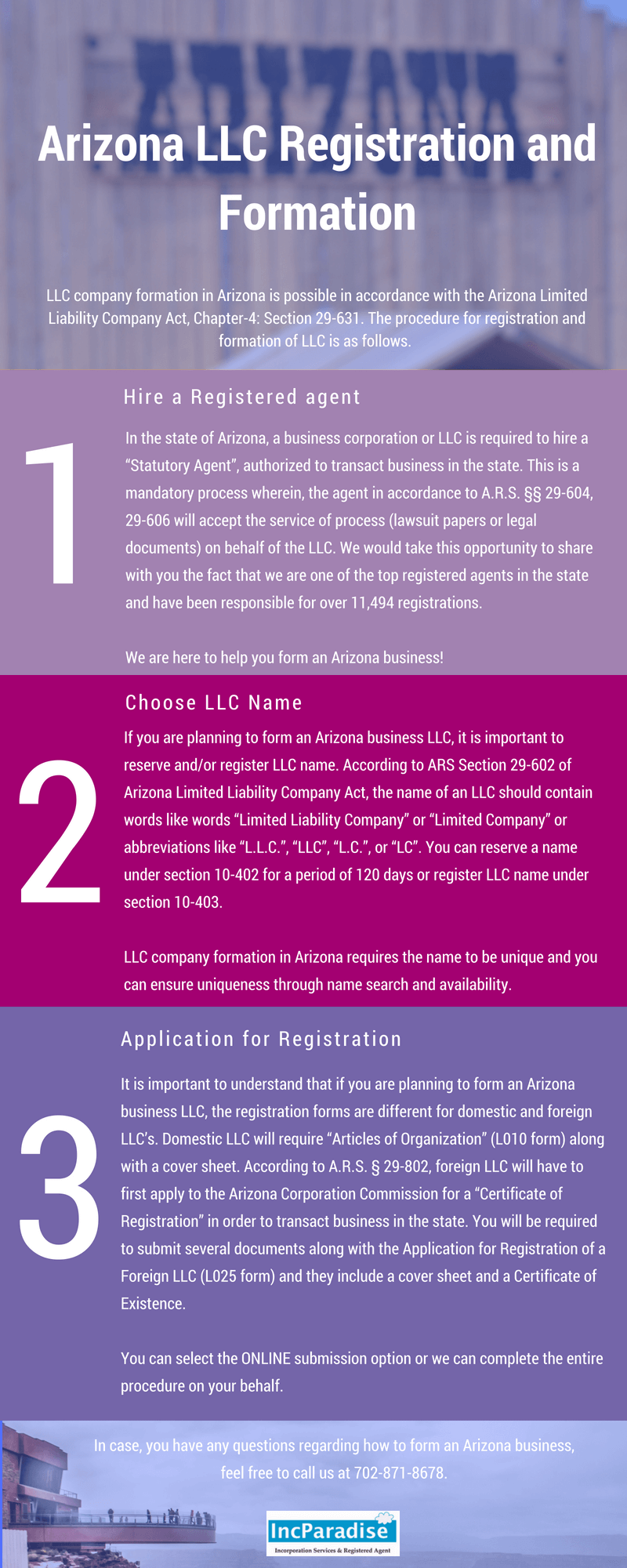
Step 1: Choose a Unique LLC Name
The first and most critical step is selecting a name for your LLC. This name must be distinguishable from other business names already registered in Arizona.
Name Availability Search
Before you get too attached to a name, you must check if it’s available. The Arizona Secretary of State website provides a tool to search for existing business names. You can search by name, entity type, and county. This is a vital step to avoid potential conflicts and rejections.
Naming Requirements
Your LLC name must include a designator indicating it’s a limited liability company. Common designators include:
- “LLC”
- “L.L.C.”
- “Limited Liability Company”
Additionally, the name cannot contain words that suggest the LLC is a government agency (e.g., “Department,” “Agency”) or that it is a bank, insurance company, or trust, unless specific licensing and approval are obtained.
For example, if you are starting a travel company focused on adventure tours in Monument Valley, you might consider names like “Canyon Explorers LLC” or “Arizona Adventures Limited Liability Company.”
Reserving Your Name (Optional)
If you have a name in mind but aren’t ready to file your formation documents, you can reserve the name for a period by filing a Name Reservation Request form with the Arizona Secretary of State. This ensures that no other business can use your chosen name while you prepare your filings.
Step 2: Appoint a Registered Agent
Every LLC registered in Arizona must have a registered agent. This individual or entity serves as the official point of contact for legal and government correspondence.
Who Can Be a Registered Agent?
The registered agent can be:
- An individual resident of Arizona.
- A business entity (domestic or foreign) authorized to do business in Arizona.
The registered agent must have a physical street address in Arizona (not a P.O. Box) and be available during standard business hours to accept service of process.
Options for Registered Agents
- Self-Designation: You can act as your own registered agent if you meet the criteria and are comfortable with receiving and handling official documents. However, this means your personal address will be publicly listed.
- Third-Party Registered Agent Services: Many companies specialize in providing registered agent services. This is a popular option for businesses that want to maintain privacy, ensure someone is always available to receive documents, or operate in multiple states. These services typically come with an annual fee.
If your LLC is a chain of boutique hotels, such as “Desert Bloom Hotels,” you might use a professional service to manage your registered agent duties across various locations.
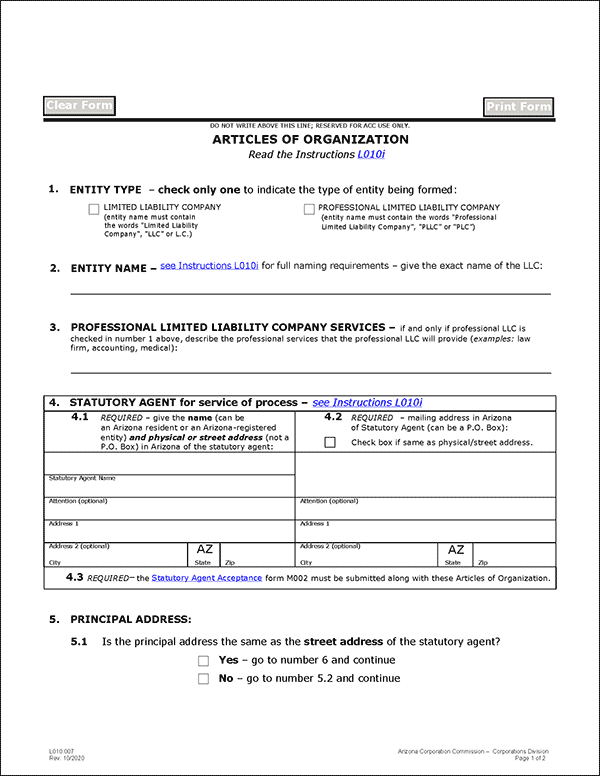
Step 3: File the Articles of Organization
This is the official document that legally creates your LLC with the state of Arizona.
Content of the Articles of Organization
The Articles of Organization for an Arizona LLC typically require the following information:
- LLC Name: The chosen name for your business.
- Registered Agent Name and Address: The name and physical street address of your registered agent.
- Principal Office Address: The main business address of your LLC.
- Management Structure: Whether the LLC will be member-managed or manager-managed.
- Organizer’s Name and Address: The name and address of the person filing the document.
- Effective Date (Optional): You can specify a future date for the LLC to become effective.
Filing with the Arizona Secretary of State
You can file your Articles of Organization online through the Arizona Secretary of State website, by mail, or in person. There is a filing fee associated with this process, which can be found on the Secretary of State’s website. Once filed and approved, your LLC is officially formed.
Step 4: Create an Operating Agreement
While not always legally required by the state for single-member LLCs in Arizona, an Operating Agreement is a vital internal document that governs how your LLC will be run.
Importance of an Operating Agreement
This document is crucial for:
- Defining Ownership: Clearly stating who owns what percentage of the LLC.
- Outlining Management: Detailing how the business will be managed, including decision-making processes and the roles of members or managers.
- Specifying Profit and Loss Distribution: Dictating how profits and losses will be allocated among members.
- Establishing Procedures: Addressing issues like admitting new members, member withdrawal, dissolution, and dispute resolution.
- Reinforcing Limited Liability: An operating agreement helps solidify the separation between the business and its owners, which can be important in legal disputes.
Key Provisions to Include
A well-drafted Operating Agreement should cover:
- Company Name and Purpose
- Members and their Contributions
- Voting Rights
- Management Structure and Duties
- Distributions of Profits and Losses
- Procedures for Admitting or Removing Members
- Dissolution Clause
For a multi-member LLC, perhaps a group launching a new travel experience company in Arizona offering guided tours of national parks, a comprehensive Operating Agreement is indispensable for clarifying expectations and responsibilities among partners.
Step 5: Obtain an EIN from the IRS
An Employer Identification Number (EIN) is a nine-digit number assigned by the Internal Revenue Service (IRS) to business entities operating in the United States for identification purposes.
When is an EIN Required?
You will need an EIN if your LLC:
- Has more than one member.
- Plans to hire employees.
- Operates as a corporation or partnership for tax purposes.
- Has certain types of tax-exempt status.
Even if your LLC is single-member and doesn’t plan to hire employees immediately, obtaining an EIN is often recommended. It helps to separate your business finances from your personal finances and is often required to open a business bank account.
How to Apply for an EIN
You can apply for an EIN for free directly on the Internal Revenue Service website. The application process is straightforward and can typically be completed online within minutes.
Ongoing Compliance and Considerations
Once your LLC is registered, there are ongoing responsibilities and considerations to ensure your business remains compliant and continues to thrive in Arizona.
Annual Reporting Requirements
In Arizona, LLCs are generally required to file an annual report and pay an annual fee with the Corporation Commission. This report updates the state on your business’s information, such as its registered agent and principal office address. Failure to file these reports can result in penalties or the administrative dissolution of your LLC.
Business Licenses and Permits
Depending on your specific business activities and location within Arizona, you may need to obtain various federal, state, and local licenses and permits. For example, a hotel or a tour operator might require specific tourism-related permits, while a restaurant within a resort would need food service licenses. Researching the requirements for your industry and locality is essential.
Tax Obligations
As mentioned earlier, LLCs typically have pass-through taxation. However, you will still need to file federal and state income tax returns. The specific forms and requirements depend on whether your LLC is taxed as a sole proprietorship, partnership, or corporation. It’s advisable to consult with a tax professional to ensure you meet all your tax obligations correctly.
Business Bank Account
It is highly recommended to open a separate business bank account for your LLC. This further reinforces the separation of your business and personal finances, making accounting and tax preparation much simpler and providing an additional layer of protection for your limited liability status. You will typically need your Articles of Organization and your EIN to open a business account.
By following these steps and adhering to ongoing compliance, you can successfully register and operate your LLC in the dynamic business landscape of Arizona, whether you are involved in the vibrant tourism sector, managing a luxurious resort, or offering unique travel experiences.