
Welcome to the vibrant and expansive Lone Star State! Whether you’re a recent transplant, a long-term visitor settling in, or simply need to understand the process for a new vehicle, registering your car in Texas is a fundamental step to officially become part of the local fabric. For many, a car is more than just transportation; it’s a gateway to exploring the diverse landscapes, bustling cities, and charming towns that make Texas truly unique. From the live music capital of Austin to the historic Alamo in San Antonio, the sprawling metropolis of Houston, or the dynamic business hub of Dallas, your car is your ticket to experiencing all that Texas has to offer.
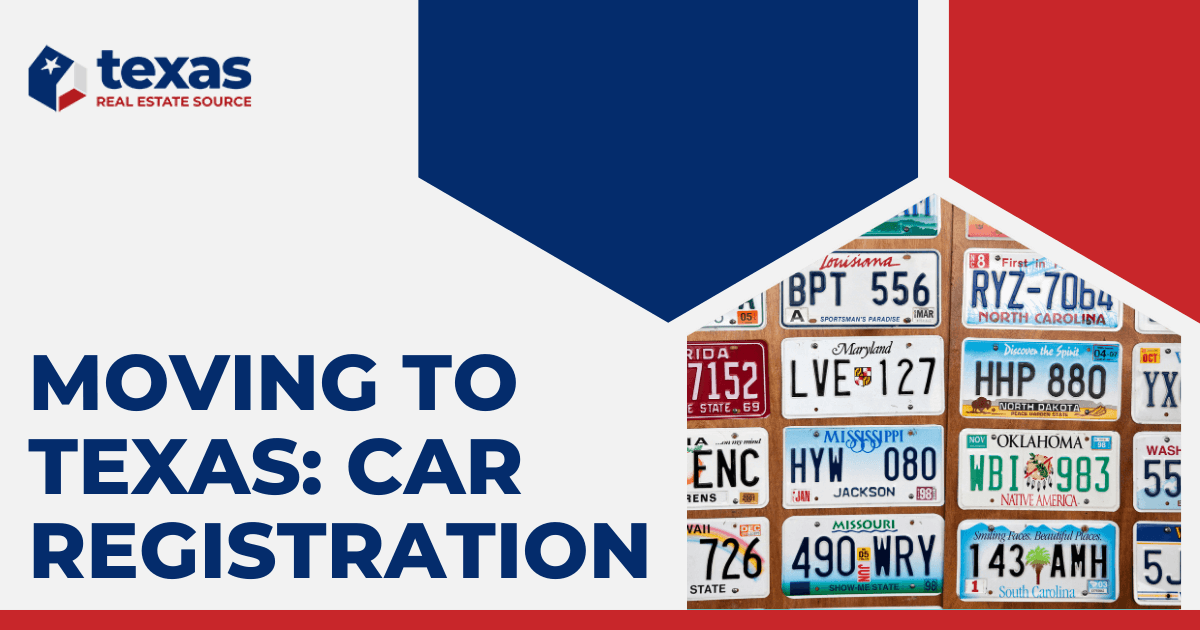
This comprehensive guide is designed to demystify the vehicle registration process, ensuring a smooth transition for new residents and providing clear instructions for anyone navigating the system. We’ll cover everything from mandatory inspections and necessary documentation to understanding fees and securing your official registration. By the end, you’ll be well-equipped to register your vehicle and hit the open roads, ready for your next Texas adventure.
Why You Need to Register Your Car in Texas: Embracing the Lone Star Lifestyle
Registering your car isn’t just a bureaucratic hurdle; it’s a crucial legal requirement that ensures your vehicle is roadworthy, insured, and compliant with state regulations. For those embracing the Lone Star State lifestyle, understanding these requirements is key to a hassle-free experience.
The Importance of Compliance for New Residents
Moving to a new state, whether from another part of the United States or internationally, involves a cascade of administrative tasks. Among the most important for vehicle owners is establishing residency and registering your car. Texas law mandates that new residents register their vehicles within 30 days of establishing residency or purchasing a vehicle. Failure to do so can result in fines and other legal repercussions.
But beyond legal compliance, registering your car is a practical necessity. It grants you the ability to legally operate your vehicle on public roads, obtain proper insurance coverage, and ultimately, fully enjoy the freedom of mobility that a car provides in a state as vast as Texas. Imagine a road trip through the majestic landscapes of Big Bend National Park or a weekend getaway to the Gulf Coast – these experiences are much smoother when you know your vehicle is properly registered and compliant.
For those planning an extended stay or relocation for work in cities like Plano, Fort Worth, or El Paso, registering your car becomes an integral part of settling in. It’s a step towards building your life in Texas, whether you’re commuting to work, dropping kids off at school, or simply exploring local attractions like the Dallas World Aquarium or the Houston Museum District.
Navigating the Texas Car Registration Process: A Step-by-Step Guide
The car registration process in Texas involves several key stages, each requiring specific documentation and attention to detail. While it might seem daunting at first, breaking it down into manageable steps makes it straightforward.
Essential Preparations: Inspection and Insurance
Before you can officially register your vehicle, two crucial prerequisites must be met: a passing vehicle inspection and valid proof of financial responsibility (insurance).
1. Vehicle Inspection (Safety and Emissions):
Every vehicle registered in Texas must pass an annual inspection. This is a combined safety and, in certain counties, emissions inspection.
- Safety Inspection: This checks essential components like brakes, lights, tires, steering, and seatbelts to ensure your vehicle is safe for the road.
- Emissions Inspection: If you reside in one of the 17 counties that require emissions testing (primarily in the Dallas-Fort Worth Metroplex, Houston/Galveston area, and Austin area), your vehicle will also undergo an emissions test to ensure it meets air quality standards. You can easily find a certified inspection station by looking for the “Official Vehicle Inspection Station” sign. Once your vehicle passes, the inspection station will issue a Vehicle Inspection Report (VIR), which will be electronically submitted to the Texas Department of Public Safety (TxDPS). You won’t receive a physical sticker for your windshield anymore; the proof is electronic.
2. Proof of Insurance:
Texas law requires all drivers to carry a minimum amount of liability insurance. Before registering your car, you must have valid auto insurance coverage. The minimum liability coverage in Texas is often referred to as “30/60/25,” which means:
- $30,000 for bodily injury per person
- $60,000 for total bodily injury per accident
- $25,000 for property damage per accident
You will need to present proof of this insurance (e.g., your insurance card or policy declaration page) during the registration process. Make sure your insurance is active and meets the state’s minimum requirements.
Titling Your Vehicle
The vehicle title is the legal document that establishes ownership. If you’ve just moved to Texas from another state, you’ll need to apply for a Texas title. If you purchased a vehicle within Texas, the dealership typically handles the title transfer for you, or you’ll do it yourself if buying from a private seller.
For Out-of-State Vehicles:
To apply for a Texas title, you will need to visit your local County Tax Assessor-Collector’s Office with the following documents:
- Proof of Identity: A valid driver’s license or state ID.
- Out-of-State Title or Registration: The original title from your previous state or your most recent out-of-state registration receipt if your lienholder holds the title.
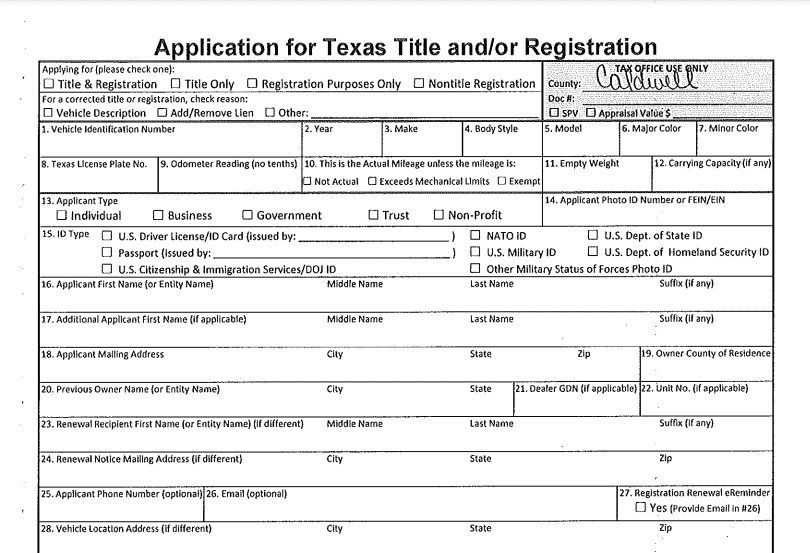
- Form 130-U, Application for Texas Certificate of Title: This form can be downloaded from the Texas Department of Motor Vehicles (TxDMV) website or obtained at the County Tax Assessor-Collector’s Office.
- Proof of Inspection: The electronic Vehicle Inspection Report (VIR) will be accessible to the county office.
- Proof of Insurance: Your current Texas liability insurance card.
- Payment for Title Fees: Be prepared to pay the applicable titling fees and sales tax (if any additional sales tax is due based on the purchase price and any taxes paid in your previous state).
For Recently Purchased Vehicles (in Texas):
If you bought your vehicle from a licensed dealership, they usually handle the title and registration transfer for you. If it was a private sale, you, as the buyer, are responsible for titling the vehicle within 30 days of purchase. You’ll need:
- The Original Title: Signed by the seller, properly reassigned to you.
- Form 130-U, Application for Texas Certificate of Title.
- Proof of Identity and Insurance.
- Vehicle Inspection Report (VIR).
- Payment for Title Fees and Sales Tax: Texas sales tax on vehicles is generally 6.25% of the purchase price or the standard presumptive value, whichever is higher.
Securing Your Registration
Once your vehicle has passed inspection and you have applied for (or transferred) your title, the final step is to secure your annual registration. This is also typically handled at the County Tax Assessor-Collector’s Office, often at the same time you apply for your title.
Documents needed for Registration (if not done concurrently with titling):
- Proof of Identity.
- Proof of Insurance.
- Vehicle Inspection Report (VIR).
- Proof of Ownership: Your Texas title or the receipt showing you’ve applied for one.
- Payment for Registration Fees.
Upon successful completion, you will be issued:
- License Plates: If you are a new registrant or getting new plates.
- Registration Sticker: This sticker must be displayed on the lower left-hand corner of your vehicle’s rear license plate, valid for one year. The old windshield sticker system was phased out in 2015.
It’s important to remember that all these steps must be completed in a timely manner. The 30-day window for new residents and newly purchased vehicles is strictly enforced.
Costs, Renewals, and Special Scenarios
Understanding the financial aspects and long-term requirements of car registration in Texas is just as important as the initial setup.
Understanding Fees and Taxes
The costs associated with registering your vehicle in Texas include several components:
- Vehicle Inspection Fee: Typically around $7 to $25, depending on the type of inspection (safety only vs. safety and emissions) and the inspection station.
- Title Application Fee: Approximately $33.
- Registration Fee: The base annual registration fee for passenger vehicles is around $50.75, but this can vary slightly by county due to local fees.
- Sales Tax: 6.25% of the vehicle’s sales price or standard presumptive value (SPV), whichever is greater. If you moved from out-of-state and paid sales tax there, you might receive a credit, but you’ll owe the difference if Texas’s rate is higher. There’s also a $90 “new resident tax” for vehicles brought into Texas by new residents if sales tax was not previously paid to [Texas](https://lifeoutofthebox.com/texas] or another state.
- Local Fees: Some counties or cities may impose additional small fees, which are added to your total registration cost.
It’s advisable to check the TxDMV website or contact your local County Tax Assessor-Collector’s Office for the most current and accurate fee schedule.
Renewing Your Texas Registration
Once your car is registered, you’ll need to renew it annually. Texas offers several convenient ways to renew your vehicle registration:
- Online: The quickest and most popular method. You can renew online via the TxDMV website. You’ll need your registration renewal notice, proof of inspection, and proof of insurance.
- By Mail: You can mail your renewal notice, proof of insurance, and payment to your County Tax Assessor-Collector’s Office.
- In Person: Visit your local County Tax Assessor-Collector’s Office or a substantiating county office. Some counties also have designated drop-off locations or grocery stores that process renewals.
Regardless of the method, remember to renew before your current registration expires. You’ll receive a renewal notice in the mail or via email as a reminder. Just like the initial registration, your vehicle must pass its annual safety and/or emissions inspection before you can renew.
Special Cases: Out-of-State Vehicles and Leased Cars
Out-of-State Vehicles (Further Detail): As previously mentioned, new Texas residents must register their out-of-state vehicles within 30 days. This involves getting a Texas inspection, applying for a Texas title, and then registering the vehicle. If your out-of-state title is held by a lienholder (meaning you still have a loan on the car), you’ll need to contact your lienholder to request that they send the title to the County Tax Assessor-Collector’s Office for transfer. This can sometimes add a few weeks to the process, so it’s wise to start early.
Leased Vehicles: If your vehicle is leased, the process is slightly different because the leasing company is the legal owner. You will still be responsible for obtaining the inspection and securing insurance. However, for titling and registration, you will need to coordinate with your leasing company. They will typically provide you with the necessary documentation (like a power of attorney) to register the vehicle in Texas on their behalf, or they may handle certain aspects directly. Always check your lease agreement and contact your leasing company for their specific instructions when moving to a new state or registering a new lease in Texas.
Beyond Registration: Exploring Texas by Car
With your vehicle properly registered, the vast and diverse landscape of Texas awaits your exploration. This state offers an incredible array of experiences that are best accessed by car, making your efforts in registration well worth it.
Imagine cruising down historic Route 66 in the Panhandle near Amarillo, with a stop at the iconic Cadillac Ranch. Or perhaps a scenic drive through the Texas Hill Country, discovering charming wineries and small towns like Fredericksburg. The opportunities for adventure are endless.
For outdoor enthusiasts, your car provides access to natural wonders like Guadalupe Mountains National Park or the pristine beaches of Padre Island National Seashore. City explorers can easily navigate the vibrant streets of Austin, famous for its music scene along Sixth Street and outdoor activities around Lady Bird Lake and Zilker Park. In Houston, you can drive to the Space Center Houston for an out-of-this-world experience or catch a game at Minute Maid Park. Meanwhile, Dallas boasts world-class museums in the Dallas Arts District and iconic landmarks like Reunion Tower.
Even local lifestyle and tourism activities often rely on personal transportation. From visiting farmers markets in College Station to enjoying the festive atmosphere of the Houston Livestock Show and Rodeo, having a registered vehicle is essential. Your newly registered car is not just a mode of transport; it’s a key to unlocking the full potential of your Texas experience, offering the freedom to explore, discover, and truly live the Lone Star State lifestyle.
The process of registering your car in Texas is a manageable one when approached with the right information and preparation. By following these steps and understanding the requirements, you’ll soon have your vehicle legally on the road, ready for countless journeys across this incredible state. Safe travels!
LifeOutOfTheBox is a participant in the Amazon Services LLC Associates Program, an affiliate advertising program designed to provide a means for sites to earn advertising fees by advertising and linking to Amazon.com. Amazon, the Amazon logo, AmazonSupply, and the AmazonSupply logo are trademarks of Amazon.com, Inc. or its affiliates. As an Amazon Associate we earn affiliate commissions from qualifying purchases.