
Navigating the process of registering a vehicle in Texas can seem daunting, especially for newcomers to the Lone Star State. Understanding the requirements, necessary documentation, and where to go is crucial for a smooth and efficient experience. This guide aims to demystify the vehicle registration process in Texas, ensuring you can hit the road legally and without unnecessary hassle. Whether you’ve purchased a new or used car, moved from another state, or are simply renewing your registration, this comprehensive overview will provide you with the essential information.
Understanding Vehicle Registration in Texas
Vehicle registration in Texas is managed by the Texas Department of Motor Vehicles (TxDMV). The primary purpose of registration is to identify vehicles operating on public roads and to ensure they meet state safety and environmental standards. It also helps in revenue generation for road maintenance and other public services. Upon registering your vehicle, you will receive license plates and a registration sticker to display on your vehicle, signifying its legal status.
Why Registration is Essential
Registering your vehicle is not merely a bureaucratic requirement; it’s a legal mandate designed for public safety and accountability. Operating an unregistered vehicle can result in significant fines, towing, and other penalties. Moreover, a properly registered vehicle is easier to identify in cases of theft or accidents, contributing to a more secure environment for all road users. It also ensures that your vehicle has undergone the necessary inspections to be deemed roadworthy, protecting you and others from potential hazards.
Key Terms and Concepts
- Proof of Texas Insurance: A valid Texas auto insurance policy is a prerequisite for registration.
- Vehicle Inspection Report (VIR): For most vehicles, a passing inspection at a state-approved inspection station is required.
- Proof of Ownership: This typically includes a title certificate or manufacturer’s statement of origin.
- Proof of Residency: Documentation that verifies you are a Texas resident.
- License Plates: Issued upon successful registration.
- Registration Sticker: Affixed to your license plate to indicate current registration.
Steps to Register Your Vehicle in Texas
The registration process can vary slightly depending on whether your vehicle is new, used, or being transferred from out of state. However, the core steps remain largely consistent.
New Vehicle Registration
If you purchase a new vehicle from a dealership in Texas, the dealership will typically handle the initial titling and registration process for you. They will collect the necessary fees and submit the paperwork to the county tax assessor-collector’s office. You will receive your license plates and registration certificate shortly thereafter. It is still advisable to confirm with the dealership what they have handled and what, if anything, you may need to complete yourself.
Used Vehicle Registration (Purchased in Texas)
When purchasing a used vehicle from a private seller within Texas, you are responsible for titling and registering the vehicle yourself.
- Obtain the Title: The seller must provide you with the vehicle’s properly assigned title. Ensure the seller’s signature matches their identification, and that there are no liens listed on the title unless they have been properly released.
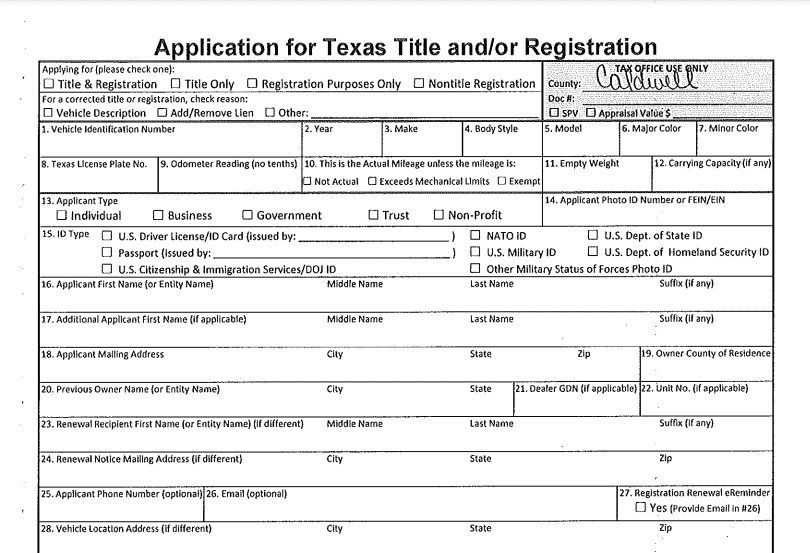
- Complete the Application for Texas Title and/or Registration (Form 130-U): This form requires information about you, the seller, and the vehicle. Both the buyer and seller will need to sign this form.
- Obtain Proof of Texas Insurance: You must have a valid Texas auto insurance policy for the vehicle.
- Get a Vehicle Inspection: Your vehicle must pass a Texas state vehicle inspection. You will receive a Vehicle Inspection Report (VIR) as proof. Keep this report handy.
- Visit the County Tax Assessor-Collector’s Office: Take all your completed forms, proof of insurance, VIR, and payment for fees to your local county tax assessor-collector’s office. You will also need to provide proof of residency.
Out-of-State Vehicle Registration
If you have moved to Texas and brought a vehicle with you, you have a limited timeframe (typically 30 days from establishing residency) to register it.
- Obtain a Texas Title: If you currently have a loan on the vehicle, you will need to contact your lienholder to request they send the title to the Texas Department of Motor Vehicles. If you own the vehicle outright, you will submit your out-of-state title.
- Complete the Application for Texas Title and/or Registration (Form 130-U): As with a used vehicle purchased in Texas, this form is essential.
- Obtain Proof of Texas Insurance: You must have a valid Texas auto insurance policy.
- Get a Vehicle Inspection: Your vehicle will need to pass a Texas state vehicle inspection. Note that vehicles model year 2025 and newer are exempt from the traditional two-step inspection process (safety and emissions) and will only require the OBD (On-Board Diagnostics) inspection. However, older vehicles will still need the full inspection.
- Complete a Vehicle Inspection Report (VIR) Release: For vehicles from out of state, you may need to complete a VIR release form if your vehicle is deemed exempt from an inspection in your previous state.
- Visit the County Tax Assessor-Collector’s Office: Bring all required documentation, proof of insurance, VIR (or VIR release), proof of residency, and payment for fees to your local county tax assessor-collector’s office.
Required Documentation Checklist
To ensure a smooth visit to the county tax assessor-collector’s office, it’s wise to prepare a comprehensive checklist of all necessary documents. Having everything in order will expedite the process and prevent you from having to make return trips.
For All Registrations:
- Completed Application for Texas Title and/or Registration (Form 130-U): Ensure all sections are filled out accurately.
- Proof of Texas Auto Insurance: A current insurance card or policy declaration page.
- Vehicle Inspection Report (VIR): A passing report from a Texas authorized inspection station, dated within the last 90 days.
- Proof of Ownership:
- For new vehicles: Manufacturer’s Statement of Origin (MSO) or Manufacturer’s Certificate of Origin (MCO).
- For used vehicles: Properly assigned Texas title or out-of-state title.
- If a lienholder has your title: A letter from the lienholder authorizing you to register the vehicle and providing lien release information.
- Proof of Residency: A Texas driver’s license, utility bill, or lease agreement.
- Payment for Fees: Cash, check, money order, or credit/debit card (check with your county office for accepted payment methods).
Additional Documentation for Specific Situations:
- For Out-of-State Vehicles: Proof of ownership from your previous state, and potentially a VIR Release form if applicable.
- For Salvage or Rebuilt Vehicles: Specific documentation related to the salvage title and rebuild process.
- For Gifted Vehicles: A Bill of Sale documenting the gift and any applicable exemptions.
Fees and Payment
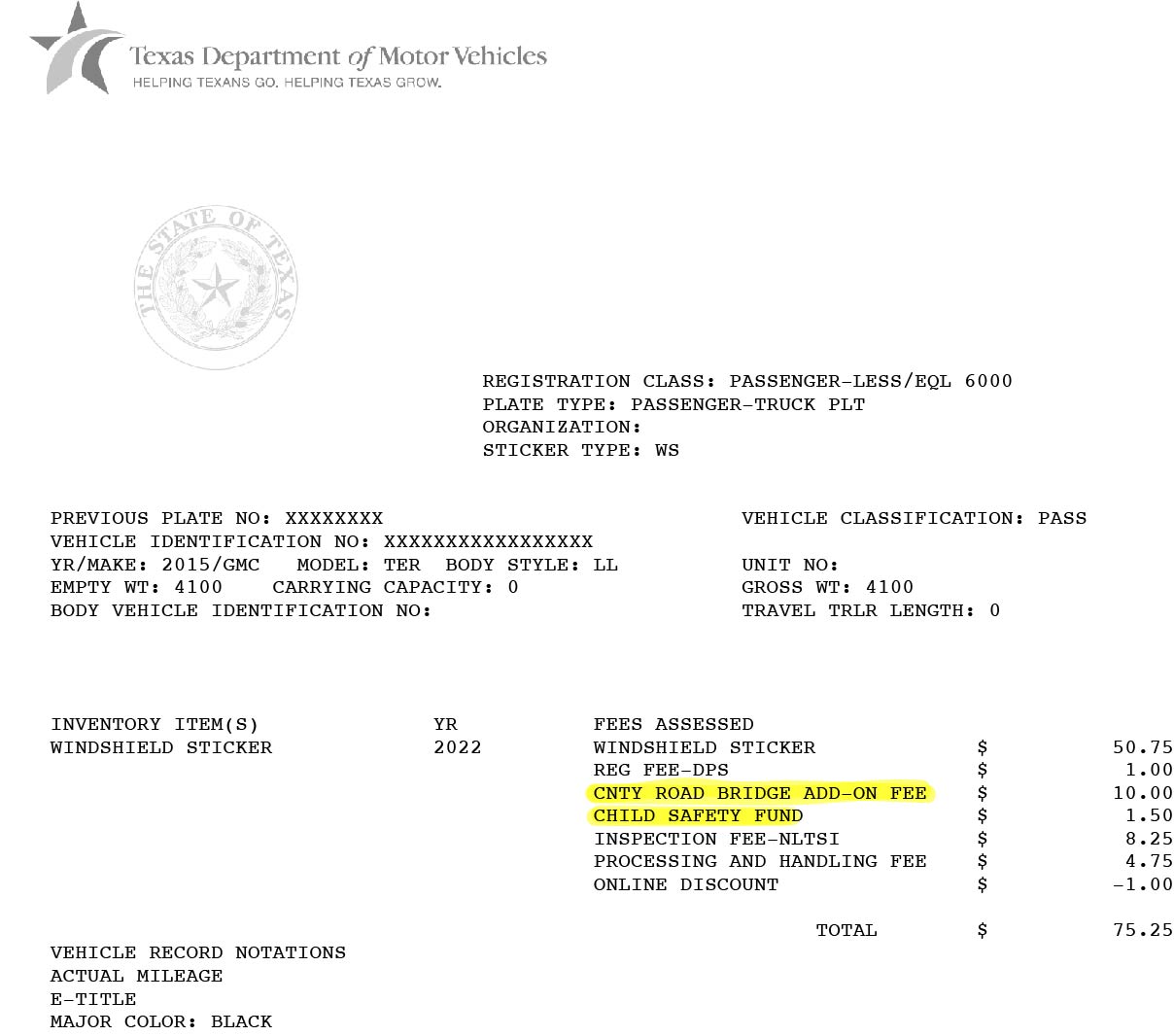
The cost of vehicle registration in Texas varies based on several factors, including the vehicle’s type, weight, age, and whether you are registering it for the first time or renewing an existing registration. Additionally, there are often local fees determined by your county and municipality.
Typical Fees Include:
- Registration Fee: The base fee for registering your vehicle.
- County and Municipal Fees: Additional fees that support local services.
- Title Fee: A one-time fee for transferring the vehicle’s title.
- Inspection Fee: The cost of the mandatory safety and/or emissions inspection.
- Optional Fees: Such as specialty license plates.
It is best to contact your local county tax assessor-collector’s office directly or visit their website for the most accurate and up-to-date fee schedule. Many county offices now offer online tools to estimate your registration costs.
Renewing Your Vehicle Registration
Vehicle registration in Texas is typically valid for one year. You will receive a renewal notice from the TxDMV approximately 30-60 days before your current registration expires.
Renewal Options:
- Online: The TxDMV offers an online renewal portal, which is often the most convenient method. You will need your license plate number and renewal notice code.
- By Mail: You can mail your renewal form and payment to the address provided on the renewal notice.
- In Person: Visit your local county tax assessor-collector’s office.
- At a Texas Department of Public Safety (DPS) Station: Some Texas DPS driver license stations also offer vehicle registration renewal services.
Renewal Requirements:
To renew your registration, you must meet the same requirements as initial registration:
- A current Texas auto insurance policy.
- A passing vehicle inspection report (VIR) if your vehicle requires one.
Failure to renew your registration by the expiration date can result in penalties and late fees, so it’s crucial to stay on top of your renewal.
Important Considerations and Tips
- Timing is Key: Be aware of the 30-day window for registering a vehicle after establishing residency in Texas, or the 90-day window after purchasing a used vehicle from a private party in Texas.
- Keep Documents Secure: Store your vehicle title, registration certificate, and insurance documents in a safe place.
- Check for Recalls: Before registering, consider checking if your vehicle has any open recalls.
- Specialty Plates: Texas offers a wide variety of specialty license plates. You can choose a design that reflects your interests or affiliations, though these often come with additional fees.
- Contact Your County Office: For specific questions or unique situations, your local county tax assessor-collector’s office is the best resource. Their websites often contain detailed information and downloadable forms.
By understanding these steps and preparing your documentation in advance, you can ensure that registering your vehicle in Texas is a straightforward and manageable process, allowing you to enjoy your new or newly acquired vehicle on the open roads of the Lone Star State.
LifeOutOfTheBox is a participant in the Amazon Services LLC Associates Program, an affiliate advertising program designed to provide a means for sites to earn advertising fees by advertising and linking to Amazon.com. Amazon, the Amazon logo, AmazonSupply, and the AmazonSupply logo are trademarks of Amazon.com, Inc. or its affiliates. As an Amazon Associate we earn affiliate commissions from qualifying purchases.