
Florida, a state renowned for its sun-drenched beaches, vibrant theme parks, and burgeoning business landscape, presents a compelling opportunity for entrepreneurs. Whether you’re looking to establish a boutique hotel in Miami, a tour operator catering to visitors of the Everglades, or a vacation rental business managing properties across the Florida Keys, forming a Limited Liability Company (LLC) is a foundational step. This structure offers significant advantages, shielding your personal assets from business liabilities and providing a flexible framework for operations. This comprehensive guide will walk you through the essential steps of setting up an LLC in Florida, ensuring you navigate the process smoothly and efficiently.
The allure of Florida extends far beyond its vacation appeal; it’s a dynamic economic hub attracting businesses of all sizes. From the bustling metropolises like Orlando and Tampa to the charming coastal towns, the Sunshine State offers a diverse range of opportunities for entrepreneurs. If your business vision involves hospitality, from managing luxury resorts on Palm Beach to operating charming bed and breakfasts near St. Augustine, or if you plan to offer unique travel experiences, such as guided tours of Gainesville’s natural wonders, an LLC is often the most suitable legal structure. It provides a layer of protection that is crucial for any aspiring business owner. Understanding the process of establishing this entity is therefore paramount to setting your venture on a solid footing.
Understanding the Benefits of an LLC in Florida
Before diving into the procedural aspects, it’s vital to grasp why an LLC is such a popular choice for businesses operating in Florida. The primary advantage, as the name suggests, is limited liability. This means that the personal assets of the members (owners) of the LLC are generally protected from business debts and lawsuits. If the LLC incurs debt or faces legal action, creditors and litigants can typically only pursue the assets of the LLC itself, not the personal bank accounts, homes, or other property of the members. This distinction is crucial and offers peace of mind to business owners.
Beyond liability protection, LLCs offer flexibility in taxation and management. Unlike corporations, LLCs can choose how they are taxed. They can be taxed as a sole proprietorship (if one member), a partnership (if multiple members), an S-corporation, or a C-corporation. This flexibility allows business owners to select the tax structure that best suits their financial situation and business goals. Furthermore, the management structure of an LLC is adaptable. It can be managed by its members (member-managed) or by appointed managers (manager-managed), providing a level of operational freedom often not found in other business structures.
Consider a scenario where you’re launching a new travel agency specializing in eco-tours of Florida’s natural landscapes, perhaps focusing on birdwatching in the Audubon Center or kayaking through the Wekiwa Springs State Park. If a client were to experience an unfortunate accident during a tour, and your LLC was found liable, your personal savings would remain protected. This shield is invaluable, especially for businesses in service-oriented industries where potential risks are present. Similarly, if you are in the business of providing luxurious vacation apartments or villas in popular tourist destinations like Key West, the protection afforded by an LLC is paramount.
Why Florida is an Attractive Location for LLCs
Florida boasts a business-friendly environment, characterized by its lack of state income tax for individuals and businesses. This is a significant draw for entrepreneurs looking to maximize their profits and retain more capital for growth. The state also benefits from a robust tourism industry, which can be a direct source of customers for businesses in hospitality, travel, and related services. Furthermore, the growing population and diverse economy of Florida provide a substantial market for a wide array of products and services.
The state government actively supports business development, offering resources and incentives for new and expanding businesses. The Florida Department of Economic Opportunity (now FloridaCommerce) provides various programs and initiatives aimed at fostering economic growth. For those looking to establish a presence in a particular locale, cities like Jacksonville, Fort Lauderdale, and Fort Myers offer unique advantages depending on your industry and target market. For instance, Fort Lauderdale is a hub for marine industries, while Jacksonville offers significant logistical advantages due to its port and transportation infrastructure.
When considering where to establish your business, Florida offers more than just favorable tax policies. Its year-round climate and world-class attractions, such as Walt Disney World Resort and Universal Orlando Resort, consistently draw millions of visitors. This provides a built-in customer base for businesses focused on the tourism sector. Whether you’re planning to offer unique experiences in Orlando, manage accommodations in Destin, or develop a brand around exploring Florida’s historical sites like Castillo de San Marcos, the state’s inherent appeal is a powerful asset.
The Steps to Forming Your Florida LLC
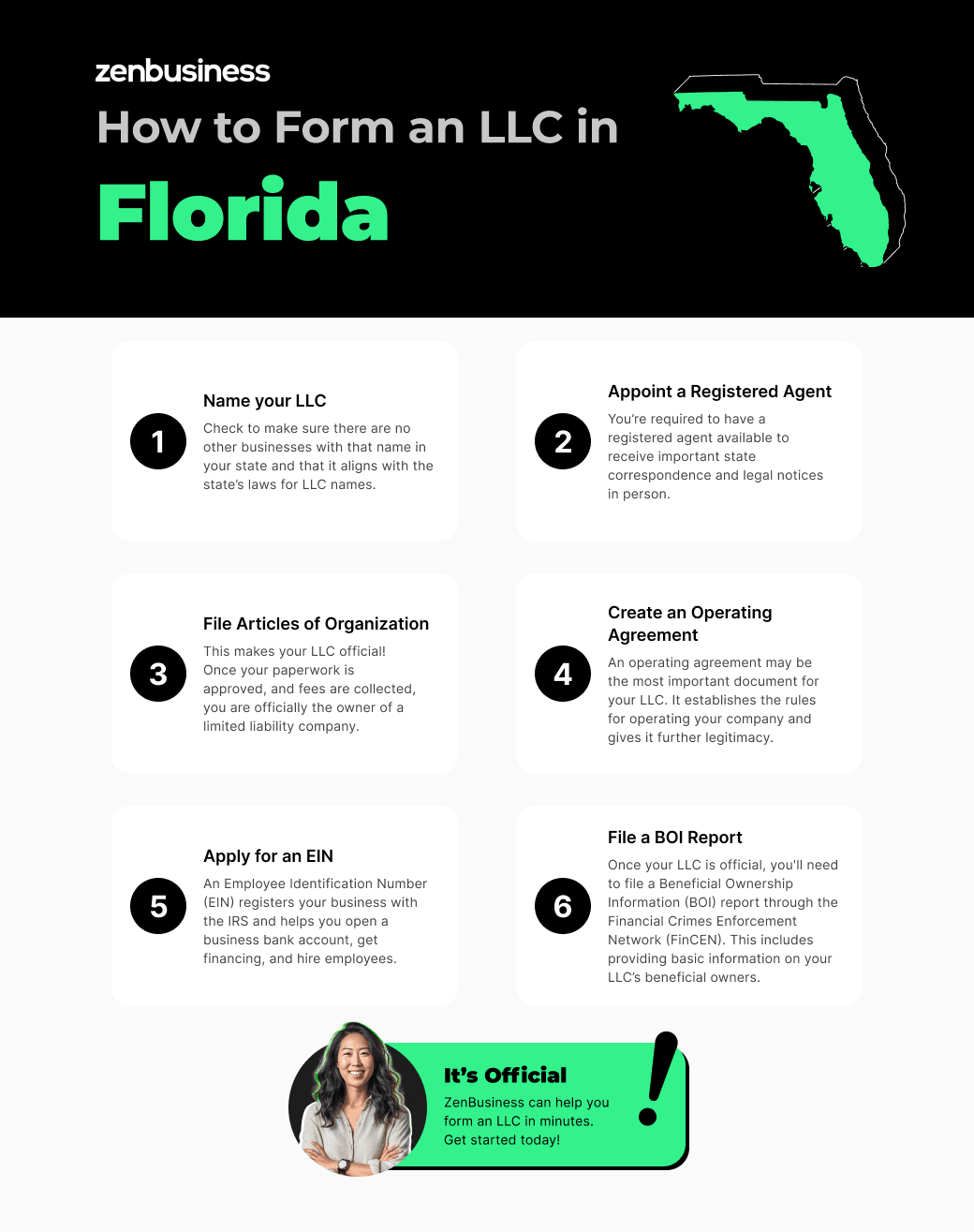
Setting up an LLC in Florida involves several key administrative steps, which, while detailed, are generally straightforward. Understanding each step will help you avoid common pitfalls and ensure a smooth formation process.
Step 1: Choose a Registered Agent
The first crucial step is to designate a registered agent. This is an individual or a company located within Florida who will accept official legal documents and state correspondence on behalf of your LLC. The registered agent must have a physical street address in Florida (not a P.O. Box) and be available during normal business hours to receive service of process. You can serve as your own registered agent if you meet these requirements and have a physical address in the state. However, many businesses opt for a professional registered agent service for privacy and convenience. This ensures that legal notices are received promptly and reliably, which is critical for maintaining good standing with the state.
Choosing the right registered agent is important. They act as the official point of contact for your business with the state. For example, if your LLC is involved in a lawsuit, the legal documents would be served to your registered agent. Therefore, it’s essential to select someone or a service that is dependable and easily accessible. Many companies specialize in providing registered agent services, offering a cost-effective solution for businesses, especially those whose owners do not reside in Florida or cannot be available during business hours.

Step 2: File Articles of Organization with the Florida Department of State
The core of establishing your LLC lies in filing the “Articles of Organization” with the Florida Department of State, Division of Corporations. This document is the official application to form your LLC. It typically requires information such as the LLC’s name, its principal address, the name and address of the registered agent, and the names of the managers or members.
The LLC’s name must be distinguishable from the names of other business entities already registered in Florida. It must also include a designator such as “LLC,” “L.L.C.,” or “Limited Liability Company.” Before filing, it’s wise to conduct a name availability search on the Florida Department of State’s website to ensure your chosen name is unique. The filing fee for Articles of Organization is subject to change, so it’s advisable to check the current fee on the Division of Corporations website before submitting your application. Once filed and approved, your LLC is officially recognized by the state.
Step 3: Create an Operating Agreement
While not legally required by the state of Florida for most LLCs, creating an Operating Agreement is highly recommended. This internal document outlines the ownership structure, operating procedures, and member responsibilities of your LLC. It details how the LLC will be managed, how profits and losses will be distributed, and the procedures for admitting new members or dissolving the company.
A well-drafted Operating Agreement is crucial for preventing disputes among members and ensuring that the LLC operates smoothly. It acts as a blueprint for your business’s internal governance. For example, if your LLC manages multiple hotels or resorts across Florida, such as the Ritz-Carlton in Naples or a chain of budget-friendly motels in Daytona Beach, the Operating Agreement would specify how revenues are shared, how decisions regarding property management are made, and what happens if a partner wishes to exit the business. This internal document solidifies the business’s operational framework and reinforces the limited liability aspect by clearly defining roles and responsibilities.
Step 4: Obtain an EIN (Employer Identification Number)
If your LLC plans to hire employees, operate as a corporation for tax purposes, or file certain tax returns, you will need to obtain an Employer Identification Number (EIN) from the Internal Revenue Service (IRS). An EIN is essentially a Social Security number for your business. It is used for tax filing, opening business bank accounts, and hiring employees.
Obtaining an EIN is a free process and can be done online through the IRS website. You will need to complete Form SS-4, “Application for Employer Identification Number.” Even if your LLC is a single-member entity with no employees, an EIN can be beneficial for separating your business finances from your personal finances, particularly if you plan to open a business bank account. This separation is a key practice for maintaining the integrity of your limited liability status.
Step 5: Understand Ongoing Compliance Requirements
Once your LLC is established, it’s essential to stay compliant with state regulations to maintain its good standing. In Florida, LLCs are required to file an annual report with the Florida Department of State, Division of Corporations. This report, along with the associated fee, provides an update on the LLC’s information, such as its principal address and registered agent. Failure to file the annual report can lead to administrative dissolution of your LLC.
Beyond state requirements, it’s important to maintain good bookkeeping practices, keep business and personal finances separate, and adhere to any local, state, or federal licensing and permit requirements relevant to your specific business operations. For a travel business, this might include specific licenses for tour operators or permits for operating certain types of vehicles. For a hospitality business, it could involve health permits, liquor licenses, and zoning compliance. Staying organized and informed about these ongoing obligations will ensure your LLC remains active and in good legal standing.

Navigating the Business Landscape in Florida
Establishing an LLC is the first step in building a successful business in Florida. The state offers a rich tapestry of opportunities for entrepreneurs across various sectors, particularly those related to tourism, hospitality, and lifestyle. From the vibrant nightlife of South Beach to the tranquil beauty of Sanibel Island, Florida provides diverse backdrops for diverse businesses.
For those in the travel industry, understanding the local attractions is key. Whether it’s promoting the historical significance of St. Augustine, the natural wonders of the Florida Everglades, or the entertainment hubs of Orlando, a well-formed LLC can be the vehicle for success. Similarly, for businesses focusing on accommodation, from luxury villas in Boca Raton to budget-friendly apartments in Clearwater, the legal framework provided by an LLC offers crucial protection.
The lifestyle sector also thrives in Florida. Whether it’s catering to luxury travel with high-end resorts like the Four Seasons Resort Orlando at Walt Disney World Resort, or facilitating family trips to the numerous theme parks, or supporting business stays in major urban centers like Miami or Tampa, an LLC provides a solid foundation. The state’s commitment to economic development, coupled with its inherent appeal as a destination, creates a fertile ground for entrepreneurial ventures. By carefully following the steps outlined above and understanding the ongoing compliance requirements, you can confidently set up your LLC and embark on your business journey in the vibrant state of Florida.