
While the allure of Florida often conjures images of sun-drenched beaches, vibrant theme parks, and a thriving tourism industry, a significant portion of the state’s economic engine is also driven by entrepreneurial spirit. For many individuals looking to establish a business, the “Sunshine State” presents an attractive landscape. If you’re considering launching your venture in Florida, understanding the legal framework is paramount. This guide will walk you through the essential steps to start a Limited Liability Company (LLC) in Florida, a business structure that offers the appealing blend of liability protection and operational flexibility.
Understanding the Limited Liability Company (LLC) in Florida
Before diving into the procedural aspects, it’s crucial to grasp what an LLC is and why it’s a popular choice for entrepreneurs in Florida. An LLC is a hybrid business structure that combines the pass-through taxation of a partnership or sole proprietorship with the limited liability of a corporation. This means that the business itself is responsible for its debts and liabilities, shielding the personal assets of its owners (known as members) from business-related lawsuits or financial obligations. This protection is a significant draw, particularly for businesses operating in sectors that might carry inherent risks, such as those involved in hospitality or tourism where customer satisfaction and safety are paramount.
Benefits of Forming an LLC in Florida
The advantages of forming an LLC in Florida are numerous and contribute to its widespread adoption by business owners.
- Limited Liability Protection: As mentioned, this is the cornerstone benefit. Your personal assets, such as your home, car, and savings, are generally protected from business debts and lawsuits. This distinction between personal and business finances is critical for long-term financial security.
- Pass-Through Taxation: Unlike C-corporations, LLCs are typically not taxed as a separate entity. Instead, profits and losses are passed through to the members, who report them on their personal income tax returns. This avoids the potential for “double taxation” that can occur with corporations.
- Flexibility in Management: LLCs can be managed by their members (member-managed) or by appointed managers (manager-managed). This flexibility allows businesses to structure their operations in a way that best suits their needs and expertise.
- Operational Simplicity: Compared to corporations, LLCs generally have fewer administrative and compliance requirements, making them easier and less costly to maintain.
- Credibility and Professionalism: Operating as an LLC can lend a greater sense of legitimacy and professionalism to your business in the eyes of customers, suppliers, and potential investors.
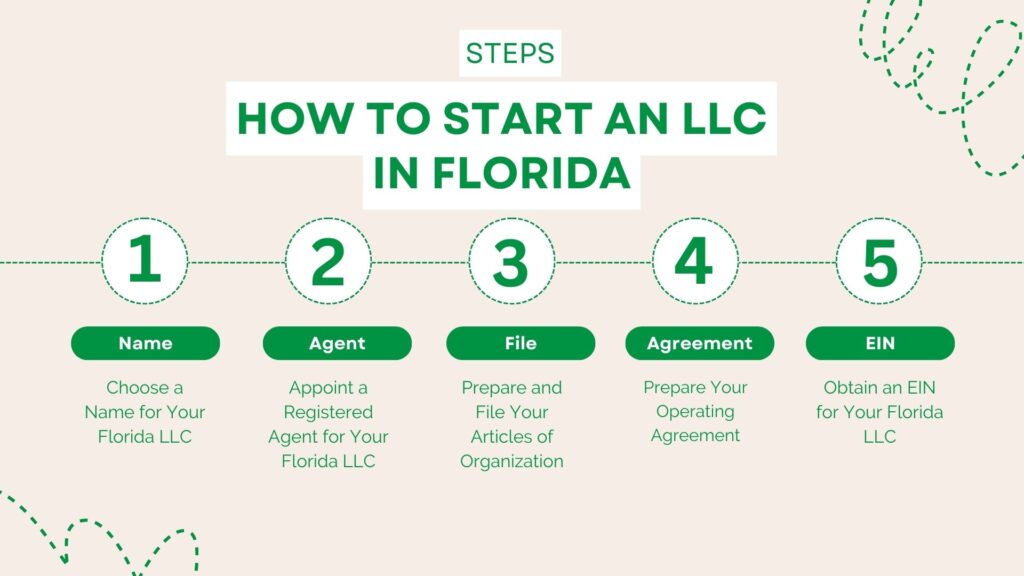
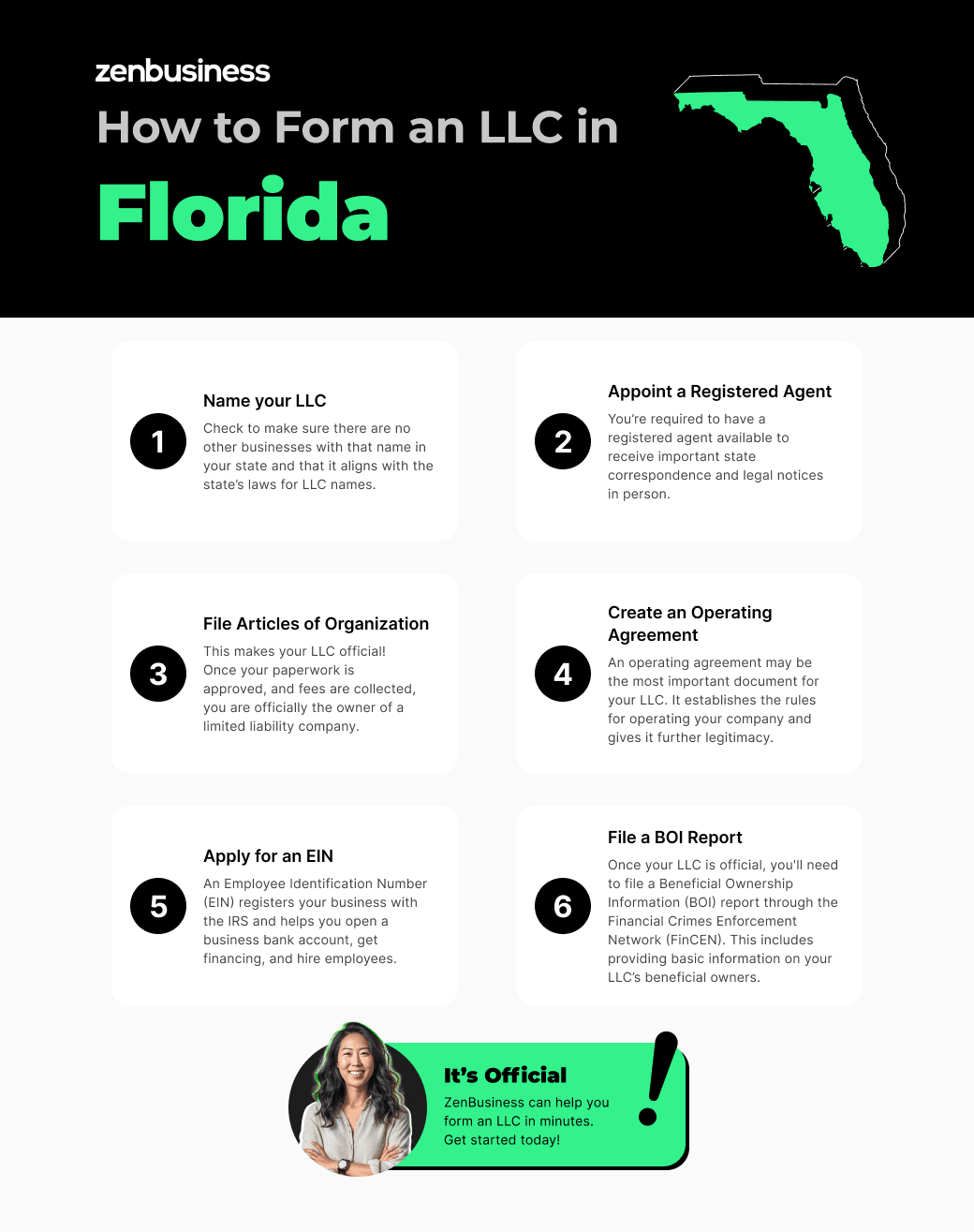
Step-by-Step Guide to Starting Your Florida LLC
Forming an LLC in Florida involves several distinct steps, each requiring careful attention to detail. The process is overseen by the Florida Department of State.
1. Choose a Name for Your LLC
The first and perhaps most exciting step is selecting a name for your business. However, this is also a step that requires due diligence to ensure compliance with Florida state laws.
Naming Requirements and Availability Check
Your LLC name must be distinguishable from existing business names registered in Florida. It must also contain specific designators to indicate its legal structure. You must include one of the following:
- “Limited Liability Company”
- “LLC”
- “L.L.C.”
You cannot use words that are misleading or suggest the company is engaged in a business that it is not. For example, using terms like “Bank,” “Insurance,” or “Trust” without proper licensing is prohibited.
To ensure your chosen name is available, you will need to conduct a name availability search. This can be done online through the Florida Department of State’s Division of Corporations website. It’s advisable to have a few alternative names in mind in case your first choice is already taken. Once you’ve identified an available name, you can reserve it for a period of time for a small fee, giving you a head start before officially filing your formation documents. This reservation is particularly useful if you are still in the planning stages and want to secure your brand identity before committing to the filing process.
2. Appoint a Registered Agent
A crucial requirement for any LLC in Florida is the appointment of a registered agent. This individual or entity is legally responsible for receiving official correspondence and legal documents on behalf of your LLC, such as service of process in the event of a lawsuit.
Responsibilities of a Registered Agent
The registered agent must have a physical street address within Florida (a P.O. Box is not acceptable for this purpose) and be available during normal business hours to accept deliveries. You can act as your own registered agent if you meet these criteria and have a physical address in Florida. However, many businesses opt to hire a professional registered agent service. This is often recommended for several reasons:
- Privacy: Using a professional service keeps your home address private, as it will be listed as the registered agent address.
- Reliability: Professional agents are trained to handle these responsibilities diligently and ensure that no important documents are missed.
- Convenience: It frees up your time to focus on running your business, especially if you travel frequently or have a busy schedule.
When choosing a registered agent, ensure they are reputable and experienced in fulfilling this vital role.
3. File the Articles of Organization
The formal creation of your LLC is accomplished by filing the Articles of Organization (sometimes referred to as the Certificate of Formation) with the Florida Department of State, Division of Corporations. This document is the foundational legal filing that establishes your LLC as a legal entity.
Key Information Required in the Articles of Organization
The Articles of Organization is a relatively straightforward document, but it requires accurate information. Typically, you will need to provide:
- The Name of Your LLC: The exact name you chose and verified for availability.
- The Principal Office Address: The primary physical location of your business operations.
- The Name and Florida Street Address of the Registered Agent: As discussed in the previous step.
- The Name and Address of Each Organizer: The individuals who are signing and filing the document.
- Management Structure: Whether the LLC will be member-managed or manager-managed.
- Effective Date: You can specify a future date for the LLC to become effective, although it’s often filed to be effective upon filing.
There is a filing fee associated with submitting the Articles of Organization. You can file this document online through the Florida Department of State’s website, by mail, or in person. Once the Department of State approves and files your Articles of Organization, your LLC is officially formed and recognized as a legal entity in Florida.
4. Create an Operating Agreement
While not a mandatory filing requirement with the state, an Operating Agreement is an extremely important internal document for any LLC. It outlines the ownership structure, operating procedures, and member responsibilities of your company.
Importance and Contents of an Operating Agreement
Think of the Operating Agreement as the internal rulebook for your LLC. It clarifies how decisions will be made, how profits and losses will be distributed, how new members can join or existing members can leave, and how the business will be dissolved. Having a well-drafted Operating Agreement can prevent future disputes among members and provide clear guidance for the day-to-day operations of the company.
Key provisions often found in an Operating Agreement include:
- Member Contributions: Details of initial capital contributions and future contributions.
- Profit and Loss Distribution: How profits and losses will be allocated among members.
- Voting Rights: The voting power of each member and the procedures for major decisions.
- Management Duties: The roles and responsibilities of members or managers.
- Transfer of Membership Interests: Rules for selling or transferring ownership.
- Dissolution Procedures: How the LLC will be wound down if necessary.
Even if you are the sole member of your LLC, having an Operating Agreement is highly recommended. It reinforces the separation between your personal and business affairs, further strengthening your liability protection.
5. Obtain an Employer Identification Number (EIN)
If your LLC plans to hire employees, or if it is a multi-member LLC, you will need to obtain an Employer Identification Number (EIN) from the Internal Revenue Service (IRS). This number is like a Social Security number for your business and is used for tax purposes.
When an EIN is Necessary
An EIN is required for:
- Hiring Employees: If you will have employees, you must have an EIN to report wages and withhold taxes.
- Operating as a Partnership: Multi-member LLCs are treated as partnerships for federal tax purposes and require an EIN.
- Operating as a Corporation: If your LLC has elected to be taxed as a corporation.
- Filing Certain Tax Returns: Such as excise tax returns.
- Opening a Business Bank Account: Most banks will require an EIN to open a business checking or savings account.
You can apply for an EIN online directly from the IRS website. This process is free of charge. Be cautious of third-party websites that charge a fee for obtaining an EIN, as the official IRS application is free.
6. Understand Ongoing Compliance and Tax Obligations
Once your LLC is formed, there are ongoing responsibilities to maintain its good standing with the state and federal government.

Annual Reports and Tax Filings
In Florida, LLCs are required to file an annual report with the Department of State. This report provides an update on the LLC’s information and ensures that the state has current contact details. Failure to file the annual report can result in the administrative dissolution of your LLC.
From a federal tax perspective, your LLC’s tax obligations will depend on how it is structured and whether it has elected to be taxed as a corporation. As mentioned, many single-member LLCs are taxed as sole proprietorships, and multi-member LLCs are taxed as partnerships, meaning profits and losses are reported on the owners’ personal tax returns. However, you will still need to file the appropriate informational returns with the IRS.
It is highly recommended to consult with a qualified accountant or tax advisor who is familiar with Florida business law and federal tax regulations. They can help you navigate your specific tax obligations, ensure compliance, and potentially identify tax strategies that can benefit your business. This professional guidance is invaluable, especially as your business grows and its financial landscape becomes more complex.
Starting an LLC in Florida is a significant step towards establishing your business. By carefully following these steps, understanding the legal requirements, and seeking professional advice when needed, you can lay a strong foundation for your entrepreneurial journey in the vibrant economic environment of the Sunshine State. Whether your business aspirations lie in the bustling tourism sector, a niche service industry, or any other commercial venture, a well-formed LLC provides a robust framework for success and protection.
LifeOutOfTheBox is a participant in the Amazon Services LLC Associates Program, an affiliate advertising program designed to provide a means for sites to earn advertising fees by advertising and linking to Amazon.com. Amazon, the Amazon logo, AmazonSupply, and the AmazonSupply logo are trademarks of Amazon.com, Inc. or its affiliates. As an Amazon Associate we earn affiliate commissions from qualifying purchases.