
While the allure of exploring the diverse landscapes and vibrant culture of Mississippi is undeniable, with its rich history, delectable cuisine, and burgeoning tourism sector, for many, the true gateway to experiencing this Southern charm lies in entrepreneurship. The question of “How to start an LLC in Mississippi?” might seem a world away from planning a luxury travel escape or discovering hidden landmarks, yet it’s a fundamental step for those looking to build a business that can capitalize on the state’s economic potential. Whether your vision involves establishing a unique boutique hotel in the heart of Natchez, offering specialized travel experiences along the Mississippi River, or providing top-tier accommodation services in the growing city of Oxford, understanding the legal framework is paramount.
This article will guide you through the essential steps of forming a Limited Liability Company (LLC) in Mississippi, a business structure that offers the liability protection of a corporation with the pass-through taxation and operational flexibility of a partnership or sole proprietorship. It’s a crucial endeavor for aspiring entrepreneurs, regardless of whether their business aspirations are directly tied to the tourism industry or a different venture altogether. The process, while requiring attention to detail, is generally straightforward, and by following these guidelines, you can lay a solid foundation for your entrepreneurial journey in the Magnolia State.
Understanding the Basics of an LLC in Mississippi
Before diving into the procedural steps, it’s beneficial to grasp what an LLC is and why it’s a popular choice for businesses of all sizes, from small family operations to larger enterprises looking to expand their reach. An LLC provides a shield between your personal assets and your business debts and liabilities. This means that if your business incurs debt or faces a lawsuit, your personal property, such as your home or car, is generally protected. This separation is a significant advantage over operating as a sole proprietorship or general partnership, where personal assets are at risk.
Furthermore, LLCs offer considerable flexibility in management and taxation. Unlike corporations, which have a more rigid structure, LLCs can be managed by their members or by appointed managers. This allows for a tailored approach that suits the specific needs of your business. Tax-wise, LLCs typically benefit from pass-through taxation, meaning the business itself doesn’t pay income tax. Instead, profits and losses are passed through to the owners’ personal income tax returns. This avoids the “double taxation” that can occur with C-corporations.
Key Advantages of Forming an LLC
- Limited Liability Protection: As mentioned, this is the cornerstone benefit. It safeguards your personal assets from business-related debts and lawsuits.
- Pass-Through Taxation: Avoids the potential for double taxation inherent in C-corporations.
- Flexibility in Management: You can choose how your LLC is managed, offering adaptability as your business grows.
- Credibility and Professionalism: Forming an LLC can lend an air of legitimacy and professionalism to your business, which can be attractive to customers, partners, and investors.
- Ease of Formation and Operation: Compared to corporations, LLCs generally have fewer administrative burdens and less stringent compliance requirements.
For individuals dreaming of opening a charming inn near the historical sites of Vicksburg or developing an app for booking unique accommodations across Mississippi, establishing an LLC is a vital first step in transforming that vision into a tangible, legally recognized entity.
The Step-by-Step Guide to Starting Your Mississippi LLC
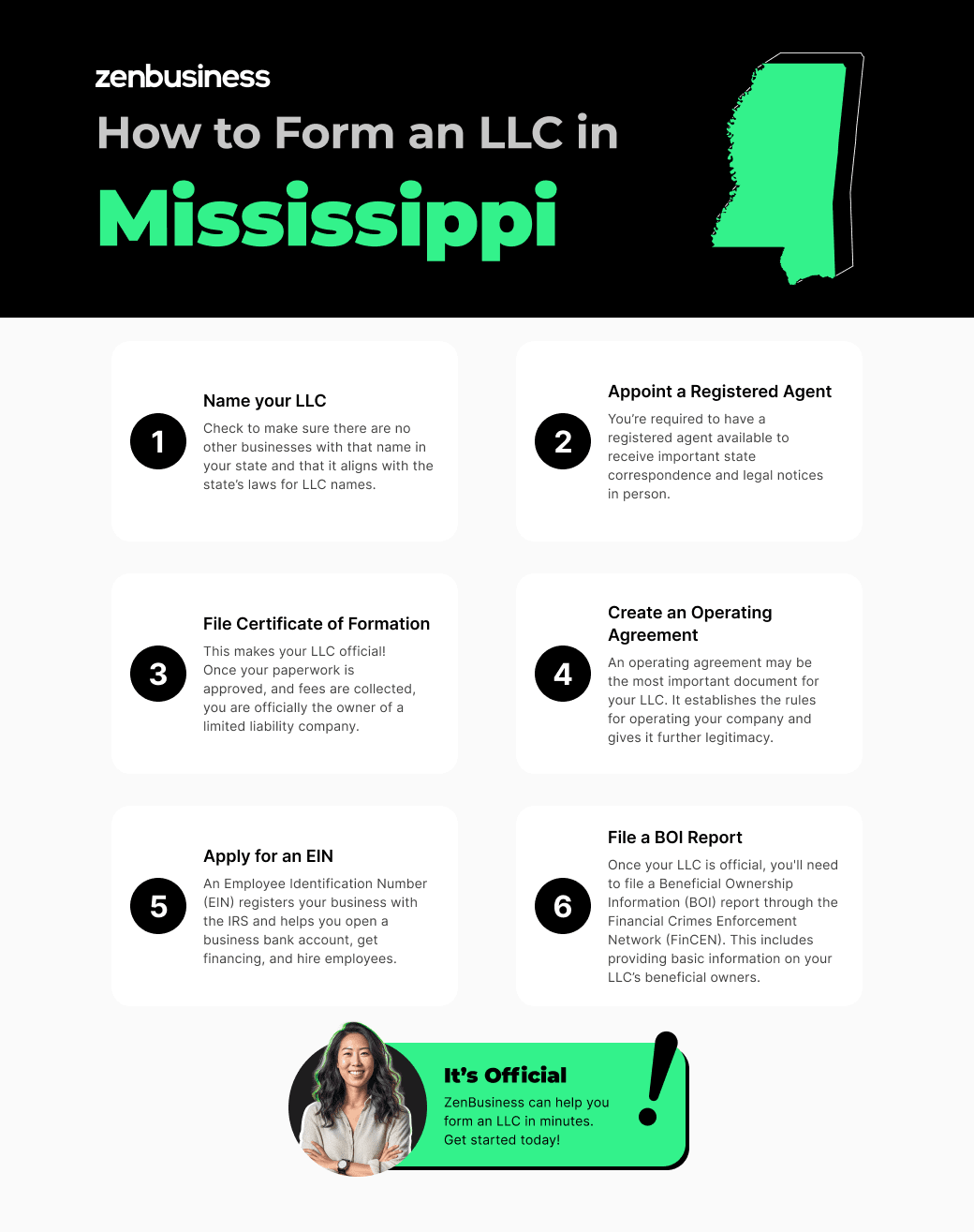
Forming an LLC in Mississippi involves several key steps, each designed to ensure your business is legally established and compliant with state regulations. While the process can seem daunting, breaking it down into manageable stages makes it much more approachable.
Step 1: Choose a Unique Name for Your LLC
The first crucial step is selecting a name for your business. This name must be distinguishable from any other business entity already registered with the Mississippi Secretary of State. You will need to perform a name availability search on the Secretary of State’s website to ensure your chosen name is not already in use.
Naming Guidelines:
- The name must include a designator indicating it is a limited liability company, such as “Limited Liability Company,” “LLC,” or “L.L.C.”
- Avoid using words that might be misleading or imply that the company is organized for a purpose for which it is not authorized.
- Ensure the name is unique and does not infringe on existing trademarks.
Once you have a name in mind, it’s advisable to check its availability. Many entrepreneurs also choose to reserve their business name for a period before officially filing, though this is not always a mandatory step in Mississippi. This reservation ensures that no other business can claim your desired name while you complete the formation process.
Step 2: Appoint a Registered Agent
A registered agent is a person or business entity designated to receive official legal and tax documents on behalf of your LLC. This agent must have a physical street address in Mississippi and be available during normal business hours to accept service of process.
Who Can Be a Registered Agent?
- An individual resident of Mississippi.
- A domestic or foreign business entity authorized to do business in Mississippi.
You can choose to act as your own registered agent if you meet these requirements, or you can hire a commercial registered agent service. Using a commercial service can be beneficial if you frequently travel or are concerned about missing important notices, especially if your business operations extend beyond Mississippi to places like New Orleans or Memphis.
Step 3: File the Articles of Organization
This is the formal document that officially creates your LLC in Mississippi. The Articles of Organization, also known as a Certificate of Formation in some states, must be filed with the Mississippi Secretary of State.
Key Information in the Articles of Organization:
- The name of the LLC.
- The name and address of the registered agent.
- The principal office address of the LLC.
- The names and addresses of the members or managers (depending on the management structure).
- The effective date of the LLC (which can be immediate or a future date).
There is a filing fee associated with submitting the Articles of Organization. You can typically file these documents online, by mail, or in person. It’s wise to have your Articles of Organization reviewed by a legal professional or a business formation service to ensure accuracy and compliance with all state requirements.
Step 4: Create an Operating Agreement
While not always legally required by the state, an Operating Agreement is a crucial internal document for your LLC. It outlines the ownership structure, management responsibilities, operating procedures, and profit/loss distribution of your business.
Importance of an Operating Agreement:
- Defines Member Roles and Responsibilities: Clearly states who does what, preventing disputes.
- Outlines Profit and Loss Distribution: Specifies how profits and losses will be shared among members.
- Establishes Management Structure: Details whether the LLC will be member-managed or manager-managed.
- Governs Membership Changes: Provides a framework for adding or removing members.
- Resolves Disputes: Can include provisions for dispute resolution.
A well-drafted Operating Agreement is vital for maintaining smooth operations, especially if you have multiple members or if your business plans to offer services that might compete with existing tourism attractions in areas like the Mississippi Delta.
Step 5: Obtain an EIN (Employer Identification Number)
An Employer Identification Number (EIN), also known as a Federal Tax Identification Number, is issued by the Internal Revenue Service (IRS). You will need an EIN if your LLC plans to hire employees, operate as a corporation or partnership for tax purposes, or file certain tax returns.
When is an EIN Necessary?
- If your LLC has more than one member.
- If you plan to hire employees.
- If your LLC is a multi-member LLC taxed as a partnership.
- If your LLC is taxed as a corporation.
You can apply for an EIN for free on the IRS website. This is a straightforward online process that can be completed in a matter of minutes.
Ongoing Compliance and Best Practices for Your Mississippi LLC
Establishing an LLC is the first major hurdle, but maintaining compliance with state and federal regulations is crucial for its continued success and legal standing. This ensures that your business, whether it’s a burgeoning bed and breakfast in the historic Gulf Coast or a new venture offering budget travel tips for exploring Jackson, operates smoothly and legally.
Annual Requirements in Mississippi
Mississippi requires LLCs to file an annual report with the Secretary of State. This report is essentially an update of your LLC’s information, ensuring that the state has your most current contact details and registered agent information. There is a filing fee associated with the annual report. Failing to file these reports can lead to penalties and, in severe cases, the administrative dissolution of your LLC. It’s advisable to calendar these deadlines to avoid any lapse in compliance.
Maintaining Separate Finances
A fundamental aspect of preserving the limited liability protection of your LLC is to maintain strict separation between your personal and business finances. This means opening a dedicated business bank account for your LLC and using it for all business transactions. Commingling personal and business funds can erode the legal veil that protects your personal assets, making them vulnerable in legal disputes. This principle is especially important if your business involves managing large sums of money, such as a hotel booking platform or a tour operator in the scenic Natchez Trace Parkway.
Understanding Tax Obligations
As an LLC, you have flexibility in how your business is taxed. You can opt to be taxed as a sole proprietorship (if you have one member), a partnership (if you have multiple members), or you can elect to have your LLC taxed as a corporation (either an S-corp or a C-corp). The choice of tax election can have significant implications for your tax liability. It’s highly recommended to consult with a qualified tax advisor or an accountant to determine the most advantageous tax structure for your specific business needs and financial situation. This is particularly relevant for businesses aiming to maximize profits from luxury travel packages or resort operations.

Staying Informed and Adapting
The business landscape is constantly evolving, and staying informed about changes in state and federal laws that may affect your LLC is crucial. This includes understanding any new regulations related to tourism, hospitality, or business operations in Mississippi. Regularly reviewing your business plan and your Operating Agreement to ensure they still align with your current operations and future goals is also a wise practice. For those involved in the burgeoning food tourism scene or managing unique villas, adapting to market trends and legal requirements will be key to sustained success.
By diligently adhering to these ongoing compliance measures and adopting best practices, you can ensure that your LLC in Mississippi remains a strong, legally protected, and well-managed entity, ready to navigate the opportunities and challenges that lie ahead, from attracting visitors to Biloxi to managing your operations effectively.
LifeOutOfTheBox is a participant in the Amazon Services LLC Associates Program, an affiliate advertising program designed to provide a means for sites to earn advertising fees by advertising and linking to Amazon.com. Amazon, the Amazon logo, AmazonSupply, and the AmazonSupply logo are trademarks of Amazon.com, Inc. or its affiliates. As an Amazon Associate we earn affiliate commissions from qualifying purchases.