
Starting a Limited Liability Company (LLC) in Texas is a strategic move for entrepreneurs looking to protect their personal assets while enjoying the flexibility of pass-through taxation. This business structure offers a compelling blend of personal liability protection, akin to a corporation, with the operational simplicity and tax advantages of a sole proprietorship or partnership. For those embarking on this entrepreneurial journey within the Lone Star State, understanding the procedural steps is paramount to establishing a legally sound and functional business entity. This guide will navigate you through the essential requirements and considerations for forming your Texas LLC.
Understanding the Texas LLC Landscape
A Limited Liability Company, or LLC, is a hybrid business structure that combines the pass-through taxation of a partnership or sole proprietorship with the limited liability of a corporation. In Texas, this means that the owners, known as members, are generally not personally responsible for the debts and liabilities of the business. This separation is a critical advantage, shielding personal assets like homes and savings from business-related lawsuits or financial obligations.
Key Benefits of Forming an LLC in Texas
- Limited Liability Protection: This is the cornerstone of the LLC structure. It segregates your personal finances from your business, offering a robust shield against potential creditors and litigants.
- Pass-Through Taxation: Unlike traditional corporations, LLCs typically avoid double taxation. Profits and losses are “passed through” to the members’ personal income tax returns, avoiding corporate income tax at the entity level.
- Flexibility in Management: LLCs can be managed by their members (member-managed) or by appointed managers (manager-managed). This flexibility allows you to structure your company’s operations in a way that best suits your business needs.
- Fewer Formalities: Compared to corporations, LLCs generally have fewer ongoing compliance requirements, such as mandatory annual meetings and extensive record-keeping, although maintaining good operational practices is always advisable.
- Credibility and Professionalism: Operating as an LLC can lend an air of legitimacy and professionalism to your venture, potentially making it easier to secure financing, establish business relationships, and attract customers.
Steps to Form Your Texas LLC
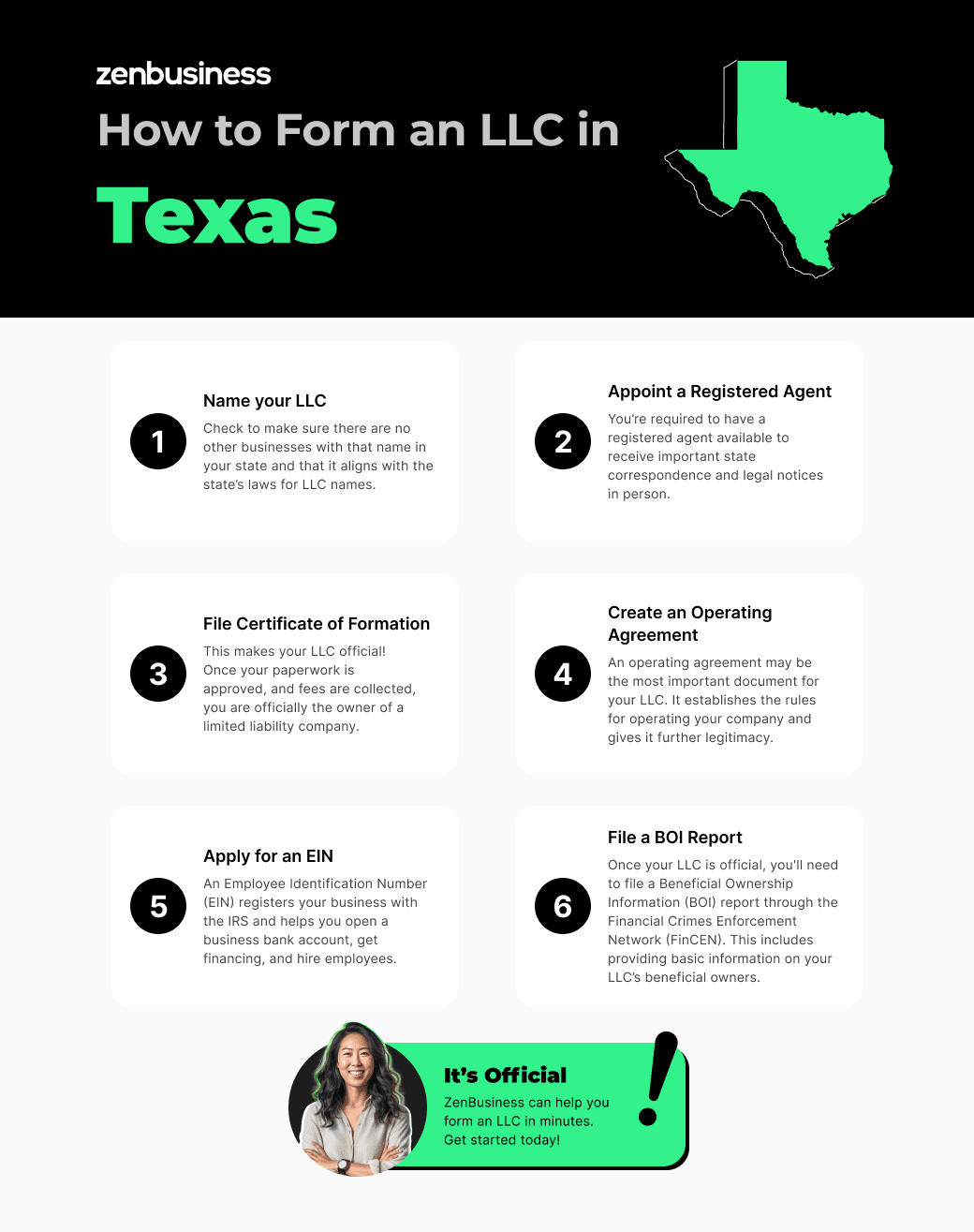
The process of forming an LLC in Texas involves several distinct steps, each requiring careful attention to detail.
1. Choose a Business Name
Your LLC’s name is its identity. It must be unique and distinguishable from existing business names registered in Texas. The name must also include an indicator of its legal structure, such as “Limited Liability Company,” “LLC,” or “L.L.C.”
- Name Availability Search: Before committing to a name, it’s essential to check its availability with the Texas Secretary of State. This can typically be done through the Secretary of State’s website.
- Name Reservation: If you have a name in mind but are not ready to file the formation documents, you can reserve the name for a limited period by filing an application for name reservation with the Secretary of State.
2. Appoint a Registered Agent
Every Texas LLC must designate a registered agent. This individual or entity is responsible for receiving official legal and tax documents on behalf of the company. The registered agent must have a physical street address in Texas (not a P.O. Box) and be available during normal business hours to accept service of process.
- Who Can Be a Registered Agent?: The registered agent can be an individual Texas resident, or a business entity authorized to do business in Texas. Many entrepreneurs choose to act as their own registered agent if they meet the criteria, or they may hire a commercial registered agent service for added privacy and convenience.
3. File the Certificate of Formation
The formal creation of your LLC occurs when you file the Certificate of Formation with the Texas Secretary of State. This document is the foundational legal filing that officially establishes your business entity.
- Required Information: The Certificate of Formation typically requires:
- The name of the LLC.
- The name and physical address of the registered agent.
- The name and address of each organizer.
- The management structure of the LLC (member-managed or manager-managed).
- The effective date of formation (which can be the filing date or a future date).
- Filing Fee: A filing fee is required by the Texas Secretary of State. The exact amount can be found on their official website.
4. Create an Operating Agreement
While not legally required by the state of Texas for single-member LLCs, an Operating Agreement is a crucial internal document for all LLCs. It outlines the ownership structure, operating procedures, and member responsibilities of the company.

- Purpose of the Operating Agreement:
- Defines the rights and responsibilities of members.
- Outlines profit and loss distribution.
- Establishes procedures for admitting new members or handling the departure of existing members.
- Specifies voting rights and decision-making processes.
- Provides a roadmap for managing the LLC and resolving potential disputes.
- Importance for Credibility: Having a well-drafted Operating Agreement can further solidify the separation between personal and business affairs, which is important for maintaining your limited liability protection.
5. Obtain an EIN (Employer Identification Number)
An Employer Identification Number, or EIN, is a nine-digit number assigned by the Internal Revenue Service (IRS) to business entities operating in the United States for tax purposes. It’s essentially a Social Security number for your business.
- When is an EIN Required?: You will need an EIN if your LLC plans to hire employees, operates as a partnership, or is taxed as a corporation. Even if not strictly required, obtaining an EIN is generally recommended for opening business bank accounts and for establishing business credit.
- How to Apply: You can apply for an EIN for free directly through the IRS website.
Post-Formation Essentials for Your Texas LLC
Once your Certificate of Formation is approved and your LLC is officially established, there are several ongoing considerations to ensure your business remains compliant and operates smoothly.
1. Business Bank Account
It is vital to keep your business finances separate from your personal finances. This is achieved by opening a dedicated business bank account for your LLC.
- Maintaining Separation: Using a separate bank account is essential for maintaining the limited liability protection afforded by the LLC structure. Commingling funds can blur the lines between personal and business assets, potentially jeopardizing your liability shield.
- Required Documents: You will typically need your Certificate of Formation, EIN, and your Operating Agreement to open a business bank account.
2. Licenses and Permits
Depending on your industry and location within Texas, your LLC may need to obtain various federal, state, and local licenses and permits to operate legally.
- Researching Requirements: Thorough research is necessary to identify all applicable licenses and permits. This might include professional licenses, sales tax permits, zoning permits, and health permits, among others.
- State and Local Agencies: You may need to consult with agencies like the Texas Comptroller of Public Accounts for sales tax permits, or local city and county governments for business licenses and zoning information.
3. Annual State Franchise Tax
In Texas, most LLCs are subject to an annual franchise tax. However, there is a “no tax due” threshold. If your LLC’s total revenue is below a certain amount, you may be exempt from paying the tax, though you still need to file a “No Tax Due” report.
- Filing Deadline: The franchise tax report and any tax due are typically filed annually with the Texas Comptroller of Public Accounts.
- Understanding Obligations: It is crucial to understand your specific filing obligations to avoid penalties and interest.
4. Ongoing Compliance and Record Keeping
While LLCs have fewer formal requirements than corporations, maintaining good business practices and accurate records is still important. This includes keeping up-to-date financial records, important business documents, and any changes to your registered agent or business address.
- Annual Filings: Beyond the franchise tax, keep an eye on any other recurring state or local filings that might be required.
- Document Retention: Establish a system for retaining important business documents, such as contracts, invoices, and legal agreements.

Conclusion
Forming an LLC in Texas is a well-defined process that offers significant advantages for entrepreneurs. By carefully following the steps of selecting a name, appointing a registered agent, filing the Certificate of Formation, creating an Operating Agreement, and securing an EIN, you lay a strong foundation for your business. Remembering to establish a separate business bank account, obtain necessary licenses and permits, comply with annual tax obligations, and maintain diligent record-keeping will ensure your LLC operates legally and effectively, providing the liability protection and operational flexibility you seek. This structured approach is key to a successful entrepreneurial venture in the dynamic business landscape of Texas.
LifeOutOfTheBox is a participant in the Amazon Services LLC Associates Program, an affiliate advertising program designed to provide a means for sites to earn advertising fees by advertising and linking to Amazon.com. Amazon, the Amazon logo, AmazonSupply, and the AmazonSupply logo are trademarks of Amazon.com, Inc. or its affiliates. As an Amazon Associate we earn affiliate commissions from qualifying purchases.