
For the avid traveler who finds solace and adventure on the water, mastering effective fishing techniques can transform a good trip into an unforgettable journey. Among the myriad rigging methods available, the Texas Rig stands out as a universally acclaimed, incredibly versatile, and undeniably effective setup, particularly for targeting elusive bass in challenging conditions. While its name suggests an origin deeply rooted in the Lone Star State’s rich fishing heritage, its utility extends far beyond, making it an indispensable skill for any angler exploring diverse waterways across the globe.
This guide isn’t just about tying a knot; it’s about unlocking a new dimension of travel and outdoor lifestyle. We’ll delve into the intricacies of the Texas Rig, understanding its components, assembly, and tactical deployment, all while framing it within the context of exhilarating travel experiences, from tranquil lakeside getaways to exotic fishing expeditions. Whether you’re a seasoned angler planning your next adventure or a curious traveler looking to add a thrilling new activity to your itinerary, the Texas Rig offers a pathway to deeper connection with nature and the thrill of the catch.
Discovering the Texas Rig: A Traveler’s Essential for Aquatic Exploration
Imagine yourself casting into the murky waters of a secluded Florida lake, or navigating the dense lily pads of a hidden California pond. These are the environments where the Texas Rig truly shines, offering a distinct advantage that makes it a favorite among experienced and novice anglers alike. Its simplicity and effectiveness make it a must-know for anyone looking to incorporate fishing into their travel plans, promising less frustration and more bites.
What Exactly is a Texas Rig and Why Travelers Love It?
At its core, the Texas Rig is a weedless, snag-resistant soft plastic lure setup designed to be fished in heavy cover without getting hung up. This ingenious design allows anglers to cast into dense vegetation, submerged timber, rocky bottom structures, and thick brush where other lures would quickly become entangled. For the traveler, this means less time untangling lines and more time experiencing the thrill of the fight.
The beauty of the Texas Rig lies in its sleek, streamlined profile. The hook point is embedded within the soft plastic bait, making the entire presentation virtually weedless. This characteristic is invaluable when exploring unfamiliar waters, as you can confidently probe areas that might otherwise seem unfishable. From the quiet coves of Lake Fork in Texas to the biodiverse freshwater ecosystems of Mexico, the ability to fish where the big ones hide is a game-changer. Furthermore, its components are relatively small and easy to pack, fitting seamlessly into a travel fishing kit without adding significant bulk or weight – a crucial consideration for any adventure-seeker.
The Anatomy of a Successful Texas Rig: Gear for the Traveling Angler
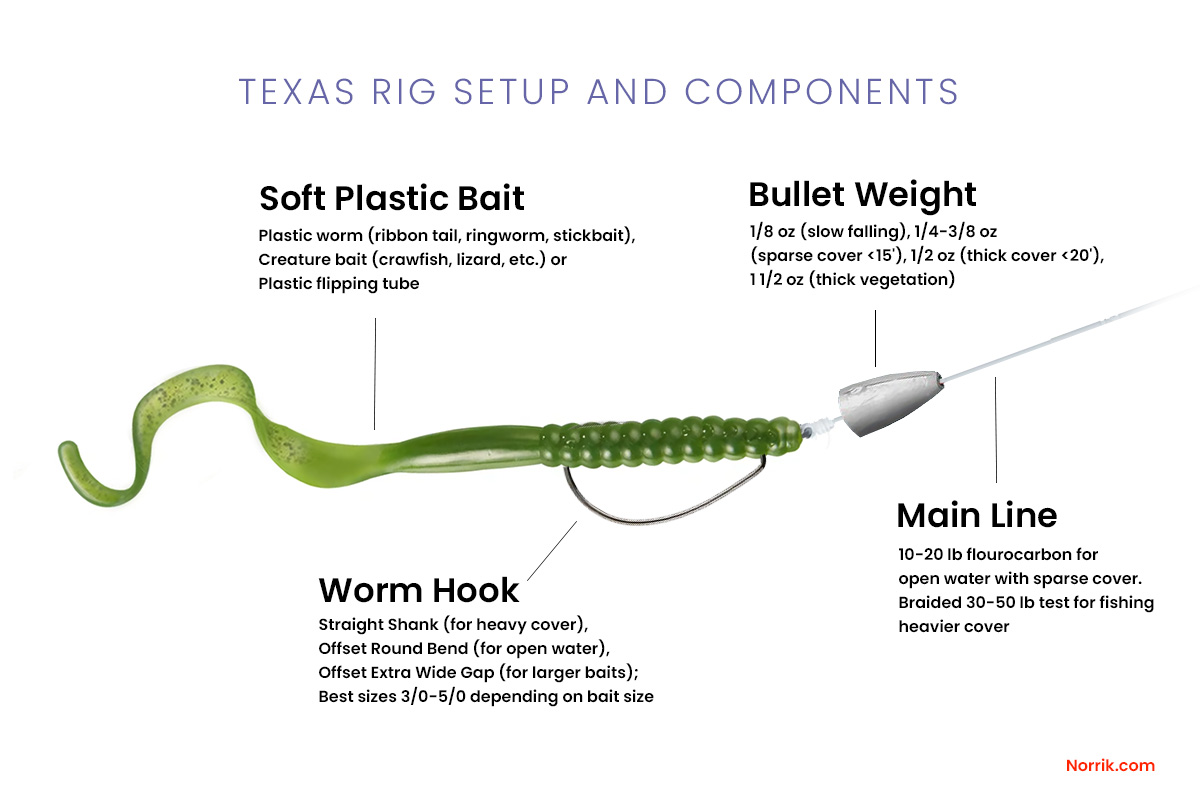
A successful Texas Rig is composed of three primary elements: a worm hook, a bullet-shaped weight, and a soft plastic lure. Understanding each component is crucial for proper assembly and optimal performance, especially when selecting gear that is robust enough for travel and versatile enough for various fishing destinations.
- The Worm Hook: This specialized hook is designed with a wide gap and a sharp, offset bend near the eye. This unique shape allows the soft plastic bait to be threaded on effectively, exposing the hook point only upon a fish strike, thus maintaining its weedless property. For travelers, choosing high-quality, corrosion-resistant hooks is paramount, especially if you anticipate fishing in brackish or slightly saline waters. Popular sizes range from 3/0 to 5/0, depending on the size of your chosen soft plastic.
- The Bullet Weight: Typically made of lead, tungsten, or brass, these weights are identifiable by their streamlined, bullet-like shape. They are designed to slide freely on the fishing line, creating a “slip sinker” effect that allows the bait to move more naturally and provides a distinct feel for bottom structure. Tungsten weights are highly favored by traveling anglers due to their increased density, allowing for a smaller profile compared to lead weights of the same mass, which translates to better sensitivity and less snagging. Weights commonly range from 1/8 oz to 1 oz, chosen based on water depth, current, and desired casting distance.
- The Soft Plastic Lure: This is where creativity meets effectiveness. A vast array of soft plastic baits can be used with a Texas Rig, including worms, creature baits, crawfish imitations, and stickbaits. For the traveler, packing a variety of shapes and colors can be beneficial, as different regions and fish species may prefer certain presentations. Durable, scent-infused soft plastics can be particularly effective, offering a tempting target even for wary fish. Their compact nature makes them perfect for stashing in a tackle bag alongside your travel essentials.
Assembling Your Texas Rig: A Step-by-Step Guide for On-the-Go Anglers
Setting up a Texas Rig is a straightforward process, but precision makes all the difference. Mastering these steps ensures that your rig performs as intended, providing that crucial weedless advantage and enticing presentation, no matter where your angling adventures take you. The quick assembly process also means more time fishing and less time rigging, a huge plus when time is often limited during travel.
Gathering Your Portable Arsenal: Key Components for Any Fishing Trip
Before you begin, ensure you have all your components readily accessible. For a travel-friendly setup, consider a small, organized tackle box or a soft-sided tackle bag that fits easily into luggage. Your essential items should include:
- Fishing Rod and Reel: A medium to medium-heavy power spinning or casting rod, typically 6’6” to 7’6” in length, paired with a matching reel spooled with 10-20 lb fluorocarbon or braided line. Fluorocarbon is excellent for its low visibility and sensitivity, while braid offers strength and casting distance, often with a fluorocarbon leader.
- Worm Hooks: A selection of sizes (e.g., 3/0, 4/0, 5/0) to match different bait sizes.
- Bullet Weights: A variety of weights (e.g., 1/4 oz, 3/8 oz, 1/2 oz) to adapt to varying depths and conditions. Tungsten is ideal for portability and sensitivity.
- Soft Plastic Lures: A diverse selection of worms, creature baits, and craws in various colors (greens, browns, blacks, and purples are great starting points).
- Optional but Recommended: Bobber stops (small rubber stoppers that can peg the weight to the hook eye, making it a “pegged” Texas Rig for even heavier cover), line cutters, and a pair of pliers.
The Art of Rigging: Simple Steps for Maximum Effectiveness
Follow these steps to correctly assemble your Texas Rig, ensuring it’s ready for the most challenging fishing spots you encounter during your travels.
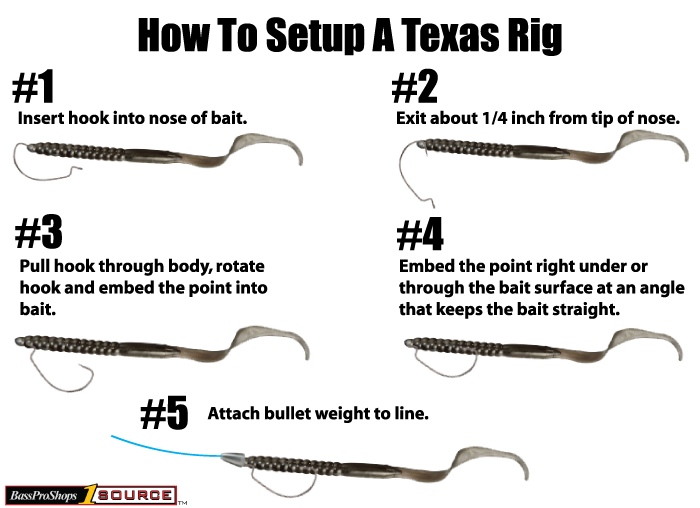
- Slide on the Bullet Weight: Begin by threading your chosen bullet weight onto your main fishing line, narrow end first. The weight should slide freely up and down the line. If you plan to use a bobber stop to peg the weight, slide it onto the line before the bullet weight.
- Tie on the Worm Hook: After the weight (and bobber stop, if used), tie your worm hook to the end of the line using a strong, reliable knot such as a Palomar knot or an improved clinch knot. Ensure the knot is snug and trim any excess tag line.
- Thread the Soft Plastic Lure:
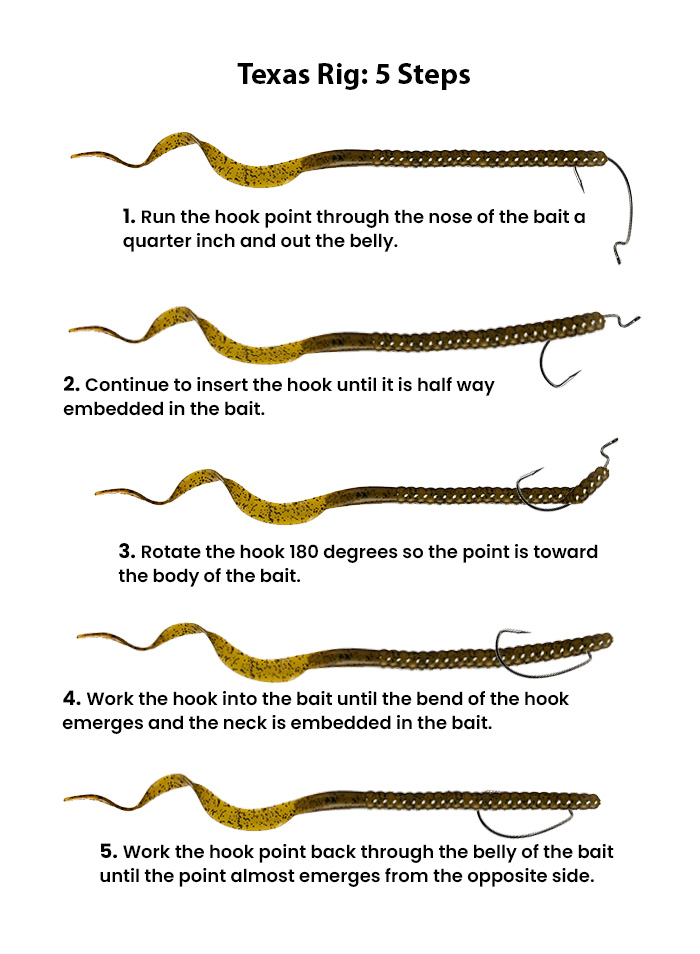
- Insert the hook point into the very tip of the soft plastic bait (the head) and push it through approximately a quarter to half an inch.
- Bring the hook point out of the bait’s side, then slide the bait up the shank of the hook until the eye of the hook is hidden within the bait’s head. The bait should sit straight on the shank, not bunched up.
- Rotate the hook 180 degrees so the hook point faces the bait’s body.
- Measure where the hook point will naturally rest on the bait’s body to ensure it sits straight.
- Insert the hook point back into the body of the soft plastic, ensuring it exits the bait exactly where you measured, but not protruding from the other side. The hook point should be embedded just beneath the surface of the plastic, making it weedless.
- Check for Straightness and Weedlessness: Give the bait a gentle tug to ensure it’s rigged straight and the hook point is fully concealed within the plastic. The entire setup should be streamlined and free of snags. If it’s not straight, the bait will spin unnaturally in the water, which can deter fish.
Where to Deploy Your Texas Rig: Top Destinations for Unforgettable Fishing Adventures
The Texas Rig’s versatility makes it a fantastic choice for a wide array of fishing destinations, from local hidden gems to world-renowned angling hotspots. Its ability to navigate challenging environments means you can explore more diverse waters and increase your chances of a successful catch, enriching your overall travel experience.
Texas and Beyond: Prime Locations for Bass Fishing Enthusiasts
While its name implies an exclusive connection to Texas, the rig’s effectiveness has propelled it into popularity across the globe. Naturally, Texas itself offers unparalleled opportunities for bass fishing. Iconic lakes like Lake Fork, famous for its trophy bass, and the sprawling Toledo Bend Reservoir on the Texas-Louisiana border, are prime locations to test your Texas Rig skills in real-world scenarios. Many resorts and lodges in these areas cater specifically to anglers, offering guided trips and comfortable accommodation options.
Beyond Texas, the southeastern United States is a mecca for bass fishing. Florida’s extensive network of freshwater lakes, including the legendary Lake Okeechobee or the chains of lakes near Orlando and Kissimmee, provides excellent grounds for Texas Rig fishing, especially amongst the lily pads and hydrilla. States like Alabama, Georgia, and the Carolinas also boast impressive bass fisheries. Internationally, countries such as Mexico (renowned for its giant bass lakes like Lake El Salto) and even Japan have thriving bass fishing scenes where the Texas Rig is a staple. Imagine staying at a luxury fishing lodge near Lake El Salto, where you can hone your skills under the guidance of local experts, followed by gourmet meals and top-tier amenities.
Crafting the Perfect Fishing Trip: Integrating Angling into Your Travel Itinerary
For travelers, the key to a successful fishing adventure is meticulous planning that blends angling objectives with broader travel interests. When choosing a destination, research the local fishing seasons, regulations, and available species. Many travel destinations offer fishing charters or guided tours that can enhance your experience, providing local insights and specialized equipment. Consider booking accommodations at lakeside resorts, such as those found around popular fishing spots, or boutique hotels that cater to outdoor enthusiasts. Options like the Grand Hyatt Hotel or specific Hilton Hotels & Resorts might offer packages that combine luxurious stays with organized fishing excursions. Integrating local culture through food festivals, historical landmarks, or nature trails around your chosen fishing spot can also enrich your trip, turning it into a comprehensive travel experience.
Mastering the Texas Rig: Techniques and Tips for Enhanced Travel Experiences
Knowing how to tie a Texas Rig is only half the battle; understanding how to effectively present and retrieve it is where true mastery lies. This section provides invaluable tips to maximize your success, whether you’re fishing a familiar home lake or an exotic destination thousands of miles away.
Presentation is Key: Effective Retrieval Methods for Different Environments
The effectiveness of your Texas Rig largely depends on how you present it to the fish. Unlike moving baits, the Texas Rig often requires a slower, more deliberate approach to mimic natural prey movements.
- Dragging and Crawling: This is perhaps the most common retrieve. Cast your rig into target cover and allow it to sink to the bottom. Once it settles, slowly drag or crawl the bait along the bottom using your rod tip, occasionally pausing to let the bait rest. Most bites will occur on the pause. This technique is excellent for probing submerged structures and rocky bottoms.
- Hopping and Lifting: For slightly more aggressive fish or when trying to imitate a fleeing crawfish, try a hopping retrieve. After the bait settles, lift your rod tip sharply to make the bait jump off the bottom, then allow it to fall back on a slack line. Pay close attention during the fall, as this is often when a strike occurs.
- Pitching and Flipping: For extremely dense cover, pitching and flipping techniques allow for silent, precise presentations. This involves a short, underhand cast that drops the bait quietly into small openings in vegetation or tight to structure. This stealthy approach is vital when fishing pressured waters or targeting trophy fish that hide deep within cover.
- Varying Retrieval Speed: Always experiment with your retrieval speed. Fish activity levels can vary greatly depending on water temperature, time of day, and weather conditions. A slower retrieve might be necessary in cold water or during post-front conditions, while a faster pace might trigger strikes from more active fish.
Beyond the Bass: Adapting the Texas Rig for Diverse Species and Waters
While the Texas Rig is synonymous with bass fishing, its fundamental weedless design makes it adaptable for other species and environments. In some regions, a smaller Texas Rig setup can be effective for targeting larger panfish, crappie, or even smaller walleye that are hiding in dense cover. When exploring the backwaters and tributaries of major rivers like the Mississippi River, this rig can be excellent for probing areas with submerged timber for various species.
For the adventurous traveler venturing into more exotic locales, the principles of the Texas Rig can even be applied to a certain extent. Imagine fishing for peacock bass in the Amazon Rainforest or other aggressive tropical species that inhabit snag-prone areas. While specific baits and hooks might change, the core concept of a weedless, soft plastic presentation remains relevant. Always research local species and regulations, and consider consulting local guides, who often have specialized knowledge about adapting techniques for unique ecosystems.
The Lifestyle of a Texas Rig Angler: Blending Passion with Travel
Fishing with a Texas Rig is more than just a technique; it’s an embrace of a lifestyle that values patience, strategy, and an intimate connection with nature. For the modern traveler, incorporating this passion into their journeys elevates travel beyond mere sightseeing into an immersive exploration of the world’s natural wonders.
Sustainable Angling and Local Tourism: Responsible Practices for Travelers
As a traveling angler, practicing sustainable and responsible fishing is paramount. Adhere to all local fishing regulations, including catch limits, size restrictions, and licensing requirements. Embrace catch-and-release practices, especially for larger or breeding fish, to help preserve fish populations for future generations. Utilize circle hooks when possible to minimize harm, and handle fish carefully, returning them to the water quickly.
Beyond the water, responsible angling contributes positively to local tourism. By hiring local guides, staying in locally owned accommodations, dining at local restaurants, and purchasing bait and tackle from local shops, you directly support the communities that host your fishing adventures. This not only enhances your experience with authentic insights but also ensures your travel has a beneficial impact on the destinations you visit. Many fishing resorts are deeply integrated into their local communities, offering opportunities to learn about local culture and support conservation efforts.
From Lakeside Cabins to Luxury Resorts: Finding Your Perfect Angling Accommodation
The type of accommodation you choose can significantly influence your fishing trip. For those seeking a rustic, nature-focused experience, lakeside cabins or campsites near prime fishing spots offer direct access to the water and an immersive outdoor feel. These often provide amenities like boat ramps, fish cleaning stations, and serene evenings under the stars.
Conversely, for travelers who appreciate comfort and luxury after a day on the water, many high-end resorts and hotels are strategically located near excellent fisheries. Imagine returning to a plush suite at a Grand Hyatt Hotel or a Hilton Hotels & Resorts property, enjoying gourmet dining, spa services, and breathtaking views, all within easy reach of your fishing destination. Some resorts even offer dedicated fishing concierges, secure tackle storage, or private charters directly from their docks. Whether your preference leans towards budget-friendly stays or opulent retreats, there’s an accommodation option perfectly suited to enhance your Texas Rig fishing adventure, making every trip a well-rounded and memorable travel experience.
Mastering the Texas Rig equips you with a powerful tool for unlocking incredible fishing opportunities around the globe. It transforms complex environments into accessible playgrounds, allowing you to focus on the thrill of the chase and the beauty of your surroundings. So, pack your gear, plan your next destination, and get ready to experience the world, one cast at a time, with your expertly tied Texas Rig.
LifeOutOfTheBox is a participant in the Amazon Services LLC Associates Program, an affiliate advertising program designed to provide a means for sites to earn advertising fees by advertising and linking to Amazon.com. Amazon, the Amazon logo, AmazonSupply, and the AmazonSupply logo are trademarks of Amazon.com, Inc. or its affiliates. As an Amazon Associate we earn affiliate commissions from qualifying purchases.