
The Texas Rig is a cornerstone technique in bass fishing, renowned for its weedless nature and versatility. Whether you’re a seasoned angler or just beginning your journey into the world of predatory fish, mastering this rig is essential for success, particularly in areas with dense cover like Lake Fork or the Everglades. This guide will break down the components, the tying process, and its strategic applications, ensuring you’re well-equipped to navigate any aquatic environment.
Essential Components of the Texas Rig
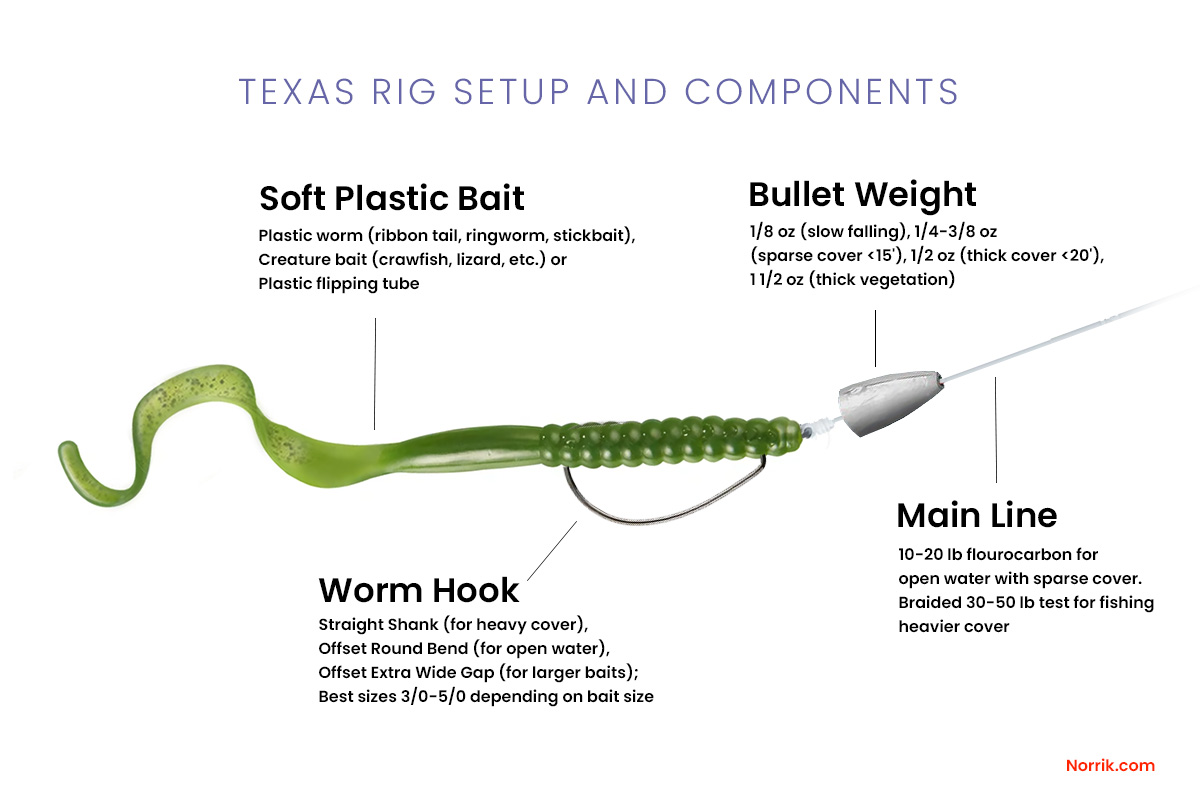
Before embarking on the tying process, understanding the individual components is crucial. Each element plays a specific role in the rig’s functionality and effectiveness.
The Hook
The heart of the Texas Rig is its specialized hook. Typically, a worm hook is used, characterized by its long shank and a keeper barb or screw system designed to hold soft plastic baits securely. The length of the shank is important; a longer shank helps to prevent bass from “short-striking” or throwing the bait without getting hooked. The eye of the hook should be turned slightly upward, facilitating a proper weedless presentation. Common hook sizes range from 1/0 to 5/0, depending on the size of the bait and the target species. For larger prey or bulkier baits, a larger hook is recommended.
The Weight
The weight, often referred to as a bullet weight, is slid onto the fishing line before the hook. These weights are typically made of lead and are shaped like a bullet or a teardrop, hence the name. Their shape helps them to glide through vegetation and deflect off obstacles, further contributing to the rig’s weedless properties. Weights can vary in size, from 1/16 ounce for shallow water and lighter baits, up to 1 ounce or more for deep water, heavy cover, or windy conditions. The weight choice significantly impacts the lure’s fall rate and its ability to reach the desired depth.
The Soft Plastic Bait
This is where the Texas Rig truly shines in its adaptability. A wide array of soft plastic baits can be employed, with worms, crawfish, and various creature baits being the most popular choices. The key is to select a bait that complements the fishing conditions and the target fish’s current feeding behavior. Ribbed worms, for instance, create subtle vibrations that attract fish. Paddle-tail baits can add a more pronounced action. The chosen bait should be durable enough to withstand multiple strikes and should have a natural or enticing profile that mimics prey. Rigging the bait correctly on the hook is paramount for its weedless presentation and hook-up ratio.
The Line
The fishing line is the connection between the angler and the rig. Braided line is highly favored for its strength, sensitivity, and zero stretch, which is beneficial for detecting subtle bites and setting the hook effectively, especially in heavy cover where abrasion is a concern. Monofilament or fluorocarbon lines can also be used, offering different buoyancy and stretch characteristics. Fluorocarbon, in particular, is known for its low visibility underwater. The line strength should be appropriate for the target species and the expected fishing conditions, typically ranging from 10 to 20-pound test.
Tying The Texas Rig: A Step-by-Step Guide
Mastering the Texas Rig involves a straightforward yet precise tying process. Following these steps will ensure a secure and effective rig.
Step 1: Threading the Weight
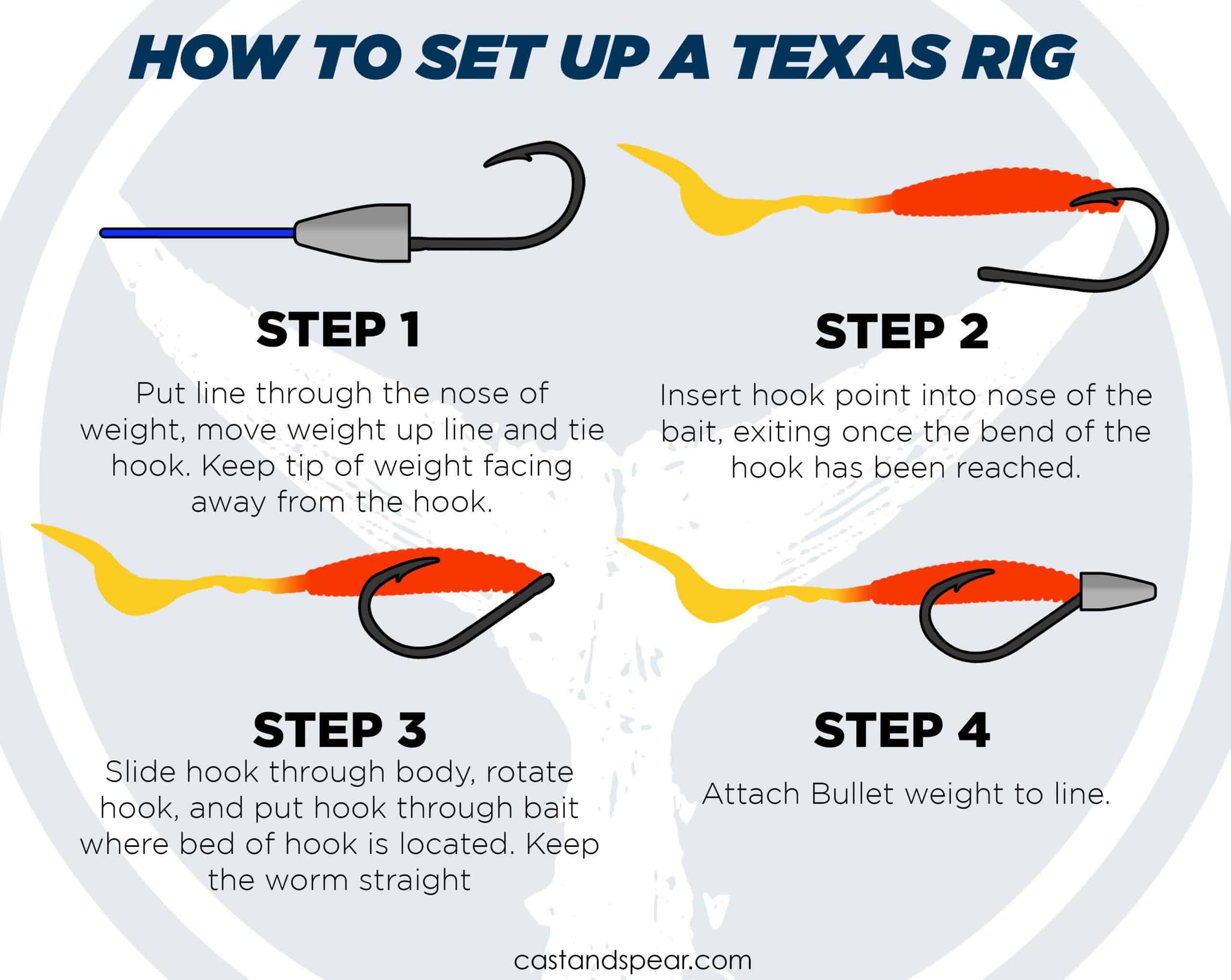
Begin by threading your fishing line through the eye of your hook. Then, slide your chosen bullet weight onto the line, allowing it to rest against the bend of the hook. The weight should be positioned so that its pointed end faces away from the hook. The weight will sit loosely on the line at this stage.
Step 2: Inserting the Hook into the Bait
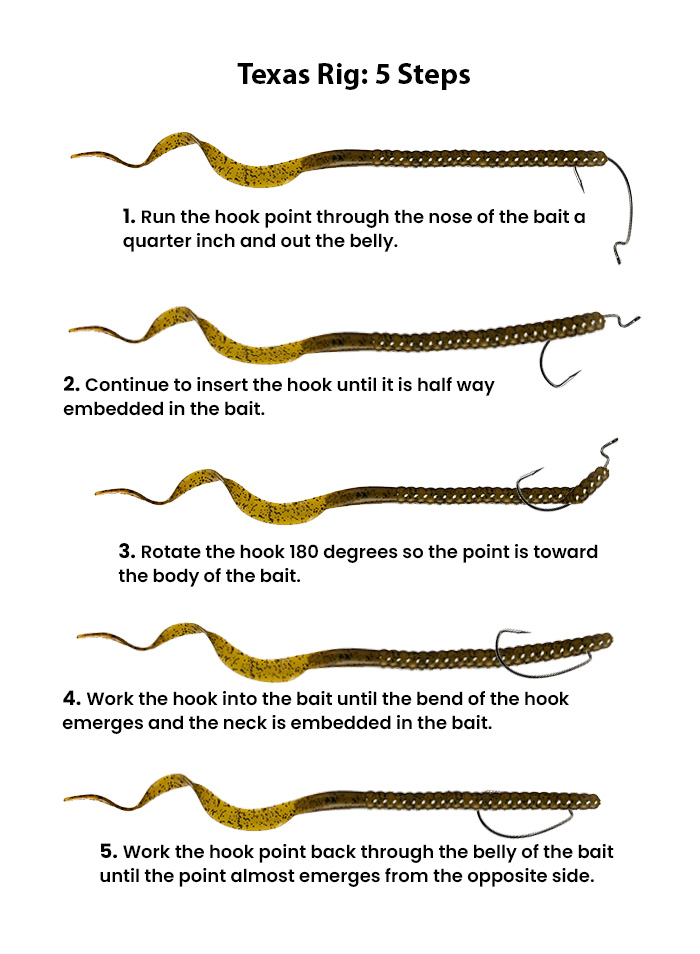
This is perhaps the most critical step for achieving a weedless presentation. Take your soft plastic bait and insert the point of the hook into the nose of the bait, just behind the very tip. The hook should enter straight and true, parallel to the bait’s body.
Step 3: Running the Hook Through the Bait
Carefully push the hook point forward into the bait, following its natural body. The goal is to have the hook shank run completely inside the bait. The distance the hook shank travels inside the bait will depend on the length of the bait and the hook shank. You want the bait to be snug against the weight, but not so tight that it deforms the bait.
Step 4: Penetrating the Bait for the Hookset
Once the hook shank is fully embedded within the bait, you will bring the hook point out through the side or belly of the bait. The key to a weedless rig is to have the hook point exposed just enough to penetrate a fish’s mouth, but not so much that it can snag on weeds, rocks, or other underwater debris. The ideal position for the hook point is slightly embedded into the plastic but still easily accessible for a hookset. For maximum weedlessness, you can tuck the hook point slightly back into the plastic.
Step 5: Ensuring a Weedless Presentation
The final check is to ensure the hook point is as flush as possible with the body of the bait. The weight should be snug against the nose of the bait, preventing it from sliding forward and exposing the hook. The bait should lie straight on the hook, without any twists or turns that could hinder its natural action. A properly tied Texas Rig should be able to be dragged through thick cover without snagging.
Strategic Applications of the Texas Rig
The Texas Rig’s inherent weedlessness makes it ideal for targeting bass in a variety of challenging environments. Its effectiveness is amplified when employed strategically.
Targeting Heavy Cover
This is where the Texas Rig truly excels. Dense vegetation, lily pads, laydown logs, and submerged brush piles are prime locations for bass to ambush prey. The weedless design allows anglers to cast directly into these areas without fear of constant snags. By dragging or hopping the bait through cover, you can entice bites from aggressive fish that are holding tight to structure. Popular destinations like the Ozark Mountains lakes often present these types of conditions.
Presenting Baits on the Bottom
The weight of the Texas Rig allows it to sink quickly to the bottom, making it an excellent choice for presentations where bass are holding close to the lakebed. Whether you’re working a creek channel or a flats area, the ability to maintain contact with the bottom is crucial. Subtle drags, lifts, and drops can mimic injured baitfish or crawfish, triggering a predatory response.
Adapting to Different Depths and Conditions
The versatility of the Texas Rig extends to its adaptability to various depths and water conditions. By adjusting the weight size, anglers can control their lure’s sink rate and its depth. In clearer, shallower water, a lighter weight might be preferred to create a slower, more natural fall. In deeper water or when facing current, a heavier weight is necessary to maintain contact with the bottom. Similarly, in windy conditions, a heavier weight helps to keep the bait in the strike zone. This adaptability makes it a go-to rig for many anglers on diverse fisheries like the Great Lakes or the Mississippi River.
Choosing the Right Soft Plastic and Action
The success of a Texas Rig is also heavily dependent on the soft plastic bait used and the action imparted to it. For highly pressured fish, a more subtle presentation with a natural-colored worm might be effective. In stained water or when targeting aggressive fish, brighter colors and baits with more action, such as a vibrating jig trailer or a crawfish imitation with prominent claws, can be more productive. Understanding local forage and seasonal bass behavior will guide your bait selection. For instance, during spawn in many Southern states, a Texas-rigged Senko or a crawfish bait might be irresistible.
Common Mistakes to Avoid with the Texas Rig
While the Texas Rig is relatively straightforward, certain common pitfalls can hinder its effectiveness. Being aware of these can significantly improve your success rate.
Improper Hookset
One of the most frequent errors is an insufficient hookset. Because the hook point is buried in the soft plastic, it requires a firm and deliberate sweep of the rod to drive the hook point through the bait and into the fish’s mouth. A tentative pull is often not enough. Ensure you feel the weight of the fish before executing your hookset.
Over-Exposing the Hook Point
While some exposure is necessary for hooking fish, too much can negate the weedless advantage. If the hook point is sticking out too far, it will snag easily, leading to frustration and missed opportunities. Regularly check your bait for any tears or damage that might cause the hook to become exposed and re-rig if necessary. This is especially important after a fish has hit the bait without being hooked.
Incorrect Bait Rigging
A poorly rigged bait can lead to a fouled lure, a twisted line, or an unnatural presentation. Ensure the bait is threaded onto the hook straight and that the hook shank is fully encased within the plastic. The bait should lie flat and balanced. A twisted or crooked bait will not swim properly and can deter bites.
Using the Wrong Weight for the Conditions
Employing a weight that is too light for the depth or cover, or too heavy for the bait and desired action, can be detrimental. Too light a weight will not get your bait to the bottom effectively, while too heavy a weight can make the bait fall unnaturally fast and spook fish. Understanding how weight affects your lure’s behavior is key.
By understanding the components, meticulously tying the rig, and applying it strategically, the Texas Rig will undoubtedly become one of your most reliable and effective fishing techniques, opening up new possibilities on waters from the shallow marshes of Louisiana to the vast reservoirs of Texas.
LifeOutOfTheBox is a participant in the Amazon Services LLC Associates Program, an affiliate advertising program designed to provide a means for sites to earn advertising fees by advertising and linking to Amazon.com. Amazon, the Amazon logo, AmazonSupply, and the AmazonSupply logo are trademarks of Amazon.com, Inc. or its affiliates. As an Amazon Associate we earn affiliate commissions from qualifying purchases.