
Transferring a car title in Florida is a fundamental administrative process that impacts countless residents, whether they are new to the state, purchasing a used vehicle, or selling one. Navigating the intricacies of the Florida Department of Highway Safety and Motor Vehicles (DHSMV) regulations can seem daunting, but understanding the steps is crucial for maintaining legal ownership and avoiding potential pitfalls. For those embracing the Florida lifestyle, from the vibrant streets of Miami to the tranquil shores of the Gulf Coast, ensuring your vehicle’s documentation is in order is a top priority for seamless integration and peace of mind.
Understanding Florida’s Title Transfer Landscape
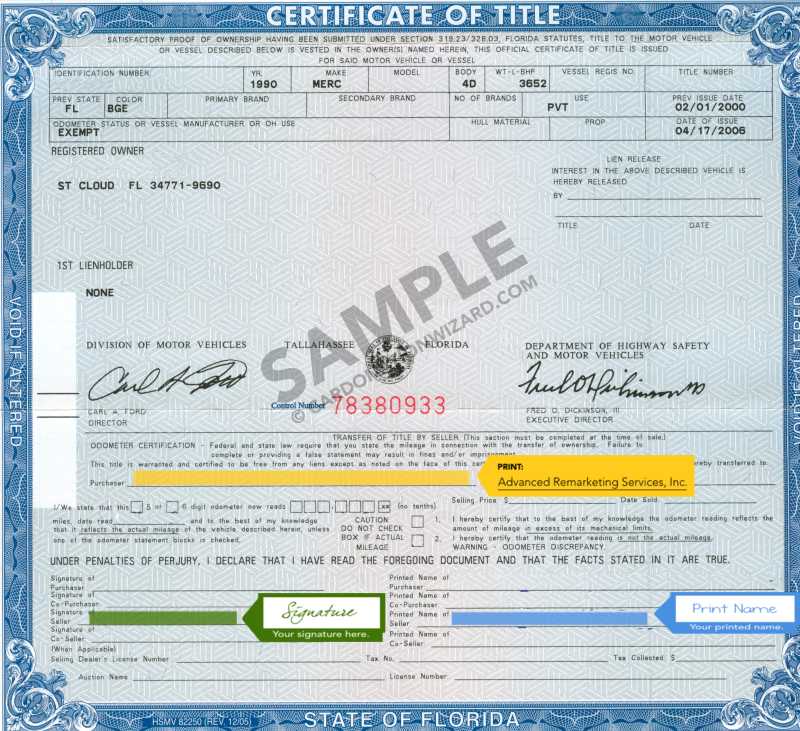
A vehicle title is the legal document proving ownership of a car, truck, motorcycle, or other motorized vehicle. In Florida, all titles are electronically maintained unless a paper title is specifically requested. This digital system streamlines many processes but requires diligent attention to detail during transfers.
When a Title Transfer is Necessary
Title transfers are required in several key scenarios:
- New Residents: If you’re moving to Florida from another state, you must transfer your out-of-state title to a Florida title within a specified period (usually 10 days of establishing residency or gaining employment). This is an essential step in becoming a full-fledged Florida driver and resident.
- Buying or Selling a Vehicle: Whenever a vehicle changes hands, whether through a private sale, a dealership, or a gift, the title must be transferred from the seller to the buyer. This ensures the new owner is legally recognized and can register the vehicle in their name.
- Inherited Vehicles: If you inherit a vehicle, you’ll need to transfer the title into your name to assume legal ownership. This often involves additional documentation such as a will or court order.
- Gifting a Vehicle: Even if no money changes hands, transferring ownership of a gifted vehicle requires a title transfer.
- Satisfying a Lien: Once a vehicle loan is paid off, the lienholder will release the lien, and you may want to apply for a clear title in your name, free of any encumbrances.
Key Players in the Process
The primary entity overseeing vehicle titles and registrations in Florida is the Florida Department of Highway Safety and Motor Vehicles (DHSMV). While the DHSMV sets the statewide regulations, many title and registration services are administered locally through County Tax Collector’s Offices. These local offices serve as the front-line service providers, processing applications, collecting fees, and issuing new titles and license plates. Understanding the roles of both the state DHSMV and your local Tax Collector’s Office will simplify your title transfer journey.
The Step-by-Step Process for New Residents
For those relocating to the Sunshine State, transferring your out-of-state vehicle title is a crucial component of settling into your new Florida lifestyle.
Gathering Essential Documentation
Before visiting a Tax Collector’s Office, ensure you have the following documents ready:
- Out-of-State Title: The original physical title from your previous state. If your vehicle has a lien, the title may be held by your lienholder. You’ll need to contact them to request a copy or arrange for them to send the title directly to the Florida Tax Collector’s Office.
- Proof of Identity: A valid government-issued photo ID (e.g., U.S. driver’s license, passport).
- Proof of Florida Insurance: You must have personal injury protection (PIP) and property damage liability (PDL) coverage from a Florida-licensed insurance company.
- Vehicle Identification Number (VIN) Verification: For out-of-state vehicles, a VIN verification is required. This confirms that the VIN on your vehicle matches the VIN on your title. This can be done by a Florida law enforcement officer, a motor vehicle dealer, or through a Form HSMV 82042 completed by an authorized third party. Some Tax Collector’s Offices offer this service on-site.
- Application for Certificate of Title With/Without Registration (Form HSMV 82040): This form must be completed and signed by the owner(s).
- Odometer Disclosure Statement: Required for vehicles less than 10 years old. This is often incorporated into Form HSMV 82040 or on the title itself.
- Lienholder Information (if applicable): If there’s an outstanding loan on your vehicle, you’ll need the lienholder’s name and address. They will be recorded as the new lienholder on your Florida title.
Vehicle Inspection and Registration
While a full mechanical inspection isn’t typically required for title transfer in Florida, the VIN verification is mandatory for out-of-state vehicles. Once your title is transferred, you will also need to register your vehicle and obtain Florida license plates. This is usually done simultaneously at the Tax Collector’s Office. You’ll choose a license plate design and pay the applicable registration fees, which vary based on vehicle type and weight.
Visiting the DMV or Tax Collector’s Office
With all your documents in hand, locate your nearest County Tax Collector’s Office. It’s often advisable to check their website for specific hours, required appointments, or any unique local requirements. Many offices allow you to make appointments online, which can significantly reduce wait times. Present your documentation, pay the necessary fees, and you’ll typically receive a temporary registration and license plate on the spot. The official Florida title will then be mailed to you (or your lienholder) within a few weeks if you requested a paper title, or held electronically.
Transferring a Title When Buying or Selling a Vehicle within Florida
Whether you’re selling your beloved convertible in Sarasota or buying a new family SUV in Orlando, the in-state title transfer process has specific steps for both parties.
Seller’s Responsibilities
The seller plays a critical role in facilitating a smooth title transfer. Their responsibilities include:
- Signing the Title: The seller must sign the “transfer of ownership” section on the back of the Florida Certificate of Title. If there are multiple owners listed with “AND,” all owners must sign. If “OR” or “AND/OR” is used, only one owner’s signature is typically needed.
- Odometer Disclosure: For vehicles less than 10 years old, the seller must accurately record the odometer reading on the title or a separate Odometer Disclosure Statement (Form HSMV 82993 if not on the title). Misrepresenting the mileage is a federal offense.
- Bill of Sale (Optional but Recommended): While not strictly required by the state for title transfer, a Bill of Sale (Form HSMV 82050) is highly recommended. It serves as proof of purchase, details the transaction, sale price, and condition of the vehicle, protecting both buyer and seller.
- Remove License Plate: The seller should remove their license plate from the vehicle. This plate can be transferred to a new vehicle, surrendered to the DHSMV, or discarded.
- Notify DHSMV of Sale: The seller should complete a Notice of Sale (Form HSMV 82109) and submit it to the DHSMV or their local Tax Collector’s Office. This protects the seller from liability for any traffic violations or accidents incurred by the buyer after the sale.
Buyer’s Responsibilities
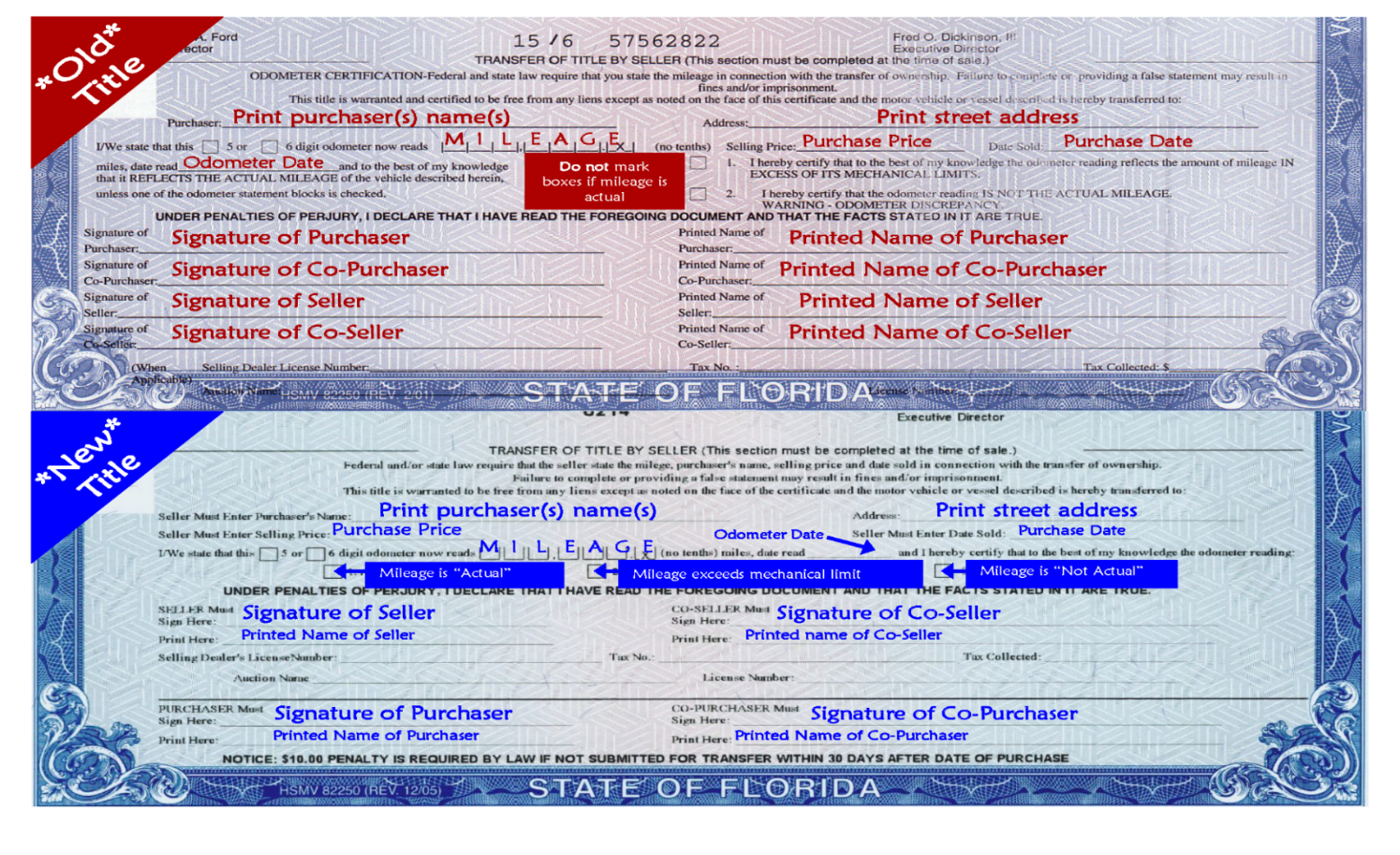
The buyer is responsible for completing the title transfer and registering the vehicle in their name. They typically have 30 days from the date of purchase to do so.
- Possession of Signed Title: The buyer must obtain the original title signed by the seller, with the odometer disclosure completed.
- Proof of Identity: A valid government-issued photo ID.
- Proof of Florida Insurance: Mandatory PIP and PDL coverage.
- Application for Certificate of Title With/Without Registration (Form HSMV 82040): The buyer completes their sections of this form.
- Sales Tax: Florida sales tax (6%) on the purchase price (or fair market value, whichever is greater) will be collected at the time of title transfer. Some counties may have an additional discretionary sales surtax.
- Payment for Fees: The buyer is responsible for title transfer fees, registration fees, and any applicable sales tax.
- Visit Tax Collector’s Office: Submit all documents and payments to a County Tax Collector’s Office.
Specifics for Leased or Financed Vehicles
If you’re selling a vehicle with an outstanding lien, you must ensure the lien is satisfied before or during the sale. The seller’s lienholder will need to provide a lien satisfaction form or the original title to the buyer or the County Tax Collector’s Office once the loan is paid off. If you are buying a vehicle with financing, your new lender will typically handle the electronic recording of their lien on the new Florida title.
Navigating Special Circumstances
Certain situations can add layers of complexity to the title transfer process, requiring specific attention and documentation.
Out-of-State Titles with Liens
This is a common scenario for new Florida residents. If your out-of-state vehicle has an active loan, the title is likely held by your lienholder. You’ll need to contact them and inform them you are relocating to Florida and need to transfer your title. They may send the title directly to the Florida Tax Collector’s Office or to you. The Florida Tax Collector’s Office will then process the title transfer, record the lien, and issue a new Florida title, often electronically. A nominal fee may apply for recording the lien.
Inherited Vehicles
Transferring an inherited vehicle title depends on the specific circumstances and the value of the estate.
- With a Will (Probate): If the will goes through probate, the personal representative appointed by the court will have the authority to sign over the title. You’ll need certified copies of the will and court orders.
- Without a Will (Small Estate Affidavit): For small estates or specific circumstances, Florida allows for a “Disposition of Personal Property Without Administration” (Form HSMV 82180), or an affidavit of heirship. This simplifies the process for certain beneficiaries. Consult with a legal professional or the Tax Collector’s Office for specific requirements.
- Trusts: If the vehicle was held in a trust, the trustee would be authorized to transfer the title.
In all cases, a certified copy of the death certificate is usually required.
Lost or Damaged Titles
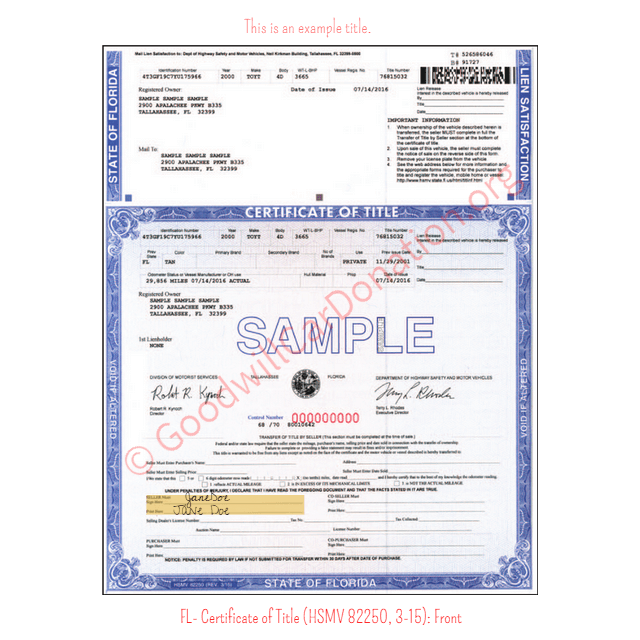
If the original Florida title is lost, stolen, or damaged, the registered owner(s) must apply for a duplicate title. This is done by completing an Application for Duplicate Title (Form HSMV 82101) and submitting it to a Tax Collector’s Office along with proof of identity and the applicable fee. If there is a lienholder, they may also need to be involved. Once a duplicate title is issued, the transfer process can proceed as usual.
Fees, Taxes, and Important Considerations
Understanding the financial obligations and common mistakes can streamline your title transfer experience.
Breakdown of Costs
The costs associated with transferring a car title in Florida can include:
- Title Transfer Fee: A standard fee for processing the title transfer, typically around $75.25 for an electronic title and an additional $2.50 for a paper title.
- Initial Registration Fee (New Residents/First-time Registration): For vehicles never before registered in Florida, there is an initial registration fee, which can be up to $225. This is often referred to as the “new plate fee.”
- License Plate/Registration Fees: Annual renewal fees depend on the vehicle’s weight and type.
- Sales Tax: 6% Florida sales tax on the purchase price (minus any trade-in credit), plus any applicable discretionary county sales surtax.
- Lien Recording Fee: If there’s a lien on the vehicle, a small fee (e.g., $2.00) is charged to record it.
- Plate Transfer Fee: If you are transferring an existing Florida plate to a new vehicle, there is a small fee.
It’s highly recommended to check the specific fee schedule on your local County Tax Collector’s website, as costs can vary slightly and are subject to change.
Common Pitfalls to Avoid
- Missing Signatures: Ensure all required parties (seller(s), buyer(s)) have signed the title and all forms correctly.
- Incomplete Forms: Double-check that all fields on the application forms are filled out accurately and completely.
- Expired ID or Insurance: Ensure your identification and proof of insurance are current and valid.
- Delaying the Transfer: For buyers, failing to transfer the title within 30 days can result in late fees. For sellers, not submitting the Notice of Sale can leave you liable for the vehicle.
- Incorrect Odometer Reading: An incorrect odometer reading can lead to legal issues. Be accurate and honest.
- Not Addressing Liens: Ensure all liens are properly released or recorded. An unreleased lien can prevent title transfer.
Staying Compliant with Florida Law
Staying compliant means understanding that the title transfer is just one part of vehicle ownership. You must maintain valid Florida insurance at all times, renew your vehicle registration annually, and keep your contact information updated with the DHSMV. By diligently following these steps, you ensure a smooth, legal, and hassle-free vehicle ownership experience, allowing you to fully enjoy all that the Florida lifestyle has to offer.
LifeOutOfTheBox is a participant in the Amazon Services LLC Associates Program, an affiliate advertising program designed to provide a means for sites to earn advertising fees by advertising and linking to Amazon.com. Amazon, the Amazon logo, AmazonSupply, and the AmazonSupply logo are trademarks of Amazon.com, Inc. or its affiliates. As an Amazon Associate we earn affiliate commissions from qualifying purchases.