
Navigating the administrative landscape of vehicle ownership can often feel daunting, especially when relocating or purchasing a vehicle in a new state. For residents and newcomers alike, understanding how to properly transfer a car title in Colorado is a crucial aspect of responsible vehicle management. This guide offers an insightful, step-by-step breakdown of the process, ensuring a smooth transition of ownership in the Centennial State. Properly transferring a car title is not just a formality; it secures legal ownership, facilitates future transactions, and ensures compliance with state regulations, all contributing to a seamless lifestyle in Colorado.
Understanding the Colorado Title Transfer Process
The process of transferring a vehicle title in Colorado is primarily handled by the Colorado Division of Motor Vehicles (DMV), which operates under the state’s Department of Revenue. Whether you’ve just bought a car, received one as a gift, or moved to the state, ensuring the title is accurately transferred into your name is paramount. Failure to do so can lead to legal complications, difficulties with registration, and potential issues with insurance claims.
When a Title Transfer is Necessary
A title transfer is required in several common scenarios:
- Buying or Selling a Vehicle: This is the most frequent reason for a title transfer, occurring after a private sale or purchase from a dealership.
- Gifting a Vehicle: If a vehicle is given as a gift, the recipient must have the title transferred to their name to establish legal ownership.
- Inheriting a Vehicle: When a vehicle is passed down through an estate, the new owner must complete a title transfer to legally possess the car.
- Relocating to Colorado: Individuals moving to Colorado from another state must transfer their out-of-state title to a Colorado title as part of the vehicle registration process.
- Adding or Removing an Owner: If you are adding a co-owner to your vehicle or removing one (e.g., due to marriage, divorce, or death), a title transfer is necessary to reflect the change in ownership.
Key Documents You’ll Need
Regardless of the specific circumstance, several essential documents are almost always required for a title transfer in Colorado. Preparing these in advance will significantly expedite your visit to the DMV:
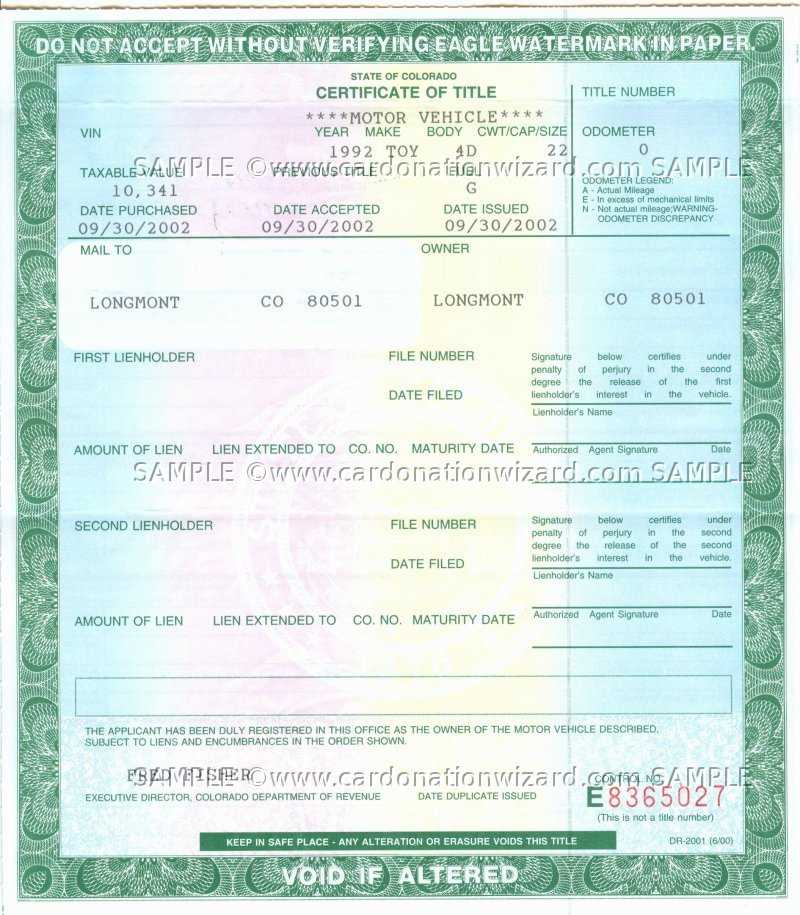
- Original Vehicle Title: This is the cornerstone document. Ensure it’s the original, not a copy, and that it has been properly signed off by the seller (if applicable).
- Application for Colorado Certificate of Title (Form DR 2395): This form must be completed by the new owner(s) and submitted to the DMV.
- Proof of Identity: A valid driver’s license, state ID, or other government-issued identification for all owners.
- Proof of Colorado Residency: Documents like a utility bill, lease agreement, or bank statement with your current Colorado address.
- Odometer Disclosure Statement: For vehicles less than 10 years old, the odometer reading must be disclosed on the title or a separate form.
- Bill of Sale: While not always strictly required for the title transfer itself, a bill of sale is highly recommended for private sales as proof of purchase price and transaction details. It’s often used for calculating sales tax.
- Proof of Colorado Emission Inspection: Required for vehicles in certain counties before registration, which often happens concurrently with title transfer for new residents. Check current regulations for your specific county.
- Proof of Insurance: Colorado law requires liability insurance for all registered vehicles. You’ll need to show proof of insurance to register the vehicle.
Steps for Private Sale Title Transfers
Private sales are a common way vehicles change hands, and understanding the specific responsibilities of both the buyer and seller is crucial for a legally sound transfer.
Seller’s Responsibilities
As the seller, your primary responsibility is to correctly endorse the vehicle title to the buyer:
- Locate the Original Title: Ensure you have the physical, original title in your possession.
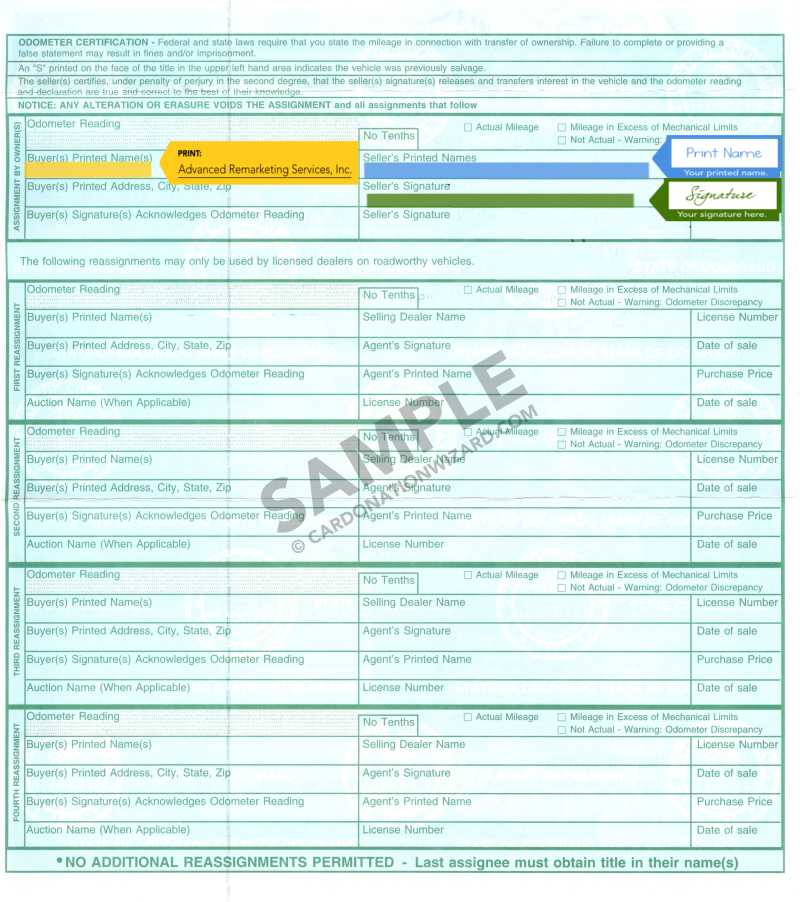
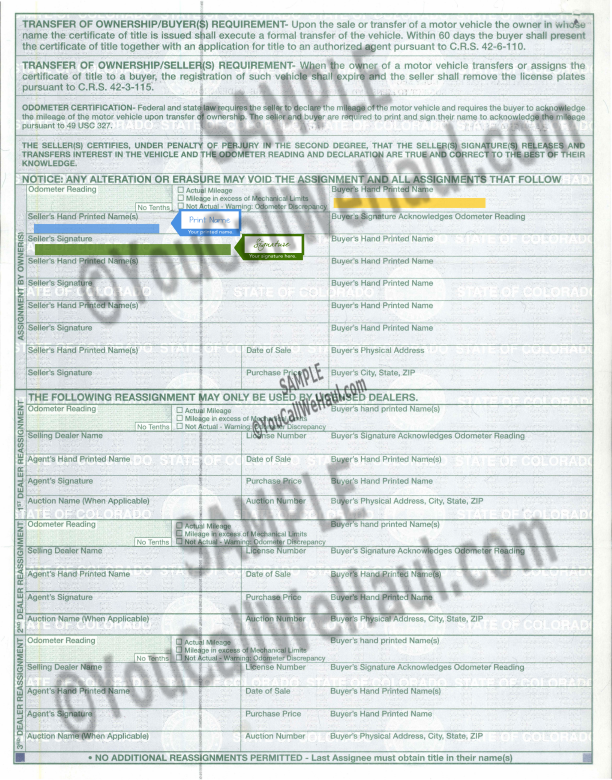
- Sign the Title: On the front of the Colorado title, there will be designated sections for the seller’s signature, printed name, and the date of sale. Sign clearly and exactly as your name appears on the title.
- Complete Odometer Disclosure: If the vehicle is less than 10 years old, accurately record the odometer reading in the designated space on the title.
- Provide a Bill of Sale: Although not legally mandated for the title transfer, a comprehensive bill of sale protects both parties. It should include the vehicle identification number (VIN), sale price, date, and names and signatures of both buyer and seller.
- Remove License Plates: Colorado plates remain with the seller, not the vehicle. You must remove your plates before the buyer drives away and either transfer them to another vehicle you own or return them to the DMV.
- Notify the DMV of the Sale: Within five days of the sale, you should complete a “Notice of Transfer of Ownership” (often available online or at the DMV) to inform the state that you are no longer responsible for the vehicle. This helps protect you from future liabilities associated with the car.
Buyer’s Responsibilities
As the buyer, your prompt action is necessary to officially take ownership and register the vehicle:
- Obtain Required Documents: Collect the properly endorsed original title, bill of sale, and any other relevant documents from the seller.
- Complete the DR 2395 Form: Fill out the “Application for Colorado Certificate of Title” with all your personal and vehicle information.
- Gather Your Identification and Proof of Residency: Prepare your valid ID and a document proving your Colorado residency.
- Obtain Proof of Insurance: Secure liability insurance for the vehicle before attempting to register it.
- Get an Emissions Inspection (if applicable): If you reside in an emissions-testing county (e.g., Denver, Boulder, Colorado Springs), your vehicle will need to pass an emissions test.
- Visit Your Local County Motor Vehicle Office: Bring all compiled documents, forms, and payment for fees and taxes to your local DMV office.
- Pay Fees and Taxes: Be prepared to pay the title transfer fee, sales tax (based on the purchase price), and registration fees.
Fees and Taxes Involved
When transferring a title in Colorado, several costs are typically involved:
- Title Fee: A relatively small flat fee, usually around $7.20, for processing the new title.
- Sales Tax: Colorado charges a state sales tax on the purchase price of the vehicle, currently 2.9%. Additionally, city and county sales taxes may apply, varying by your specific location. This can add up significantly, so factor it into your budget.
- Registration Fees: These vary based on the vehicle’s weight, age, and type. New registrations also include specific ownership taxes.
- Road Safety Fee: A fee levied on new vehicle registrations to fund transportation projects.
- Emissions Test Fee: If required, there will be a separate fee for the emissions inspection.
It’s advisable to check the specific fees with your county’s motor vehicle office, as local taxes and fees can slightly alter the total cost.
Special Circumstances and Considerations
Beyond standard private sales, certain situations require specific attention during the title transfer process.
Out-of-State Transfers
If you’re moving to Colorado, you generally have 90 days to register your vehicle and obtain Colorado plates. The title transfer is a crucial part of this process:
- Verification of Vehicle Identification Number (VIN): A VIN inspection is required for out-of-state vehicles to ensure the VIN on your physical vehicle matches the one on your out-of-state title. This can often be done by a DMV agent or law enforcement.
- Surrender Out-of-State Title: You will surrender your existing out-of-state title when applying for a new Colorado title.
- Follow Buyer’s Responsibilities: The rest of the process largely mirrors a buyer’s responsibilities, including completing the DR 2395 form, providing proof of identity and residency, getting an emissions test (if applicable), securing Colorado insurance, and paying all associated fees and taxes.
Gifting a Vehicle
When a vehicle is gifted, the monetary transaction aspect is absent, but the title transfer process is largely similar:
- Proper Title Endorsement: The giver must sign off the original title, similar to a sale.
- Statement of Fact (Form DR 2444): To avoid sales tax on a gifted vehicle, both the giver and recipient may need to sign a Statement of Fact form, explicitly stating the vehicle was a gift and no money exchanged hands. This form clarifies the nature of the transaction for the DMV.
- Recipient’s Responsibilities: The recipient follows the standard buyer’s steps for title application, registration, and obtaining insurance. While sales tax is typically waived for gifts, other fees like title and registration fees still apply.
Inherited Vehicles
Transferring a title for an inherited vehicle depends on the specifics of the deceased’s estate:
- Probate vs. Non-Probate: If the vehicle is part of a larger estate going through probate, documentation from the probate court (e.g., Letters Testamentary or Letters of Administration) will be required. If the estate is small and avoids probate, an Affidavit for Collection of Personal Property may suffice.
- Signed Title or Affidavit: In some cases, if the deceased had already signed the title in anticipation of transferring it, the process can be simpler. Otherwise, an executor or authorized individual will need to sign on behalf of the estate, often alongside additional legal documentation.
- Heir’s Responsibilities: The heir will then follow the standard steps for applying for a new title, providing their identification, and registering the vehicle.
Navigating the Colorado Division of Motor Vehicles (DMV)
The final step in securing your vehicle title transfer involves a visit to a Colorado county motor vehicle office. Being prepared for this visit can significantly reduce wait times and ensure a successful outcome.
Finding Your Local DMV Office
Colorado’s motor vehicle services are managed at the county level. You will need to visit the motor vehicle office in the county where you reside. A quick search on the Colorado Department of Revenue’s website or your county’s official government website will provide locations, hours, and contact information for your local DMV office.
Making an Appointment
Many Colorado county motor vehicle offices now offer online appointment scheduling, which is highly recommended. This can save you considerable time compared to walking in and waiting in line. Check your specific county’s website for their appointment system.
Common Pitfalls to Avoid
- Incomplete or Incorrect Forms: Double-check all forms for accuracy and ensure all required fields are filled out. Errors can lead to delays.
- Missing Signatures: Ensure both the seller and buyer (if applicable) have signed all necessary documents in the correct places.
- Original vs. Copy: Always bring original documents, especially the vehicle title. Copies are rarely accepted for title transfers.
- Lack of Proof of Insurance: You cannot register a vehicle in Colorado without valid proof of liability insurance.
- Expired Emissions Test: If your vehicle requires an emissions test, ensure it’s current. An expired test will halt the registration process.
- Not Researching County-Specific Requirements: While state laws are consistent, some local counties may have slightly different procedures or additional requirements. Always check your specific county’s motor vehicle website.
By meticulously following these steps and being well-prepared, transferring a car title in Colorado can be a straightforward process, allowing you to fully enjoy your vehicle and the beautiful Colorado lifestyle.
LifeOutOfTheBox is a participant in the Amazon Services LLC Associates Program, an affiliate advertising program designed to provide a means for sites to earn advertising fees by advertising and linking to Amazon.com. Amazon, the Amazon logo, AmazonSupply, and the AmazonSupply logo are trademarks of Amazon.com, Inc. or its affiliates. As an Amazon Associate we earn affiliate commissions from qualifying purchases.