
Navigating the complexities of vehicle ownership and transfer is a fundamental aspect of managing one’s lifestyle, particularly when relocating or conducting private sales. In Florida, a state known for its transient population and vibrant communities, understanding the nuances of transferring a car title is crucial for both buyers and sellers to ensure legal compliance and peace of mind. This comprehensive guide will illuminate the process, offering clear steps and vital insights to make your Florida car title transfer as smooth and straightforward as possible. Whether you’re a long-time resident, a new arrival to the Sunshine State, or simply selling your vehicle, adhering to the proper procedures ensures that ownership is legally and seamlessly transitioned, safeguarding all parties involved from potential future complications.
Understanding the Florida Vehicle Title System
The foundation of vehicle ownership in Florida rests upon its title system. A vehicle title is more than just a piece of paper; it is the legal document that establishes rightful ownership of a car, truck, motorcycle, or any other motorized vehicle. Without a properly transferred title, the new owner cannot legally register the vehicle or prove their rights to it, potentially leading to significant legal and financial headaches.
The Importance of a Clean Title
A “clean title” refers to a title that is free from any liens, major accidents, or salvage designations that might impact its value or legal standing. For buyers, receiving a clean title is paramount. It confirms that the seller has the full legal right to transfer ownership and that there are no outstanding financial claims against the vehicle. The Florida Department of Highway Safety and Motor Vehicles (FLHSMV) is the governing body responsible for issuing and regulating vehicle titles and registrations throughout the state. They maintain records of all titled vehicles, including any active liens. Before any transfer, it is highly advisable for buyers to conduct a VIN (Vehicle Identification Number) check to ensure the title is clean and the vehicle’s history is transparent. This due diligence protects your investment and ensures you’re not inheriting unforeseen problems.
Types of Title Transfers
While the core process remains similar, title transfers in Florida can occur under various circumstances, each with slight procedural nuances. The most common scenario is a private sale between individuals, where the buyer purchases the vehicle directly from the seller. Other types include:
- Gift Transfers: When a vehicle is given as a gift, certain forms must be completed to waive sales tax, though transfer fees still apply.
- Inheritance Transfers: After the death of an owner, a vehicle’s title might be transferred to an heir, often requiring a death certificate and potentially probate court documents.
- Out-of-State Transfers: When a vehicle is brought into Florida from another state, it requires a new Florida title and registration, along with a VIN verification.
- Adding/Removing Owners: When adding or removing a co-owner from a title, a new title must be issued reflecting the updated ownership.
Each scenario demands careful attention to specific forms and requirements, as mandated by the FLHSMV and local County Tax Collector’s offices.
The Seller’s Responsibilities in Florida
For sellers, proper execution of a title transfer is not just a courtesy but a legal imperative. Failing to follow the correct procedures can leave you liable for traffic violations, accidents, or even unpaid tolls incurred by the new owner. Protecting yourself means ensuring the vehicle is legally detached from your ownership as soon as the sale is complete.
Preparing the Original Title
The original vehicle title certificate is the most critical document for the seller. It is essential to:
- Locate the Title: Ensure you have the physical paper title. If it’s lost or damaged, you must apply for a duplicate title through the FLHSMV before proceeding with the sale.
- Check for Liens: If there is a lienholder (e.g., a bank from which you financed the car), the lien must be satisfied and released by the lienholder before you can transfer ownership. The lienholder will typically send a lien satisfaction letter, which may need to be presented to the County Tax Collector’s office.
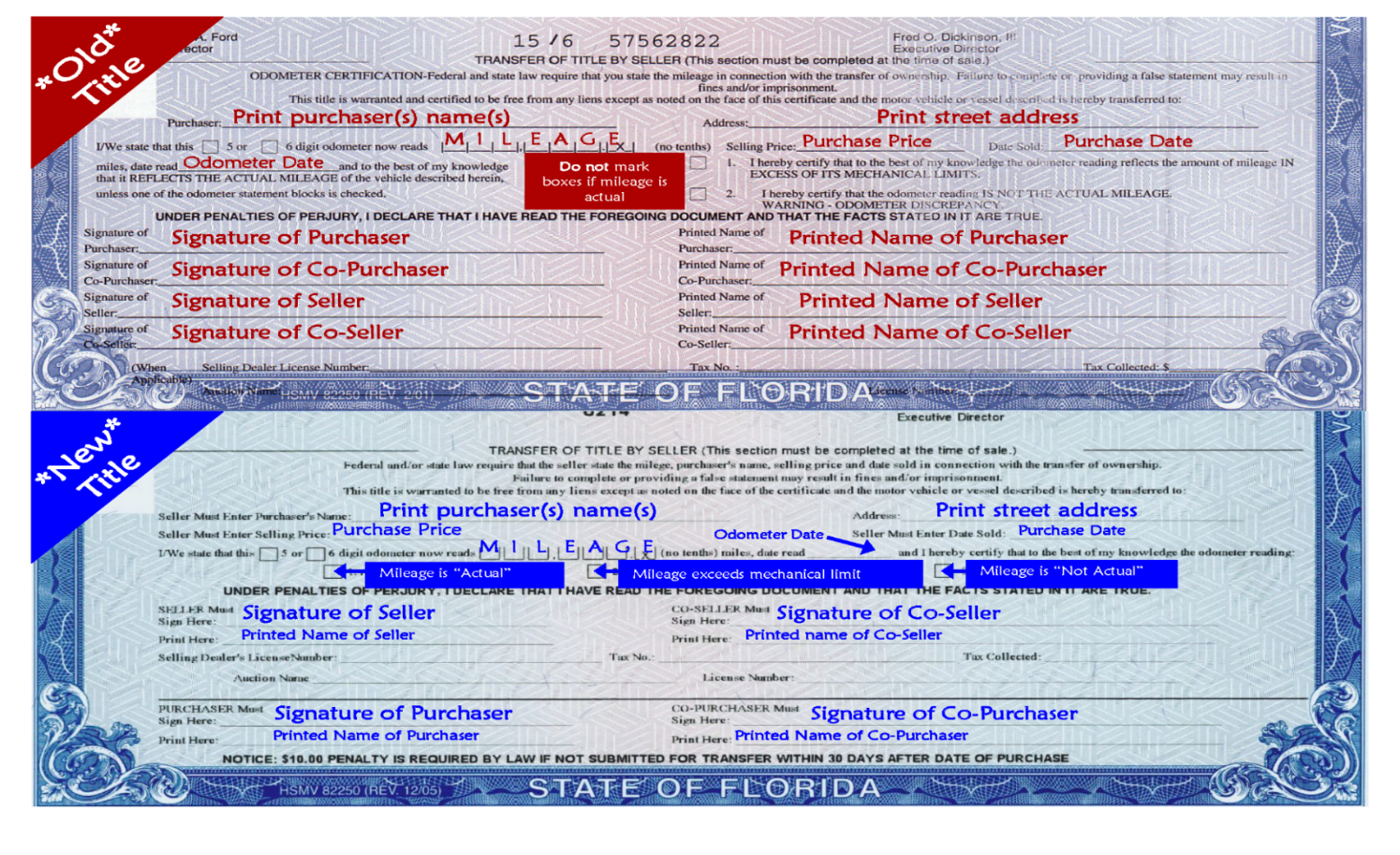
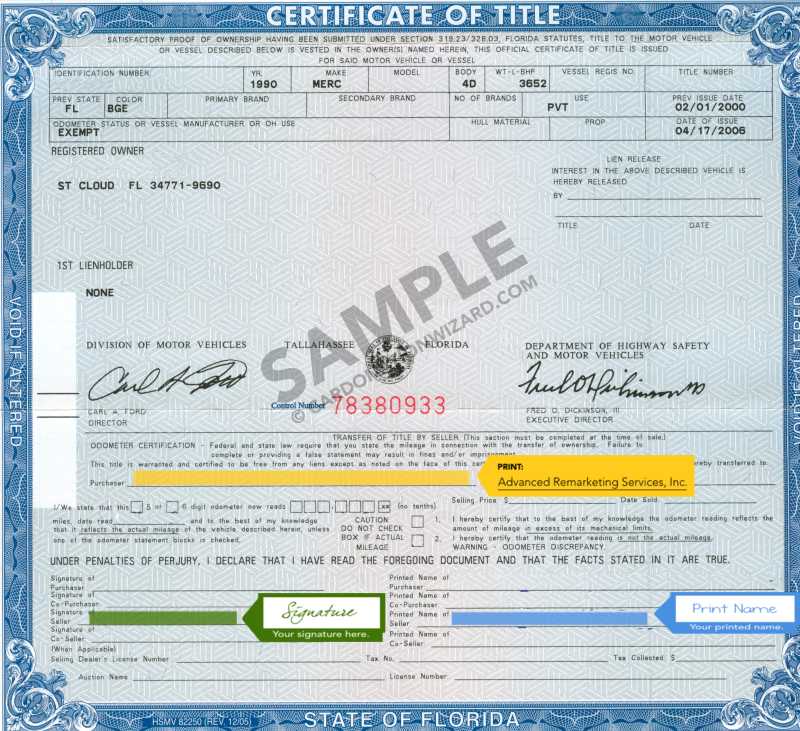
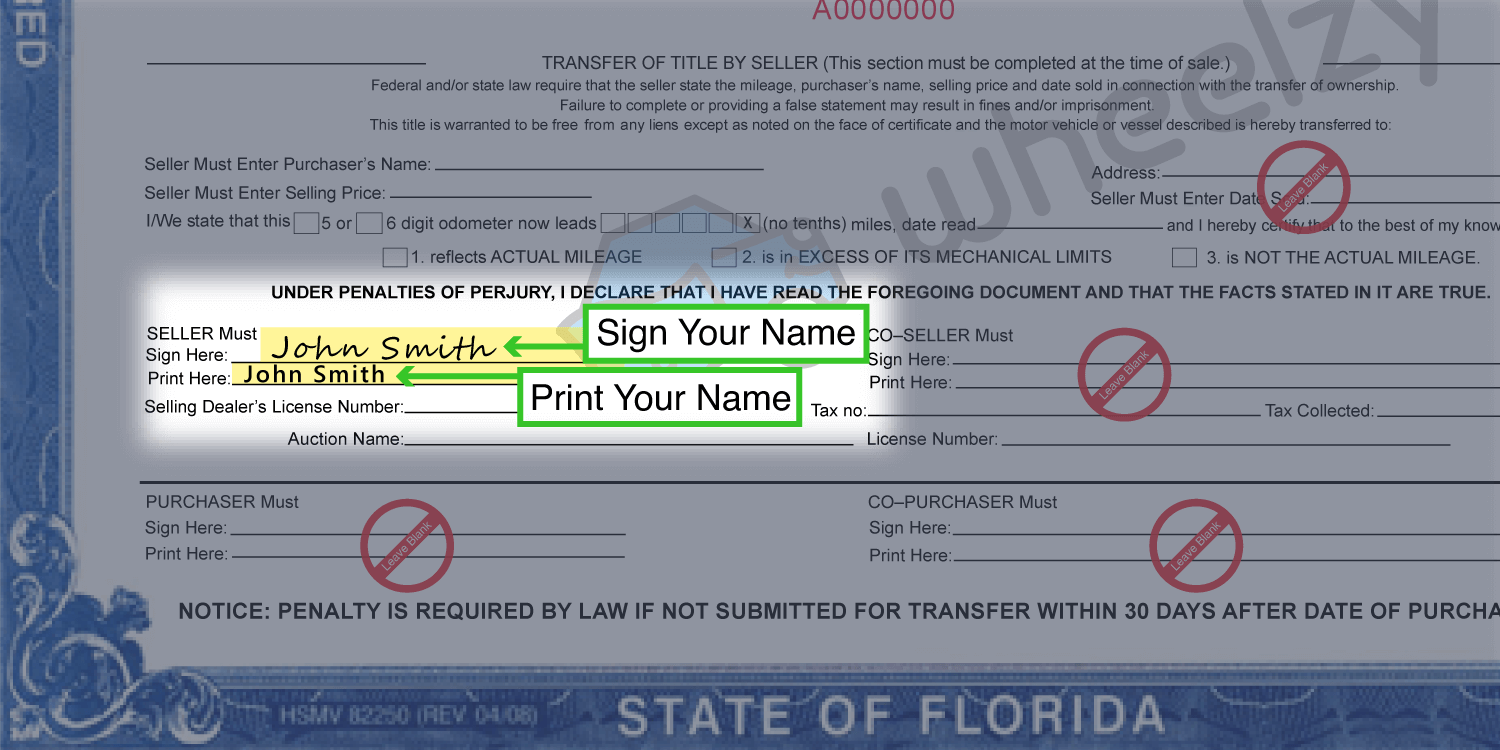
- Complete the Assignment of Title Section: On the front of the Florida title certificate, there is a section for “Assignment of Title.” Here, the seller must print and sign their name exactly as it appears on the title. The buyer’s name and address must also be entered.
- Odometer Disclosure Statement: For vehicles less than 20 years old, the odometer reading must be accurately recorded in the “Odometer Disclosure Statement” section on the title. Both the seller and buyer must sign this statement. Falsifying odometer readings is a felony.
- Sales Price: While not strictly required on the title, it’s good practice to record the sales price, especially if you create a separate Bill of Sale.
Notifying the FLHSMV
One of the most crucial steps for a seller in Florida is to submit a “Notice of Sale” (Form HSMV 82101) to the FLHSMV. This form formally informs the state that you are no longer the owner of the vehicle. Submitting this notice helps absolve you of liability for the vehicle from the date of sale. It’s recommended to do this immediately after the sale. You can submit it online through the FLHSMV website or by mail.
Removing License Plates
In Florida, license plates belong to the owner, not the vehicle. When you sell your car, you must remove the license plate. You have a few options for the plate:
- Transfer to a New Vehicle: You can transfer the plate to another vehicle you own or acquire, provided the vehicle classification (e.g., car to car) is the same. This usually involves a transfer fee.
- Surrender the Plate: If you don’t plan to use the plate on another vehicle, you must surrender it to a Florida County Tax Collector’s office to cancel the registration. Failing to do so can result in suspension of your driver’s license if the insurance associated with the plate lapses.
The Buyer’s Steps for a Smooth Transfer
Once the seller has completed their part, the responsibility shifts to the buyer to finalize the ownership transfer and registration within a specified timeframe. This ensures the vehicle is legally yours and ready for the road.
Required Documents for Buyers
To successfully transfer the title and register the vehicle, buyers will need to gather several essential documents:
- Original Title Certificate: This is the most important document, properly signed and completed by the seller, including the odometer reading and assignment of title sections.
- Proof of Florida Insurance: You must have valid personal injury protection (PIP) and property damage liability (PDL) insurance coverage from a Florida insurer before you can register the vehicle.
- Valid Identification: A valid driver’s license or state-issued ID.
- Bill of Sale (Optional but Recommended): While not always mandatory for title transfer, a Bill of Sale (Form HSMV 82050) is highly recommended. It serves as a receipt and proof of purchase, detailing the vehicle’s information, purchase price, date of sale, and signatures of both buyer and seller. This can be crucial for resolving disputes or for tax purposes.
- Application for Certificate of Title With/Without Registration: (Form HSMV 82040) This form is completed by the buyer and submitted to the County Tax Collector’s office.
Visiting the Tax Collector’s Office
In Florida, vehicle title and registration services are handled by your local County Tax Collector’s office. These offices serve as the primary point of contact for vehicle services, effectively acting as the local DMV (Department of Motor Vehicles) in many other states.
Upon visiting, you will:
- Submit All Required Documents: Present your original title, proof of insurance, ID, and completed application forms.
- Vehicle Identification Number (VIN) Verification: If you are transferring an out-of-state vehicle title, a VIN verification is required. This can often be performed at the tax collector’s office by an authorized agent, or you might need to have a law enforcement officer or DMV representative complete Form HSMV 82042.
- Pay Applicable Fees and Taxes: Be prepared to pay the necessary fees.
Fees and Taxes
Transferring a car title in Florida involves several costs:
- Title Transfer Fee: A standard fee for processing the new title.
- Sales Tax: Florida levies 6% sales tax on the purchase price of the vehicle, plus any local discretionary sales surtax, which varies by county (e.g., Miami-Dade County or Broward County might have an additional percentage). This is typically based on the purchase price or the vehicle’s fair market value, whichever is higher.
- Registration Fee: This annual fee varies based on the vehicle’s weight and type. If you are registering a vehicle in Florida for the first time, there is also an initial registration fee (also known as a “new resident” fee) of $225, in addition to the standard registration fee.
- License Plate Fee: If you are getting new plates, there will be a fee for them.
It’s wise to check with your specific County Tax Collector’s office website for the most current fee schedule, as these can occasionally change.
Special Considerations and Common Pitfalls
While the general process is outlined above, certain situations require extra attention to detail to avoid delays or legal issues.
Out-of-State Vehicle Transfers
For individuals moving to Florida and bringing their vehicle, the process includes a few additional steps. Beyond the standard title application, you will need proof of out-of-state title, a VIN verification, and sometimes an odometer verification if your out-of-state title does not have a designated odometer section. Remember the initial $225 registration fee for first-time Florida vehicle registrations.
Adding or Removing Lienholders
If you purchase a vehicle with a loan, your lender will be listed as a lienholder on the title. The FLHSMV issues electronic titles to lienholders until the loan is paid off. Once the loan is satisfied, the lienholder will release the lien, typically by providing an electronic notification to the FLHSMV or by sending you a physical lien satisfaction document. You may then apply for a paper title in your name, free of liens.
Dealing with Lost or Damaged Titles
A lost or damaged title can significantly delay a sale. If this happens, the registered owner must apply for a duplicate title (Form HSMV 82101) through the FLHSMV or a County Tax Collector’s office. This process typically involves a waiting period and a fee. It’s crucial to resolve this before attempting a transfer.
Gifting a Vehicle
When a vehicle is gifted, the sales tax may be waived under specific conditions (e.g., between immediate family members). However, an Affidavit of Gift of Motor Vehicle (Form HSMV 82002) must be completed and submitted along with the other transfer documents to claim the tax exemption. The regular title transfer fee and initial registration fee still apply.
Ensuring Legal Compliance and Avoiding Delays
The final successful transfer of a car title in Florida hinges on meticulous attention to detail and adherence to deadlines. A proactive approach will save you time, money, and unnecessary stress.
Deadlines and Penalties
Buyers have a limited timeframe—typically 30 days from the date of purchase—to transfer the title into their name and register the vehicle. Failure to do so can result in late fees and penalties. For sellers, submitting the Notice of Sale promptly is critical to avoid liability.
Verifying Information
Double-check all forms for accuracy. Mistakes in names, VINs, odometer readings, or signatures can lead to the rejection of your application, causing delays and requiring re-submission. Ensure all parties sign in the correct places, exactly as their names appear on official identification.
Seeking Professional Assistance
While the process is generally straightforward, complex situations (e.g., vehicles with multiple liens, probate issues, or foreign imports) might warrant consulting a professional. A tag agency, attorney specializing in vehicle law, or even a knowledgeable County Tax Collector’s office staff member can offer guidance. For most standard private sales, however, this guide provides all the necessary information to complete the transfer independently.
In conclusion, transferring a car title in Florida is a vital administrative task that supports a smooth and responsible lifestyle within the state. By diligently following the steps for both sellers and buyers, understanding the necessary documentation, and being aware of potential pitfalls, you can ensure a hassle-free and legally compliant ownership transition. This attention to detail not only fulfills your legal obligations but also provides peace of mind, allowing you to fully enjoy your vehicle on Florida’s scenic roads.
LifeOutOfTheBox is a participant in the Amazon Services LLC Associates Program, an affiliate advertising program designed to provide a means for sites to earn advertising fees by advertising and linking to Amazon.com. Amazon, the Amazon logo, AmazonSupply, and the AmazonSupply logo are trademarks of Amazon.com, Inc. or its affiliates. As an Amazon Associate we earn affiliate commissions from qualifying purchases.