
For anyone moving to the Lone Star State, planning an extended stay, or simply engaging in a private vehicle transaction, understanding the process of how to transfer a vehicle title in Texas is absolutely paramount. While seemingly a bureaucratic hurdle, a proper title transfer ensures legal ownership, facilitates future transactions, and prevents potential legal complications. Whether you’re a seasoned resident or new to the vibrant Texas lifestyle, this guide will demystify the steps involved, highlight crucial documents, and offer insights into common scenarios, making your journey as smooth as a Texas summer drive.
The need to transfer a vehicle title often arises from significant life events: purchasing a new car, relocating to Texas from another state, inheriting a vehicle, or even gifting one to a loved one. Each scenario comes with its own set of requirements and considerations. Given the vastness of Texas and its diverse regions—from the bustling metropolises of Houston and Dallas to the scenic Hill Country around Austin and the historic charm of San Antonio—having a legally registered vehicle is not just a convenience; it’s often a necessity for enjoying all that the state has to offer, from exploring local attractions and landmarks to embarking on spontaneous road trips. This guide aims to equip you with the knowledge needed to navigate the official channels efficiently, allowing you to focus more on the exciting aspects of your Texas adventure.
Understanding the Basics of Vehicle Title Transfer in Texas
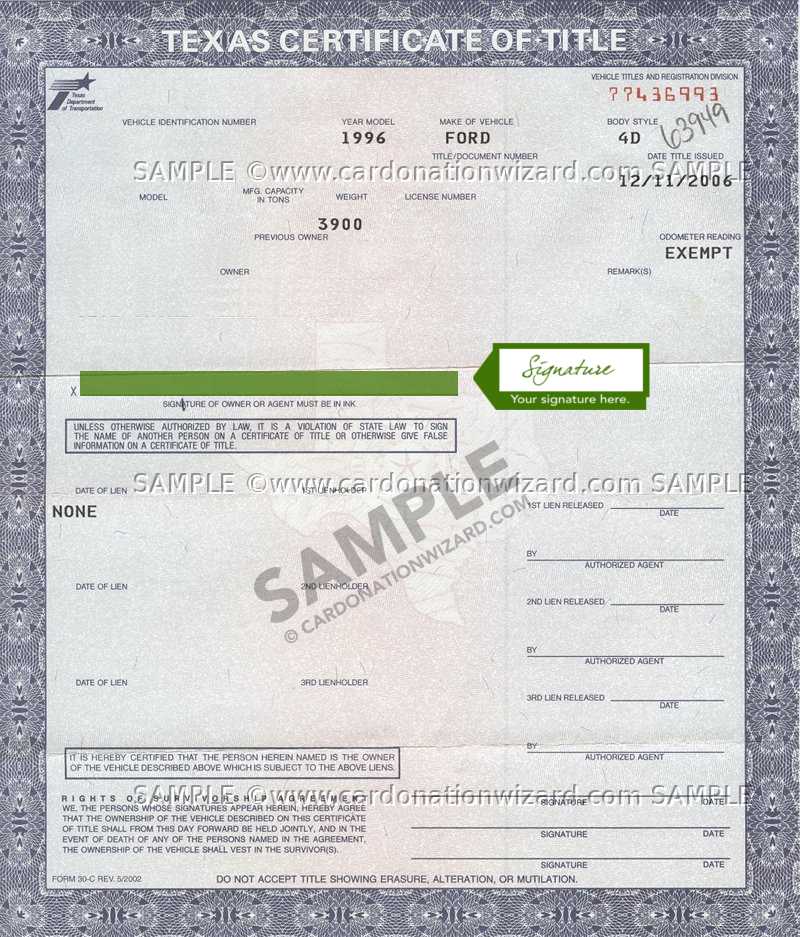
Before diving into the granular steps, it’s essential to grasp the fundamental concepts surrounding vehicle title transfers in Texas. A vehicle title is a legal document that establishes proof of ownership. It contains vital information about the vehicle, such as its Vehicle Identification Number (VIN), make, model, year, and the name of the legal owner. The transfer of this title from one party to another officially changes ownership in the eyes of the state.
Why Title Transfer is Crucial
Proper title transfer is not just a formality; it carries significant legal and practical implications. Firstly, it legally protects both the buyer and the seller. For the buyer, a valid title confirms that they are the rightful owner, protecting them from claims by previous owners or potential legal disputes. For the seller, properly transferring the title removes their liability for the vehicle after the sale, including any accidents, violations, or unpaid tolls incurred by the new owner. This is particularly important in a large state like Texas, where vehicles can quickly cover vast distances.
Secondly, you cannot legally register or obtain license plates for a vehicle in Texas without a properly transferred title. Registration is mandatory for all vehicles operated on public roads. Without it, you could face fines, penalties, or even have your vehicle impounded. Furthermore, the title transfer process is often tied to sales tax collection, which is a state requirement for most vehicle sales. Attempting to bypass these steps can lead to significant financial and legal headaches down the road.
Key Players in the Process
The primary entities involved in a Texas vehicle title transfer are the seller, the buyer, and the County Tax Assessor-Collector’s office.
- The Seller: The individual or entity currently listed as the legal owner on the existing title. The seller’s responsibilities include signing off on the title, providing necessary documentation, and potentially removing their license plates.
- The Buyer: The individual or entity acquiring ownership of the vehicle. The buyer’s responsibilities include completing various forms, paying sales tax and fees, and submitting all documentation to the County Tax Assessor-Collector’s office.
- The County Tax Assessor-Collector’s Office: This local government office, present in every Texas county, is the authoritative body responsible for processing title transfers, collecting sales tax and registration fees, and issuing new titles and license plates. While the Texas Department of Motor Vehicles (TxDMV) sets the statewide regulations, actual transactions occur at the county level. It’s important to note that you must process the transfer in the county where the buyer resides.
Understanding these roles and the importance of each step will streamline your experience and help you avoid common pitfalls.
Step-by-Step Guide to Transferring a Texas Vehicle Title
Successfully transferring a vehicle title in Texas involves a series of clear steps for both the seller and the buyer. Adhering to these steps meticulously will ensure a smooth and legal transaction.
Seller’s Responsibilities
The seller’s role is crucial in initiating a smooth title transfer. Their primary responsibilities include:
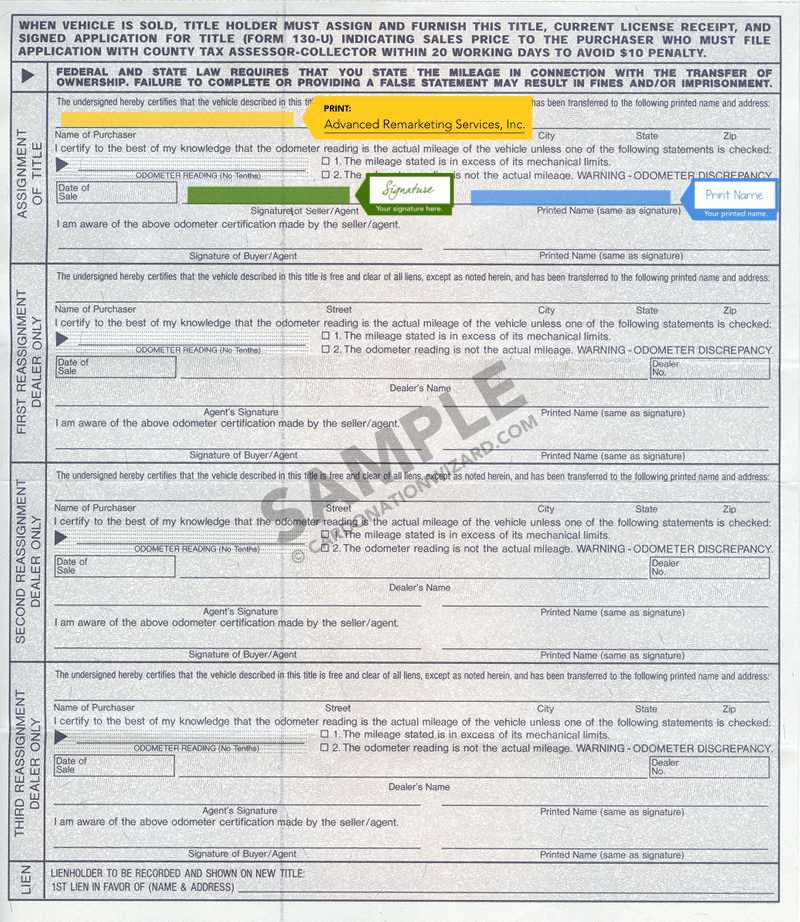
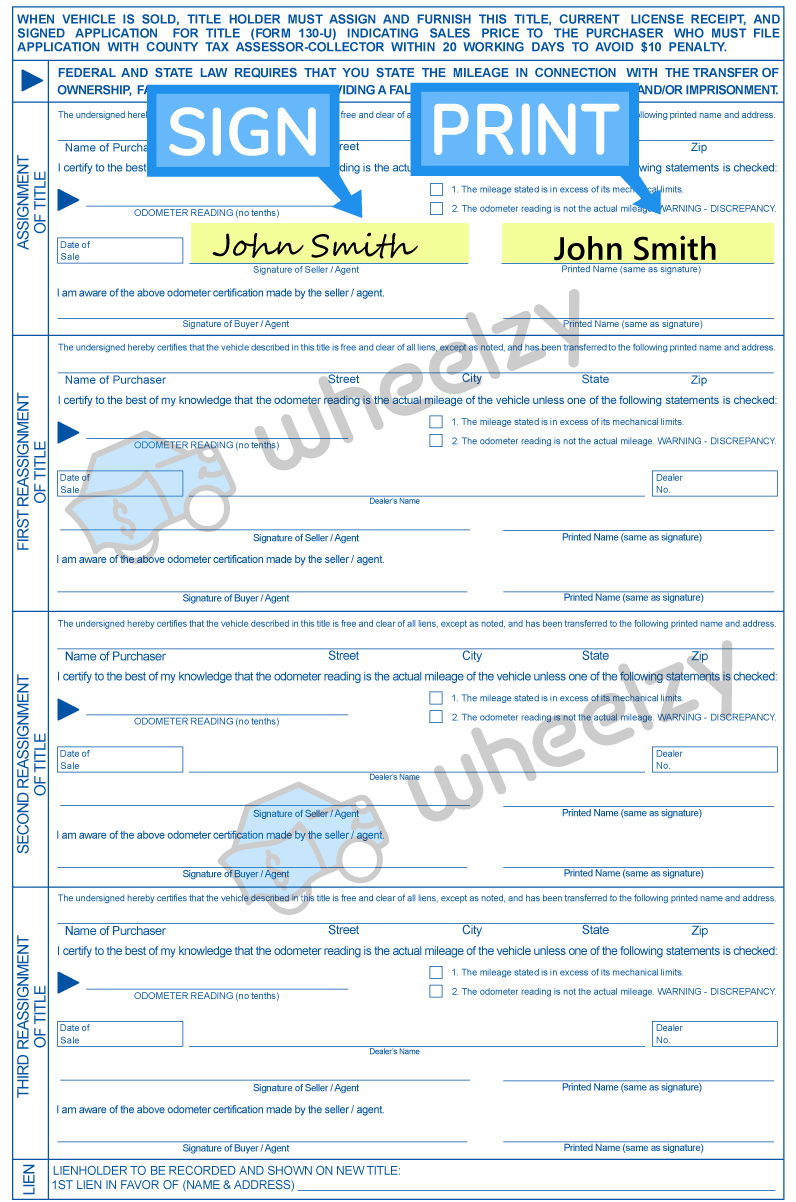
- Signing the Title: The seller must sign and date the original Texas Certificate of Title in the designated “Assignment of Title” section. This is often on the back of the title document. Ensure the signature matches the name printed on the title exactly. If there are multiple owners listed with “AND” between their names, both must sign. If it’s “OR,” only one signature is required.
- Odometer Disclosure: For vehicles less than 10 years old, the seller must accurately record the current odometer reading on the title or on a separate Odometer Disclosure Statement (Form VTR-407). This is a federal requirement designed to prevent odometer fraud.
- Statement of Fact: In certain situations, such as when the title is lost or damaged, or if specific information needs to be clarified, the seller might need to complete a Statement of Fact (Form VTR-141).
- License Plates: In Texas, license plates belong to the seller, not the vehicle. The seller must remove their plates from the vehicle after the sale. They can transfer these plates to another vehicle they own (if applicable) or surrender them to their local County Tax Assessor-Collector’s office.
- Notice of Sale: While not legally required, it is highly recommended that the seller submit a Vehicle Transfer Notification (Form VTR-346) to the TxDMV online or by mail. This notifies the state that the vehicle has been sold and helps release the seller from liability for tickets, tolls, or accidents incurred by the buyer after the sale.
Buyer’s Responsibilities and Required Documents
The buyer has the bulk of the responsibility in completing the title transfer within the legally stipulated timeframe. In Texas, the buyer must apply for a new title within 30 calendar days of the date of sale. Failure to do so can result in penalties. Here’s what the buyer needs to do and prepare:
- Original Texas Certificate of Title: This must be the original document signed by the seller (as described above). Do not accept a copy.
- Application for Texas Title and/or Registration (Form 130-U): This is the most crucial document for the buyer. It must be filled out completely and accurately. Both the buyer and seller’s information (names, addresses, driver’s license numbers), vehicle details (VIN, make, model, year), and the sales price must be entered. The form also asks for the date of sale and any lienholder information if the vehicle is financed.
- Proof of Insurance: You must have current liability insurance coverage for the vehicle in your name to register it. You will need to show proof of this insurance when applying for the title and registration.
- Valid Photo Identification: The buyer must present a valid government-issued photo ID (e.g., Texas driver’s license or ID card).
- Proof of Inspection: All vehicles in Texas must pass a safety inspection (and emissions inspection in certain counties like Dallas and Houston areas) within 90 days prior to registration renewal or initial registration. You will need to provide proof of a current inspection.
- Odometer Disclosure Statement (if applicable): If the odometer reading wasn’t recorded on the title, ensure you have the separate Odometer Disclosure Statement signed by both parties.
- Payment for Fees and Taxes: Prepare to pay sales tax, title transfer fees, and registration fees.
Completing Form 130-U
The Application for Texas Title and/or Registration (Form 130-U) is the cornerstone of the title transfer process. It’s a comprehensive document that consolidates much of the necessary information. Key sections to pay close attention to include:
- Vehicle Information: Double-check the VIN, make, model, and year against the title and the vehicle itself.
- Owner Information: Accurately enter the buyer’s name(s), address, driver’s license number, and contact information.
- Previous Owner Information: Enter the seller’s name and address.
- Sales Price: This is critical for calculating sales tax. Be truthful about the sales price. If the sales price is significantly below the vehicle’s standard presumptive value (SPV), the state may use the SPV to calculate the sales tax, unless you have a legitimate reason (e.g., gifting, trade-in, mechanical issues) which might require additional documentation like a Statement of Fact for Gifted Vehicles (Form 14-317) or a Rebuilt Salvage Vehicle Form (Form VTR-61).
- Signatures: Both the buyer and seller (or their authorized agents) must sign and date the form.
Accuracy is paramount when filling out Form 130-U. Mistakes can lead to delays or rejection of your application, requiring multiple trips to the County Tax Assessor-Collector’s office.
Navigating Fees and Taxes
The financial aspect of transferring a vehicle title in Texas includes several components:
- Sales Tax: Texas levies a 6.25% motor vehicle sales tax on the sales price or the standard presumptive value (SPV) of the vehicle, whichever is greater. The SPV is a value determined by the state for tax purposes, based on the vehicle’s make, model, and year. If the actual sales price is lower than the SPV, you may need to provide a valid explanation or pay tax based on the SPV.
- Title Application Fee: A relatively small fee (typically around $33) is charged for processing the title transfer.
- Registration Fee: This annual fee varies slightly by county but is generally around $50. It covers the cost of your license plates and registration sticker.
- Inspection Fee: While typically paid at the inspection station, ensure your vehicle has a current passing inspection, as proof will be required.
- Local Fees: Some counties may have additional small local fees.
It’s advisable to check the specific fees with your local County Tax Assessor-Collector’s office website or by phone before your visit to ensure you bring the correct payment method (cash, check, or credit/debit card, depending on the office’s policies).
Special Scenarios and Important Considerations
While the general steps cover most private sales, specific situations require additional documentation or slightly different procedures. Awareness of these can save you time and frustration.
Gifting a Vehicle
If a vehicle is truly a gift (no money or services exchanged), you can often avoid paying sales tax based on the vehicle’s value. However, you’ll still need to pay a small gift tax. Both parties must complete a Affidavit of Motor Vehicle Gift Transfer (Form 14-317), often referred to as the Gift Tax Form. This form ensures the transaction is legitimately a gift and not an attempt to evade sales tax. You will still need the original title, Form 130-U, and proof of insurance and inspection.
Inherited Vehicles
Transferring the title of an inherited vehicle depends on whether the deceased owner left a will and whether the estate is going through probate.
- With a Will and Probate: You’ll typically need a certified copy of the Letters Testamentary or Letters of Administration from the probate court, along with the original title and Form 130-U.
- Without a Will or Probate (Small Estate): If the estate is small enough to qualify for a “Small Estate Affidavit,” you may be able to use this document. Alternatively, for very small estates with no other assets, an Affidavit of Heirship for a Motor Vehicle (Form VTR-262) can be used, signed by two disinterested witnesses. The TxDMV website provides detailed guidance on these scenarios, and it’s often wise to consult with the County Tax Assessor-Collector’s office or even legal counsel for complex inheritance cases.
Out-of-State Transfers
Moving to Texas with an out-of-state vehicle requires specific steps to register it in the state:
- Texas Safety and Emissions Inspection: Your vehicle must pass a Texas inspection.
- Proof of Texas Insurance: Obtain liability insurance from a provider licensed in Texas.
- Original Out-of-State Title: You’ll need your original title from the previous state. If it’s held by a lienholder, you’ll apply for a new Texas title and registration, and the TxDMV will correspond with your lienholder to obtain the necessary documentation.
- Application for Texas Title and/or Registration (Form 130-U): Complete this form, indicating it’s an out-of-state transfer.
- Identification: Your valid driver’s license.
- Payment: Be prepared for sales tax (if you haven’t paid sales tax on the vehicle in another state or if the tax paid was less than Texas’s 6.25%), title fees, and registration fees.
The 30-day rule for new residents also applies: you must register your vehicle within 30 days of establishing residency or moving to Texas.
Addressing Common Pitfalls
Several issues can cause delays in title transfers:
- Incomplete or Incorrect Forms: Missing signatures, incorrect VINs, or blank fields on Form 130-U or the title are common reasons for rejection.
- Failure to Obtain Inspection: Ensure your vehicle has passed its Texas inspection before heading to the County Tax Assessor-Collector’s office.
- Lien Release Issues: If there was a lien on the title that hasn’t been properly released (e.g., if you recently paid off a loan), you’ll need the original lien release document from the lienholder.
- Mismatched Names: Ensure the names on the ID, title, and Form 130-U match.
- Expired Deadlines: The 30-day deadline for buyers is critical. Missing it can result in late fees and penalties.
Double-checking all documents and understanding the specific requirements for your situation can prevent these common setbacks.
Finalizing Your Title Transfer at the County Office
The final stage of the title transfer process involves a visit to your local County Tax Assessor-Collector’s office. This is where all your prepared documents come together for official processing.
What to Bring to the Tax Assessor-Collector’s Office
To ensure a smooth visit, compile all necessary documents in an organized manner:
- The original Texas Certificate of Title, properly signed by the seller.
- The completed and signed Application for Texas Title and/or Registration (Form 130-U).
- Proof of current liability insurance in your name.
- Proof of a current Texas vehicle inspection (VI-30A form or electronic verification).
- Your valid government-issued photo identification.
- Any additional forms specific to your situation (e.g., Odometer Disclosure Statement, Affidavit of Motor Vehicle Gift Transfer, lien release).
- Payment for all applicable fees and taxes.
It’s often a good idea to make copies of all documents for your records before submitting the originals. Some offices allow online appointments, which can significantly reduce wait times, especially in larger cities like Houston or Dallas.
The Waiting Period and Receiving Your New Title
Once you’ve submitted all the documents and paid the fees, the County Tax Assessor-Collector’s office will provide you with a new registration sticker and license plates (if needed) on the spot. They will also give you a receipt as proof that you have applied for the title.
The actual new Certificate of Title is not issued immediately. It will be mailed to you by the TxDMV from their central office, usually within 2 to 4 weeks. If there is a lienholder (e.g., if you financed the vehicle), the title will be mailed directly to the lienholder. It is crucial to keep your receipt of application as proof of your pending title while you wait.
In conclusion, navigating the vehicle title transfer process in Texas is a fundamental aspect of vehicle ownership in the state. By meticulously following the steps outlined in this guide, understanding the required documentation, and being aware of specific scenarios, you can ensure a hassle-free experience. This will free you up to enjoy the open roads of Texas, whether you’re exploring the historic missions of San Antonio, enjoying the live music scene in Austin, or simply commuting through the vast landscapes of the Lone Star State. Happy motoring!
LifeOutOfTheBox is a participant in the Amazon Services LLC Associates Program, an affiliate advertising program designed to provide a means for sites to earn advertising fees by advertising and linking to Amazon.com. Amazon, the Amazon logo, AmazonSupply, and the AmazonSupply logo are trademarks of Amazon.com, Inc. or its affiliates. As an Amazon Associate we earn affiliate commissions from qualifying purchases.