
Navigating the sprawling urban landscape of New York City can seem daunting, especially for first-time visitors. However, at the heart of the city’s efficient transit system lies the iconic New York City Subway. More than just a mode of transportation, it’s a vital artery that connects the diverse boroughs, allowing residents and tourists alike to traverse the city with speed and relative ease. Mastering its use unlocks the full potential of your New York City experience, from reaching world-renowned landmarks like the Empire State Building to exploring vibrant neighborhoods like Greenwich Village. This guide is designed to equip you with the knowledge to confidently navigate the New York City Subway, ensuring your journey through the city is seamless and enjoyable.
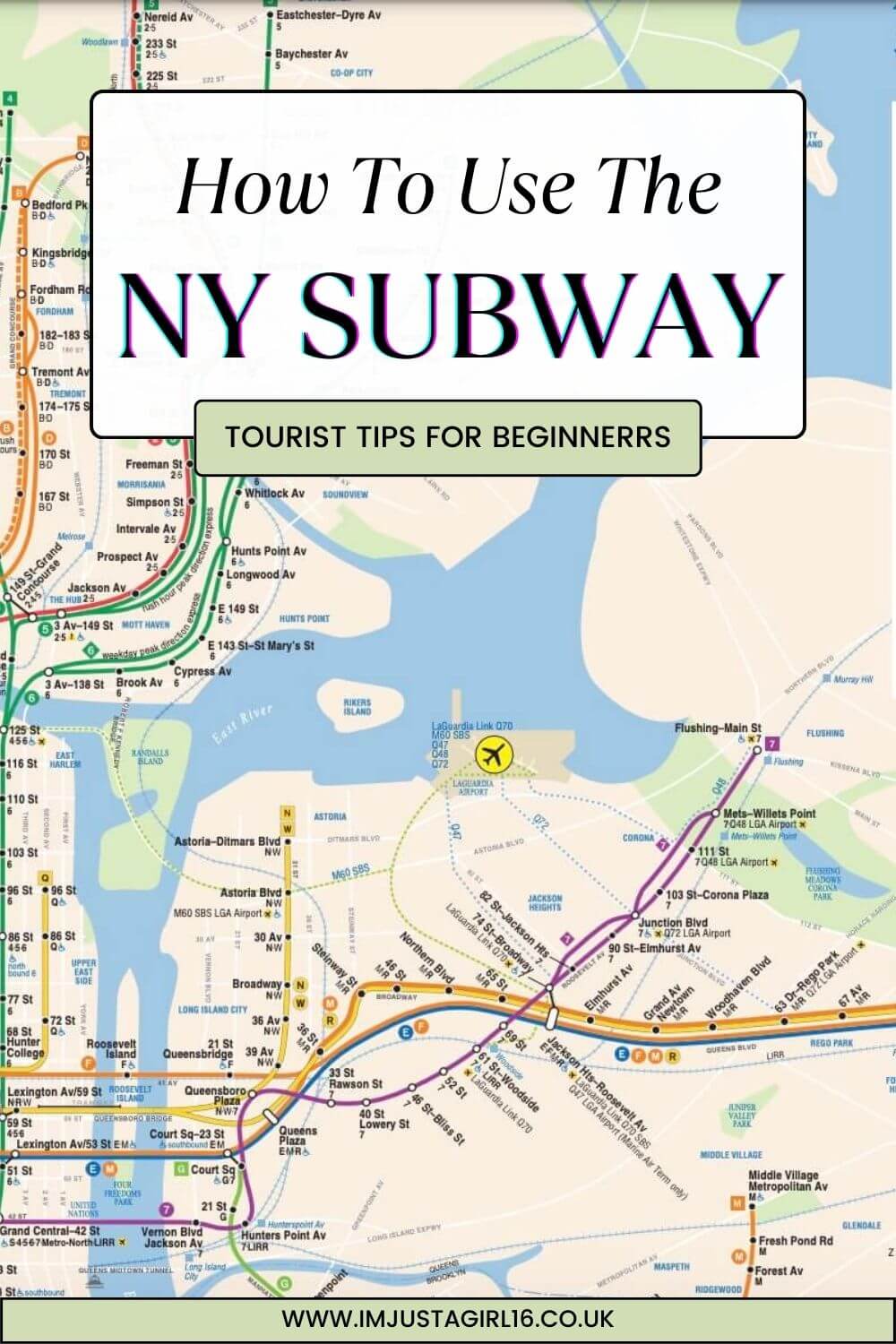
Understanding the Subway System: Your First Steps
Before you even step onto a platform, a basic understanding of the New York City Subway system is crucial. It’s a vast network, and knowing a few key principles will make your experience significantly smoother.
The Network: Lines, Colors, and Numbers
The New York City Subway operates on a color-coded and lettered/numbered line system. Each distinct route is represented by a specific color and a letter (e.g., the A, C, E are generally blue) or a number (e.g., the 1, 2, 3 are generally red). These colors often correspond to the trunk lines that run through Manhattan. However, it’s important to note that multiple lines can share the same track for sections of their journey. For example, both the A and C trains might run on the same tracks in certain parts of Manhattan.
When planning your journey, you’ll typically be looking for a specific line letter or number. Maps are ubiquitous at stations and online, detailing these routes. Pay close attention to the direction of travel: trains are designated as either “Uptown” or “Downtown” in Manhattan, and similarly as “Queens-bound,” “Brooklyn-bound,” or “Bronx-bound” in other boroughs. Understanding your destination’s general direction is a primary step in selecting the correct platform.
Station Layouts and Platform Guidance
New York City Subway stations can vary greatly in size and complexity. Some are simple, single-platform stops, while others are massive, multi-level hubs serving numerous lines. Regardless of size, stations are typically signed with the names of the lines that serve them, along with directional indicators.
Platforms are usually marked with the line letters/numbers and the direction of travel (e.g., “Uptown & Queens,” “Downtown & Brooklyn”). Overhead signs, often illuminated, will display the next arriving train and its destination. It’s essential to stand on the correct side of the platform. Some platforms are island platforms, serving trains in both directions, while others are side platforms. Always check the signs before a train arrives to ensure you are waiting for the correct one. Boarding the wrong train can lead to significant delays or even require you to backtrack, so double-checking is always a good habit.
Express vs. Local Trains: A Crucial Distinction
One of the most vital concepts to grasp when using the New York City Subway is the difference between express and local trains. On some heavily trafficked lines, particularly in Manhattan, there are separate tracks for express and local trains.
- Local trains stop at every station along their route.
- Express trains skip some stations, stopping only at major transfer points.
Identifying whether your train is express or local is paramount for efficient travel. Maps clearly indicate which stations are served by express trains. If you’re heading to a smaller station that an express train skips, you’ll need to take a local train or transfer from an express train at a designated express stop to a local train. This distinction is crucial for avoiding unintended, longer journeys.
Planning Your Journey: Tools and Techniques
Effective planning is the cornerstone of a stress-free subway experience. Fortunately, the Metropolitan Transportation Authority (MTA), the agency that operates the New York City Subway, provides several excellent tools to assist you.
Navigating with the MTA Website and Apps
The official MTA website and its associated apps are invaluable resources. You can input your starting point and destination, and the system will generate optimal routes, including estimated travel times, transfers, and any service advisories. These tools are updated in real-time, so you’ll be informed of delays, planned maintenance, or unexpected disruptions.
Beyond the official app, numerous third-party navigation apps are available for smartphones. These often offer user-friendly interfaces and additional features like offline maps and crowd-sourced delay information. Popular choices include Google Maps and Citymapper. Whichever app you choose, familiarize yourself with its features before you begin your travels.
Understanding Service Changes and Advisories
The New York City Subway operates 24/7, but this constant operation means that maintenance and upgrades are regularly scheduled. This often results in service changes, especially on weekends and during late nights. You’ll frequently see signs in stations and announcements about rerouted trains, closed stations, or modified schedules.
It’s imperative to check for service advisories before you embark on your journey, especially if you’re traveling during off-peak hours or on weekends. The MTA website and apps are the best places to find this information. Ignoring these advisories can lead to confusion and significant delays, so make it a habit to check before you head out.
Reading the Subway Map: A Visual Guide
The iconic New York City Subway map is a work of art in itself, but it can also be a bit overwhelming for the uninitiated. The official map, while geographically simplified, accurately depicts the relative positions of stations and the connectivity of the lines.
When using the map:
- Identify your starting station and your destination station.
- Trace the lines that serve each. Note the color and letter/number.
- Look for transfer points. These are typically indicated by circles on the map, signifying stations where you can switch between different lines.
- Determine the direction of travel. Is it uptown or downtown? East or west? This is crucial for choosing the correct platform.
- Consider express vs. local stops. If your destination is a local stop, ensure you’re on a local train or can easily transfer to one.
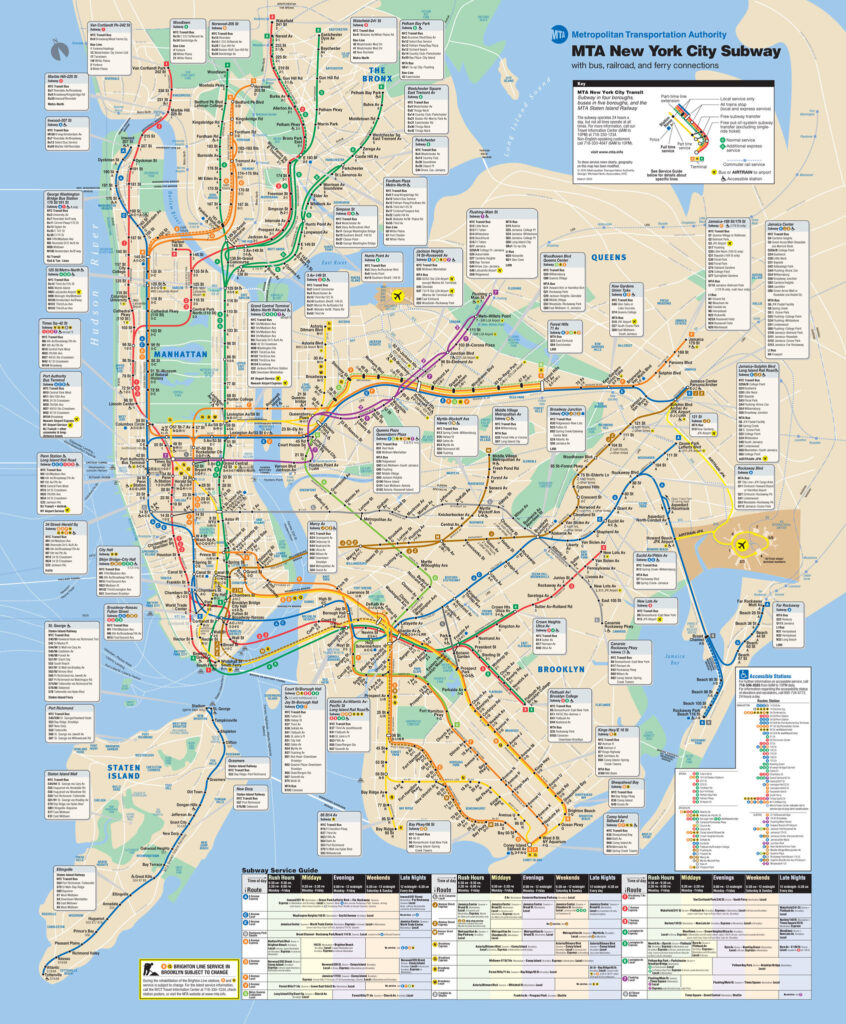
Don’t be afraid to spend a few minutes studying the map at your starting station. Many stations have large, illuminated maps that are easy to read.
Purchasing Fares and Riding Etiquette
Once you understand the system and have planned your route, it’s time to get on board. This involves purchasing your fare and adhering to basic subway etiquette, which contributes to a more pleasant experience for everyone.
Fares and Payment Options: OMNY and MetroCards
The New York City Subway has transitioned to a new fare payment system called OMNY (One Metro New York). This contactless payment system allows you to tap your contactless credit or debit card, or a smart device with mobile payment enabled, directly on the reader at the turnstile. This is the most convenient and increasingly the most common way to pay.
For those who prefer not to use contactless payment, or for specific fare types, the traditional MetroCard is still available at vending machines in most stations. You can purchase a pay-per-ride MetroCard or an unlimited ride MetroCard for periods of 7 or 30 days. The fare for a single ride is currently a flat fee, but unlimited passes can be cost-effective for frequent riders.
When purchasing a MetroCard from a vending machine, follow the on-screen prompts. You can typically pay with cash or credit/debit cards. If you’re unsure about which fare option is best for your needs, consider your planned itinerary. For most tourists visiting for a few days, a pay-per-ride MetroCard or using OMNY with a contactless payment method will be sufficient.
Navigating Turnstiles and Station Entrances
Entrances to subway stations are clearly marked with the distinctive green globe lights. Once inside, you’ll find the fare gates or turnstiles.
- Using OMNY: Simply tap your contactless payment device on the OMNY reader. The gate will unlock, and you can proceed.
- Using MetroCard: Swipe your MetroCard through the reader slot. If the card has sufficient fare and is valid, the gate will unlock. If it’s declined, the reader will usually indicate why (e.g., insufficient fare, expired card).
Be mindful of people exiting the subway; you can only pass through the turnstile after the person in front of you has cleared it. Rushing or attempting to push through can be disruptive and lead to minor accidents.
Riding Etiquette: Being a Considerate Passenger
The New York City Subway is a shared space, and adhering to basic etiquette ensures a more pleasant experience for all.
- Let passengers exit before boarding: Wait for people to get off the train before you attempt to get on. This is a fundamental rule that prevents congestion on the platform and inside the car.
- Move to the center of the car: Once onboard, don’t block the doors. Move into the car to make space for others.
- Offer your seat to those in need: This includes seniors, pregnant women, and individuals with disabilities.
- Keep your belongings to yourself: Avoid taking up extra space with large bags or backpacks. If possible, place them on your lap or between your feet.
- Keep the noise down: While some conversation is inevitable, try to keep your voice down and avoid playing music or videos without headphones.
- Be aware of your surroundings: While generally safe, it’s always wise to be mindful of your personal belongings, especially during crowded times.
- Do not litter: Stations and trains are cleaned regularly, but littering makes the environment unpleasant for everyone.
By following these simple guidelines, you contribute to a more efficient and enjoyable subway experience for yourself and your fellow passengers.
Beyond the Basics: Advanced Tips for the Savvy Traveler
Once you’ve mastered the fundamentals, a few advanced tips can elevate your New York City Subway experience from functional to truly proficient.
Understanding Transferring Between Lines
Transferring between subway lines is a common necessity, especially in Manhattan where many lines converge. Stations where you can switch lines are indicated on the map by circles.
- Within the station: Most major transfer stations are designed for easy passage between platforms of different lines. Follow the signs for the line you wish to transfer to. Sometimes, this involves walking down a level, up a level, or through a connecting corridor.
- “Free” transfers: In most cases, transferring between lines within a station does not require you to pay another fare, as long as you do not exit the paid area of the station. However, always confirm this by looking for signage that indicates “Free Transfer.”
- Transfers requiring exiting: In rare cases, you might need to exit one station and enter another to complete a transfer. This would require paying a second fare. This is less common for typical tourist routes and more likely for very specific, less-trafficked connections.
Safety and Security on the Subway
The New York City Subway is generally a safe environment, but it’s always prudent to be aware and take precautions.
- Stay on well-lit and populated platforms: Especially if you’re traveling late at night.
- Keep valuables out of sight: Avoid flashing expensive jewelry or electronics.
- Be aware of your surroundings: Pay attention to who is around you.
- If you feel unsafe, move to a more populated area of the car or platform: Or speak to a uniformed MTA employee if one is available.
- Emergency call buttons: Many cars and platforms are equipped with emergency call buttons that connect directly to transit police.
Exploring the Outer Boroughs
While Manhattan is often the primary focus for tourists, the New York City Subway provides excellent access to the other four boroughs: Brooklyn, Queens, The Bronx, and Staten Island (though Staten Island has its own ferry and express bus system that connects to the subway).
- Brooklyn: Explore neighborhoods like DUMBO for stunning views of the Manhattan skyline, or Williamsburg for its vibrant arts and food scene.
- Queens: Discover Flushing Meadows Corona Park, home to the Queens Museum and the iconic Unisphere, or explore the diverse culinary landscapes of Jackson Heights.
- The Bronx: Visit the Yankee Stadium or enjoy the natural beauty of Orchard Beach.
The subway system is your gateway to experiencing the true diversity and richness of New York City. Don’t hesitate to venture beyond the usual tourist trails; the New York City Subway makes it possible. By following this comprehensive guide, you’ll transform your subway journeys from a logistical hurdle into an integral and exciting part of your New York City adventure.
LifeOutOfTheBox is a participant in the Amazon Services LLC Associates Program, an affiliate advertising program designed to provide a means for sites to earn advertising fees by advertising and linking to Amazon.com. Amazon, the Amazon logo, AmazonSupply, and the AmazonSupply logo are trademarks of Amazon.com, Inc. or its affiliates. As an Amazon Associate we earn affiliate commissions from qualifying purchases.