
The story of Las Vegas is one of the most improbable tales in the history of the United States. What began as a hidden oasis in the parched Mojave Desert has transformed into a global icon of neon lights, architectural marvels, and world-class entertainment. To understand how Las Vegas was started, one must look past the modern-day “Strip” and delve into the geological and historical milestones that allowed a city to bloom in one of the harshest environments on Earth. The history of this landmark city is a fascinating blend of pioneering spirit, massive engineering projects, and the relentless pursuit of the American Dream.
The Geographic Origins and Natural Landmarks
Long before the first neon sign was ever lit, the Las Vegas Valley was defined by its unique geography. Unlike the surrounding arid landscape of Nevada, this specific basin contained artesian wells that pushed water to the surface, creating lush green meadows. The name itself, Las Vegas, is Spanish for “The Meadows,” a tribute to the life-giving water found here.
The Discovery of the Valley
The first European to set eyes on the valley was Rafael Rivera, a young scout who was part of a trading party traveling from New Mexico to California in 1829. While searching for a shortcut, Rafael Rivera discovered the valley’s springs. This discovery was pivotal, as it provided a reliable water source for travelers on what would become the Old Spanish Trail. For decades, the area served as a critical rest stop for traders and explorers navigating the vast distance between Santa Fe and Los Angeles.
Exploration and Early Mapping
In the 1840s, the renowned explorer John C Fremont led an expedition to the valley under the orders of the United States government. John C Fremont was instrumental in mapping the region and documenting the springs. His reports encouraged further westward expansion. Today, Fremont Street in Downtown Las Vegas serves as a permanent landmark honoring his legacy. His arrival signaled the transition of the valley from a Spanish colonial outpost to an American frontier territory.
From Mormon Fort to Rail Hub
The mid-19th century saw the first attempts at permanent settlement in the region. These early structures remain some of the most significant historical landmarks in Nevada, representing the transition from a nomadic stopping point to a structured community.
The Old Las Vegas Mormon Fort
In 1855, members of the Church of Jesus Christ of Latter-day Saints arrived from Utah to establish a settlement. They built the Old Las Vegas Mormon Fort, a defensive structure designed to protect the “Mormon Corridor” and to provide a base for proselytizing the local Paiute people. Although the mission was abandoned just a few years later due to internal conflicts and the difficulty of desert farming, the fort remains a state park today. It stands as the oldest standing building in the city, a stark architectural contrast to the glass skyscrapers nearby.
The Arrival of the Railroad
The true catalyst for the birth of Las Vegas as a town was the San Pedro Los Angeles & Salt Lake Railroad. In 1905, the railroad company auctioned off 110 acres of land near its tracks, effectively founding the town. This area, located near the intersection of the railway and the springs, became the city’s first commercial district. The connection between Salt Lake City and Los Angeles turned Las Vegas into a vital refueling station for steam engines, ensuring the town’s survival in the early 20th century.
The Engineering Feat: Hoover Dam and the Birth of Modern Vegas

The Great Depression of the 1930s destroyed many American towns, but for Las Vegas, it was the era of its greatest growth. This period saw the construction of one of the most famous landmarks in the world, which provided the economic engine for the city’s future.
Constructing the Hoover Dam
Located just 30 miles southeast of the city, the Hoover Dam (originally called the Boulder Dam) was an unprecedented feat of engineering on the Colorado River. Thousands of workers flocked to the region for jobs, bringing a massive influx of population. To accommodate these workers, the government built Boulder City. However, the workers frequently traveled to Las Vegas for recreation, leading to a boom in businesses along the Fremont Street area.
Legalization and the Shift in Culture
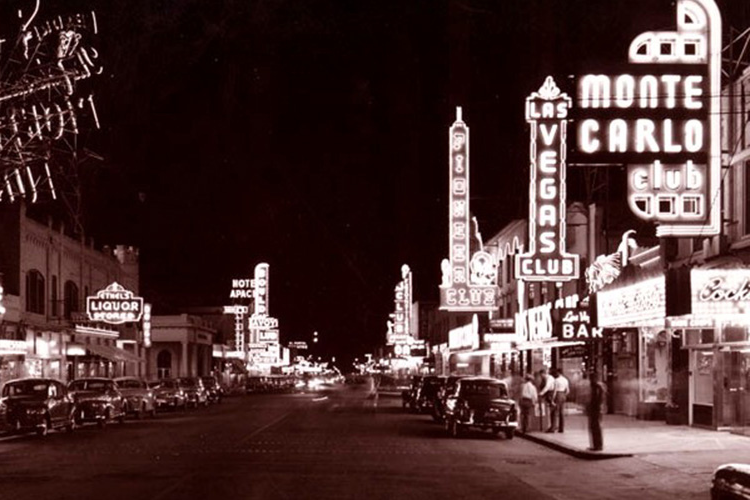
Recognizing the potential for tax revenue from the dam workers, the state of Nevada legalized gambling in 1931. This was a pivotal moment in the history of the city. While the United States was grappling with Prohibition and strict moral codes, Las Vegas embraced a more liberal atmosphere. The completion of the Hoover Dam not only provided jobs but also created Lake Mead, which became a major natural landmark and recreational destination, and ensured a steady supply of hydroelectric power for the city’s future lights.
The Rise of the Las Vegas Strip and Iconic Architecture
As the 1940s began, the focus of the city shifted from the downtown core to a dusty stretch of Highway 91, which would later become the world-famous Las Vegas Strip. This era introduced a new type of landmark: the luxury resort.
El Rancho Vegas and the Early Resorts
The first major resort on what is now the Las Vegas Strip was El Rancho Vegas, opened in 1941. Its architectural style was themed around the “Old West,” featuring sprawling bungalows and a casual atmosphere. This was followed by the Last Frontier, further establishing the trend of building large-scale, self-contained destination resorts outside of the city limits to avoid certain taxes and regulations.
The Mob Era and the Flamingo
Perhaps the most famous turning point in the city’s history was the opening of the Flamingo Hotel & Casino in 1946. Financed by organized crime figures like Bugsy Siegel, the Flamingo Hotel & Casino brought a level of Hollywood glamour and sophistication that the city had never seen. Its sleek, modern architecture and high-profile entertainment changed the city’s trajectory forever. The involvement of the mob in Las Vegas during the mid-20th century is a dark but integral part of its history, leading to the construction of iconic landmarks like the Sands Hotel and the Riviera Hotel.
Modern Transformation and Architectural Evolution
By the late 1960s, the “mob era” began to fade as corporate America took notice of the city’s profitability. This transition led to the “Mega-Resort” era, characterized by colossal buildings that are landmarks in their own right.
The Corporate Takeover and Mega-Resorts
The arrival of eccentric billionaire Howard Hughes, who purchased the Desert Inn and several other properties, signaled the end of organized crime’s dominance and the beginning of corporate ownership. This shift culminated in the 1989 opening of The Mirage by Steve Wynn. The Mirage featured a man-made volcano and a tropical theme, setting a new standard for architectural spectacle. It was followed by other landmarks such as the Bellagio, known for its dancing fountains, and Caesars Palace, which evokes the grandeur of Ancient Rome.

Natural Landmarks and Conservation
While the city is famous for its man-made structures, the surrounding natural landmarks continue to play a vital role in its identity. The Red Rock Canyon National Conservation Area and the Valley of Fire State Park offer a glimpse into the prehistoric landscape that greeted the first explorers. These areas are protected to ensure that even as the city grows, the majestic beauty of the Mojave Desert remains a permanent fixture of the region.
Today, Las Vegas is more than just a place for gambling; it is a museum of architectural history and a testament to human ingenuity. From the humble Old Las Vegas Mormon Fort to the heights of the Stratosphere Tower, the city continues to reinvent itself. It remains a landmark of the United States, proving that with enough water, power, and imagination, even a barren desert can become a global center of culture and history. Over a century after its founding, the “Meadows” discovered by Rafael Rivera have become a beacon of light visible even from space, marking a truly unique chapter in the history of human civilization.
LifeOutOfTheBox is a participant in the Amazon Services LLC Associates Program, an affiliate advertising program designed to provide a means for sites to earn advertising fees by advertising and linking to Amazon.com. Amazon, the Amazon logo, AmazonSupply, and the AmazonSupply logo are trademarks of Amazon.com, Inc. or its affiliates. As an Amazon Associate we earn affiliate commissions from qualifying purchases.