
Visiting Florida, the Sunshine State, often involves exploring its vibrant cities, pristine beaches, and natural wonders by car. Whether you’re driving your own vehicle across state lines or opting for a rental, understanding local driving regulations is paramount for a smooth and enjoyable trip. One frequently asked question, particularly by those accustomed to darker window tints in other regions, revolves around the legality of specific tint percentages in Florida. The 20% tint, in particular, sparks much curiosity. Delving into Florida’s window tint laws is crucial for any tourist looking to avoid unforeseen legal issues and ensure a safe journey.
Navigating Florida’s Window Tint Regulations: A Tourist’s Guide
Florida has specific regulations regarding how dark a vehicle’s windows can be tinted. These laws are designed to balance occupant privacy and comfort with public safety and law enforcement visibility. For tourists, being aware of these nuances is not just about avoiding a ticket; it’s about understanding how these rules contribute to overall road safety in a state known for its diverse driving conditions.
Understanding Visible Light Transmission (VLT)
At the heart of window tint laws is the concept of Visible Light Transmission (VLT). VLT refers to the percentage of visible light that passes through the window film and glass. A higher VLT percentage means more light is allowed to pass through, resulting in a lighter tint. Conversely, a lower VLT percentage indicates a darker tint, allowing less light to penetrate. For instance, a 70% VLT tint allows 70% of visible light to pass through, while a 20% VLT tint allows only 20%.
Understanding VLT is critical because Florida’s laws are strictly defined by these percentages for different windows of a vehicle. The primary concern with overly dark tints is their potential to impair a driver’s visibility, especially at night or in adverse weather conditions, and to hinder law enforcement officers from being able to clearly see into a vehicle during a stop. This balance between driver needs and public safety forms the basis of Florida’s regulations.
Specific Legal Requirements for Different Windows
Florida’s window tint laws distinguish between different sets of windows on a vehicle:
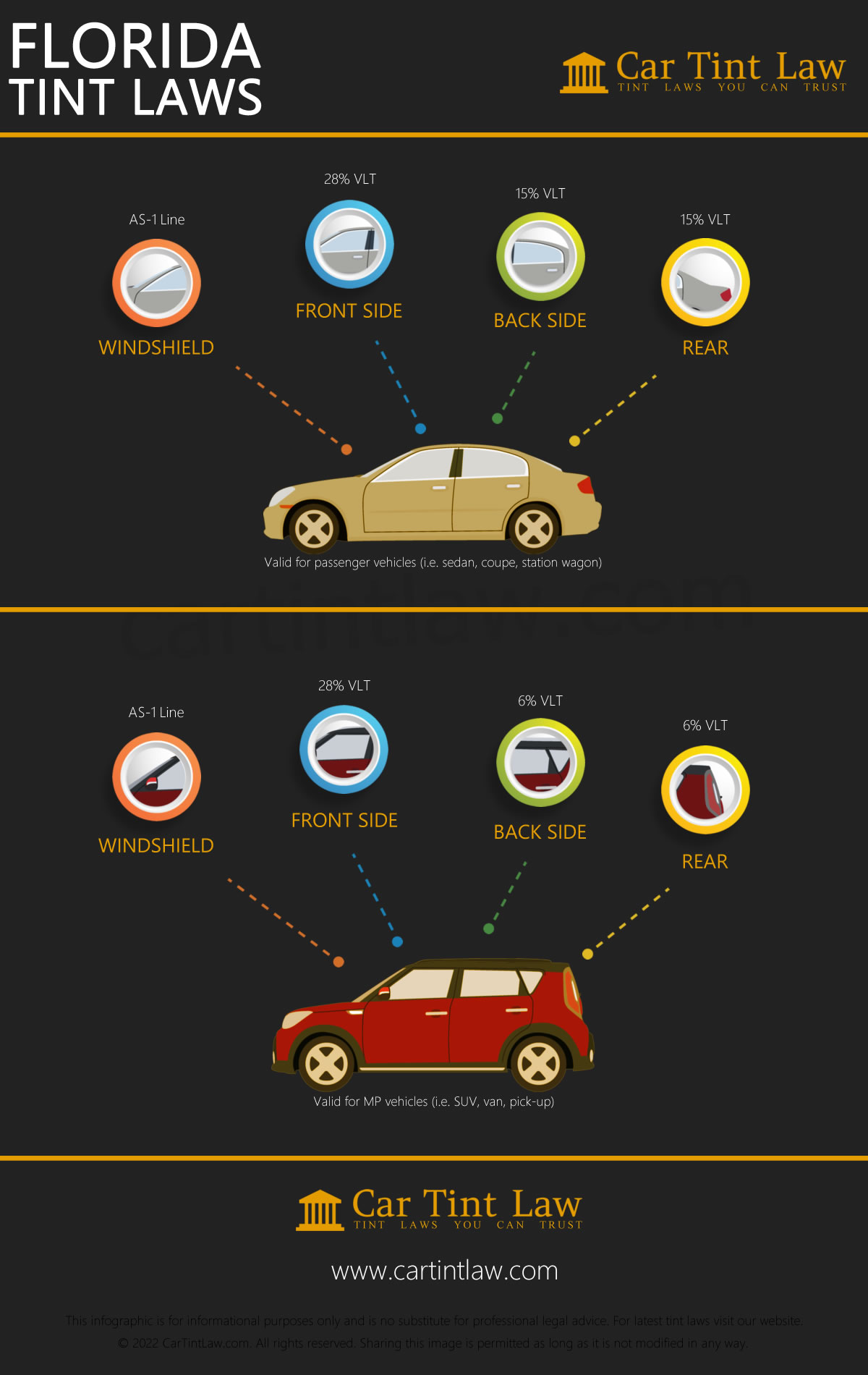
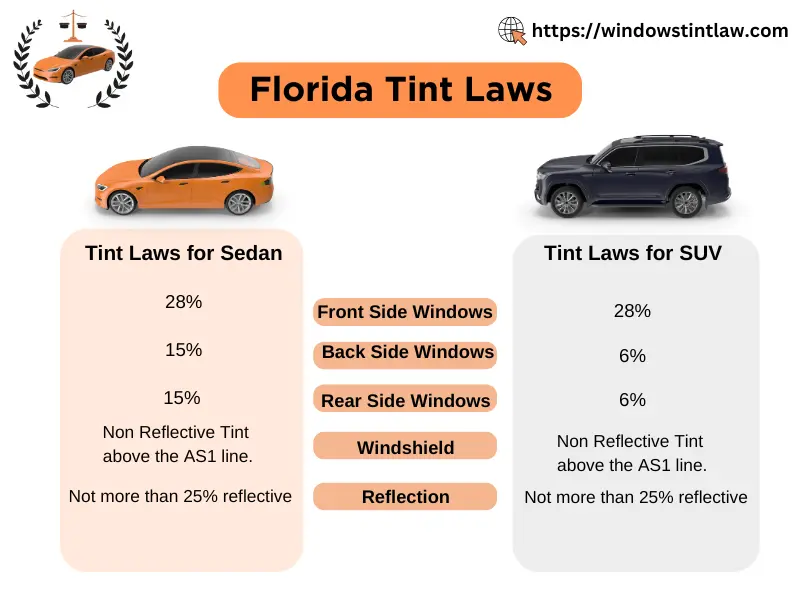
- Front Side Windows: These are the windows on either side of the driver and front passenger. According to Florida Statute 316.2953, these windows must allow more than 28% of visible light through. This means a minimum of 28% VLT is required. A tint darker than this (e.g., 20% VLT) would be illegal for these windows.
- Rear Side Windows: These are the windows immediately behind the driver and front passenger, up to the rear window. For these windows, the law is more lenient, requiring them to allow more than 15% of visible light through, meaning a minimum of 15% VLT.
- Rear Window: The rear window of a vehicle also falls under the 15% VLT minimum, similar to the rear side windows.
- Windshield: The windshield generally has the strictest regulations. Non-reflective tint is allowed only above the manufacturer’s AS-1 line or the top 5 inches of the windshield, whichever is less. The VLT for this strip must be at least 28%. The rest of the windshield cannot be tinted.
These varying percentages mean that a tint considered legal for a rear window might be entirely illegal for a front side window. For tourists, it’s particularly important to remember these distinctions, especially if driving a personal vehicle from a state with different tint laws or considering a rental car with pre-applied tint.
The Implications of Non-Compliance for Visitors
For a tourist, a legal infraction, even a seemingly minor one like non-compliant window tint, can transform a relaxing vacation into a stressful ordeal. Understanding the consequences can help motivate adherence to Florida’s laws.
Avoiding Fines and Legal Pitfalls
Non-compliance with Florida’s window tint laws can result in a non-moving traffic infraction, which typically carries a fine. While the exact amount can vary by county and specific circumstances, it usually falls within the range of standard traffic tickets. Beyond the monetary cost, receiving a ticket while on vacation can be a significant inconvenience. It might require you to:
- Attend a court hearing: If you dispute the ticket, this could mean disrupting your travel plans or even having to return to Florida at a later date.
- Pay the fine remotely: While often possible, it’s still an unexpected expense and administrative hassle.
- Address the violation: In some cases, you might be issued a “fix-it ticket,” requiring you to remove or replace the non-compliant tint and provide proof of correction. This is particularly problematic for visitors who are only in the state for a short period or are driving a rental car.
These disruptions can significantly detract from the enjoyment and freedom associated with a Florida getaway.
Safety Considerations on Florida Roads
Beyond legal penalties, tint laws also serve a vital safety function. Florida’s roads can be bustling, especially in major tourist hubs like Orlando or Miami, and weather conditions can change rapidly, from bright sunshine to torrential downpours.
- Reduced Visibility: Excessively dark tint, particularly on front side windows, can severely reduce a driver’s ability to see pedestrians, cyclists, or other vehicles, especially when changing lanes, at intersections, or during nighttime driving. This risk is amplified in low-light conditions or heavy rain, common in Florida during hurricane season.
- Emergency Situations: In the event of a traffic stop or an accident, police and first responders need clear visibility into a vehicle for their safety and to assess the situation quickly. Overly dark tint can hinder this, potentially leading to misunderstandings or delays in emergency response.
For tourists unfamiliar with Florida’s specific driving environment, prioritizing clear visibility is a crucial step towards ensuring personal safety and the safety of others on the road.
The 20% Tint Conundrum: What Florida Law Says
The question of 20% tint is common because it strikes a popular balance between privacy and visibility in many places. However, in Florida, its legality is conditional and restrictive.

Decoding the Allowable Percentages
Based on Florida’s VLT requirements, a 20% tint is not legal for the front side windows (which require >28% VLT). This means if you have 20% tint on your driver or front passenger windows, you are in violation of Florida law.
However, a 20% tint would be legal for the rear side windows and the rear window, as these require >15% VLT. Therefore, it is possible for a vehicle to have 20% tint on its rear windows while adhering to Florida regulations, provided the front side windows meet the 28% VLT minimum.
This distinction is vital. A vehicle could have a mix of tint percentages—lighter in the front, darker in the back—to comply with the law. Tourists bringing their own vehicles into Florida should be particularly mindful of this, as tint laws vary significantly from state to state. What is perfectly legal in Georgia or Alabama might not be in Florida.
What About the “AS-1” Line?
As mentioned earlier, the windshield has its own specific rule related to the “AS-1” line. This is a marking found on most vehicle windshields, indicating the uppermost point where tint can be applied without obscuring the driver’s primary field of vision. If no AS-1 line is present, the general rule is the top 5 inches of the windshield. The tint applied to this strip must still allow more than 28% of visible light through. This allows for some sun glare reduction without compromising safety. No other part of the windshield can be tinted.
Practical Advice for Tourists Driving in the Sunshine State
For an enjoyable and trouble-free visit, tourists should take proactive steps regarding window tint compliance.
Verifying Your Vehicle’s Tint Compliance
If you’re driving your own car to Florida, especially from another state, it’s wise to verify your vehicle’s tint percentages before you arrive.
- Professional Inspection: The most accurate way is to visit an automotive shop that specializes in window tinting. They have VLT meters that can precisely measure the percentage of light passing through your windows.
- Check Tint Stickers: Many legally tinted windows will have a sticker between the film and the glass, indicating the VLT percentage and certifying compliance. Look for these.
- Rental Cars: Reputable rental car companies operating in Florida are generally compliant with state laws. It’s highly unlikely a major rental company would provide a vehicle with illegal tint. However, if you have concerns, especially with a lesser-known rental agency, you can inquire about their tint policies.
When to Consult Local Authorities or Rental Agencies
If you have specific questions or unusual circumstances, it’s always best to seek definitive information:
- Florida Department of Highway Safety and Motor Vehicles: The official source for all vehicle regulations in Florida. Their website typically provides detailed information on tint laws (often under their statutes section related to vehicle equipment).
- Rental Car Companies: Before booking, if window tint is a concern for you, you can always contact the rental company directly to ask about the VLT of their fleet’s window tint.
The key is to resolve any doubts before you hit the road in Florida to ensure your vacation remains enjoyable and free of legal complications.
Beyond Legalities: The Comfort and Safety Aspects of Window Tint for Tourists
While the legal aspect of window tint is crucial, understanding its practical benefits and drawbacks can also enhance a tourist’s experience in Florida.
Protecting Against Florida’s Sun
Florida’s nickname, the “Sunshine State,” is well-earned. The intense sun can quickly heat car interiors and expose occupants to significant UV radiation. Legal window tint offers substantial advantages here:
- UV Protection: Quality window films block a high percentage of harmful UVA and UVB rays, protecting skin and reducing the fading of interior fabrics. For long drives or prolonged exposure, this is a significant health and comfort benefit.
- Heat Reduction: Tint helps to keep the car’s interior cooler by reflecting or absorbing solar energy, reducing the strain on the air conditioning system and making the cabin more comfortable, especially after parking in direct sunlight. This can be a game-changer for tourists traveling with children or pets.
These benefits, when achieved within legal VLT limits, contribute to a more pleasant and safer driving environment during your Florida visit.
Balancing Privacy with Safety and Compliance
Many drivers opt for window tint for increased privacy and a sense of security for their belongings. While darker tints naturally offer more privacy, Florida’s laws ensure that this desire for privacy does not compromise public safety. The legally allowed tint percentages for rear and rear side windows (down to 15% VLT) still offer a good level of privacy and heat reduction while maintaining reasonable visibility for the driver. It’s about finding that sweet spot where you feel comfortable and secure without infringing on legal requirements or safety standards.
In conclusion, while 20% tint is generally legal for the rear and rear side windows in Florida, it is definitively illegal for the front side windows. For any tourist planning to drive in the state, understanding and adhering to these specific regulations is not just about avoiding a fine; it’s about contributing to road safety and ensuring a smooth, enjoyable, and stress-free vacation in the beautiful Sunshine State.
LifeOutOfTheBox is a participant in the Amazon Services LLC Associates Program, an affiliate advertising program designed to provide a means for sites to earn advertising fees by advertising and linking to Amazon.com. Amazon, the Amazon logo, AmazonSupply, and the AmazonSupply logo are trademarks of Amazon.com, Inc. or its affiliates. As an Amazon Associate we earn affiliate commissions from qualifying purchases.