
Florida, the Sunshine State, beckons millions of travelers each year with its pristine beaches, vibrant cities, and world-class attractions. From the magical theme parks of Orlando to the Art Deco charm of Miami Beach, and the laid-back vibe of the Florida Keys, there’s an endless array of experiences waiting to be discovered. However, amidst the excitement of planning a perfect Florida getaway or settling into a long-term stay, a seemingly minor detail often surfaces: window tint. For many, especially those relocating or planning extensive road trips, understanding Florida’s specific laws regarding vehicle window tint is a practical necessity. The question “Is 5 tint legal in Florida?” is more common than one might think, driven by a desire for privacy, protection from the relentless Florida sun, and simply wanting to avoid legal trouble. This comprehensive guide will delve into the intricacies of Florida’s window tint laws, explain what “5 tint” actually means, and explore how these regulations impact everything from renting a car for a vacation to the broader lifestyle considerations for residents and frequent visitors in this popular travel destination. Understanding these nuances is crucial for a smooth and compliant experience, ensuring your focus remains on enjoying all that Florida has to offer.
Understanding Window Tint Terminology and Florida’s Climate
When discussing vehicle window tint, many terms can be confusing for the uninitiated. Before diving into the specifics of Florida law, it’s essential to clarify what “5 tint” and related terminology actually mean. This understanding forms the foundation for grasping why certain regulations are in place, particularly within the unique climatic conditions of the Sunshine State.
What Does “5 Tint” Really Mean?
The percentage associated with window tint, such as “5 tint” or “20 tint,” refers to the Visible Light Transmission (VLT) percentage. VLT is a measurement of the amount of visible light that passes through the window. Therefore:
- 5% VLT (or “5 tint”) means that only 5% of visible light can pass through the window, making it extremely dark. This level of tint offers maximum privacy and heat reduction but significantly reduces visibility from both outside and inside the vehicle, especially in low-light conditions.
- 20% VLT (or “20 tint”) means 20% of visible light can pass through, offering a balance between privacy and visibility.
- 70% VLT means 70% of visible light can pass through, which is a very light tint, often barely noticeable, primarily offering UV protection rather than significant privacy.
It’s critical to remember that the lower the VLT percentage, the darker the tint. This distinction is paramount when interpreting tint laws, as different window positions on a vehicle often have varying legal VLT limits. The implications of these percentages extend beyond mere aesthetics, impacting driver visibility, passenger comfort, and law enforcement’s ability to see into a vehicle.
The Rationale Behind Tinting in the Sunshine State
The motivations behind tinting vehicle windows are particularly strong in a state like Florida, renowned for its year-round sunshine and often scorching temperatures. The benefits of window tint, when applied legally, are multifaceted and directly address many of the challenges posed by Florida’s climate:
- Heat Reduction: One of the primary reasons for tinting is to reduce the amount of solar heat entering the vehicle’s interior. Darker tints are more effective at blocking infrared rays, which are responsible for heat. In Florida’s sweltering summers, this can make a significant difference in cabin temperature, reducing the strain on the air conditioning system and making drives more comfortable, whether you’re navigating the bustling streets of Tampa or cruising down a coastal highway in the Florida Keys.
- UV Protection: Beyond heat, the sun’s ultraviolet (UV) rays are a concern. High-quality window films block up to 99% of harmful UV-A and UV-B rays, protecting occupants from skin damage and preventing the vehicle’s interior (upholstery, dashboard) from fading and deteriorating over time. This is a significant factor for anyone spending considerable time on the road, from local commuters to tourists embarking on extensive road trips to destinations like Everglades National Park or St. Augustine.
- Glare Reduction: Bright sunlight and glare can be a major distraction and safety hazard, especially during sunrise and sunset drives. Tinted windows help to reduce this glare, improving driver visibility and reducing eye strain, which is particularly beneficial during long journeys across the state.
- Privacy and Security: Darker tints offer increased privacy for occupants and can deter potential thieves by making it harder to see valuables inside the vehicle. This added layer of security can be reassuring for travelers leaving luggage in their rental cars while exploring attractions or for residents parked at various public venues.
- Aesthetics: For many, window tint is also a matter of personal preference and style, contributing to a vehicle’s overall appearance. This aesthetic appeal, combined with the practical benefits, makes tinting a popular choice across Florida.
However, these benefits must be balanced against safety considerations, particularly visibility for the driver and the ability of law enforcement to assess a situation. This balance is precisely what Florida’s tint laws aim to achieve.
Navigating Florida’s Window Tint Laws
Understanding the specific legal limits for window tint in Florida is critical for both residents and visitors. The state’s regulations are designed to balance the benefits of tinting with public safety concerns, particularly regarding driver visibility and law enforcement interaction.
The Specifics: Front, Rear, and Side Windows
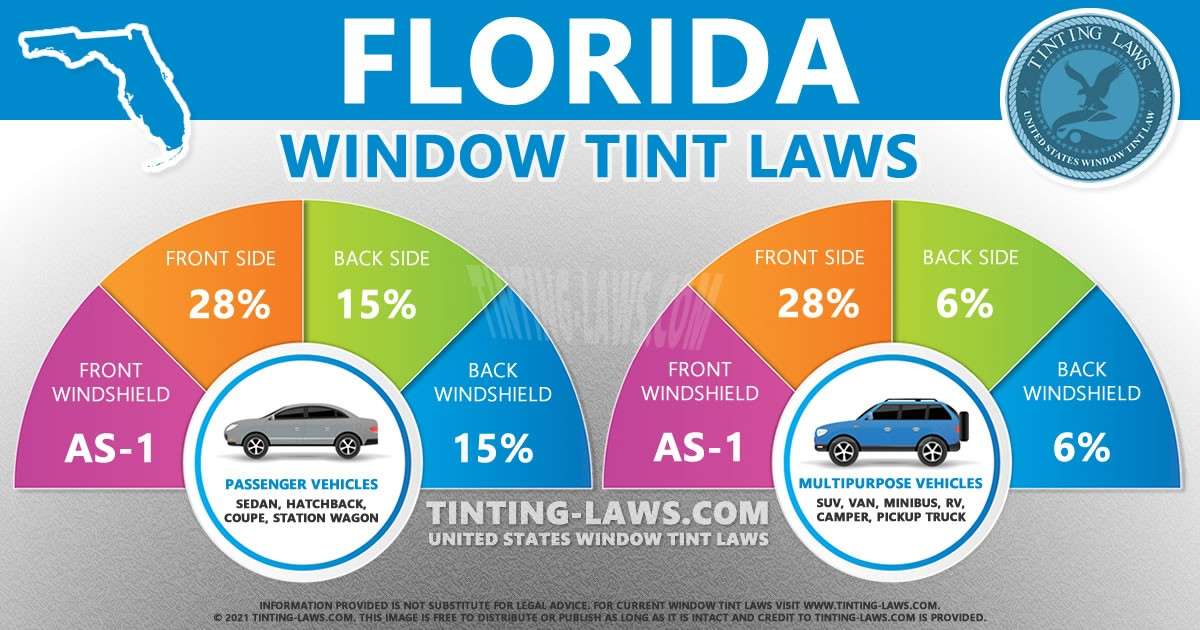
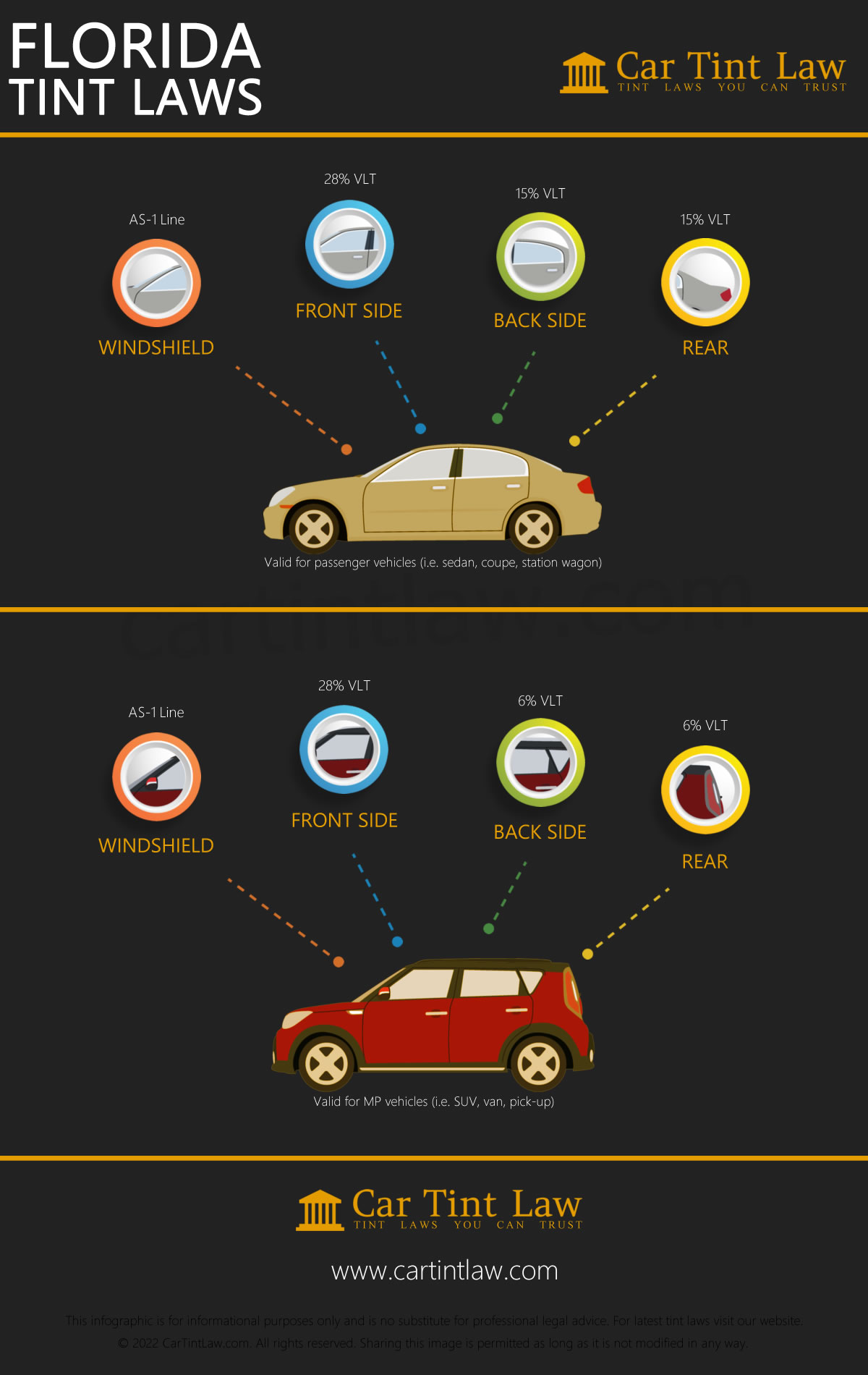
Florida Statute 316.2954 outlines the detailed requirements for window tinting, differentiating between various windows on a vehicle. It’s important to note that these percentages refer to the VLT (Visible Light Transmission) allowed, meaning the percentage of light that must pass through.
- Front Side Windows: For the windows immediately to the left and right of the driver, the law dictates a minimum of 28% VLT. This means that the tint applied must allow more than 28% of visible light to pass through. Therefore, a “5 tint” (5% VLT) is unequivocally not legal for the front side windows in Florida. This lighter tint level on the front windows is a safety measure, ensuring drivers have adequate side visibility, especially at night or in adverse weather conditions, and allowing law enforcement officers to clearly see the vehicle’s occupants during traffic stops.
- Rear Side Windows: The windows located behind the front side windows, on either side of the vehicle, have a more lenient VLT requirement. They must allow a minimum of 15% VLT. This means a “5 tint” (5% VLT) is legal for the rear side windows. This darker allowance acknowledges that these windows are less critical for primary driving visibility and offers increased privacy and heat reduction for rear passengers.
- Rear Window (Back Window): Similar to the rear side windows, the rear windshield must also allow a minimum of 15% VLT. Consequently, a “5 tint” (5% VLT) is legal for the rear window. This darker tint provides significant relief from the sun for occupants and can aid in securing items in the trunk or cargo area. However, it’s crucial that the vehicle also has functional dual side mirrors to compensate for any reduced visibility through the rear window, as required by Florida law.
- Windshield: The regulations for the front windshield are stricter. Non-reflective tint is permitted only above the manufacturer’s AS-1 line, which is typically a line across the top of the windshield, usually about 5-6 inches from the top. If no AS-1 line is present, the tint cannot extend more than 5 inches down from the top of the windshield. The tint applied here must not be red, amber, or blue. Crucially, the rest of the windshield (below the AS-1 line) generally cannot have any tinting that obstructs the driver’s clear view, except for the factory-installed light tint that is common in most vehicles. A “5 tint” would be entirely illegal on the main portion of the windshield.
Medical Exemptions and Other Important Considerations
While the general tint laws are clear, Florida also accounts for specific circumstances and other critical details that tint users should be aware of.
- Medical Exemptions: Florida law provides for medical exemptions for individuals who require darker window tint for health reasons, such as severe photosensitivity or conditions exacerbated by sun exposure. To qualify for a medical exemption, a driver must obtain a notarized affidavit from a licensed physician stating the medical necessity. This affidavit must be kept in the vehicle and presented to law enforcement upon request. The tint applied under a medical exemption still must comply with specific reflective limits and cannot be red, amber, or blue.
- Tint Color and Reflectivity: Florida law prohibits tints that are red, amber, or blue. Additionally, the tint on any window must not be excessively reflective. The maximum reflection allowed is 20% on both the front side and rear side windows. Highly reflective tint can create glare for other drivers and make it difficult for law enforcement to see into the vehicle, thus posing a safety concern.
- Tint Stickers: Many states require a sticker or label from the tint installer indicating compliance with state laws. While Florida itself doesn’t explicitly mandate a certification sticker on the window after installation, reputable tint shops will often provide a certificate of compliance. It’s always wise to retain any documentation regarding your tint installation, especially if you have an aftermarket tint, to demonstrate legality if questioned.
- Measuring Tint: Law enforcement officers use specialized devices, called tint meters, to measure the VLT of vehicle windows. These devices provide an accurate reading of how much light is passing through the tint, allowing officers to determine if a vehicle is in compliance with state law. It’s important to remember that factory tint on some vehicles, particularly SUVs and minivans, often meets [Florida](https://lifeoutofthebox.com/florida]’s rear window requirements but rarely meets the front side window requirements for aftermarket applications.
Penalties for Non-Compliance
Violating Florida’s window tint laws typically results in a non-moving traffic infraction, similar to a parking ticket or an expired tag. While it’s generally not a severe offense, the consequences can still be inconvenient and costly:
- Fines: The primary penalty is a monetary fine. The exact amount can vary depending on the county or municipality, but it’s usually in the range of $50 to $100.
- “Fix-It” Ticket: In many cases, officers may issue a “fix-it” ticket, requiring the driver to remove the illegal tint or replace it with compliant tint within a certain timeframe. Failure to correct the violation and provide proof (e.g., a signed affidavit from a law enforcement officer or tint shop) by the deadline can lead to additional fines or a court summons.
- Impoundment: While less common for tint violations alone, repeated offenses or other concurrent traffic violations could potentially lead to more severe actions, though vehicle impoundment solely for illegal tint is rare.
For travelers, getting a tint ticket can be an unwelcome interruption to a vacation, adding unexpected costs and requiring time to address the issue. For residents, it’s an ongoing compliance matter that can lead to recurring fines if not corrected. Therefore, ensuring your vehicle’s tint adheres to Florida law is a simple step to avoid unnecessary hassles and ensure a smooth experience navigating the state’s roadways.
Window Tint and the Florida Travel Experience
For visitors and those contemplating a move to Florida, understanding window tint laws extends beyond mere compliance; it influences the overall travel and lifestyle experience in the Sunshine State. From selecting a rental car to planning a cross-state road trip, tint regulations play a subtle yet significant role.
Renting a Car in Florida: What Travelers Need to Know
Travelers arriving in Florida airports like Orlando International Airport or Miami International Airport often head straight to car rental agencies. The good news is that most reputable car rental companies operating in Florida ensure their vehicles comply with state-specific laws. This means you are unlikely to encounter a rental car with illegal “5 tint” on the front windows.
- Checking Tint Levels: While car rental agencies aim for compliance, it’s not a bad idea for the curious traveler to be aware. You generally won’t need to scrutinize VLT percentages, but if a vehicle’s front windows appear unusually dark, you might inquire. However, vehicles, especially SUVs and minivans, often come with factory-installed privacy glass on the rear side and rear windows. This factory tint is typically compliant with Florida’s 15% VLT rule for those windows.
- Driving in Major Florida Cities and Destinations: Whether you’re navigating the bustling avenues of Miami, the tourist-heavy roads around Walt Disney World in Orlando, the historic streets of St. Augustine, or the scenic routes of Key West, having compliant window tint ensures peace of mind. Getting pulled over for a tint violation, even a minor one, can significantly disrupt your vacation schedule and dampen the spirit of your adventure. Law enforcement in popular tourist areas might be particularly vigilant about traffic laws to ensure public safety.
- Long Road Trips: If your Florida itinerary involves extensive driving—perhaps from the Panhandle down to South Florida, or exploring the natural beauty of Big Cypress National Preserve—the comfort provided by legal tint is invaluable. It reduces heat build-up and glare, making long hours behind the wheel more pleasant and safer. When renting, prioritize comfort and legality, trusting that the rental companies adhere to the state’s regulations.
Enhancing Your Stay: Comfort, Privacy, and Safety on Florida Roads
The right window tint, within legal limits, can genuinely enhance your Florida experience, aligning perfectly with the themes of travel, accommodation, and lifestyle promoted by sites like LifeOutoftheBox.com.
- Comfort for Travelers: Imagine driving from your luxurious resort in Naples to a day trip exploring the Gulf Coast beaches. With legally tinted windows, the interior of your car stays cooler, and the harsh sun’s glare is significantly reduced. This makes the journey itself part of the enjoyable experience, rather than a taxing endeavor. For families with young children, this added comfort can be a game-changer, preventing overheating and discomfort in the backseat.
- Privacy for Personal Belongings: When you’re staying at an elegant suite in South Beach and venturing out to explore, you might leave items in your car while visiting attractions. Legally darker tints on rear windows can offer a layer of privacy, making it harder for opportunistic individuals to see what’s inside, thus adding a sense of security to your travel. This is particularly relevant when parked near crowded tourist spots or while enjoying an outdoor meal.
- Safety on the Go: Reduced glare not only improves comfort but is a significant safety benefit, especially on Florida’s often wide-open highways or during the intense late afternoon sun. Clear visibility through legally compliant front windows ensures you can safely navigate intersections and changing traffic conditions, whether you’re heading to a business meeting in Jacksonville or embarking on a family adventure to Busch Gardens Tampa Bay. This blend of comfort, privacy, and safety underscores why legal tint is a valuable addition to any vehicle in Florida.
Lifestyle Implications for Florida Residents and Long-Term Visitors
For those who call Florida home or are enjoying an extended stay, window tint becomes an integral part of daily life and a smart lifestyle choice.
- Daily Commuting and Errands: From the everyday commute in Tallahassee to running errands in a vibrant community like Fort Lauderdale, a legally tinted vehicle offers consistent protection from the sun, preserving the car’s interior and providing a cooler ride. This is a practical consideration for anyone regularly driving in Florida’s climate.
- Vehicle Longevity and Resale Value: The harsh Florida sun can take a toll on a vehicle’s interior, leading to faded dashboards, cracked leather, and deteriorated plastics. High-quality, legally compliant tint acts as a protective barrier, preserving the aesthetic and structural integrity of the interior, which can positively impact the car’s resale value over time.
- Customizing Your Ride: For many, car ownership in Florida is part of a broader lifestyle. Customizing a vehicle with legal tint is a common enhancement that combines personal style with practical benefits. Whether you own a sports car, a family SUV, or a work truck, choosing the right VLT percentages allows you to personalize your vehicle while remaining within the bounds of the law.
- Comparison to Other States: Individuals moving to Florida from states with different tint laws should be particularly mindful. What might have been legal in another state, such as a very dark “5 tint” on front windows, will not be permissible in Florida. Familiarizing oneself with these differences is crucial for a seamless transition and to avoid unexpected fines. Consulting local tint professionals can ensure your vehicle meets all Florida requirements upon registration, ensuring your Florida lifestyle is truly worry-free.

Conclusion: Drive Smart, Explore Florida
The question “Is 5 tint legal in Florida?” reveals a crucial intersection of practical vehicle customization, personal comfort, and adherence to state law, particularly relevant in a popular destination like the Sunshine State. As we’ve explored, while a “5 tint” (5% VLT) is highly effective for privacy and heat reduction, it is not legal for the front side windows of vehicles in Florida, which mandate a minimum of 28% VLT. However, this extremely dark tint is permissible for the rear side windows and the rear window, offering considerable flexibility for those seeking enhanced comfort and security for the back half of their vehicle.
Understanding Florida’s specific tint laws—from the distinct VLT percentages for different windows to prohibitions on certain colors and reflective levels—is paramount. For tourists embarking on unforgettable adventures from the white sands of Sarasota to the vibrant nightlife of Orlando, and for residents enjoying the daily rhythm of life in cities like Tallahassee or Fort Myers, knowing these regulations ensures a smooth journey free from legal hassles. When renting a car, rest assured that reputable agencies will provide compliant vehicles, allowing you to focus on the myriad of attractions and experiences. For those driving their own vehicles or considering long-term stays, ensuring your tint is legally compliant means you can enjoy the manifold benefits—reduced heat, UV protection, glare reduction, and enhanced privacy—without the risk of fines or inconvenience.
Ultimately, a well-informed approach to vehicle window tint contributes to a safer, more comfortable, and compliant experience on Florida’s roads. It allows travelers to fully immerse themselves in the state’s offerings, from world-class hotels and luxurious accommodations to breathtaking natural landmarks and diverse lifestyle experiences. So, drive smart, understand the law, and embark on your Florida journey with confidence, ready to soak up all the legal sunshine this incredible state has to offer.
LifeOutOfTheBox is a participant in the Amazon Services LLC Associates Program, an affiliate advertising program designed to provide a means for sites to earn advertising fees by advertising and linking to Amazon.com. Amazon, the Amazon logo, AmazonSupply, and the AmazonSupply logo are trademarks of Amazon.com, Inc. or its affiliates. As an Amazon Associate we earn affiliate commissions from qualifying purchases.