
The question of whether Airbnb is legal in New York is a complex one, fraught with nuances, ongoing debates, and evolving regulations. For travelers dreaming of an authentic New York experience, often envisioning charming brownstone apartments or chic lofts, the allure of Airbnb is undeniable. It promises a more local feel, often at a potentially lower cost than traditional hotels, and can offer greater space and amenities for families or groups. However, navigating the legal landscape of short-term rentals in New York City can be a minefield, with significant implications for both hosts and guests. Understanding these rules is crucial to avoid unexpected disruptions to your travel plans or potential legal entanglements.
The core of the legal ambiguity surrounding Airbnb in New York stems from a series of state and city laws designed to address issues like housing shortages, safety concerns, and fair competition with the established hotel industry. These laws aim to preserve the city’s housing stock for permanent residents and ensure that short-term rentals operate under similar safety and tax regulations as traditional lodging establishments. As a result, what might seem like a straightforward booking can quickly become complicated when faced with the specific ordinances of New York’s various boroughs.
This article will delve into the intricacies of Airbnb legality in New York, exploring the key legislation, the distinctions between different types of rentals, and the potential consequences for those who fall afoul of the rules. We will also touch upon the impact on the broader tourism landscape and offer practical advice for travelers seeking to book accommodations in the Empire State.
Understanding New York’s Short-Term Rental Laws
At the heart of the debate are laws that broadly restrict the ability of individuals to rent out entire apartments or homes for short periods in New York City. The most significant piece of legislation is the New York Multiple Dwelling Law. This law generally prohibits the rental of an entire dwelling unit for less than 30 days unless the permanent resident owner or a legally authorized occupant is also present in the dwelling unit during the entire occupancy. This means that if you are renting an entire apartment or house on Airbnb in New York City, and the host is not present, it is, in most cases, illegal.
The “30-Day Rule” and its Implications
The New York Multiple Dwelling Law, often referred to as the “30-Day Rule,” is the cornerstone of the city’s efforts to curb illegal hotel operations. The intention behind this rule is to prevent property owners from converting residential buildings into de facto hotels, thereby reducing the availability of long-term housing for residents. For travelers, this translates to a significant limitation: booking an entire apartment or house for a short stay, without the host being present, is generally not permitted.
This prohibition has led to a situation where many Airbnb listings in New York City are technically operating illegally. Hosts who wish to rent out their entire property for less than 30 days, without being present, are in violation of the law. The penalties for such violations can be substantial, involving fines that can quickly escalate with repeat offenses. This creates a precarious situation for both hosts who are trying to earn income from their properties and for guests who may unknowingly be staying in accommodations that are not fully compliant with local regulations.
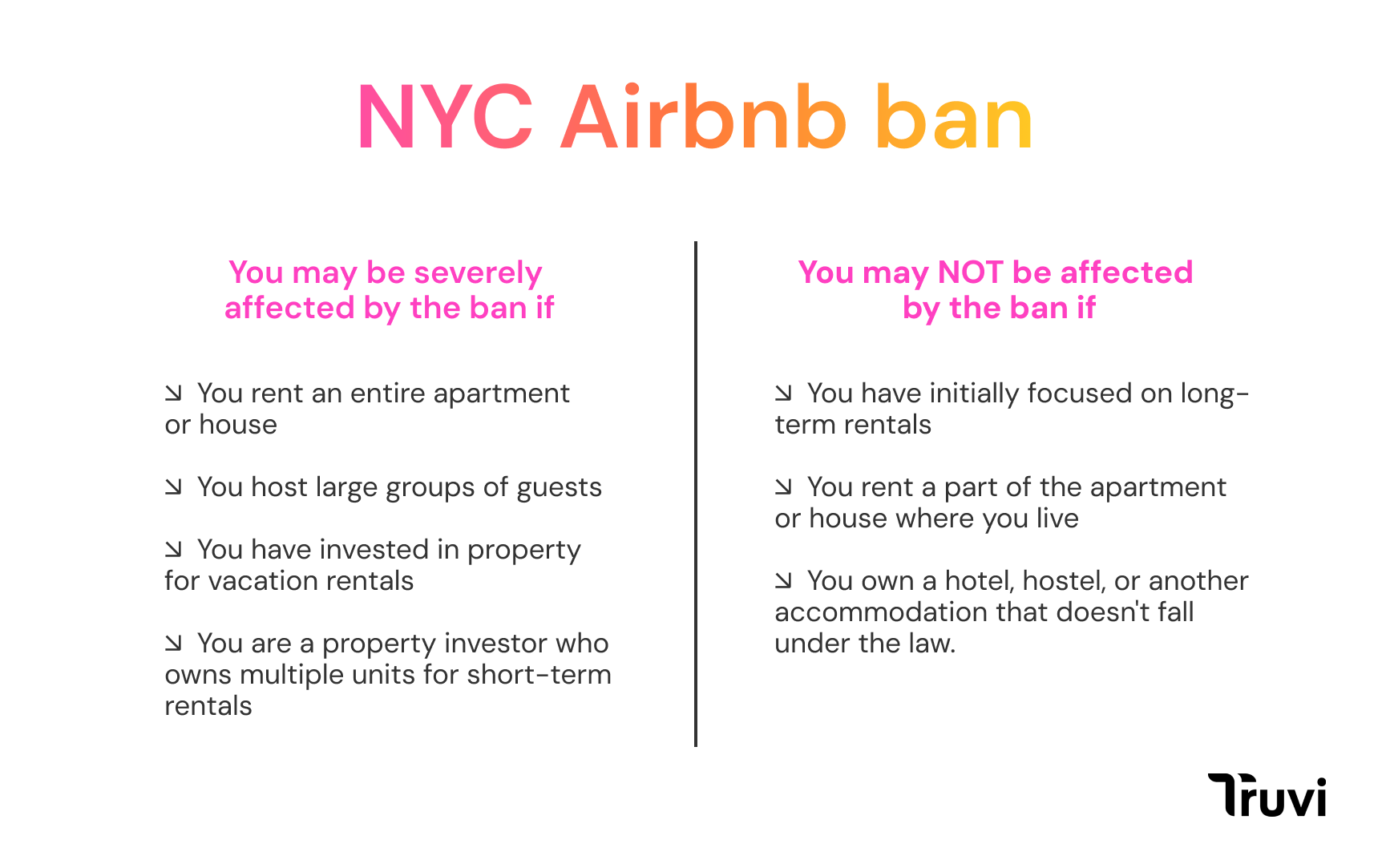
The practical implication for travelers is that the vast majority of entire homes and apartments listed on Airbnb for stays under 30 days in New York City are likely illegal. This doesn’t mean all Airbnb listings are banned, but it significantly narrows the scope of what is permissible.
Differentiating Between Legal and Illegal Listings
Given the legal complexities, it’s essential for travelers to understand how to differentiate between potentially legal and illegal Airbnb listings in New York. The key factor, as dictated by the Multiple Dwelling Law, is the presence of the permanent resident or a legally authorized occupant.
Legal Short-Term Rentals: The “Host Present” Rule
The primary exception to the 30-Day Rule, and thus a pathway to legal short-term rentals, is when the host is present in the dwelling unit during the rental period. This typically means renting a private room within an occupied residence. In such scenarios, the host is effectively offering a form of home-stay or bed and breakfast experience, where the guest has access to their own private space (usually a bedroom and perhaps a bathroom) but shares common areas like the kitchen or living room with the host. These bookings are generally considered legal, as the property is not being used exclusively as a short-term rental accommodation.
When searching on Airbnb for a legal stay in New York City, look for listings that clearly state the host lives on the premises and will be present. Reviews often offer clues as to whether this is genuinely the case. If a listing advertises an entire apartment or house for a short stay, and there’s no mention of the host’s presence, it is highly probable that it falls into the illegal category.
The Rise of “Ghost Hotels” and Enforcement
The existence of numerous illegal listings has led to the phenomenon of “ghost hotels” – properties that are essentially operating as informal hotels, often managed by individuals or companies that do not own the properties themselves. These operations circumvent the intent of the housing laws and create an uneven playing field for legitimate hotels.
In response, New York City has increased its enforcement efforts. The Mayor’s Office of Special Enforcement (MOSE) is tasked with identifying and penalizing illegal short-term rentals. This can involve investigations, issuing fines, and even legal action against property owners and booking platforms. For travelers, this enforcement can mean an unexpected cancellation of their booking if a property is deemed illegal and shut down. While less common for guests to face direct penalties, the disruption to their travel plans is a significant risk.
The city has also focused on imposing regulations on booking platforms themselves. While Airbnb and similar sites have previously been criticized for not doing enough to prevent illegal listings, there have been efforts to implement stricter verification processes and to comply with local ordinances. However, the sheer volume of listings makes complete eradication of illegal offerings a challenging endeavor.
Navigating the Accommodation Landscape in New York
Given the legal complexities surrounding Airbnb in New York, travelers seeking accommodation have several avenues to explore, ensuring a smoother and more legally compliant stay. While the traditional hotel sector remains a robust and reliable option, understanding the nuances of short-term rentals can help discern legitimate opportunities.
Traditional Hotels: The Safest Bet
For many travelers, the most straightforward and legally secure option for accommodation in New York remains booking a room in a traditional hotel. New York City boasts an incredible array of hotels, from luxury establishments like the The Plaza and the Waldorf Astoria to budget-friendly options and boutique inns. These establishments are fully licensed, regulated, and compliant with all city ordinances, offering peace of mind regarding legality and safety.
Hotels provide a range of amenities, from concierge services and on-site dining to fitness centers and business facilities, catering to diverse travel needs. Whether you’re planning a romantic getaway to Central Park, a family trip to visit the Statue of Liberty, or a business stay near Times Square, the hotel sector offers unparalleled choice and reliability. Furthermore, booking through reputable hotel chains or travel agencies often provides additional layers of customer protection and support.
Alternative Accommodation Options Beyond Airbnb
While Airbnb has redefined the accommodation landscape globally, New York presents a more restricted environment for its use. However, this doesn’t mean that travelers are limited to traditional hotels. Several alternative accommodation options offer unique experiences while adhering to legal frameworks.
- Extended Stay Hotels: For travelers planning longer trips, extended stay hotels provide apartment-style accommodations with kitchenettes, living areas, and other amenities designed for longer durations. These are fully legal and regulated, offering a middle ground between a hotel and a traditional apartment rental.
- Serviced Apartments: Similar to extended stay hotels, serviced apartments offer fully furnished units with hotel-like services, including housekeeping and concierge. These are often found in residential buildings and are a good option for families or groups seeking more space and independence.
- Hostels: For budget-conscious travelers, particularly solo adventurers or younger individuals, hostels offer dormitory-style or private rooms in a social atmosphere. Hostels in New York are regulated and provide a safe, albeit basic, form of accommodation.
- Long-Term Rentals: For stays exceeding 30 days, or for those seeking a more immersive local experience, exploring long-term apartment rentals through reputable agencies or platforms that cater to monthly or longer leases can be a viable option. These typically require leases and are subject to residential tenancy laws.
The Future of Short-Term Rentals in New York
The debate surrounding short-term rentals in New York is far from over. Proponents of Airbnb argue that it provides valuable income for residents and offers diverse accommodation choices for visitors, contributing to the city’s vibrant tourism economy. They often point to the economic benefits for local businesses and the ability for travelers to experience neighborhoods beyond the typical tourist hubs.
However, the concerns about housing affordability, tenant protections, and fair competition remain significant. The city continues to grapple with balancing the economic advantages of short-term rentals with the need to preserve housing for its residents. Future legislation or court decisions could further shape the legal landscape. For now, travelers planning a trip to New York should be aware that booking entire homes or apartments for short stays through platforms like Airbnb carries a considerable risk of illegality and potential disruption. Prioritizing legal and established accommodation options, such as traditional hotels or explicitly legal short-term rental arrangements where the host is present, is the surest way to ensure a seamless and enjoyable visit to the dynamic city of New York.
Understanding these regulations not only protects travelers from unexpected issues but also respects the city’s efforts to maintain its character and housing availability for its residents. As the landscape of travel and accommodation continues to evolve, staying informed about local laws and regulations is more important than ever for making informed booking decisions.
LifeOutOfTheBox is a participant in the Amazon Services LLC Associates Program, an affiliate advertising program designed to provide a means for sites to earn advertising fees by advertising and linking to Amazon.com. Amazon, the Amazon logo, AmazonSupply, and the AmazonSupply logo are trademarks of Amazon.com, Inc. or its affiliates. As an Amazon Associate we earn affiliate commissions from qualifying purchases.