
The question of proximity between Alaska and Russia is a fascinating one, often sparking curiosity for travelers and history enthusiasts alike. While the vast expanse of the Pacific Ocean separates them, the geographical truth is that these two landmasses are, in fact, remarkably close at certain points. This closeness has a rich history, influencing exploration, trade, and even geopolitical dynamics. For those planning a trip to Alaska or simply intrigued by its unique position on the globe, understanding this relationship is key to appreciating the state’s distinct character and the opportunities for extraordinary travel experiences.

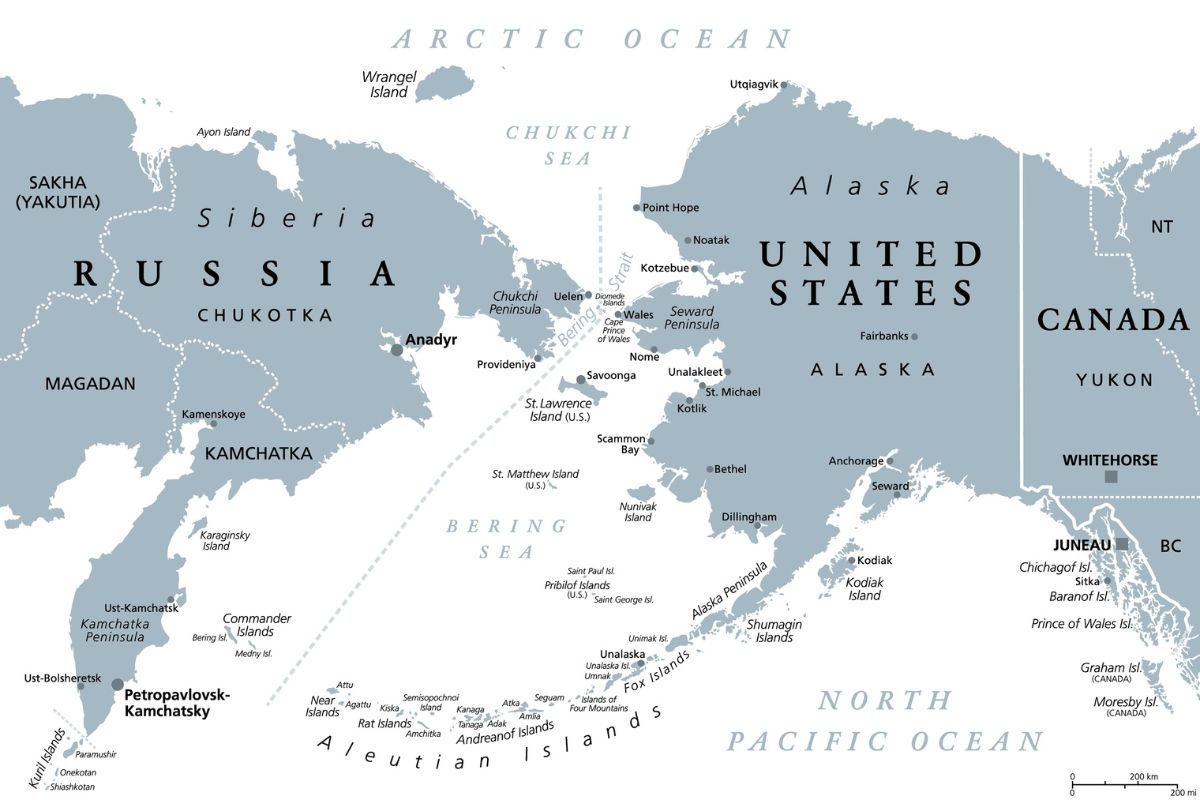
The most striking evidence of this proximity lies in the Bering Strait, a narrow body of water that separates the easternmost point of Russia’s Chukotka Peninsula from the westernmost point of Alaska, specifically Cape Prince of Wales. At its narrowest, the strait is a mere 55 miles (88 kilometers) wide. To put this into perspective, on a clear day, it is possible to see the opposing landmass with the naked eye. Within the strait lie two islands, the Diomede Islands: Big Diomede (belonging to Russia) and Little Diomede (belonging to the United States). These islands are separated by only about 2.5 miles (4 kilometers) of water, yet they represent a border of immense significance, not just geographically but also temporally. The International Date Line runs between them, meaning that when it is daytime on Little Diomede, it is already the next day on Big Diomede. This seemingly small distance embodies a vast difference in time zones and political jurisdictions, a testament to the unique geographical and historical context of this region.
The historical context of this proximity is deeply intertwined with exploration and the pursuit of new territories. For centuries, both Russia and America harbored ambitions of expanding their influence and understanding of the northern frontiers. The Bering Strait became a crucial gateway, a path traversed by explorers seeking to map the unknown and establish claims. Early Russian explorers, such as Vitus Bering, a Danish explorer in Russian service, played a pivotal role in charting these waters, giving his name to the strait. His expeditions in the early 18th century confirmed the separation between Asia and North America, a crucial step in understanding global geography. The Russian presence in Alaska predates its purchase by the United States, with Russian traders and explorers establishing settlements and trade routes, primarily for the lucrative fur trade. This period of Russian rule left an indelible mark on the region, with place names and cultural influences still evident today.
The sale of Alaska from Russia to the United States in 1867, often referred to as “Seward’s Folly,” was a landmark event driven by a complex interplay of factors, including Russia‘s declining financial resources and its strategic concerns regarding Great Britain‘s presence in North America. While some in the United States initially decried the purchase as a waste of money, the immense natural resources discovered in Alaska in subsequent years proved its immense value. The proximity of Alaska to Russia remained a significant geopolitical consideration, particularly during the Cold War era, when the Bering Strait became a heavily militarized zone, a stark physical manifestation of the ideological divide between East and West.
Exploring the Wonders of Alaska: A Traveler’s Perspective
For travelers drawn to the allure of the Last Frontier, the proximity to Russia adds another layer of fascination to an already captivating destination. Alaska offers a diverse range of experiences, from the rugged wilderness to vibrant urban centers, each providing a unique glimpse into the state’s rich tapestry of nature, culture, and history. The sheer scale and unspoiled beauty of Alaska are its primary draw. Vast national parks, towering glaciers, and abundant wildlife create a paradise for nature lovers and adventurers.
Arctic Adventures and Cultural Encounters
Venturing into the Arctic regions of Alaska brings one geographically closer to the spirit of the far north, a spirit that also resonates with the indigenous cultures of Russia‘s far east. Towns like Barrow, now officially Utqiagvik, the northernmost city in the United States, offer a profound sense of isolation and a stark beauty. Here, visitors can learn about the traditional ways of life of the Inupiat people, whose ancestral lands have long been connected to the Arctic environment. Experiences may include witnessing the awe-inspiring northern lights, or Aurora Borealis, a celestial spectacle that paints the night sky with vibrant hues, or learning about subsistence hunting and fishing practices that have sustained communities for generations.
Further south, cities like Anchorage, Fairbanks, and Juneau serve as gateways to different facets of Alaska. Anchorage, the state’s largest city, offers a blend of urban amenities and easy access to outdoor recreation. Visitors can explore world-class museums, enjoy a burgeoning culinary scene, and embark on day trips to nearby natural wonders like Flattop Mountain for panoramic views. Fairbanks, known as the “Golden Heart City,” is a prime location for aurora viewing, especially during the winter months. It also serves as a hub for exploring Denali National Park and Preserve, home to the majestic Denali, North America’s tallest peak.
For those seeking a more coastal experience, Juneau, the state capital, is nestled between mountains and the sea. Accessible only by air or sea, it offers breathtaking scenery and opportunities for whale watching, glacier tours, and exploring the historic downtown area. The Mendenhall Glacier, a massive river of ice just a short drive from the city, is a must-see attraction. Cruising through the Inside Passage, a network of waterways along the coast, reveals stunning fjords, lush rainforests, and charming seaside towns like Ketchikan and Skagway, each with its own unique history and character, often linked to the Klondike Gold Rush.
The cultural landscape of Alaska is as diverse as its physical geography. The legacy of indigenous peoples, including the Tlingit, Haida, Tsimshian, Aleut, and Yupik, is deeply woven into the fabric of the state. Visitors can engage with these cultures through art, storytelling, and participation in traditional ceremonies and festivals. The Alaska Native Heritage Center in Anchorage provides an invaluable opportunity to learn about the diverse traditions and contemporary life of Alaska‘s indigenous communities.
Accommodation and Lifestyle in Alaska
When planning a trip to Alaska, understanding the accommodation options and lifestyle is crucial for a comfortable and memorable stay. The choices range from luxurious resorts to cozy cabins and budget-friendly hotels, catering to various travel styles and preferences. Whether one is seeking a romantic getaway, a family adventure, or a solo expedition, Alaska offers a unique lifestyle experience that blends wilderness immersion with curated comfort.
Lodging Options for Every Traveler
For those seeking an upscale experience, Alaska boasts several exquisite resorts and lodges that offer unparalleled comfort and stunning natural settings. Imagine waking up to panoramic views of snow-capped mountains or the vast expanse of the ocean, with world-class amenities at your fingertips. Properties like the Alyeska Resort near Girdwood offer ski-in/ski-out access, fine dining, and a luxurious spa, making it a perfect base for exploring the surrounding Chugach Mountains. In more remote locations, exclusive lodges provide intimate settings and guided experiences, allowing guests to fully immerse themselves in the wilderness while enjoying gourmet meals and exceptional service. These often focus on unique experiences like bear viewing, fly-fishing, or helicopter tours to remote glaciers.
For families or those preferring a more independent stay, apartments and vacation rentals offer flexibility and space. Many of these are equipped with kitchens, allowing for home-cooked meals, which can be a great way to save money and experience local produce. In smaller towns and more remote areas, charming bed and breakfasts and guesthouses provide a cozy and personal touch, often run by locals who can offer invaluable tips and insights into the area.
Budget travelers will find a range of options as well, from hostels and campgrounds to more basic hotels. Alaska‘s national parks and state parks offer numerous campgrounds, providing an authentic wilderness experience at an affordable price. Even in larger cities, budget-friendly hotels and motels are available, ensuring that Alaska is accessible to a wide range of travelers. Booking in advance is highly recommended, especially during the peak summer season, as popular accommodations can fill up quickly.
The lifestyle of visiting Alaska is often characterized by an appreciation for the outdoors and a sense of adventure. Whether it’s hiking through boreal forests, kayaking in pristine fjords, or simply enjoying the quiet solitude of a remote cabin, the emphasis is on connecting with nature. Many visitors find themselves embracing a slower pace of life, a welcome respite from the hustle and bustle of urban living. The emphasis on sustainability and respect for the environment is also a significant aspect of Alaska‘s tourism, encouraging visitors to tread lightly and appreciate the delicate ecosystems they are experiencing.
The Historical Echoes of Proximity: From Exploration to Modern Day
The historical connection between Alaska and Russia is not merely a geographical footnote; it’s a narrative that has shaped the identity and development of both regions. The legacy of Russian exploration and settlement in Alaska is a tangible part of the state’s heritage, visible in place names, architectural styles, and even some cultural traditions. For instance, the Russian Orthodox Church has a significant presence in Alaska, with historic churches and communities found in various locations, a direct result of the Russian missionary efforts during their period of governance.

A Journey Through Time and Space
The purchase of Alaska by the United States in 1867 marked a pivotal moment, transforming the territory from Russian possession to an American frontier. However, the geographical closeness to Russia continued to play a role in strategic considerations. During the 20th century, especially during the Cold War, the Bering Strait became a heavily guarded border, a silent standoff between two global superpowers. The presence of military installations and surveillance outposts in both Alaska and the nearby Russian territories underscored the geopolitical significance of this close proximity.
For contemporary travelers, this historical context adds a unique dimension to their journey. Visiting historical sites that harken back to the Russian era, such as the Russian Bishop’s House in Sitka, offers a glimpse into this past. These landmarks serve as reminders of the ebb and flow of history and the enduring connections between distant lands.
Today, the relationship between Alaska and Russia is primarily one of peaceful coexistence and a shared interest in the Arctic region. While the direct travel between the two is limited, the awareness of their close geographical positioning is a constant. This proximity continues to influence scientific research, environmental monitoring, and discussions about the Arctic’s future. For those who venture to the westernmost reaches of Alaska, the distant shores of Russia across the Bering Strait serve as a powerful reminder of the interconnectedness of our planet and the fascinating stories that unfold at the edges of the world. The allure of Alaska is amplified by this unique geographical position, offering not just natural beauty and adventure, but also a compelling narrative of exploration, history, and enduring human connection across vast distances.
LifeOutOfTheBox is a participant in the Amazon Services LLC Associates Program, an affiliate advertising program designed to provide a means for sites to earn advertising fees by advertising and linking to Amazon.com. Amazon, the Amazon logo, AmazonSupply, and the AmazonSupply logo are trademarks of Amazon.com, Inc. or its affiliates. As an Amazon Associate we earn affiliate commissions from qualifying purchases.