
The question “Is Alaska near Russia?” often evokes a sense of geographical curiosity, hinting at a connection that feels both distant and strikingly close. For many, the vastness of the Pacific Ocean separates the United States from its Cold War-era rival, making the idea of direct proximity seem improbable. Yet, a glance at a globe, particularly a polar projection, reveals a truth far more astonishing: Alaska, the largest state in the United States, is indeed remarkably close to Russia, separated by a narrow stretch of water that has profoundly shaped history, culture, and the very concept of transcontinental travel. This geographical intimacy offers a unique lens through which to explore the vast landscapes, rich heritage, and unparalleled experiences that define America’s last frontier.

The Geographical Reality: A Stone’s Throw Across the Bering Strait
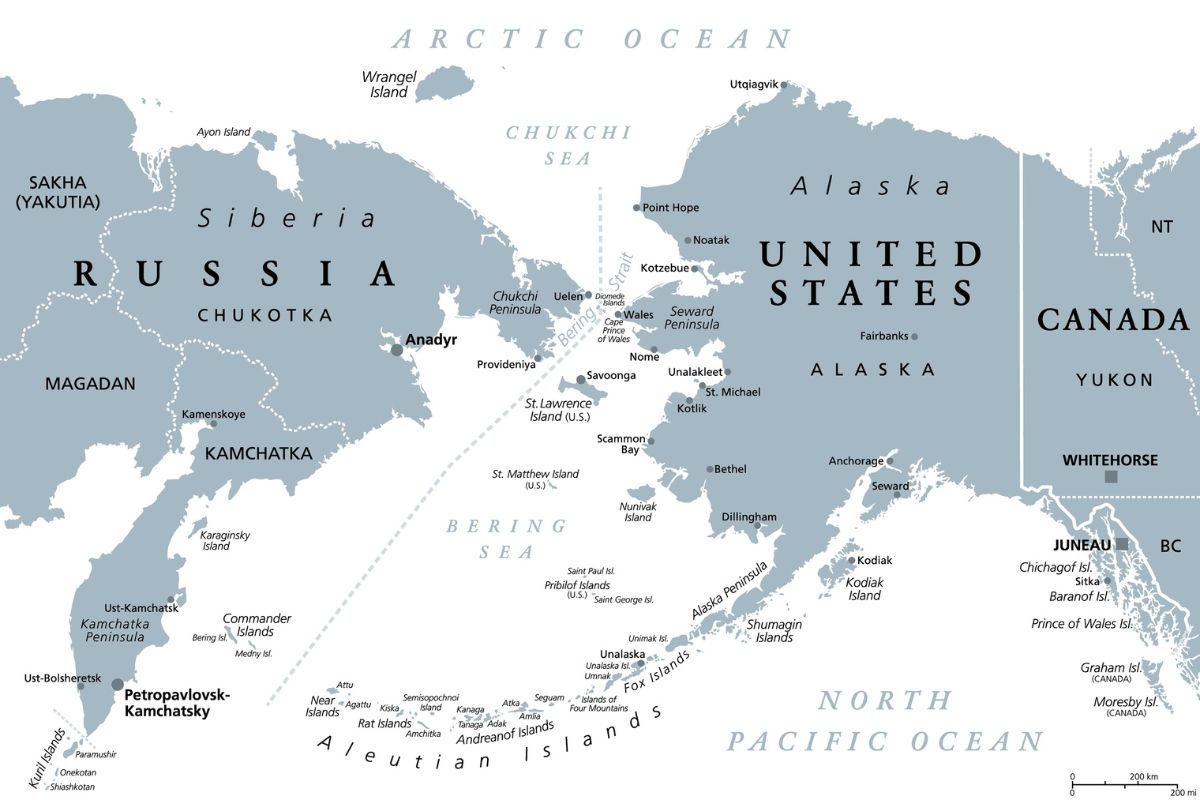
The proximity between Alaska and Russia is not just a matter of continental drift over millennia but a striking feature of modern geography. The primary point of contact, or rather, separation, is the Bering Strait, a relatively shallow sea channel that connects the Arctic Ocean to the Bering Sea. This iconic strait is not merely a line on a map; it’s a dynamic body of water, often icy and treacherous, that has played a pivotal role in human migration, international relations, and scientific exploration.
The Narrowest Point: Diomede Islands
At its narrowest, the Bering Strait is only about 53 miles (85 kilometers) wide. However, this distance is further reduced by the presence of the Diomede Islands – two small, rocky outcrops that serve as literal stepping stones between continents. Little Diomede Island belongs to the United States, while Big Diomede Island, just 2.4 miles (3.8 kilometers) to the west, is part of Russia. From Little Diomede Island, one can literally see Russia across the water, a stark visual representation of geopolitical divides. This close proximity makes the Bering Strait one of the most unique borders in the world, embodying both a historical bridge and a modern barrier.
Historical Significance of the Bering Land Bridge
The contemporary geographic separation is a relatively recent phenomenon in geological terms. During various ice ages, particularly the Last Glacial Maximum, sea levels dropped significantly, exposing a vast landmass known as the Bering Land Bridge or Beringia. This prehistoric connection between Siberia (present-day Russia) and Alaska served as a critical migration route for early humans, who are believed to have crossed into the Americas, populating the continents. Evidence of this ancient migration can be found in the genetic heritage of indigenous peoples across North and South America, linking them directly to ancestral populations in Northeast Asia. The study of the Bering Land Bridge continues to provide invaluable insights into human history and environmental change, transforming our understanding of global settlement patterns.
International Date Line: Traveling Through Time
Adding another layer of fascination to this unique geographical setting is the International Date Line, which passes directly between Little Diomede Island and Big Diomede Island. This means that despite being less than 4 kilometers apart, the islands are almost a full day apart in time. Standing on Little Diomede Island (US), one can look across to Big Diomede Island (Russia) and literally see “tomorrow.” This temporal anomaly underscores the profound implications of global mapping conventions in a region that blurs geographical, historical, and chronological boundaries, creating a truly surreal travel experience for those who venture this far north.
A Shared History: From Russian America to US Territory
The proximity between Alaska and Russia is not just a geographical quirk; it is a foundational element of Alaska’s unique history and cultural identity. Before becoming part of the United States, Alaska was known as Russian America, a colonial outpost of the Russian Empire for over a century.
Russian Exploration and Colonization
The first documented European exploration of Alaska was in 1741, led by the Danish explorer Vitus Bering, sailing under the Russian flag. His expeditions not only confirmed the separation of the continents but also opened the door for Russia to claim vast territories in North America. Russian fur traders, primarily seeking valuable sea otter pelts, established settlements along the Alaskan coast, extending down the Aleutian Islands and into the panhandle. These early Russian outposts were rugged, remote, and often brutal, shaping the landscape and interacting, sometimes violently, with the indigenous populations. The legacy of this period can still be seen in Alaskan place names, Russian Orthodox churches, and the descendants of Russian settlers who remain in communities like Sitka today.
The Alaska Purchase: A Strategic Exchange
By the mid-19th century, Russia found its Alaskan colony increasingly difficult and expensive to maintain, especially after its defeat in the Crimean War. Fearing that the territory might fall into British hands, Tsar Alexander II decided to sell Alaska to the United States. On March 30, 1867, U.S. Secretary of State William H. Seward negotiated the purchase of Alaska for $7.2 million, or approximately two cents an acre. Initially ridiculed as “Seward’s Folly” or “Seward’s Icebox,” the acquisition proved to be an extraordinary bargain, providing the United States with immense natural resources and strategic geopolitical advantages, effectively expanding its northern border to touch Russia directly.
Echoes of the Past in Modern Alaska
The historical ties between Alaska and Russia are more than just textbook facts; they are woven into the very fabric of Alaskan life. From the onion-domed churches found in coastal towns like Unalaska and Kodiak to the mixed heritage of many Alaskans, the Russian influence is undeniable. This shared history provides a compelling backdrop for travelers interested in delving deeper into the cultural tapestry of the region. Exploring the remnants of Russian forts, museums dedicated to the fur trade, or simply observing the architectural styles in older communities offers a profound connection to this intertwined past, enriching any travel experience to America’s northern frontier.
Implications for Travel and Exploration
The geographical closeness of Alaska and Russia, particularly across the Bering Strait, creates a truly unique environment for exploration and travel. While direct transit between the two nations across the strait is highly restricted for civilians, the region offers unparalleled opportunities for adventure travel, wildlife viewing, and cultural immersion that are shaped by this distinct proximity.
The Challenges of Cross-Border Travel

Despite the physical closeness, crossing the Bering Strait between Alaska and Russia is not a straightforward affair for the average traveler. Political tensions, stringent visa requirements, and the harsh, unpredictable Arctic weather make it one of the most challenging international borders to traverse. While discussions about a potential bridge or tunnel have surfaced over the years, the logistical and political hurdles remain immense. For now, the dream of walking or driving from one continent to another remains largely out of reach for tourists, emphasizing the raw, untamed nature of this border region.
Unique Expedition Opportunities
However, the inaccessibility itself contributes to the mystique and appeal of the region for specialized expeditions. Adventure cruises often navigate the waters of the Bering Sea and the Arctic Ocean, offering passengers rare glimpses of the Diomede Islands and the Chukotka Peninsula of Russia. These voyages, often aboard ice-strengthened vessels, provide a unique perspective on the historical and environmental significance of the strait. They offer educational experiences focused on Arctic ecology, geology, and the indigenous cultures that have thrived in this challenging environment for millennia, making them a truly once-in-a-lifetime travel opportunity.
Wildlife and Wilderness: A Shared Arctic Ecosystem
The Bering Strait region is not just a geographical and political boundary; it is a vital ecological corridor, supporting an astonishing array of wildlife. Both the Alaskan and Russian sides of the strait are home to massive migrations of marine mammals, including whales (bowhead, gray, beluga), walruses, and seals. Millions of seabirds nest along the rugged cliffs of the Diomede Islands and other coastal areas. This shared ecosystem means that species migrate freely across the international border, making the region a critical area for conservation efforts and a paradise for wildlife enthusiasts. Experiencing this vibrant natural world, whether from an expedition ship or remote Alaskan coastal towns like Nome or Kotzebue, is a profound journey into the heart of the Arctic.
Exploring Alaska: A Journey to the Edge of the World
While the direct proximity to Russia defines a unique aspect of Alaska’s geography and history, the state itself offers an unparalleled range of travel experiences, drawing visitors from across the globe. From towering mountains to vast tundras, and ancient glaciers to vibrant indigenous cultures, Alaska is a destination of epic proportions.
Untamed Wilderness and National Parks
Alaska is renowned for its immense, untamed wilderness, much of which is protected within a spectacular system of national parks and preserves. Destinations like Denali National Park, home to North America’s highest peak, Denali, offer opportunities for mountaineering, wildlife viewing (grizzly bears, caribou, moose), and backcountry hiking. Glacier Bay National Park provides breathtaking cruises through fjords teeming with marine life and actively calving glaciers. Other notable parks include Kenai Fjords National Park, famous for its tidewater glaciers and marine wildlife, and Wrangell-St. Elias National Park, the largest national park in the United States, offering a blend of towering mountains, glaciers, and historical mining towns. For those seeking true solitude and a profound connection with nature, the remote expanses of Gates of the Arctic National Park or Katmai National Park, known for its brown bears fishing for salmon, represent the ultimate Alaskan adventure.
Indigenous Cultures and Communities
Beyond its stunning natural beauty, Alaska is rich in diverse indigenous cultures that have thrived in this challenging environment for thousands of years. From the Inupiat and Yup’ik peoples of the Arctic and Bering Sea coasts, known for their whaling traditions and intricate ivory carvings, to the Athabascan tribes of the interior, and the coastal Tlingit, Haida, and Tsimshian peoples of the Inside Passage, each group possesses a unique heritage, language, and artistic tradition. Travelers can experience these vibrant cultures through visits to cultural centers, native villages, art markets, and traditional ceremonies. Engaging respectfully with these communities offers invaluable insights into the history, resilience, and contemporary life of Alaska’s first peoples, providing a deeper understanding of the land itself.
From Anchorage to the Arctic Circle
Travel in Alaska often begins in Anchorage, the state’s largest city and a hub for transportation and tourism. From here, visitors can embark on scenic railway journeys, drive along breathtaking highways, or take bush planes to remote lodges and villages. Juneau, the capital, is accessible primarily by air or sea and offers unique attractions like the Mendenhall Glacier. Fairbanks, located in the interior, serves as a gateway to the Arctic and is one of the best places in the world to witness the Aurora Borealis (Northern Lights). For the truly adventurous, crossing the Arctic Circle marks a symbolic journey into a land of midnight sun in summer and continuous darkness in winter, a stark reminder of the state’s extreme northern latitude and its close brush with the planet’s polar regions and, by extension, Russia.
Planning Your Alaskan Adventure
Embarking on a journey to Alaska is an experience of a lifetime, offering a blend of natural wonder, cultural immersion, and adventurous exploration. To make the most of your trip, careful planning is essential, particularly given the state’s vastness and the unique demands of its environment.
Best Time to Visit and Key Activities
The peak tourist season in Alaska is generally from May to September, when temperatures are milder, daylight hours are long, and most attractions and services are open. During these months, popular activities include cruising the Inside Passage, bear viewing at Katmai National Park, fishing for salmon and halibut, hiking in national parks, and flightseeing over glaciers. Winter travel, while colder and with fewer daylight hours, offers its own magic, including world-class skiing, dog sledding, ice sculpting festivals, and prime opportunities to view the Aurora Borealis, especially in interior cities like Fairbanks.
Essential Gear and Preparedness
Regardless of the season, packing appropriate gear is crucial for an Alaskan adventure. Layered clothing is key, as weather conditions can change rapidly. Waterproof outerwear, sturdy hiking boots, insect repellent (especially in summer), and a good camera are highly recommended. For those venturing into the backcountry, bear spray and knowledge of bear safety are paramount. It’s also wise to research travel insurance, as remote locations can lead to expensive emergency services. Understanding the unique challenges of Alaskan travel, such as limited cell service in rural areas and the distances between towns, helps ensure a smoother and safer trip.
Sustainable Travel Practices
Given Alaska’s fragile ecosystems and the strong cultural ties of its indigenous communities, practicing sustainable and responsible tourism is vital. This includes minimizing your environmental footprint by staying on marked trails, properly disposing of waste, and respecting wildlife by maintaining a safe distance. Supporting local businesses, choosing eco-friendly tour operators, and learning about the customs and traditions of the indigenous peoples you encounter contribute to a more positive and impactful travel experience. By embracing responsible travel, visitors can help preserve the pristine beauty and rich heritage of Alaska for future generations, ensuring that this truly unique corner of the world, with its intriguing proximity to Russia, remains an awe-inspiring destination.
LifeOutOfTheBox is a participant in the Amazon Services LLC Associates Program, an affiliate advertising program designed to provide a means for sites to earn advertising fees by advertising and linking to Amazon.com. Amazon, the Amazon logo, AmazonSupply, and the AmazonSupply logo are trademarks of Amazon.com, Inc. or its affiliates. As an Amazon Associate we earn affiliate commissions from qualifying purchases.