
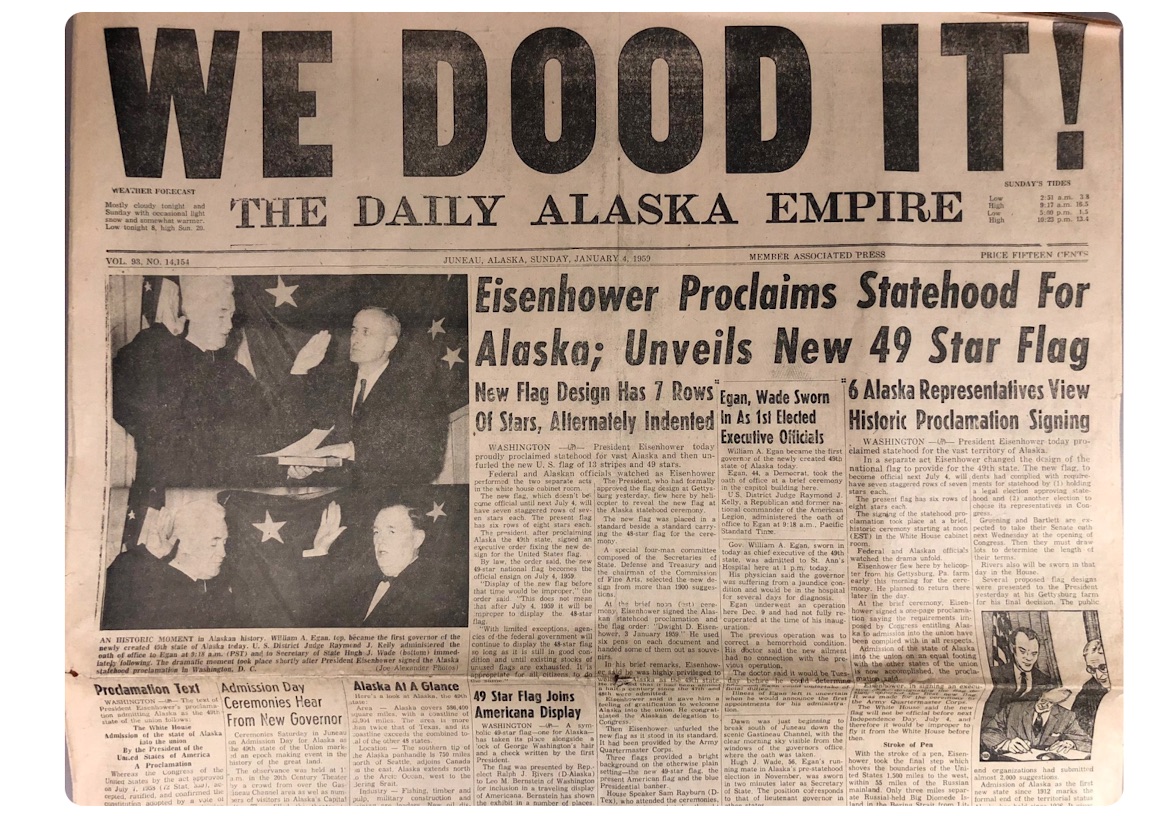
The question “Is Alaska the 49th state?” delves into a pivotal moment in American history, marking the formal integration of one of the world’s most unique and vast territories into the United States of America. Indeed, Alaska proudly holds the distinction of being the 49th state, admitted to the Union on January 3, 1959. This historical event was not merely a bureaucratic formality but the culmination of centuries of exploration, geopolitical maneuvering, and the persistent efforts of its residents. Understanding Alaska’s journey to statehood offers profound insights into its identity, its strategic importance, and its enduring status as a land of unparalleled natural and historical landmarks.
The Path to Statehood: A Historical Overview
Alaska’s path to statehood is a compelling narrative that spans from its early discovery by Europeans to its pivotal role in 20th-century geopolitics. Its history is deeply intertwined with the quest for resources, strategic control, and the expansion of national territories, shaping it into the significant landmark it is today.
From Russian America to U.S. Territory
Initially, the vast expanse known today as Alaska was part of Russian America, claimed by the Russian Empire in the 18th century after its discovery by Vitus Bering. For over a century, Russian fur traders exploited its rich resources, primarily sea otter pelts, establishing small settlements along the coast. However, maintaining such a distant and resource-intensive territory proved challenging for the Russians, especially after the Crimean War weakened their imperial ambitions.
The Alaska Purchase and Early Days
The turning point came with the Alaska Purchase in 1867, when U.S. Secretary of State William H. Seward negotiated the acquisition of Alaska from Russia for $7.2 million. This transaction, initially ridiculed as “Seward’s Folly” or “Seward’s Icebox,” was a monumental strategic move that vastly expanded the United States’ territory and secured its northern flank. For decades after the purchase, Alaska remained largely unorganized and neglected, administered primarily by the military and later as a district. The discovery of gold in the late 19th and early 20th centuries, particularly the Klondike Gold Rush and subsequent discoveries in Nome and Fairbanks, brought a surge of population and economic activity, laying the groundwork for more formal governance. In 1912, Alaska was officially designated an organized territory, a significant step towards self-rule.
The Drive for Self-Governance
The territorial years were marked by a growing desire among Alaskans for greater control over their own destiny. They faced numerous challenges, including distance from the federal government, insufficient representation, and the feeling that their vast resources were being exploited without adequate benefit to the local population. The onset of World War II dramatically highlighted Alaska’s strategic importance, particularly after the Japanese invasion of the Aleutian Islands. This conflict underscored the need for improved infrastructure, economic development, and robust local governance, galvanizing the statehood movement. Veterans returning from the war, many of whom had seen the vast potential and strategic value of Alaska, became fervent advocates for statehood, believing it was essential for the territory’s progress and security.
The Formal Recognition: January 3, 1959
The decades of advocacy, political maneuvering, and a clear demonstration of Alaska’s capacity for self-governance culminated in its formal admission into the United States. This date stands as a historical landmark for both Alaska and the broader American narrative.
The Act of Admission
After a hard-fought campaign, including multiple referendums and dedicated lobbying efforts by Alaskan leaders like Ernest Gruening and Bob Bartlett, the United States Congress passed the Alaska Statehood Act in 1958. President Dwight D. Eisenhower signed the bill into law on July 7, 1958, paving the way for the formal proclamation of statehood. On January 3, 1959, President Eisenhower issued Proclamation 3269, officially admitting Alaska as the 49th state of the United States. This act completed the continental expansion of the United States and brought a vast, resource-rich, and strategically vital region fully into the Union. The capital, Juneau, became the seat of the new state government, marking a new era of self-determination and growth for the Alaskan people.

A New Star on the Flag
The admission of Alaska necessitated a change to the American flag, adding a 49th star. This new flag officially debuted on July 4, 1959, a symbol of the nation’s continuous growth and the enduring pursuit of self-governance for all its constituent parts. The addition of Alaska, followed shortly by Hawaii as the 50th state, redefined the geographical and political landscape of the United States, solidifying its global presence from the Arctic to the Pacific.
The Significance of Alaska’s Statehood
Alaska’s statehood is not just a historical date; it represents a profound shift in its standing and development, with far-reaching implications that continue to define its identity as a global landmark.
Geographic and Strategic Importance
As the largest state in the United States by area, Alaska boasts an extraordinary diversity of landscapes, from vast mountain ranges like the Alaska Range, home to Denali (North America’s highest peak), to extensive coastlines, dense forests, and expansive tundra. Its strategic location, bordering Canada to the east and separated from Russia by the Bering Strait to the west, has always made it a critical geopolitical hub. During the Cold War, Alaska’s military bases were vital defense outposts. Today, it remains crucial for national security, trade routes, and environmental research, especially concerning climate change in the Arctic. Statehood allowed Alaskans greater control over these strategic assets and the ability to advocate for their interests on a national and international stage.
Economic and Cultural Impact
Statehood empowered Alaska to manage its immense natural resources, which include substantial oil, natural gas, timber, and fisheries. The discovery of oil on the North Slope at Prudhoe Bay in 1968 and the subsequent construction of the Trans-Alaska Pipeline System transformed the state’s economy, leading to significant wealth and the establishment of the Alaska Permanent Fund. This fund, which pays annual dividends to residents, is a unique economic landmark, directly benefiting every citizen from the state’s natural resource wealth. Culturally, statehood allowed for stronger recognition and preservation of Alaska’s rich Indigenous heritage, encompassing diverse groups such as the Inuit, Yup’ik, Aleut, and Athabascan peoples. Their languages, traditions, and land claims gained greater legal and political standing, contributing to a vibrant and multifaceted state identity.
Alaska Today: A Land of Enduring Landmarks
Today, Alaska continues to evolve, its historical journey to statehood serving as a bedrock for its modern identity. It stands as a testament to human resilience, governmental foresight, and the enduring power of its natural environment, making every facet of the state a potential landmark.
Natural Wonders as National Treasures
From the towering peaks of Denali National Park and Preserve to the glaciers of Glacier Bay National Park and Preserve and the vast wilderness of the Arctic National Wildlife Refuge, Alaska is replete with natural landmarks of global significance. Statehood helped solidify federal and state protections for these pristine areas, ensuring their preservation for future generations. These natural wonders are not merely scenic backdrops but are integral to the state’s economy through sustainable tourism and scientific research, drawing visitors and scholars from around the world. The recognition of Alaska as a state provided the framework for the intricate balance between conservation and development that continues to shape its environmental policies.

Cultural Heritage and Modern Development
Beyond its natural beauty, Alaska is home to a rich tapestry of cultural landmarks. Museums like the Anchorage Museum and the Alaska State Museum in Juneau chronicle its diverse history, from Indigenous traditions to Russian colonial influences and American pioneering spirit. Historic sites, such as the remains of Russian settlements on Kodiak Island or the infrastructure built during the gold rushes, serve as tangible reminders of its eventful past. Modern developments, including bustling port cities like Anchorage and innovative research facilities, demonstrate Alaska’s forward trajectory. The decision to become the 49th state was a declaration of self-reliance and ambition, cementing Alaska’s place not just on the map, but as a dynamic and independent entity within the United States, a true landmark of perseverance and potential.
LifeOutOfTheBox is a participant in the Amazon Services LLC Associates Program, an affiliate advertising program designed to provide a means for sites to earn advertising fees by advertising and linking to Amazon.com. Amazon, the Amazon logo, AmazonSupply, and the AmazonSupply logo are trademarks of Amazon.com, Inc. or its affiliates. As an Amazon Associate we earn affiliate commissions from qualifying purchases.