
The sprawling state of Texas, a vast expanse of diverse landscapes and vibrant cultures, often presents a unique set of logistical questions for travelers and residents alike. Among these, the query about its time zone coverage is a frequent point of curiosity. While many assume a monolithic time zone across the entirety of the Lone Star State, the reality is more nuanced. Understanding Texas’s temporal boundaries is crucial for seamless travel planning, ensuring punctual arrivals for business meetings, and accurately coordinating with friends and family across its considerable geographical spread. This exploration delves into the intricacies of time in Texas, shedding light on whether the entire state adheres to a single time zone or if pockets of temporal variation exist.
The Dominance of Central Time in Texas
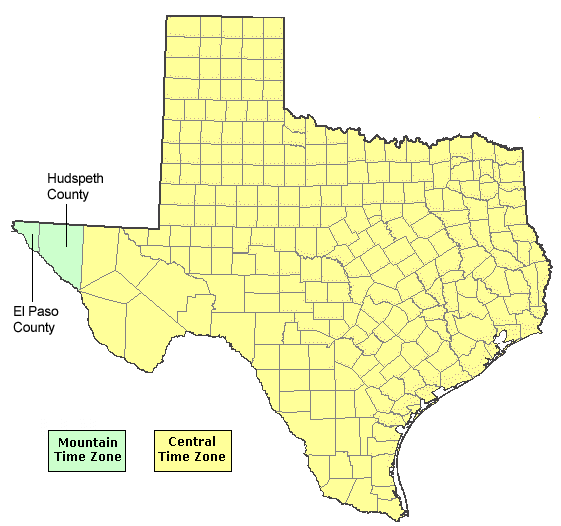
The overwhelming majority of Texas operates within the Central Time Zone (CT). This means that during standard time, it observes Central Standard Time (CST), which is UTC-6, and during daylight saving time, it switches to Central Daylight Time (CDT), UTC-5. This adherence to CT is deeply rooted in historical practices and geographical proximity to other states within the same time zone.
Historical Context of Time Zone Adoption
The establishment of time zones in the United States was a complex process driven by the needs of the burgeoning railroad industry in the late 19th century. Before standardized time zones, each town or city operated on its own local solar time, leading to considerable confusion for transportation and communication. The railroads pushed for a unified system to simplify scheduling and improve efficiency.
Texas, as a rapidly developing state with significant agricultural and industrial output, quickly embraced the advantages of standardized time. While the initial adoption and precise demarcation of time zones were subject to debate and legislative action at both state and federal levels, the prevailing geographical and economic forces ultimately aligned most of Texas with the Central Time Zone. This alignment facilitated smoother trade and travel with neighboring states like Oklahoma and Louisiana, which also predominantly fall within CT.
Geographical Factors Influencing Time Zone Assignment
Geographically, Texas lies squarely within the longitude bands that define the Central Time Zone. The time zone boundaries are primarily determined by lines of longitude, with the intention of aligning the clock time with the solar noon as closely as possible within a given region. Texas’s vast east-west expanse means that solar noon occurs at different actual times across the state, but the Central Time Zone provides a practical compromise for the majority of its population and economic centers.
Major metropolitan areas such as Houston, Dallas, San Antonio, and Austin all observe Central Time. This uniformity simplifies operations for businesses that span multiple cities within the state and for travelers moving between these popular tourist and business destinations. The consistency of CT across these urban hubs makes navigating Texas from a temporal perspective relatively straightforward for most visitors.
The Exception: The Peculiar Case of El Paso
While the statement “All of Texas is in Central Time” holds true for the vast majority of the state, there is one notable exception that often sparks confusion: the city of El Paso and its surrounding county. Due to its geographical proximity to New Mexico and its historical ties with the Mountain Time Zone, El Paso County has historically operated under Mountain Time.
El Paso’s Mountain Time Status
This means that during standard time, El Paso observes Mountain Standard Time (MST), which is UTC-7, and during daylight saving time, it switches to Mountain Daylight Time (MDT), UTC-6. This places El Paso one hour behind the rest of Texas for most of the year.
The reasons for this divergence are primarily geographical and historical. El Paso is located in the westernmost tip of Texas, bordering both New Mexico and Mexico. The natural flow of commerce, transportation, and communication in this region is heavily influenced by its neighbors in New Mexico, which has long been part of the Mountain Time Zone. To facilitate these connections and avoid the inconvenience of a one-hour time difference with its immediate surroundings, El Paso County adopted Mountain Time.
Navigating the Time Zone Divide
For travelers, this temporal anomaly requires a degree of awareness. If you are flying into El Paso International Airport from Dallas or Houston, for example, your watch will effectively jump back one hour upon arrival. Similarly, if you are making a phone call to someone in El Paso from another part of Texas, you will need to account for this one-hour difference.
This difference, while seemingly minor, can have implications for business travelers coordinating meetings or for tourists trying to catch a specific show or make dinner reservations. It is always advisable to confirm the local time in El Paso when planning any activities or communications that involve the city. Local businesses and service providers in El Paso are accustomed to this time difference and will typically specify times in Mountain Time, but it’s a detail worth noting for any visitor.
Implications for Travel and Logistics
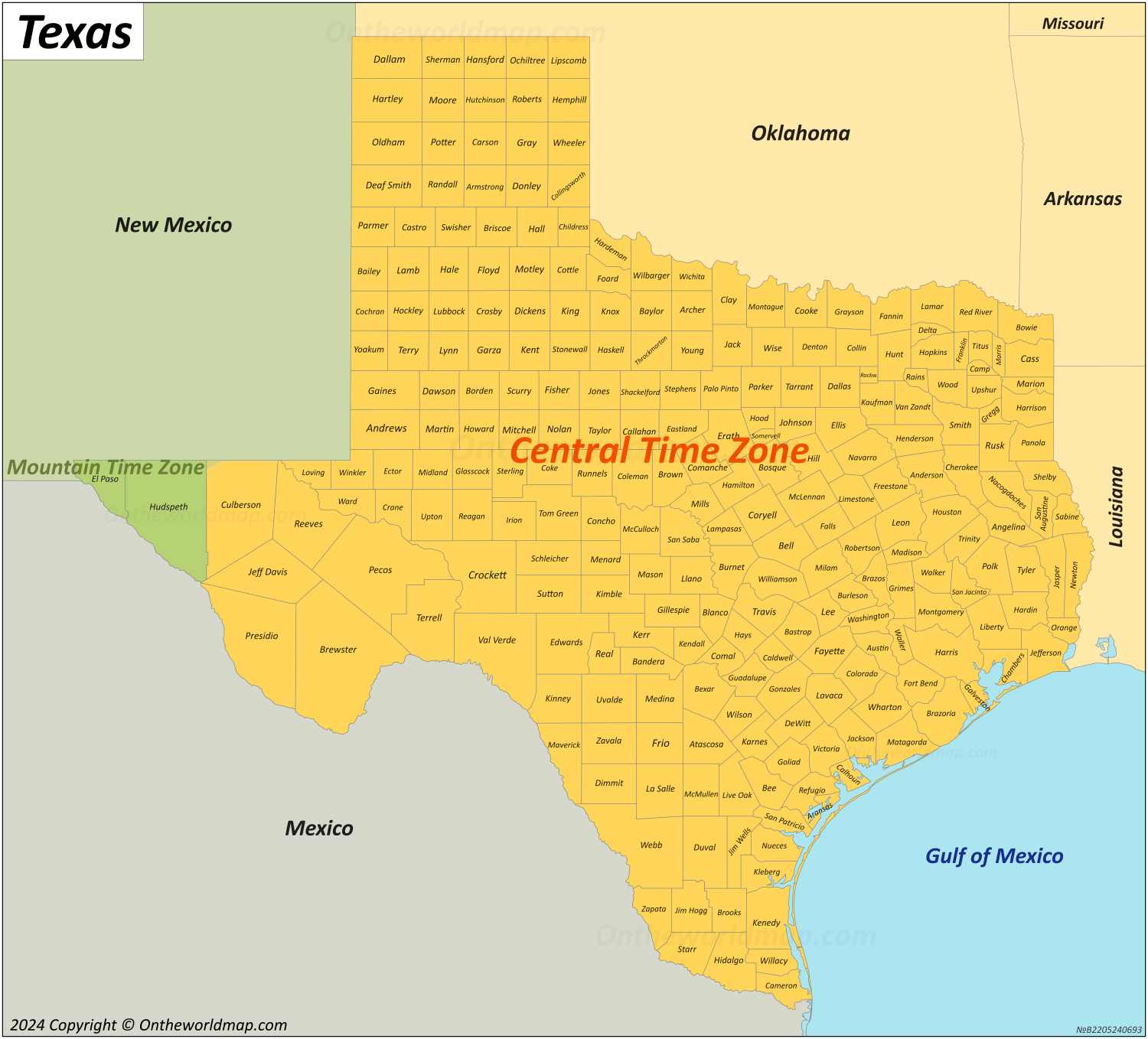
The presence of two time zones within Texas, though one is a significant outlier, has several practical implications for those traveling within or to the state. Understanding these nuances can prevent minor inconveniences and ensure a smoother journey.
Business Travel and Scheduling
For businesses operating across Texas, the time zone difference in El Paso is a factor to consider when scheduling meetings, coordinating conference calls, and managing project timelines. Companies with offices in both the Central and Mountain time zones within Texas must have clear protocols in place to avoid confusion. This might involve explicitly stating the time zone for all scheduled events or using scheduling software that automatically adjusts for different time zones.
The perception of time can also subtly influence business interactions. A conference call scheduled for 10 AM in Dallas will be at 9 AM in El Paso. This requires participants in El Paso to be ready an hour earlier in their local time, which can impact their morning routines and preparation time.
Tourism and Leisure Activities
For tourists, the time zone difference is generally less disruptive but still warrants attention. When booking tours, making restaurant reservations, or planning to visit attractions, it’s essential to be aware of whether the advertised times are in Central or Mountain Time.
For instance, if a popular restaurant in San Antonio takes reservations at 7 PM, and you plan to visit El Paso later in your trip and see a similar offering, you’ll need to mentally adjust. A 7 PM reservation in El Paso would correspond to 8 PM in Central Time. This is particularly relevant for those engaging in activities with fixed schedules, such as guided tours, theater performances, or sporting events.
Communication and Connectivity
Staying connected with friends and family across Texas also requires an understanding of the time zones. A casual chat or a planning call needs to be timed appropriately. A call placed at 8 PM in Houston would be reaching someone at 7 PM in El Paso. While this difference is manageable, it’s a point of awareness for maintaining seamless communication. Many people traveling between these regions will adjust their phone settings or use apps that automatically display local times for their contacts.
Understanding Daylight Saving Time in Texas
Both Central Time and Mountain Time in Texas observe Daylight Saving Time (DST). This means that clocks are advanced by one hour in the spring and set back by one hour in the autumn. The dates for DST changes are standardized across the United States, so both the Central and Mountain time zones within Texas adhere to these national guidelines.
The Impact of DST on Time Differences
During DST, the one-hour difference between the two time zones in Texas persists. While Central Daylight Time (CDT) is UTC-5, Mountain Daylight Time (MDT) is UTC-6. This means that the temporal separation between El Paso and the rest of the state remains constant, regardless of whether DST is in effect. The difference is always one hour.
This consistency simplifies the mental arithmetic for those who frequently travel or communicate between the two regions. The shift to DST occurs simultaneously across both time zones, so the relative difference in time does not change. This is a crucial point for travelers to remember: the one-hour lag in El Paso is a year-round phenomenon.
Planning Around DST
While the DST change itself doesn’t alter the time difference, it’s still a factor to consider for travel planning, especially for those who might be less familiar with the concept. For example, if you are planning a trip that spans the DST changeover dates, it’s important to be aware of when the clocks will shift to avoid any disorientation. However, for the most part, modern smartphones and digital devices automatically adjust for DST, minimizing the need for manual intervention.

Conclusion: A Tale of Two Time Zones in the Lone Star State
In conclusion, the question “Is all of Texas Central Time?” is met with a qualified “mostly.” While the vast majority of the state, encompassing its major cities and population centers, operates under Central Time, the westernmost city of El Paso and its surrounding county stand as a distinct temporal island, observing Mountain Time.
This geographical and historical anomaly in El Paso means that travelers and residents must remain aware of the one-hour difference when planning activities, conducting business, or simply staying in touch across the state. Understanding this distinction is a small but essential piece of knowledge for anyone navigating the diverse and expansive landscape of Texas, ensuring a smoother and more punctual experience in this vast and captivating state. Whether you’re exploring the vibrant culture of Austin, the historic sites of San Antonio, the bustling metropolis of Houston, or the unique border city of El Paso, a mindful approach to time will enhance your journey.
LifeOutOfTheBox is a participant in the Amazon Services LLC Associates Program, an affiliate advertising program designed to provide a means for sites to earn advertising fees by advertising and linking to Amazon.com. Amazon, the Amazon logo, AmazonSupply, and the AmazonSupply logo are trademarks of Amazon.com, Inc. or its affiliates. As an Amazon Associate we earn affiliate commissions from qualifying purchases.