
When contemplating a move to the Grand Canyon State or navigating the complexities of divorce within its sunny borders, understanding Arizona‘s legal framework regarding marital property is crucial. While the primary focus of our platform often revolves around the enriching experiences of travel, from exploring vibrant destinations and uncovering unique attractions to indulging in luxurious hotels and discovering local tourism gems, we recognize that life’s transitions, including significant legal matters, can profoundly impact individuals and their lifestyle choices. This article aims to demystify Arizona‘s classification as a community property state, drawing parallels where appropriate to how this legal distinction can affect everything from asset division during a divorce to financial planning for couples.
For those considering relocation for a change of lifestyle, perhaps drawn by Arizona‘s allure of warm weather, stunning natural landmarks, and diverse accommodation options, a foundational understanding of its legal landscape is as vital as knowing the best time to visit the Grand Canyon or where to find the most authentic Arizona tacos. Similarly, for residents planning long-term stays or seeking to book a dream resort getaway, awareness of property rights can offer peace of mind.
Understanding Community Property in Arizona
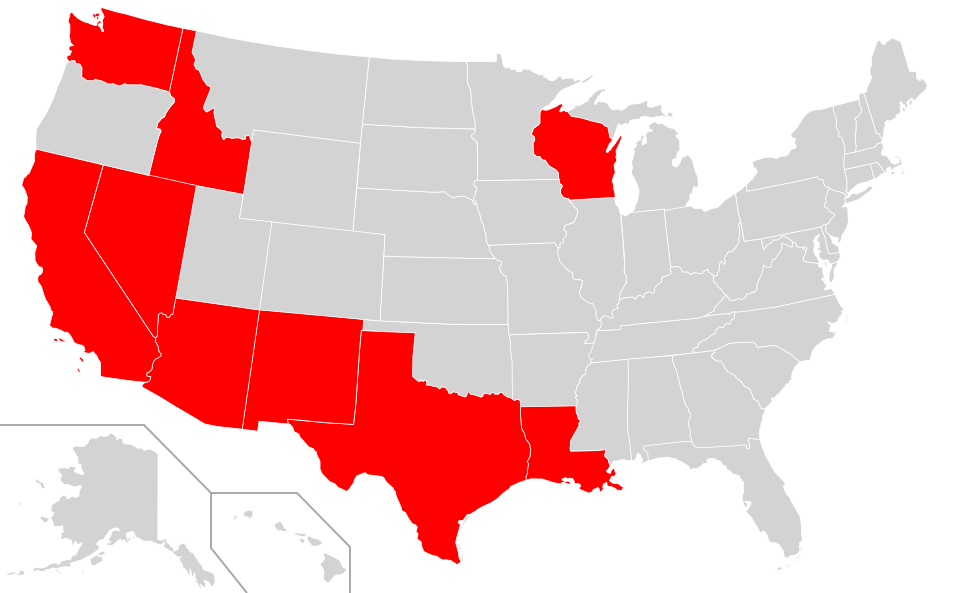
Arizona operates under a community property system, a legal doctrine that significantly influences how assets and debts acquired during a marriage are viewed. This is a stark contrast to common law property states, where ownership is typically determined by who earned or purchased the asset. In a community property state like Arizona, the fundamental principle is that all property acquired by either spouse during the marriage is considered jointly owned by both spouses, regardless of whose name is on the title or who made the direct financial contribution. This shared ownership extends to both assets and debts.
What Constitutes Community Property?
Generally, any asset or debt acquired from the date of marriage until the date of separation or divorce is presumed to be community property. This broad definition encompasses a wide range of acquisitions, from real estate purchased together to salaries earned by each spouse during the marriage.
- Income and Wages: Money earned by either spouse from employment or self-employment during the marriage is community property. This includes salaries, bonuses, commissions, and profits from businesses. Even if one spouse stayed home to raise a family or manage the household, their contributions are recognized as valuable and contribute to the community estate.
- Real Estate: Homes, land, and any other real property purchased or acquired during the marriage are considered community property. This applies whether the property is used as a primary residence, a vacation home, or an investment.
- Personal Property: This category includes a vast array of items, such as vehicles, furniture, electronics, bank accounts, retirement funds (contributions and growth during the marriage), stocks, bonds, and business interests.
- Debts: Similarly, debts incurred by either spouse during the marriage are generally considered community obligations. This can include mortgages, car loans, credit card debt, and personal loans.
It is important to distinguish community property from separate property. Separate property is generally defined as assets owned by a spouse before the marriage, or acquired during the marriage through gift or inheritance. For instance, if one spouse owned a property in Phoenix before getting married, and did not commingle its ownership or income with marital assets, it would likely remain their separate property. Likewise, if a spouse receives an inheritance or a gift during the marriage, and keeps it separate from marital funds, it would be considered separate property. However, proving the separate nature of property can sometimes be challenging, especially if there has been any commingling of funds or assets.
The Impact on Property Division in Divorce
The community property doctrine has a profound impact on how assets and debts are divided during a divorce proceeding in Arizona. The guiding principle is that community property should be divided “equitably,” which generally means fairly or justly. While “equitable” often translates to a 50/50 split, courts do have the discretion to deviate from an equal division if circumstances warrant it.
Factors that a court might consider when determining an equitable distribution include:
- The contributions of each spouse to the acquisition of the property: This goes beyond direct financial contributions and can include the value of homemaking, child-rearing, and support of the other spouse’s career.
- The duration of the marriage: Longer marriages may see a more equal division of assets.
- The economic circumstances of each spouse: If one spouse has significantly greater earning capacity or needs than the other, the court might adjust the division.
- Any acts of domestic violence: In some cases, misconduct can influence property division.
- The opportunity of each spouse for future acquisition of capital assets and income: The court may consider each spouse’s potential to earn income and acquire wealth in the future.
For couples who have meticulously planned their finances, perhaps by co-owning accommodation like a vacation villa in Sedona or investing jointly in resorts, the division process, while still complex, may be more straightforward. However, for those with entangled finances or significant separate property claims, legal counsel is indispensable. The division process aims to leave both parties in a reasonably stable financial position, enabling them to continue their lifestyle choices post-divorce.

Navigating Travel and Lifestyle Choices in a Community Property State
The community property laws of Arizona can influence various aspects of a couple’s life, including their travel plans, lifestyle choices, and even their investment decisions related to tourism and accommodation. Understanding these implications can help couples make informed decisions, whether they are planning a romantic getaway to Sedona, considering a long-term stay in a Scottsdale resort, or simply managing their everyday finances.
Joint Decisions and Financial Planning
For married couples in Arizona, many financial decisions are, by default, joint decisions because the assets acquired are considered community property. This includes decisions about:
- Purchasing Property: Whether it’s a primary residence in Tucson or an investment property, the acquisition during the marriage is generally a community asset.
- Taking on Debt: A mortgage for a new home or a loan for a business venture undertaken during the marriage typically creates a community obligation.
- Making Significant Purchases: Large purchases, whether for personal enjoyment or investment, are made with community funds and therefore contribute to the community estate.
This shared ownership encourages open communication and collaboration in financial matters. Couples planning a significant trip or a substantial accommodation booking, like a suite at the Arizona Biltmore, should ideally be in agreement, as the funds used are likely community property. This principle extends to investments in tourism ventures or the acquisition of property for lifestyle purposes.
Separate Property and its Management
While the presumption is that property acquired during marriage is community property, couples can maintain separate property. This requires careful segregation of funds and assets. For example, if one spouse inherited money from their family in California, and this money was deposited into a separate bank account and used exclusively for personal expenses or separate investments, it could remain separate property. However, if these inherited funds were used to pay the mortgage on a marital home or to fund a joint travel experience, they could become commingled and thus treated as community property.
When considering luxury travel or acquiring distinctive villas, individuals should be mindful of the source of funds. If the funds are demonstrably separate and have been kept separate throughout the marriage, then the acquisition could be considered separate. This is an area where meticulous record-keeping and legal advice are paramount.
Estate Planning and Inheritance
The community property laws of Arizona also affect estate planning. Upon the death of one spouse, the surviving spouse is generally entitled to their half of the community property. The deceased spouse’s half of the community property, along with any separate property they owned, will pass according to their will or by the laws of intestate succession if they die without a will. This can have implications for heirs and the distribution of assets, including any landmarks or properties that were part of the marital estate. Understanding these rules is crucial for comprehensive financial and legacy planning.

Conclusion: Planning for Your Arizona Future
Whether you are embarking on a new lifestyle adventure in Arizona, seeking unique experiences through tourism, or navigating significant life changes, a grasp of the state’s legal framework is invaluable. Arizona‘s designation as a community property state shapes how assets and debts are viewed, both during the marriage and in the event of divorce or death.
For those drawn to Arizona‘s diverse attractions, from the majestic Grand Canyon to the vibrant arts scene in Santa Fe (though Santa Fe is in New Mexico, the spirit of exploration is universal), or planning stays at renowned hotels like the El Tovar Hotel, understanding the legal underpinnings of shared finances can provide a clearer path forward. This is particularly true for couples who co-own resorts, apartments, or villas, or make joint decisions about booking accommodation.
The principles of community property encourage transparency and collaboration in financial matters, fostering a sense of shared ownership and responsibility. By understanding what constitutes community property and how it is divided, individuals and couples can better plan their travel, manage their lifestyle, and secure their financial future within the sunny embrace of Arizona. For any complex financial or legal matters, consulting with qualified legal and financial professionals is always recommended to ensure that your experiences in Arizona are as smooth and rewarding as possible.
LifeOutOfTheBox is a participant in the Amazon Services LLC Associates Program, an affiliate advertising program designed to provide a means for sites to earn advertising fees by advertising and linking to Amazon.com. Amazon, the Amazon logo, AmazonSupply, and the AmazonSupply logo are trademarks of Amazon.com, Inc. or its affiliates. As an Amazon Associate we earn affiliate commissions from qualifying purchases.