
For travelers exploring the diverse landscapes and vibrant culture of the American Southwest, understanding local time zones is often a minor detail, yet it can significantly impact travel plans, from booking accommodations to coordinating activities. When it comes to Arizona, the question of “Is Arizona in Mountain Standard Time?” carries a fascinating and unique answer that sets it apart from many other states. The short answer is yes, Arizona generally observes Mountain Standard Time (MST) year-round. However, the nuance lies in its distinctive decision to largely opt out of Daylight Saving Time (DST), creating a consistent, albeit sometimes confusing, time-keeping system for residents and visitors alike.
This particular time zone policy profoundly influences everything from flight schedules and hotel check-ins to planning your excursions to breathtaking natural landmarks and engaging with local culture. For those seeking a seamless travel experience, whether it’s a luxury getaway, a budget-friendly adventure, a family trip, or a crucial business stay, grasping Arizona’s time zone quirks is essential. This article delves into the specifics of Arizona’s time zone, its historical context, and practical tips for navigating it efficiently during your travels, ensuring your focus remains on the stunning attractions and unforgettable experiences the Grand Canyon State has to offer.
The Arizona Time Zone Explained: A Year-Round Mountain Standard Time State
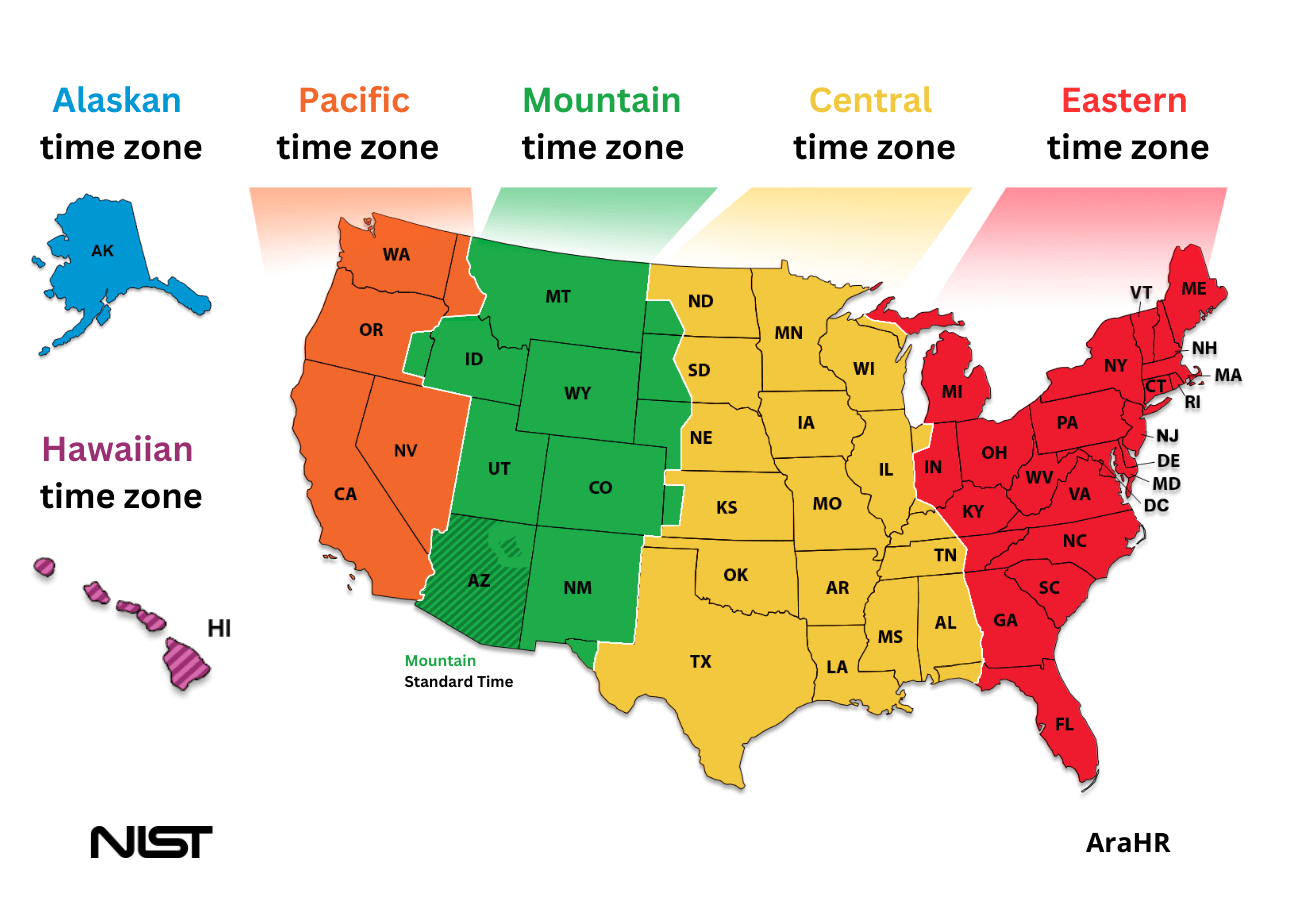
At its core, most of Arizona operates on Mountain Standard Time (MST). This means that its clocks are set to UTC-7. What makes Arizona’s approach unique is its steadfast refusal to observe Daylight Saving Time (DST) for the majority of the state. While most of the United States “springs forward” an hour in March and “falls back” in November, Arizona’s clocks remain unchanged. This consistency might seem straightforward, but it creates a dynamic where Arizona is aligned with different time zones depending on the time of year.
During the winter months, when states observing DST revert to standard time, Arizona aligns with Mountain Standard Time (MST), just like its neighbors in Utah, Colorado, and New Mexico. However, when DST kicks in, and these neighboring states advance their clocks to Mountain Daylight Time (MDT), Arizona effectively shifts to match Pacific Daylight Time (PDT), which is observed in states like California and Nevada. This seasonal fluctuation in relative time is the primary source of confusion for many visitors.
No Daylight Saving Time for Most of Arizona
The decision to forego Daylight Saving Time dates back to the 1960s, rooted in practical considerations for the hot desert climate. The primary argument against DST in Arizona is that advancing the clock by an hour in summer would simply prolong the intensely hot daylight hours into the evening, increasing energy consumption for air conditioning and making outdoor activities less comfortable during what would otherwise be cooler twilight hours. By sticking to Mountain Standard Time year-round, Arizona experiences earlier sunsets, which can be a welcome relief from the scorching heat, particularly in cities like Phoenix and Tucson.
This consistent approach means that from mid-March to early November, Arizona is essentially on the same clock as California and Nevada (which are on PDT). For travelers flying in from the East Coast, this could mean an additional hour of time difference during these months, relative to what they might experience during winter. For those coming from states observing MST, it means no time change at all when crossing the border into Arizona, but a one-hour difference compared to their home state’s clocks during DST. This simple yet profound difference has a ripple effect on travel planning, especially when coordinating itineraries, tours, and accommodations.
The Navajo Nation Exception: A Unique Time-Keeping Challenge
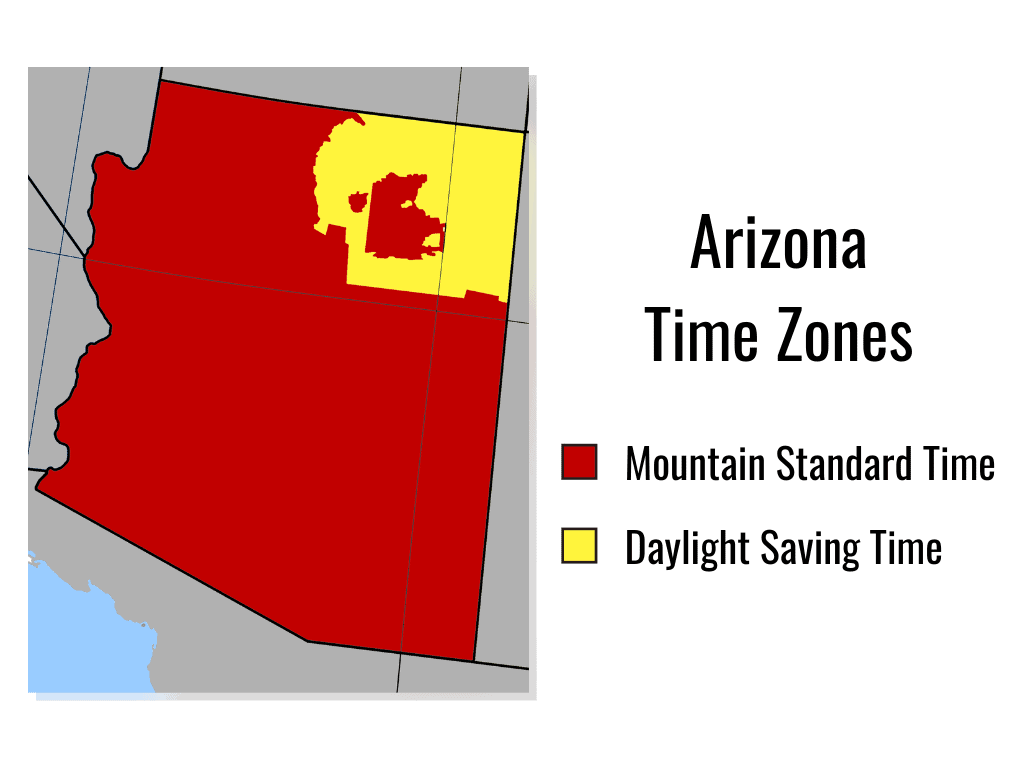
As with many rules, there’s a significant exception that adds another layer of complexity to Arizona’s time zone saga: the Navajo Nation. This sovereign nation’s territory spans across northeastern Arizona, New Mexico, and Utah. Unlike the rest of Arizona, the Navajo Nation does observe Daylight Saving Time. This decision allows them to maintain consistent time with the portions of their reservation that extend into Utah and New Mexico, which both observe DST.
For travelers, this means that if you’re driving through Arizona and enter the Navajo Nation during the DST period, you will need to adjust your clock forward by one hour. This is particularly relevant for those visiting iconic attractions within the reservation, such as Antelope Canyon, Monument Valley, or planning to stay in accommodations in towns like Page which is on the border of the reservation. Compounding the complexity, the Hopi Nation, an independent reservation, is entirely encircled by the Navajo Nation in Arizona but does not observe Daylight Saving Time, following the rest of Arizona’s lead. This creates an almost checkerboard pattern of time changes for those traveling through the northeastern part of the state, requiring careful attention to avoid missed tours or appointments.
Navigating Time Zones as a Traveler: Practical Tips for Your Arizona Trip
Understanding Arizona’s unique time zone situation is more than just a fun fact; it’s a critical component of successful travel planning. Whether you’re embarking on a luxurious resort stay in Scottsdale, a budget-friendly road trip to the Grand Canyon, or a family adventure through ancient ruins, proper time management can make or break your experience. From flight arrivals to tour departures, every element of your itinerary can be affected.
Planning Your Itinerary: Flights, Check-ins, and Attractions
One of the first points of contact for many travelers is arriving at an Arizona airport, such as Phoenix Sky Harbor International Airport. If you’re arriving during DST, remember that Arizona will be on the same time as California. This is particularly important for connecting flights or if you’re coordinating with someone arriving from a state that observes DST. Always confirm your flight times in Arizona local time.
Accommodation bookings are another area where time awareness is key. Hotels, resorts, apartments, and villas throughout Phoenix, Tucson, Sedona, and other destinations will operate on Arizona’s year-round MST. Ensure your check-in and check-out times align with this. If you’ve booked a guided tour to the Grand Canyon or a desert jeep tour near Sedona, verify the departure times against your personal clock, especially if you’re traveling from an area that recently adjusted for DST. Many tour operators are adept at reminding visitors, but personal vigilance is your best defense against missing an unforgettable experience. Use your smartphone, which typically updates time zones automatically, but always double-check against local signs or information when in doubt.
Business and Communications: Staying Connected Across Time Zones
For business travelers or those needing to stay connected with work or family during their trip, Arizona’s time zone can present unique challenges. During the spring and summer months, when most of the country is on DST, Arizona will be three hours behind the East Coast (EDT) and one hour behind the Mountain Time Zone (MDT). This means that a 9 AM meeting in New York would be 6 AM in Phoenix, while a 9 AM meeting in Denver (MDT) would be 8 AM in Phoenix.
For international communication or coordinating with global teams, it’s vital to clearly state “MST” or “Arizona Time” to avoid ambiguity. This is especially true for long-term stays where consistent communication is paramount. Leveraging tools that display multiple time zones can be incredibly helpful for business travelers needing to manage meetings and deadlines across different regions. Remember, clear communication about the exact time zone is essential to prevent missed calls or misinterpretations.
Dining and Local Activities: Making the Most of Your Schedule
Arizona’s unique time zone also subtly influences daily life and activity planning. For instance, dining reservations should always be confirmed for local Arizona time. If you’re coming from a state that just switched to DST, you might mistakenly think you have an extra hour, leading to a late arrival for your culinary experience. Similarly, checking opening and closing times for attractions, museums, or local shops needs to be done with Arizona’s MST in mind.
Consider a visit to the Grand Canyon National Park. While the park itself adheres to Arizona’s non-DST schedule, if you’re staying just outside the park in a town within the Navajo Nation (which observes DST), you’ll need to remember the hour difference when planning sunrise or sunset views. Imagine heading out for an early morning hike, only to realize you’re an hour off, potentially missing the magical golden hour or delaying your planned activities. From exploring local culture and food scenes in Tucson to enjoying the amenities of your Phoenix resort, being time-aware enhances your ability to immerse yourself fully in the experience.
Why Arizona Opted Out: History and Implications
Arizona’s decision to largely forgo Daylight Saving Time is not an arbitrary one, but rather a choice deeply rooted in the state’s geography, climate, and lifestyle. This historical context helps explain why this peculiar time zone system persists, despite the occasional confusion it causes for outsiders. Understanding the rationale offers a deeper appreciation for the unique culture and practical considerations that shape life in the Grand Canyon State.
The Rationale Behind the Decision
The primary reason Arizona opted out of Daylight Saving Time is the intense summer heat. Arizona experiences exceptionally long, hot summers, with temperatures frequently soaring above 100°F (38°C) in urban centers like Phoenix and Tucson. The purpose of DST is generally to make better use of daylight by shifting an hour of sunlight from the morning to the evening. However, in Arizona, this would mean prolonging the hours of extreme heat into the later evening.
Forcing people to get up earlier and stay out later in the sun’s scorching intensity was deemed impractical and undesirable. By remaining on Mountain Standard Time year-round, the sun sets an hour earlier during the summer months compared to if DST were observed. This allows for cooler evenings to begin sooner, reducing the demand for air conditioning, lowering energy consumption, and making outdoor leisure activities like evening walks, sports, or dining on patios more tolerable. It’s a choice driven by comfort, energy efficiency, and a lifestyle adapted to the desert environment, aligning with the website’s focus on local culture and sustainable living.
The Impact on Daily Life and Tourism
This consistent time-keeping has several implications for both residents and the tourism industry. For residents, it eliminates the biannual disruption of changing clocks, which many find inconvenient. Children don’t have to adjust their sleep schedules, and commuters don’t have to deal with sudden changes in daylight during their drives. For tourists, while initially confusing, it often translates into more comfortable evening experiences. After a day of exploring Arizona’s landmarks or enjoying local activities, the earlier sunsets allow for a more pleasant transition into dinner or relaxation at a luxury resort.
The tourism sector has adapted well to this system. Tour operators, accommodation providers, and local businesses are generally well-versed in explaining the time zone differences to visitors. Major attractions like the Grand Canyon National Park ensure their operating hours are clearly communicated in local Arizona time. However, the exception of the Navajo Nation does pose a unique challenge, requiring heightened awareness for travelers venturing into that specific region. This duality highlights the balance between local autonomy and broader state policy, reflecting a nuanced approach to governance and cultural considerations.

Popular Arizona Destinations and Their Time Zones
Arizona is a land of incredible diversity, from bustling metropolitan areas to serene desert oases and majestic natural wonders. Understanding how the time zone applies to specific popular destinations is crucial for effective travel planning, especially for those visiting multiple regions within the state or bordering areas.
Phoenix, Tucson, and Southern Arizona
The major urban centers of Phoenix, Tucson, and popular tourist hubs like Scottsdale, Mesa, and Chandler all strictly adhere to Mountain Standard Time year-round. This means that during the summer months, these cities are on the same time as Los Angeles or Las Vegas (PDT). This can be advantageous for travelers coming from California or Nevada, as there’s no time change when crossing the border into southern Arizona.
Southern Arizona is rich with attractions, from the desert botanical gardens in Phoenix to the historic missions and vibrant food scene of Tucson. Whether you’re indulging in luxury travel at a Scottsdale resort, exploring the architectural wonders of Taliesin West, or discovering the unique natural beauty of Saguaro National Park near Tucson, all your activities will operate on the consistent MST clock. Even destinations further west, like Yuma or Lake Havasu City, home to the famous London Bridge, maintain this same year-round schedule. This simplifies planning for multi-day itineraries within this region.
Grand Canyon, Sedona, and Central/Northern Arizona
Central and Northern Arizona, encompassing iconic destinations like the Grand Canyon, the red rock country of Sedona, and the mountain town of Flagstaff, also adhere to Mountain Standard Time year-round. This is crucial for visitors planning tours, hikes, and experiences in these world-renowned natural attractions. For example, if you’re taking a helicopter tour over the Grand Canyon or a sunrise yoga session in Sedona, the scheduled times will always be Arizona’s MST.
The consistency here is beneficial for travelers. Whether you’re staying in a lodge within the Grand Canyon National Park, a boutique hotel in Sedona, or a cozy cabin near Flagstaff, your local time will remain the same. This allows for straightforward planning of activities such as exploring the diverse trails, enjoying local cuisine, or simply relaxing and soaking in the breathtaking scenery without the added stress of clock adjustments.
Exploring Border Regions and the Navajo Nation
The most intricate aspect of Arizona’s time zone policy lies in its border regions, particularly where it intersects with states that observe DST, and most notably, the Navajo Nation.
If you’re traveling from Arizona into Utah or New Mexico during DST, you’ll gain an hour as those states will be on MDT (which is one hour ahead of Arizona’s MST). Conversely, if you’re coming from California or Nevada (PDT) during DST, there’s no time change when entering Arizona. However, if you’re crossing the border from Arizona into Mexico (e.g., Sonora), you’ll need to check the specific time zone for your destination in Mexico, as it can vary.
The situation with the Navajo Nation is where maximum vigilance is required. As mentioned, the Navajo Nation observes DST, meaning during the summer months, it is one hour ahead of the rest of Arizona. This is crucial for visiting popular sites like Antelope Canyon or Monument Valley, which are within the reservation. A tour scheduled for 10 AM on the Navajo Nation will be 9 AM according to a clock set to standard Arizona time. Travelers must adjust their watches upon entering Navajo Nation territory to avoid missing tours or appointments. For example, if you’re staying in Page, which is on Arizona time, but have a tour booked for Antelope Canyon, which is on Navajo Nation time, you’ll need to factor in that hour difference. The complexity is further highlighted by the Hopi Nation, entirely surrounded by the Navajo Nation in Arizona, yet sticking to Arizona’s non-DST policy. This means driving through a small pocket of land where time literally changes twice. Even the famous Four Corners Monument presents a challenge, with three of the four states observing DST and Arizona not, leading to differing local times at the same spot!
In conclusion, while the simple answer to “Is Arizona in Mountain Standard Time?” is yes, the full picture is far more nuanced and engaging. Arizona’s commitment to year-round MST, coupled with the unique exception of the Navajo Nation, creates an interesting layer of planning for any traveler. By understanding these distinctions, you can ensure a smooth, enjoyable, and punctual experience, allowing you to fully immerse yourself in the stunning landscapes, rich culture, and endless adventures that await in the Grand Canyon State. Always double-check local times, especially when crossing borders or venturing into tribal lands, to make the most of your unforgettable Arizona journey.
LifeOutOfTheBox is a participant in the Amazon Services LLC Associates Program, an affiliate advertising program designed to provide a means for sites to earn advertising fees by advertising and linking to Amazon.com. Amazon, the Amazon logo, AmazonSupply, and the AmazonSupply logo are trademarks of Amazon.com, Inc. or its affiliates. As an Amazon Associate we earn affiliate commissions from qualifying purchases.