
California, often celebrated as the Golden State, beckons with its sun-drenched beaches, towering redwoods, innovative tech hubs, and a vibrant cultural tapestry. From the glitz and glamour of Hollywood to the serene vineyards of Napa Valley and the rugged beauty of its national parks, it promises an unparalleled lifestyle. However, this dream often comes with a hefty price tag, leaving many prospective residents and visitors asking a critical question: “Is California expensive to live in?” The short answer is unequivocally yes, it is one of the most expensive states in the United States. Yet, the complete picture is far more nuanced, revealing significant regional disparities and lifestyle choices that can dramatically alter one’s financial experience. This article delves deep into the various facets of the cost of living in California, offering insights into housing, daily expenses, transportation, and strategies to navigate its economic landscape.
Understanding the Golden State’s Price Tag
The reputation of California as an expensive place to live is well-earned. When compared to the national average, nearly every category of expense, from housing to groceries, utilities, and healthcare, registers significantly higher. This elevated cost of living is largely driven by a combination of factors: high demand for desirable locations, a robust job market in specific industries like technology and entertainment, stringent environmental regulations, and a desirable climate that attracts millions. The allure of its natural beauty, economic opportunities, and diverse culture creates a competitive environment for resources, driving up prices across the board.
Understanding this overarching context is crucial before diving into the specifics. While the state offers an abundance of opportunities and a quality of life that many aspire to, it demands a higher income to maintain a comfortable standard of living compared to most other states. This reality shapes not only who can afford to live there but also the choices residents make regarding where they settle, how they commute, and their overall lifestyle.
Breaking Down the Core Costs of Living in California
To truly grasp the financial commitment of living in California, it’s essential to dissect the primary expenditures that comprise a typical budget. These core costs are the fundamental pillars of financial planning for anyone considering a move to the Golden State.
The Housing Hurdle: Rent or Buy in California?
Housing is, without a doubt, the most significant contributor to California’s high cost of living. Whether you’re looking to rent or buy, expect prices to be substantially above the national average, especially in major metropolitan areas.
- Rent: Median rents for a one-bedroom apartment in cities like San Francisco or Los Angeles can easily exceed $2,500-$3,000 per month, and often much more for prime locations or larger units. Even in less competitive areas, finding a decent apartment for under $1,800 can be a challenge. Two-bedroom apartments, essential for families or roommates, see these figures jump even higher. This high rental cost often forces residents to live further from work, endure longer commutes, or opt for smaller living spaces. The fierce competition means that securing a desirable rental property often requires quick action and a strong financial application.
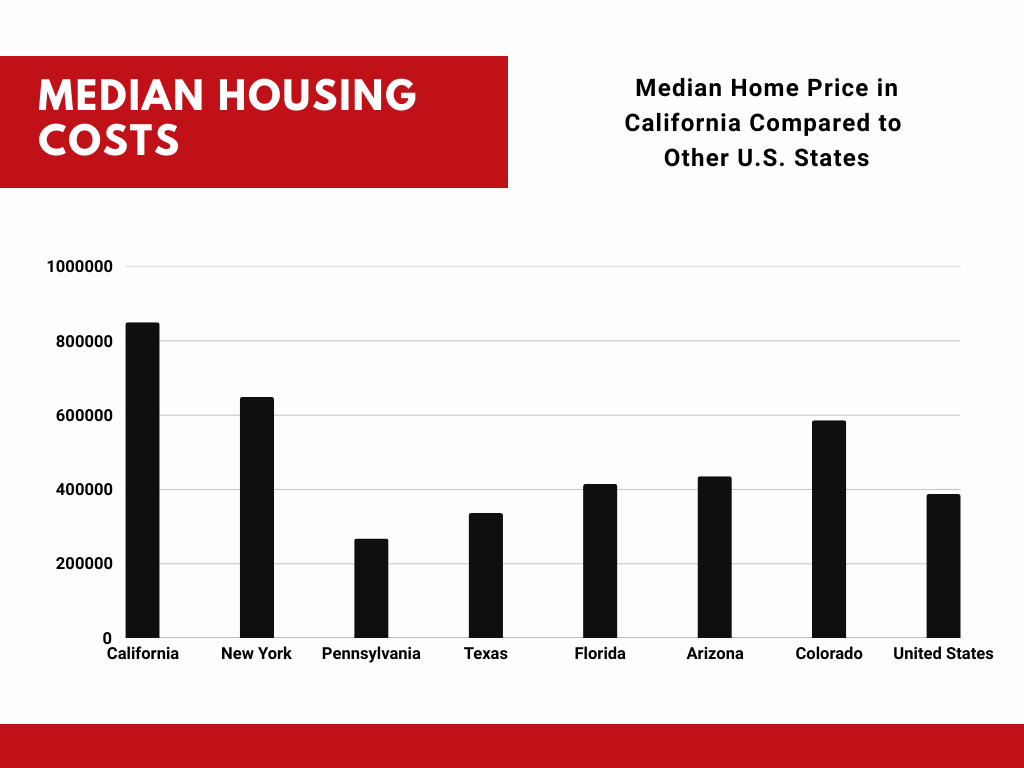
- Buying a Home: The dream of homeownership in California remains elusive for many, particularly first-time buyers. The median home price across the state often hovers above $700,000, significantly higher than the national median. In hot markets like the Bay Area or Orange County, median home prices can easily soar past $1 million, making a substantial down payment and hefty mortgage payments a prerequisite. These figures don’t even account for property taxes, homeowners insurance, and maintenance costs, which add further to the financial burden. The supply-demand imbalance, coupled with slow housing development in high-growth areas, continues to inflate property values, creating a challenging market for buyers.
Everyday Expenses: Groceries, Utilities, and Healthcare
Beyond housing, the daily necessities also come with a premium in California.
- Groceries: While not as drastically inflated as housing, grocery prices are noticeably higher than the national average. Factors such as transportation costs, labor wages, and local taxes contribute to this. A typical weekly grocery bill for an individual or family can be 10-20% more expensive than in many other states. Shopping at local farmers’ markets can sometimes offer better value for fresh produce, but overall, budget-conscious meal planning is often a necessity.
- Utilities: Utility costs, including electricity, gas, water, and internet, also contribute to the higher cost of living. Electricity rates can be particularly high, especially during peak usage periods or in areas prone to extreme temperatures that necessitate extensive heating or air conditioning. Water costs, especially in a state frequently battling drought conditions, have been on the rise. Internet services, while competitive, are still priced to reflect the overall higher operational costs in the state. Expect to pay anywhere from $150-$300+ per month for basic utilities, depending on usage, property size, and location.
- Healthcare: Healthcare expenses in California are also above the national average. Insurance premiums, deductibles, and out-of-pocket costs for medical services can be substantial. Access to quality healthcare is generally good, but residents should factor in these higher costs when budgeting for their overall well-being.
Getting Around: Transportation Costs
Given California’s vast size and often spread-out urban centers, transportation is another significant expense.
- Vehicle Ownership: For most residents outside of dense urban cores like downtown San Francisco or parts of Los Angeles, a car is almost a necessity. This entails costs for car payments, insurance (which tends to be higher in California due to population density and traffic), maintenance, and, crucially, gasoline. California consistently has some of the highest gas prices in the nation, driven by state taxes and specific fuel formulations.
- Public Transportation: While major cities do offer public transit options like BART in the Bay Area or the Metro in Los Angeles, these systems may not cover all areas efficiently, leading to long commute times or requiring supplementary transport. Fares are comparable to other major cities, but the convenience and coverage vary greatly by region. Ridesharing services are widely available but can quickly add up for daily commutes.
Regional Realities: Where Your Dollar Goes Further (or Not)
The notion of California being uniformly expensive is a generalization. The state’s vast geography and diverse economies mean that the cost of living fluctuates dramatically from one region to another. Understanding these regional differences is key to making an informed decision about where to settle.
The Urban Sprawl: Los Angeles and San Francisco’s High Price
The Bay Area, encompassing cities like San Francisco, Oakland, and the tech hub of Silicon Valley, is notoriously one of the most expensive places on earth. Housing costs here are astronomical, propelled by a thriving tech industry that brings high-paying jobs but also intense competition for limited living spaces. A small apartment in San Francisco can cost more than a house in many other states. While salaries in tech can be exceptionally high, they are often offset by these exorbitant living expenses, making budgeting a crucial skill for residents. The median home price in San Francisco can easily exceed $1.5 million, and average rents for a one-bedroom apartment often surpass $3,000.
Similarly, Los Angeles, the second-largest city in the United States, presents its own set of financial challenges. Known for its entertainment industry, diverse neighborhoods, and sprawling geography, Los Angeles also boasts some of the highest housing costs. Rent for a one-bedroom apartment in desirable neighborhoods can range from $2,000 to $4,000+, while home prices consistently remain in the high six figures to well over a million. The sheer size of Los Angeles means transportation costs can be significant, with long commutes being a common reality.

Other coastal cities like San Diego and Orange County also fall into this high-cost category, offering beautiful beaches, vibrant cultures, and strong economies, but demanding a premium for the privilege of living there.
Inland Empire and Central Valley: More Breathing Room
Moving inland, the financial landscape shifts considerably. Areas like the Inland Empire (including cities like Riverside and San Bernardino) and the vast Central Valley (home to cities such as Fresno, Bakersfield, and the state capital Sacramento) offer a much more affordable cost of living. Housing prices, both for rent and purchase, are significantly lower than on the coast. Median home prices in these regions often range from $350,000 to $550,000, and rents for a one-bedroom apartment can be found for $1,200-$1,800.
While these areas may not have the same immediate access to the Pacific Ocean or the same concentration of high-paying tech jobs, they provide a more attainable path to homeownership and a generally lower overall cost of daily expenses. This affordability often comes at the trade-off of hotter summers and potentially longer commutes to coastal job centers.
Coastal Charms Beyond the Major Metros
Even along the coast, there are variations. While San Francisco and Los Angeles dominate headlines for their expense, other charming coastal towns and smaller cities might offer a slightly less exorbitant, though still elevated, cost of living. However, these often come with fewer job opportunities or smaller populations, making them attractive for retirees or those with remote work arrangements. Places like Santa Barbara or Monterey are still expensive, but perhaps not quite at the peak levels of the largest metropolises.
Lifestyle and Living: Tailoring Your California Experience
Beyond geographic location, personal lifestyle choices play a monumental role in determining the actual cost of living in California. The Golden State offers a spectrum of experiences, from ultimate luxury to budget-conscious living, and tailoring one’s lifestyle to their financial capacity is crucial.
The Allure of Luxury vs. Budget-Conscious Living
California is synonymous with luxury. High-end dining, designer boutiques, exclusive resorts, and lavish entertainment are readily available, especially in cities like Beverly Hills or Malibu. For those with substantial incomes, the state offers an unparalleled lifestyle. However, indulging in such luxuries will quickly inflate monthly expenditures.
Conversely, a budget-conscious approach can make California more manageable. This involves making deliberate choices:
- Dining: Opting for home-cooked meals over frequent restaurant dining, or choosing more affordable eateries.
- Entertainment: Utilizing the state’s abundant free natural attractions like beaches, hiking trails, and parks instead of expensive theme parks like Disneyland Park or costly concerts.
- Shopping: Focusing on necessities and seeking out deals rather than splurging on high-end retail.
- Accommodation: Exploring roommates, smaller living spaces, or co-living options to reduce housing costs.
Family Dynamics and Education Costs
For families, the cost equation becomes even more complex. Childcare costs in California are among the highest in the nation, often comparable to a second mortgage or rent payment. Education, while publicly available, might incur additional costs for school supplies, extracurricular activities, and potentially private schooling for those who choose it. The desire for good school districts often drives up housing prices in specific areas, further impacting family budgets. When planning a move with a family, these additional expenses, combined with the need for larger living spaces, must be carefully considered.
Navigating California’s Costs: Strategies for Affordability
Despite its reputation, living in California is not entirely out of reach for everyone. Strategic planning, smart financial decisions, and a willingness to adapt can make the dream of living in the Golden State a reality for many.
Smart Spending and Budgeting
Effective budgeting is paramount. Tracking every expense, setting financial goals, and adhering to a strict budget can help manage the high cost of living.
- Transportation Alternatives: Utilize public transit, biking, or carpooling whenever possible to reduce fuel and parking costs. Consider living closer to work to minimize commute expenses.
- Food Management: Plan meals, buy in bulk when economical, and prioritize grocery shopping over dining out. Look for discount grocery stores or ethnic markets that often offer better prices.
- Entertainment on a Budget: Leverage California’s incredible natural resources. Hiking in the Santa Monica Mountains, surfing at Huntington Beach, or exploring the vibrant neighborhoods of San Francisco can be free or low-cost activities. Many museums offer free days, and local communities often host free festivals and events.
Income Matters: Earning Potential in California
While expenses are high, so too can be the earning potential, particularly in specific industries and regions. California’s robust economy, especially in technology, entertainment, healthcare, and innovation, offers some of the highest salaries in the United States.
- High-Demand Fields: Professionals in tech (software engineers, data scientists), healthcare (doctors, specialized nurses), and creative industries (film, digital media) often command salaries that, while not fully offsetting the highest housing costs, certainly help make the cost of living more manageable.
- Entrepreneurship: The state’s dynamic economy fosters a strong entrepreneurial spirit, offering opportunities for those looking to start their own businesses.
- Remote Work: The rise of remote work has opened up new possibilities, allowing individuals to earn a California salary while potentially living in a more affordable part of the state or even a neighboring state with a lower cost of living.
Exploring Affordable Alternatives
If the major coastal cities prove too expensive, consider exploring other regions within California that offer a better balance of cost and quality of life.
- The Central Valley and Inland Empire: As discussed, these areas offer significantly lower housing costs and a more relaxed pace of life.
- Northern California (outside the Bay Area): Regions closer to the state’s northern border or around destinations like Lake Tahoe and Sonoma County (outside the prime wine country) can offer more affordable living, often with stunning natural beauty.
- Desert Regions: Cities like Palm Springs and surrounding communities offer a unique desert lifestyle that can be more affordable than coastal areas, though often with a different set of climate-related considerations.
Ultimately, “Is California expensive to live in?” is a question with a complex answer. Yes, it is generally much more expensive than the national average, primarily due to its high housing costs and elevated daily expenses. However, the state’s economic opportunities, diverse landscapes, and unparalleled lifestyle continue to draw people from around the globe. By understanding the regional variations, making informed lifestyle choices, and employing smart financial strategies, the dream of living in the Golden State can indeed be within reach. It’s not just about the absolute cost, but the value derived from the quality of life, career prospects, and cultural richness that California uniquely offers.
LifeOutOfTheBox is a participant in the Amazon Services LLC Associates Program, an affiliate advertising program designed to provide a means for sites to earn advertising fees by advertising and linking to Amazon.com. Amazon, the Amazon logo, AmazonSupply, and the AmazonSupply logo are trademarks of Amazon.com, Inc. or its affiliates. As an Amazon Associate we earn affiliate commissions from qualifying purchases.