
The question “Is California the biggest state?” often sparks a lively debate, fueled by the state’s immense cultural influence, economic power, and sprawling urban centers. While California certainly feels monumental in many respects, a purely geographical assessment reveals a more nuanced answer. By area, California is undoubtedly vast, but it doesn’t hold the top spot. Its true grandeur lies not merely in its acreage, but in the unparalleled diversity of its natural and historical landmarks, each contributing to a landscape that is both immense and profoundly varied. This exploration delves into the actual dimensions of the Golden State, examining how its substantial size underpins a spectacular array of iconic geographical features, making it a colossus in terms of natural and scenic wealth.

Unpacking the Dimensions: How Big is California, Really?
The perception of California as the “biggest” often stems from its significant role on the national and global stage, rather than its literal landmass. Understanding its true geographical footprint requires a look at the numbers and a comparison with its counterparts.
Geographical Footprint: Actual Size and Ranking
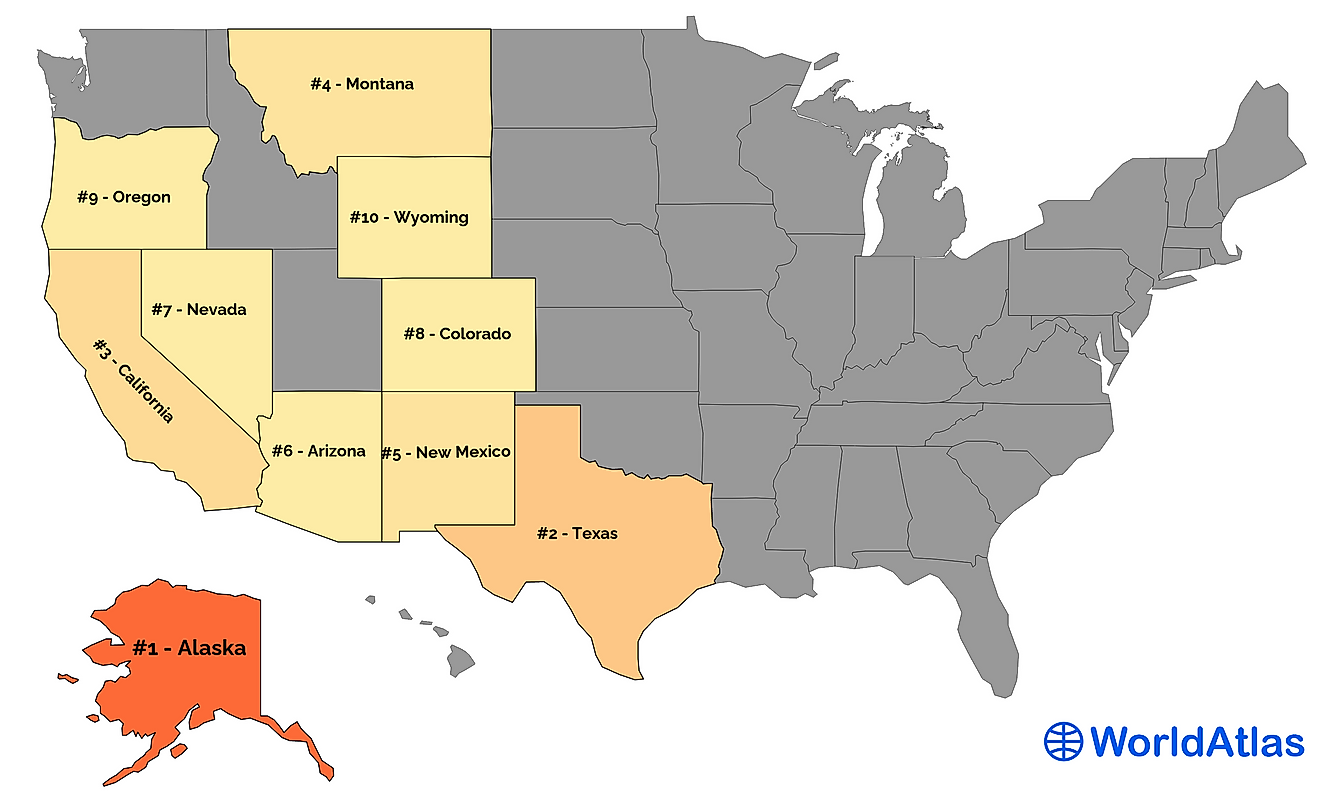
By total area, encompassing both land and water, California spans approximately 163,695 square miles (423,970 square kilometers). This places it as the third-largest state in the United States. The undisputed champion in terms of sheer size is Alaska, which dwarfs all other states with an astounding 665,384 square miles, more than four times the size of California. Following Alaska is Texas, the second-largest state, measuring approximately 268,596 square miles.
While not the largest, California’s third-place ranking still positions it as an exceptionally vast state. To put its size into perspective, if California were a country, it would be larger than many nations around the world. This expansive area allows for an incredible range of geographical features and distinct regions, from arid deserts to snow-capped mountains, and a lengthy coastline.
Defining “Biggest”: Area vs. Influence
The confusion regarding California’s size often arises from a conflation of geographical area with other metrics of “bigness.” California is, in fact, the most populous state in the United States, with nearly 40 million residents. This massive population, coupled with its status as the world’s fifth-largest economy, its cultural impact, and its pioneering spirit in technology and entertainment, contribute to an overwhelming sense of scale. The sheer diversity of its landscapes, which we will explore, also contributes to the feeling that one could travel endlessly within its borders, encountering entirely new environments. Thus, while not the largest by square mileage, California’s “bigness” is undeniably felt through its demographic weight, economic might, and the vastness of its diverse geographical landmarks.
A Tapestry of Natural Landmarks: California’s Diverse Geography
The true allure of California’s scale is best appreciated through its extraordinary collection of natural landmarks. From towering peaks to scorching deserts, the state’s geography is a testament to its immense and varied landscape.
Majestic Mountains and Valleys
Central to California’s geography are its magnificent mountain ranges. The Sierra Nevada, a formidable granite range stretching over 400 miles, dominates the eastern part of the state. This range is home to Mount Whitney, the highest peak in the contiguous United States, soaring to 14,505 feet (4,421 meters). The Sierra Nevada is also the location of Yosemite National Park, an iconic landmark renowned globally for its dramatic granite cliffs like El Capitan and Half Dome, its giant sequoia groves, and breathtaking waterfalls. Further north, the Cascade Range extends into California, featuring volcanic peaks like Mount Shasta, an imposing landmark that stands as a solitary sentinel.
Nestled between the Coast Ranges to the west and the Sierra Nevada to the east lies the Central Valley, a vast, fertile agricultural basin. This immense valley, roughly 450 miles long and 50 miles wide, is one of the most productive agricultural regions in the world. While not a dramatic natural landmark in the traditional sense, its sheer scale and ecological significance as a wetland and agricultural powerhouse make it a defining geographical feature of the state.
Along the state’s western edge, the Coast Ranges parallel the Pacific Ocean, creating a rugged and scenic backdrop to the state’s famous coastline. This range is characterized by Redwood forests in the north and the dramatic cliffs and winding roads of Big Sur further south, a true landmark of coastal grandeur.
Deserts, Canyons, and Unique Geological Formations
East of the Sierra Nevada, California’s landscape transitions dramatically into vast desert ecosystems. The Mojave Desert, covering a significant portion of southeastern California, is a stark yet beautiful landmark characterized by unique flora like the Joshua Tree, volcanic formations, and expansive dry lake beds. Within the Mojave lies Death Valley National Park, a place of extreme heat and remarkable geological features. This park is home to Badwater Basin, the lowest point in North America at 282 feet (86 meters) below sea level, offering a surreal landscape of salt flats, colorful canyons, and sculpted badlands.
Further south, Joshua Tree National Park serves as another iconic desert landmark, where the Mojave and Colorado Deserts converge. It is famed for its rugged rock formations, dramatic desert landscapes, and the peculiar, tree-like Joshua Trees that dot the terrain. These desert environments, with their vast open spaces and extreme conditions, underscore the sheer scale of California’s geographical diversity.
Coastal Wonders and Aquatic Features
California’s extensive interface with the Pacific Ocean gives rise to some of its most famous and beloved landmarks, from iconic beaches to serene lakes and mighty rivers.
The Iconic Pacific Coastline
Stretching for approximately 840 miles (1,350 kilometers) along the western edge of the state, California’s Pacific Coastline is a landmark in itself, renowned for its incredible variety. From the rugged cliffs and misty Redwood forests of the north coast to the sun-drenched beaches of Southern California, it offers a continuous panorama of natural beauty. Notable coastal landmarks include the dramatic sea arches and pristine beaches of Point Reyes National Seashore, the bustling marine ecosystems of Monterey Bay, and the iconic golden sands of Malibu.
The coastline also encompasses significant bays and estuaries, essential for both ecology and commerce. San Francisco Bay, one of the largest estuaries in the Americas, is a crucial landmark, defining the geography of the San Francisco metropolitan area and serving as a vital natural harbor. Its waters and surrounding wetlands provide critical habitats and offer stunning vistas, with landmarks like Alcatraz Island rising from its depths.
Lakes, Rivers, and Waterways
Beyond its ocean frontage, California is crisscrossed and dotted with significant inland aquatic landmarks. Lake Tahoe, a massive freshwater lake straddling the border with Nevada, is an alpine gem celebrated for its clear blue waters and surrounding mountain scenery. As the largest alpine lake in North America, its deep waters and pristine environment make it a natural landmark of immense beauty and ecological importance.
The state’s two primary rivers, the Sacramento River in the north and the San Joaquin River in the south, converge to form the Sacramento-San Joaquin Delta before emptying into San Francisco Bay. These river systems are vital landmarks, shaping the state’s agriculture, ecology, and history. Additionally, the mighty Colorado River forms part of California’s southeastern border, its waters being a crucial resource for the arid regions of the state and beyond. These waterways are not just sources of life but are also natural landmarks that have carved the land and supported diverse ecosystems for millennia.
The Influence of Scale: Why California’s Size Matters for its Landmarks
The sheer geographical scale of California, even if not the absolute largest, is a fundamental factor in the proliferation and grandeur of its natural and historical landmarks. Its vastness allows for ecological diversity and the preservation of significant natural heritage.
Protecting Vast Ecosystems
California’s expansive territory has enabled the establishment and protection of an extraordinary network of national parks, state parks, and wilderness areas. These protected lands safeguard diverse ecosystems, from the ancient Redwood forests of Redwood National and State Parks in the north to the unique desert landscapes of Anza-Borrego Desert State Park in the south. The state’s size means that vast stretches of wilderness, mountain ranges, and coastlines have been preserved, allowing for the continuation of critical biodiversity hot spots and providing unparalleled opportunities to experience untouched nature. These protected areas are, in themselves, monumental landmarks, preserving natural processes and offering glimpses into the state’s ancient past.
The Grandeur of Diversity
The most profound impact of California’s size is arguably the breathtaking diversity it encompasses within a single political boundary. Within its considerable area, one can find extreme contrasts: the highest peak in the contiguous United States (Mount Whitney) and the lowest point in North America (Badwater Basin); arid deserts and lush rainforests; active volcanoes and serene coastlines. This incredible range of climates, topographies, and ecosystems means that the concept of a “Californian landmark” is not singular but represents an entire spectrum of natural wonders. From ancient geological formations that tell the story of Earth’s powerful forces to delicate ecosystems teeming with unique species, the state’s vastness ensures that its landscape is a living museum of natural history and unparalleled beauty.
In conclusion, while California may not be the largest state by landmass, its geographical dimensions are undeniably immense, placing it among the biggest in the United States. More significantly, this vastness has sculpted a landscape teeming with some of the world’s most iconic and diverse natural landmarks. From the majestic peaks of the Sierra Nevada to the scorching depths of Death Valley and the picturesque expanses of its Pacific Coastline, California’s geological tapestry is a testament to its profound natural grandeur. It is this unparalleled collection of natural features that truly makes California feel like one of the biggest and most significant states, a treasure trove of monumental landscapes and irreplaceable natural heritage.
LifeOutOfTheBox is a participant in the Amazon Services LLC Associates Program, an affiliate advertising program designed to provide a means for sites to earn advertising fees by advertising and linking to Amazon.com. Amazon, the Amazon logo, AmazonSupply, and the AmazonSupply logo are trademarks of Amazon.com, Inc. or its affiliates. As an Amazon Associate we earn affiliate commissions from qualifying purchases.