
Navigating the legal landscape of firearm ownership and carry, especially when traveling, is a crucial aspect of responsible gun ownership. For those planning a trip to the breathtaking scenery of Colorado, a common question arises: Is Colorado a constitutional carry state? This inquiry is fundamental for residents and visitors alike who wish to understand their rights and responsibilities regarding firearms in the Centennial State. Constitutional carry, also known as permitless carry, is a legal framework that allows individuals to carry firearms, openly or concealed, without needing a specific permit or license. Understanding if Colorado adheres to this principle is vital for planning your travels and ensuring you remain within legal boundaries.

The discussion around constitutional carry in Colorado is nuanced, influenced by evolving legislation and judicial interpretations. While the term “constitutional carry” often implies an unfettered right to carry, state laws can still impose certain restrictions, such as age requirements, prohibitions on carrying in specific locations, or rules regarding reciprocity with other states. Therefore, a simple yes or no answer doesn’t fully capture the intricacies of Colorado’s firearm laws. This article aims to delve into the specifics, providing clarity for travelers and residents interested in the current status of constitutional carry in Colorado.
Understanding the Nuances of Firearm Carry in Colorado
Before delving into the specifics of constitutional carry, it’s important to establish a baseline understanding of firearm laws in general. In the United States, the Second Amendment to the Constitution protects the right of the people to keep and bear arms. However, this right is not absolute and is subject to regulation by both federal and state governments. States have adopted a variety of approaches to regulating firearm carry, ranging from very permissive to highly restrictive.
Colorado’s approach to firearm laws has seen changes over time, reflecting a broader national conversation. The concept of “constitutional carry” suggests that the right to carry a firearm is inherent and does not require government permission in the form of a permit. This contrasts with “shall-issue” or “may-issue” permit systems, where an individual must apply for and be granted a permit to carry a concealed weapon. Open carry, the practice of carrying a firearm in plain view, also has its own set of regulations that can vary significantly from concealed carry.
The debate surrounding firearm laws often centers on balancing the rights of law-abiding citizens to self-defense with public safety concerns. Proponents of constitutional carry argue that requiring permits infringes upon the Second Amendment rights of responsible citizens and creates unnecessary barriers, particularly for those who travel frequently between states with different permit requirements. Opponents, conversely, often express concerns that permitless carry could lead to an increase in gun violence and make it more difficult for law enforcement to identify individuals who are legally permitted to carry firearms.
Open Carry in Colorado
Open carry laws in Colorado have historically been a key aspect of the state’s firearm regulations. Generally speaking, Colorado does not require a permit for open carry of a handgun. This means that an individual who is legally allowed to possess a handgun can carry it in plain view in most public places without needing a concealed carry permit. However, this right is not without limitations.
For instance, there are restrictions on where firearms can be carried, regardless of whether they are open or concealed. These prohibited locations often include federal buildings, courthouses, schools, polling places on election day, and private property where the owner has posted signs prohibiting firearms. It’s crucial for anyone open carrying a firearm in Colorado to be aware of these restricted areas to avoid accidental violations.
Furthermore, while open carry is generally permitted, the manner in which a firearm is carried can sometimes lead to misunderstandings or even cause for concern among the public. Law enforcement officers may approach an individual openly carrying a firearm to ensure public safety and assess the situation. It is advisable for individuals open carrying to be cooperative and aware of their surroundings. The intent of open carry laws is to allow for the visible display of a firearm, but responsible carriage involves being mindful of the impact on others and adhering strictly to all applicable laws.
Concealed Carry in Colorado
The question of concealed carry in Colorado is where the concept of constitutional carry becomes most relevant. For many years, Colorado operated under a “shall-issue” system for concealed carry permits. This meant that individuals who met certain criteria, such as being of legal age, having no felony convictions, and completing a training course, could obtain a permit to carry a concealed handgun. The sheriff’s office was generally required to issue a permit if the applicant met the statutory requirements.
However, the landscape of concealed carry in Colorado has evolved. In 2021, Colorado enacted a law that strengthened some firearm regulations, but it did not eliminate constitutional carry. In fact, Colorado is widely considered a constitutional carry state for both open and concealed carry, meaning that a permit is not required to carry a concealed handgun for individuals who are legally allowed to possess one. This allows residents and visitors who meet the age and legal possession requirements to carry a handgun, concealed, without needing to obtain a separate permit.
The age requirement for carrying a handgun in Colorado is 18 years old. However, federal law prohibits licensed gun dealers from selling handguns to anyone under 21. For concealed carry without a permit, individuals must be 18 years or older and legally eligible to possess a firearm. This is a significant aspect of Colorado’s firearm laws, aligning it with a growing number of states that recognize permitless carry. It’s essential to reiterate that even in a constitutional carry state, there are still regulations and prohibitions regarding where firearms can be carried, as well as responsibilities for safe handling and storage.
Specific Locations and Prohibited Areas
While Colorado may be considered a constitutional carry state, this does not grant an unrestricted right to carry firearms in every location. Understanding the specific places where firearms are prohibited is paramount for lawful carrying. These restrictions are in place to enhance safety in sensitive environments and are enforced at both the federal and state levels.
Federal Prohibitions

Federal law imposes restrictions on carrying firearms in certain locations, regardless of state laws. These include:
- Federal Buildings: This encompasses a wide range of facilities, including post offices, federal courthouses, and federal office buildings.
- Airports: Firearms are generally prohibited in sterile areas of airports, such as beyond security checkpoints.
- National Parks and Monuments: While specific regulations can vary, many federal lands have restrictions on firearms. It is always advisable to check the specific rules for the park or monument you plan to visit.
- Military Installations: Carrying firearms on military bases is typically restricted.
It’s crucial to note that ignorance of these federal prohibitions is not a valid defense against a charge of illegal firearm possession.
State and Local Prohibitions
In addition to federal laws, Colorado state law and local ordinances also designate specific areas where firearms are prohibited. These often overlap with federal restrictions but can also include:
- Schools and Universities: Firearms are generally prohibited on the grounds of K-12 schools and in most university buildings, unless specific exceptions apply for authorized personnel.
- Courthouses: State courthouses are typically firearm-free zones.
- Law Enforcement Facilities: Buildings housing police departments or sheriff’s offices are usually off-limits for firearms.
- Private Property: While private property owners have the right to prohibit firearms on their premises, they must clearly communicate this restriction, typically through posted signage. If you are on private property and are asked to leave due to carrying a firearm, you must comply.
- Areas Under Temporary Prohibition: Law enforcement or security personnel may temporarily prohibit firearms at specific events or locations for public safety reasons.
Important Considerations for Travelers:
When traveling to Colorado, especially if you plan to engage in activities like visiting Rocky Mountain National Park, exploring the historic streets of Denver, or staying at a resort like the Broadmoor, it is imperative to be aware of these firearm regulations. The state’s constitutional carry status simplifies the process of carrying a firearm for self-defense, but it does not negate the responsibility to know and adhere to all prohibited locations.
For tourists planning a trip that might include hiking in the Colorado Rockies, visiting ski resorts like Aspen or Vail, or exploring cities like Boulder or Colorado Springs, understanding these rules is as important as knowing the best trails or the most charming hotels. Responsible gun ownership involves not only knowing your rights but also understanding and respecting the laws of the place you are visiting. Always err on the side of caution and research specific regulations for any location you intend to visit.
Reciprocity and Travel Across State Lines
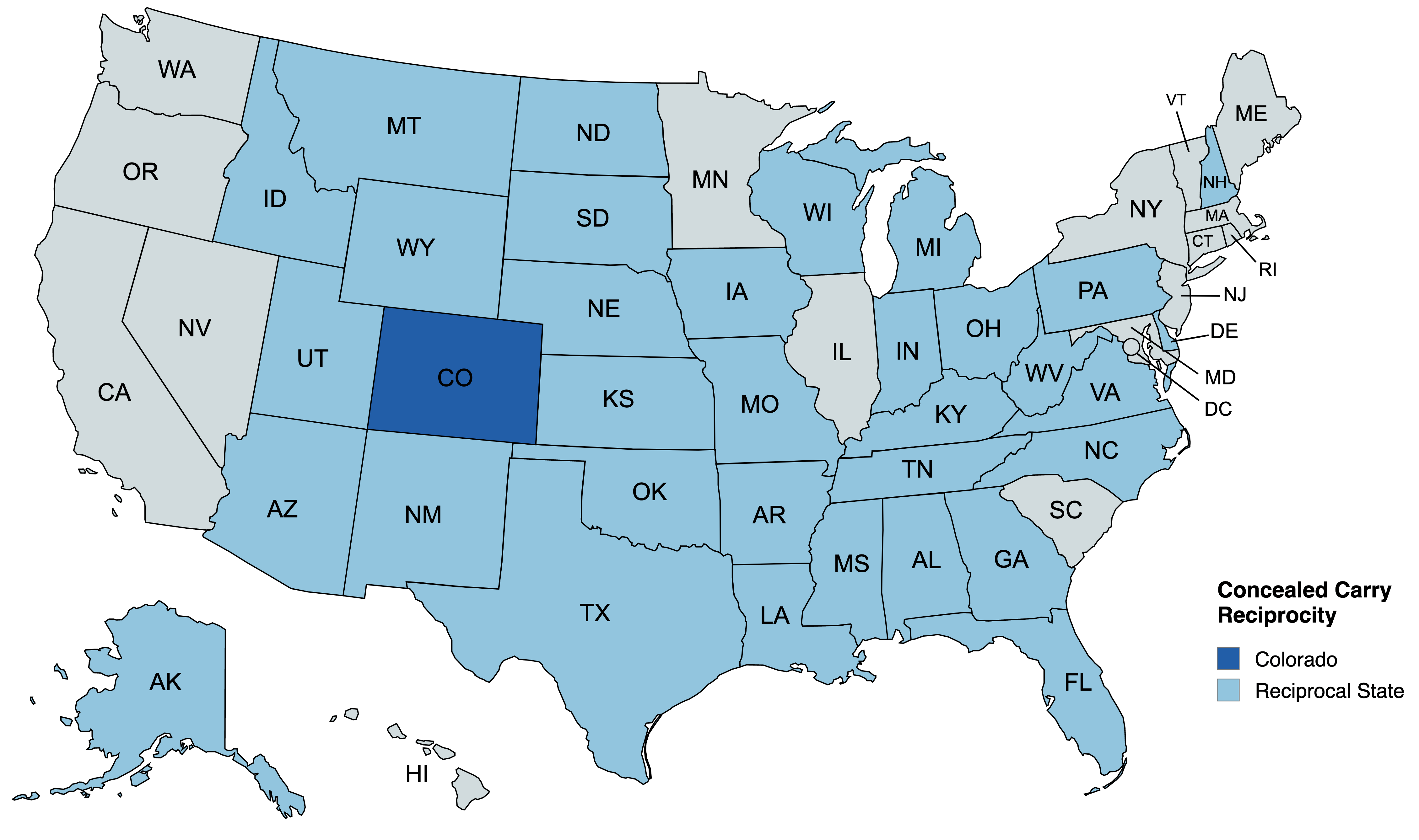
Understanding Colorado’s constitutional carry status is crucial for residents and visitors alike. However, for those traveling to or from Colorado, the concept of reciprocity becomes a significant consideration. Reciprocity refers to the mutual recognition of firearm permits or carry rights between different states.
As Colorado is a constitutional carry state, it allows individuals who are legally eligible to carry firearms to do so without a permit. This simplifies carry for those residing within Colorado or visiting from other states that also have constitutional carry. However, the situation becomes more complex when traveling to states that do require permits for concealed carry.
Traveling From Colorado to Other States
If you are a resident of Colorado or have been legally carrying a firearm in Colorado without a permit, and you plan to travel to another state, you must understand that state’s firearm laws. While your right to carry in Colorado is permitless, other states may have different requirements. For example, if you travel from Colorado to a state that requires a concealed carry permit, you will need to obtain that permit to legally carry a concealed firearm in that state.
Many states have reciprocity agreements, meaning they will recognize a concealed carry permit issued by another state. Colorado does issue concealed handgun permits, and these permits are recognized in many other states. If you choose to obtain a Colorado concealed handgun permit, it can provide you with carry rights in states that have reciprocity with Colorado’s permit system. However, even with a permit, it is still essential to be aware of and abide by the specific firearm laws of any state you visit.
Traveling To Colorado From Other States
For individuals traveling to Colorado, the fact that Colorado is a constitutional carry state generally means that if you are legally permitted to possess a firearm in your home state, you can likely carry it in Colorado, subject to Colorado’s laws and restrictions. This is because Colorado recognizes the right of its residents and lawful visitors to carry firearms without a permit.
However, this does not mean that all firearm laws from your home state are automatically carried over. You must comply with Colorado’s age requirements (18 years old for handguns) and be aware of Colorado’s prohibited locations. If your home state has more restrictive laws than Colorado, you must adhere to Colorado’s less restrictive laws while in the state. Conversely, if your home state has less restrictive laws, you must still abide by Colorado’s regulations, especially regarding prohibited areas.
The most prudent approach for anyone traveling with a firearm is to research the specific laws of each state they will be passing through and visiting. Resources such as the Giffords Law Center or the U.S. Concealed Carry Association (USCCA) can provide valuable information on state-by-state firearm laws. Staying informed ensures that your travels through states like Wyoming, Kansas, Nebraska, Oklahoma, New Mexico, and Utah, all of which border Colorado, are conducted safely and legally. Responsible firearm ownership includes a commitment to understanding and respecting the diverse legal frameworks governing firearms across the nation.
LifeOutOfTheBox is a participant in the Amazon Services LLC Associates Program, an affiliate advertising program designed to provide a means for sites to earn advertising fees by advertising and linking to Amazon.com. Amazon, the Amazon logo, AmazonSupply, and the AmazonSupply logo are trademarks of Amazon.com, Inc. or its affiliates. As an Amazon Associate we earn affiliate commissions from qualifying purchases.