
The landscape of personal relationships and legal recognition of unions has evolved significantly over time, and few areas are as frequently misunderstood as common law marriage. For those building a life, planning a move, or simply seeking clarity on their status within the Yellowhammer State, understanding Alabama‘s stance on common law marriage is crucial for lifestyle planning and securing one’s future. While once a viable path to marital recognition, the legal framework in Alabama underwent a pivotal transformation, impacting countless individuals and families.
The Shifting Sands of Marital Law in Alabama
For generations, common law marriage held a distinct place in American jurisprudence, including within Alabama. It provided a pathway for couples to be legally recognized as married without the necessity of a formal ceremony or license, provided certain criteria were met. This historical precedent reflected a time when formal ceremonies might have been less accessible or common, and societal norms often accepted cohabitation with intent as a legitimate union. However, as society modernized and legal structures became more formalized, many states, including Alabama, reevaluated this practice. The shift wasn’t sudden but rather a gradual evolution driven by a desire for greater legal clarity, reduced litigation, and a more uniform approach to defining marital status. This change profoundly impacts lifestyle choices, particularly for couples considering long-term commitments or planning to relocate to Alabama.
The journey to the current legal standing in Alabama wasn’t without its complexities. Before the ban, common law marriage often arose from situations where couples genuinely intended to be married and presented themselves to the community as such. The legal recognition of these unions carried the same weight as ceremonial marriages, affording partners identical rights and responsibilities concerning property, inheritance, spousal support, and child custody. This meant that individuals in common law marriages were entitled to the same protections and subject to the same obligations as those who had gone through a formal wedding. This historical context is vital, as it continues to affect specific populations within the state, even after the legislative changes. Understanding these prior stipulations helps illuminate the ongoing relevance of this legal concept for certain residents of Alabama.
Understanding the Historical Definition
Historically, for a common law marriage to be recognized in Alabama (prior to the ban), three primary elements had to be present:
- Capacity to Marry: Both parties had to be legally eligible to marry, meaning they were of legal age, not already married to someone else, and not closely related.
- Present Intent to Be Married: This was perhaps the most critical element. Both individuals must have intended to be married at that moment, not at some future date. It wasn’t about planning a wedding; it was about the present declaration of being husband and wife.
- Public Acknowledgment/Holding Out: The couple must have held themselves out to the public as husband and wife. This could be demonstrated in various ways, such as using the same last name, filing joint tax returns, referring to each other as “my husband” or “my wife,” sharing bank accounts, or living together as a married couple.
The absence of any one of these elements would typically preclude the formation of a common law marriage. Proving these elements often fell to the couple or their estates, frequently leading to complex and emotionally charged legal disputes, particularly in cases of separation or death. This complexity was a significant factor driving the legislative changes that eventually took effect across the state.
The Ban: Life After January 1, 2017
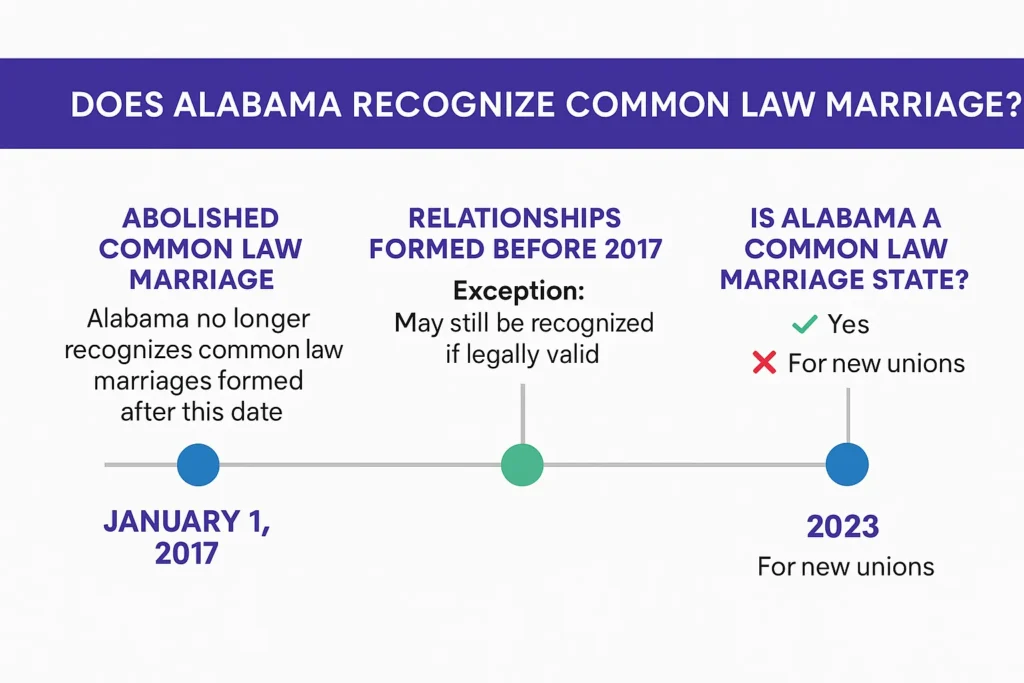
The definitive answer to the question “Is common law marriage legal in Alabama?” is generally “no” for marriages initiated after a specific date. On January 1, 2017, a new law went into effect in Alabama that prospectively abolished common law marriage. This legislative act, signed into law on May 27, 2016, marked a significant shift in the state’s approach to marital recognition. For any relationship that began or intended to become a common law marriage on or after January 1, 2017, the legal mechanism of common law marriage is no longer available. Couples wishing to be recognized as married in Alabama must now obtain a marriage license and solemnize their union through a formal ceremony. This change simplifies the process for future unions but introduces new considerations for those navigating existing relationships.
Crucially, the law was prospective, meaning it did not invalidate common law marriages that were legally established before January 1, 2017. If a couple met all the requirements for a common law marriage in Alabama before this date, their marriage remains valid and fully recognized by the state. This distinction is vital for lifestyle planning, estate considerations, and securing benefits for long-term residents who may have established their unions many years ago without a formal ceremony. Such couples retain all the rights and responsibilities of ceremonially married spouses. Proving the existence of such a marriage, however, still relies on demonstrating the three historical elements discussed earlier, which can be challenging without clear documentation or consistent public acknowledgment. Therefore, for those in pre-2017 common law marriages, maintaining evidence of their marital intent and public presentation remains a prudent lifestyle choice.
Implications for Existing Common Law Marriages
For couples who genuinely formed a common law marriage in Alabama prior to January 1, 2017, their legal status as married individuals remains intact. This means they are fully entitled to:
- Spousal Inheritance Rights: Upon the death of one spouse, the surviving common law spouse has the same inheritance rights as a ceremonially married spouse.
- Property Rights: Jointly acquired property during the marriage is subject to equitable division upon separation or divorce, similar to formal marriages.
- Healthcare Decision-Making: Common law spouses typically have the right to make healthcare decisions for an incapacitated partner.
- Social Security and Other Benefits: Eligibility for spousal benefits from Social Security, pensions, and other government or private programs is maintained, provided the common law marriage can be proven.
- Tax Benefits: Common law spouses can continue to file joint tax returns.
It is highly advisable for these couples to gather and maintain any evidence that supports their common law marriage status. This could include shared leases, joint bank accounts, insurance policies naming each other as spouses, tax returns, photographs, and declarations from friends or family confirming their public presentation as a married couple. Such documentation can be invaluable for legal and administrative purposes, securing their lifestyle and financial future.

Navigating Relationship Commitments in the Yellowhammer State Today
For couples initiating new relationships or considering long-term cohabitation in Alabama today, the legal landscape is clear: common law marriage is no longer an option. This necessitates a more intentional approach to formalizing commitments and protecting individual interests. The lack of common law marriage means that simply living together, even for many years and with the intent to be a permanent couple, does not confer the legal protections or obligations of marriage. This can have significant implications for lifestyle planning, particularly regarding shared assets, debts, healthcare, and parental rights.
For those who choose not to undergo a formal marriage ceremony, it becomes essential to consider alternative legal instruments to define their relationship and protect their interests. Without the default protections offered by marriage, cohabiting couples in Alabama might find themselves in legally ambiguous situations should their relationship dissolve or one partner become incapacitated or pass away. Proactive legal planning can mitigate these risks and provide peace of mind, aligning legal frameworks with personal lifestyle choices. This foresight is especially critical for couples blending families, acquiring significant assets, or planning for retirement together.
Alternatives for Unmarried Couples in Alabama
For couples living together without the legal recognition of marriage, several legal tools can help manage their shared lives and future. These alternatives are integral to sound lifestyle planning in the absence of common law marriage:
-
Cohabitation Agreements: This is perhaps the most comprehensive tool for unmarried couples. A cohabitation agreement, sometimes called a “living together agreement” or “domestic partnership agreement,” is a legally binding contract that outlines the rights and responsibilities of each partner. It can address various aspects of their shared life, including:
- Property Ownership: How real estate, vehicles, and other significant assets acquired during the relationship will be divided upon separation.
- Financial Responsibilities: How household expenses, debts, and other financial obligations will be shared.
- Spousal Support (or lack thereof): Explicitly stating whether one partner will provide financial support to the other if the relationship ends.
- Bank Accounts and Investments: How joint and individual accounts will be managed.
- Pets: Custody and care arrangements for shared pets.
- It is crucial for both parties to seek independent legal counsel when drafting such an agreement to ensure it is fair, enforceable, and reflects their true intentions.
-
Wills and Estate Planning: Without marriage, a surviving partner does not automatically inherit from their deceased partner’s estate (unless explicitly named in a will or other estate planning documents). Therefore, crafting a comprehensive will, setting up trusts, and designating beneficiaries on financial accounts (life insurance, retirement accounts) are paramount to ensure assets are distributed according to the deceased partner’s wishes. This prevents the state’s intestacy laws (rules for dying without a will) from dictating inheritance, which typically favors blood relatives over an unmarried partner.
-
Durable Power of Attorney for Healthcare: This legal document allows an individual to designate another person (their partner) to make medical decisions on their behalf if they become incapacitated. Without this, healthcare providers may default to blood relatives, even if the partner has been the primary caregiver.
-
Durable Power of Attorney for Finances: Similar to the healthcare power of attorney, this document grants a partner the authority to manage financial affairs if one becomes unable to do so. This can prevent significant disruptions in bill payments, access to funds, and management of shared investments.
-
Joint Ownership of Property: For shared homes or other significant assets, holding title as “joint tenants with right of survivorship” ensures that the surviving partner automatically inherits the deceased partner’s share without going through probate. This is a common and effective strategy for property ownership among unmarried couples.
Implementing these legal strategies ensures that the lifestyle choices of unmarried couples in Alabama are protected and respected, providing clarity and security for the future.

Planning for the Future: Why This Matters for Alabama Residents and Newcomers
The abolition of common law marriage in Alabama has profound implications for lifestyle planning, not just for long-term residents but especially for those considering relocating to the state. Individuals and couples moving from states where common law marriage is still recognized might mistakenly assume similar laws apply in Alabama. This misunderstanding can lead to significant legal and financial vulnerabilities. Awareness of Alabama’s specific laws is a critical component of informed relocation and settlement.
For couples who move to Alabama and have a valid common law marriage established in another state, Alabama will generally recognize that marriage under the principle of comity, provided it was legally valid where it was formed. However, proving such a marriage can still present challenges, especially if the couple later separates or one partner dies. Therefore, even valid out-of-state common law marriages should be meticulously documented and perhaps even formally converted to ceremonial marriages if possible, to avoid future complications in Alabama.
Ultimately, whether you are a lifelong resident of Alabama or contemplating a move to vibrant cities like Birmingham, Montgomery, or Mobile, understanding the specifics of marital law is an essential part of responsible lifestyle management. For those seeking the full legal protections and benefits of marriage, a formal ceremony is now the only path in Alabama. For those choosing to remain unmarried, proactive legal planning through cohabitation agreements, wills, and powers of attorney is not just recommended, but vital. These tools empower individuals to define their relationships and secure their futures, ensuring their personal choices are legally honored and protected. Embracing this legal foresight is key to a stable and secure lifestyle in the Yellowhammer State.
LifeOutOfTheBox is a participant in the Amazon Services LLC Associates Program, an affiliate advertising program designed to provide a means for sites to earn advertising fees by advertising and linking to Amazon.com. Amazon, the Amazon logo, AmazonSupply, and the AmazonSupply logo are trademarks of Amazon.com, Inc. or its affiliates. As an Amazon Associate we earn affiliate commissions from qualifying purchases.