
Understanding time zones is a fundamental aspect of planning any trip, especially when navigating the diverse landscapes of the United States. For travelers heading to Detroit, the question of whether it observes Eastern Standard Time is not merely a geographical curiosity but a practical necessity. This inquiry delves into the temporal identity of Michigan’s largest city, exploring its adherence to Eastern Time, the implications for visitors, and how this designation fits into the broader tapestry of American time zones.
Navigating Detroit’s Temporal Landscape
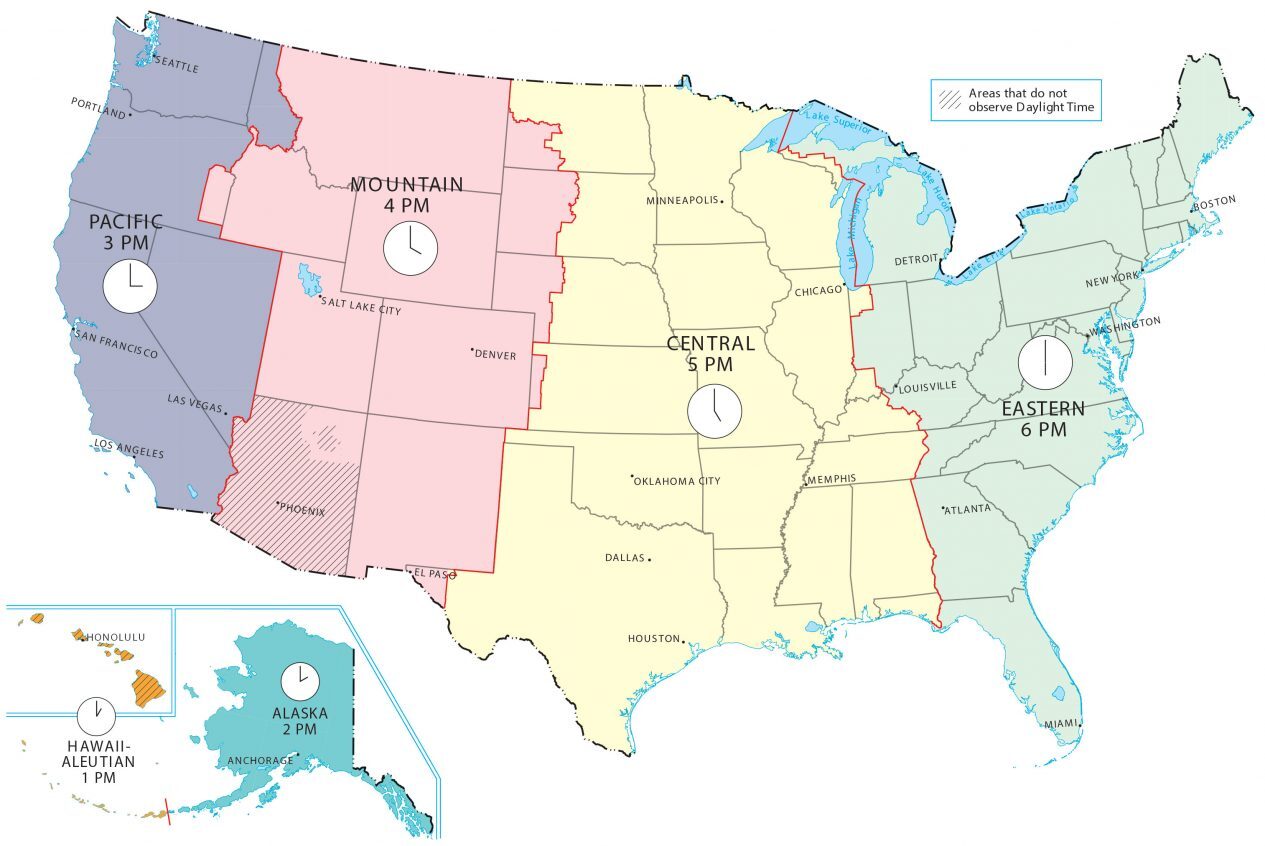
Detroit proudly resides within the Eastern Time Zone, a fact that simplifies logistical planning for many who are accustomed to this timekeeping system. The Eastern Time Zone spans a significant portion of the eastern half of the United States, encompassing major metropolitan areas like New York City, Washington D.C., and Miami. This broad reach means that many international travelers, particularly those arriving from Europe, will find the time in Detroit to be a familiar reference point, even if the specific offset from Coordinated Universal Time (UTC) requires adjustment.
Daylight Saving Time in the Motor City
Like much of the United States, Detroit observes Daylight Saving Time (DST). This means that for a portion of the year, the city operates on Eastern Daylight Time (EDT), which is UTC-4, rather than Eastern Standard Time (EST), which is UTC-5. The transition typically occurs on the second Sunday in March, when clocks are moved forward by one hour, and reverts back on the first Sunday in November. This annual shift is a critical detail for travelers who may be coordinating meetings, booking flights, or arranging transportation, as the effective “local time” changes.
The Rationale Behind DST
The practice of Daylight Saving Time has a long and somewhat debated history. The primary stated goal is to make better use of daylight during the warmer months, extending it into the evening hours. Proponents argue that this can lead to energy savings, as less artificial light is needed in the evenings, and can also encourage outdoor activities. Critics, however, point to potential disruptions to sleep patterns, impacts on agriculture, and complications for industries that operate on fixed schedules. Regardless of the ongoing discussion, its observance in Detroit means that visitors must remain aware of the seasonal adjustments.
Implications for Travelers
The consistent adherence to the Eastern Time Zone in Detroit simplifies many aspects of travel.
Flight Schedules and Connections
When booking flights to Detroit Metropolitan Wayne County Airport (DTW), all schedules will be listed in Eastern Time. This eliminates the confusion that can arise when traveling between time zones that have different DST observances or entirely different standard times. If your departure city is in a different time zone, the flight duration will factor in the time difference, but the arrival time at DTW will be unambiguously in Eastern Time.
Business and Appointments

For those traveling to Detroit for business, understanding the local time is paramount. Meetings scheduled with local businesses, partners, or for conferences will all be in Eastern Time. This synchronicity facilitates seamless communication and scheduling, preventing costly misunderstandings. If you are coordinating with individuals in other time zones, simply subtract or add the appropriate number of hours based on their location relative to Eastern Time.
Exploring Attractions and Activities
Detroit offers a wealth of attractions, from the historic Ford Piquette Avenue Plant Museum to the vibrant Detroit Institute of Arts. The opening and closing times of museums, restaurants, entertainment venues, and tours will all be expressed in Eastern Time. This consistency ensures that visitors can confidently plan their itineraries without the added complexity of time zone conversions for local activities. For example, a visit to the Motown Museum or a Tigers baseball game at Comerica Park will operate on the standard Eastern Time clock.
Understanding the Broader Time Zone Context
Detroit’s position within the Eastern Time Zone places it among a significant group of states in the eastern half of the United States. This zone is defined by its geographical longitude and is a fundamental element of the nation’s temporal organization.
The Eastern Time Zone’s Reach
The Eastern Time Zone is the most populous time zone in the United States, serving as the temporal hub for the Northeast and much of the Southeast. It extends westward to include states like Michigan, where Detroit is located, and parts of the Midwest. This broad geographical coverage is a testament to the historical development of timekeeping, which initially aimed to standardize time within regions for railway operations and later for general public convenience.
Contrast with Other U.S. Time Zones
The United States is divided into six primary time zones, each with its own standard time:
- Atlantic Standard Time (AST) (UTC-4)
- Eastern Standard Time (EST) (UTC-5)
- Central Standard Time (CST) (UTC-6)
- Mountain Standard Time (MST) (UTC-7)
- Pacific Standard Time (PST) (UTC-8)
- Alaska Standard Time (AKST) (UTC-9)
- Hawaii-Aleutian Standard Time (HST) (UTC-10)
Travelers moving westward from Detroit will encounter these different time zones. For instance, cities like Chicago are in the Central Time Zone, meaning they are one hour behind Detroit. Further west, Denver observes Mountain Time, two hours behind, and Los Angeles operates on Pacific Time, three hours behind. Understanding these differences is crucial for any cross-country travel within the United States.

The Practicality of Uniformity
While the existence of multiple time zones can present challenges, the general adherence to standard time within each zone, and the widespread adoption of Daylight Saving Time in most of them, creates a predictable system. For a traveler whose journey begins and ends within the Eastern Time Zone, such as a trip from New York to Detroit or a local exploration within Michigan, the temporal question is straightforward. The city of Detroit is indeed within the Eastern Time Zone, making it a familiar temporal destination for a large segment of the population and a key consideration for efficient travel planning.
LifeOutOfTheBox is a participant in the Amazon Services LLC Associates Program, an affiliate advertising program designed to provide a means for sites to earn advertising fees by advertising and linking to Amazon.com. Amazon, the Amazon logo, AmazonSupply, and the AmazonSupply logo are trademarks of Amazon.com, Inc. or its affiliates. As an Amazon Associate we earn affiliate commissions from qualifying purchases.