
One of the most common questions travelers and business professionals ask when planning a trip to Detroit is about its time zone. Navigating time differences can be tricky, especially in the vast expanse of the United States where multiple time zones are in effect. For those accustomed to the idea that states often fall entirely within a single time zone, Michigan, and specifically its largest city, Detroit, can present a point of confusion. The definitive answer, without further ado, is that Detroit is firmly situated in the Eastern Time Zone (ET). This means it observes Eastern Standard Time (EST) during the cooler months and Eastern Daylight Time (EDT) when Daylight Saving Time is in effect.

Understanding this seemingly simple fact is crucial for anyone planning to visit the Motor City, whether for tourism, business, or family gatherings. From scheduling flights and hotel check-ins to making dinner reservations and attending crucial meetings, being aware of the correct time zone is paramount for a smooth and enjoyable experience. This comprehensive guide will delve into why this question arises, what the implications are for travelers, and how to make the most of your time in Detroit, leveraging insights from travel, accommodation, and lifestyle perspectives.
Unraveling Detroit’s Time Zone: The Definitive Answer
The query about Detroit being in the Central Time Zone often stems from a general lack of familiarity with Michigan’s unique geographical position and the historical decisions that shaped its timekeeping. While it might seem like a minor detail, time zones have significant impacts on our daily lives and especially on travel logistics.
Understanding Eastern Time vs. Central Time
The United States is divided into several standard time zones, from east to west: Eastern Time Zone, Central Time Zone, Mountain Time Zone, and Pacific Time Zone. Each zone is generally one hour different from its neighbor.
- The Eastern Time Zone (ET) covers much of the eastern third of the United States, including major cities like New York City, Miami, and Washington D.C.. During standard time (EST), it is UTC-5, and during Daylight Saving Time (EDT), it is UTC-4.
- The Central Time Zone (CT) is one hour behind ET, covering states like Illinois (home to Chicago), Texas, and Missouri. During standard time (CST), it is UTC-6, and during Daylight Saving Time (CDT), it is UTC-5.
This means that when it’s 10:00 AM in Detroit, it’s 9:00 AM in Chicago. This one-hour difference can significantly impact travel plans, business communications, and even local experiences.
Why the Confusion About Michigan’s Time Zones?
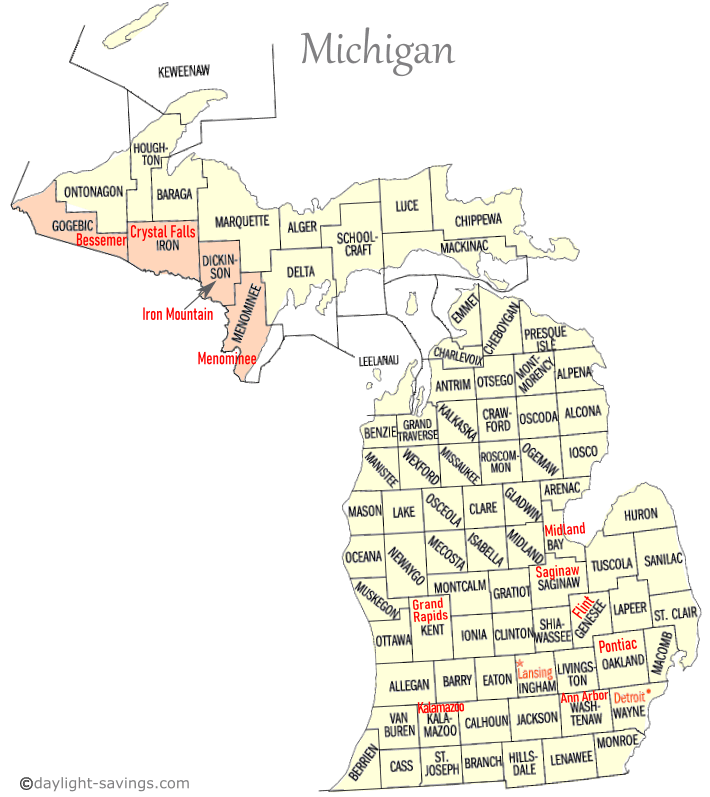
The confusion regarding Michigan’s time zone primarily stems from two factors: its longitude and the distribution of time zones within the state. While most of Michigan operates on Eastern Time, a small portion of its Upper Peninsula, specifically the counties bordering Wisconsin (such as Gogebic, Iron, Dickinson, and Menominee counties), observe Central Time. This split is a practical concession to align these western Upper Peninsula communities with their close commercial and social ties to Wisconsin, which is entirely in the Central Time Zone.
Furthermore, Michigan’s geographical longitude places much of the state, including Detroit, quite far west within the Eastern Time Zone. In fact, the westernmost parts of the Lower Peninsula are west of the 85th meridian, which is often considered the theoretical boundary between ET and CT. This western position can sometimes lead to later sunrises and sunsets compared to other Eastern Time Zone cities further east, reinforcing the feeling for some that it “should” be in Central Time. However, for practical and historical reasons, Detroit and the majority of Michigan remain in the Eastern Time Zone, aligning with neighboring states like Ohio and Indiana, and its Canadian counterpart, Ontario.
Navigating Travel: Time Zone Implications for Visitors to Detroit
Understanding Detroit’s time zone is not merely an academic exercise; it’s a practical necessity for any traveler. From initial planning to on-the-ground experiences, time zone awareness smooths out the journey and prevents frustrating misunderstandings.
Planning Your Itinerary: Flights, Meetings, and Events
When arranging travel to Detroit, every detail related to time needs to be double-checked against the Eastern Time Zone.
- Flights: All arrival and departure times for Detroit Metropolitan Wayne County Airport (DTW) are listed in Eastern Time. If you are flying from a Central Time Zone city like Chicago, remember you’ll effectively “lose” an hour upon arrival. Conversely, if you’re flying from the Pacific Time Zone, you’ll “lose” three hours. Always adjust your internal clock accordingly to avoid missing connecting flights or ground transportation.
- Business Meetings and Conferences: For business travelers, adhering to the correct time zone is critical. Schedule virtual meetings with colleagues in different time zones by clarifying local times for all participants. If you’re attending a conference, ensure your registration and session times are aligned with Eastern Time to prevent missed opportunities.
- Tourism and Leisure Activities: Planning to visit the Henry Ford Museum, catch a show at the Fox Theatre, or see a Detroit Red Wings game at Little Caesars Arena? All opening hours, tour schedules, and event start times will be in Eastern Time. Double-check any pre-booked tickets or reservations to ensure you arrive punctually and make the most of your travel experiences.
- Daylight Saving Time: The shift to and from Daylight Saving Time occurs annually, typically in March and November. Be aware of these dates, as they can cause temporary confusion. While most modern devices automatically update, manually adjusting your clock or verifying times can prevent missed appointments during these transition periods.
Overcoming Time Differences: Jet Lag and Scheduling Tips
While Detroit’s Eastern Time Zone might only be one to three hours ahead for most domestic travelers, even small time shifts can induce mild jet lag or throw off your internal clock.
- Adjust Gradually: If possible, try to shift your sleep schedule by an hour or two a few days before your trip. This pre-adjustment can ease the transition upon arrival.
- Hydrate and Rest: Staying well-hydrated and ensuring you get adequate rest before and during your journey are simple yet effective ways to combat fatigue and help your body adapt to the new time.
- Embrace Natural Light: Upon arrival, expose yourself to natural light during the day, especially in the mornings, to help reset your circadian rhythm. Avoid excessive screen time late at night.
- Plan Buffer Time: Always build in buffer time, especially for your first day. Don’t schedule critical meetings or demanding activities immediately after arrival. Allow yourself an hour or two to check into your accommodation, refresh, and get oriented.
- Use Technology Wisely: Your smartphone or smartwatch will likely adjust to local time automatically, but it’s always good practice to verify. Set alarms for important events in local time and consider using a world clock app to keep track of multiple time zones if you’re coordinating with people in different regions.
Exploring the Motor City: A Guide to Detroit’s Attractions and Lifestyle
Beyond the logistics of time zones, Detroit offers a rich tapestry of history, culture, and innovation, making it a compelling destination for diverse travelers. From its iconic automotive heritage to its vibrant arts scene and revitalized downtown, Detroit provides a unique blend of experiences.
Iconic Landmarks and Cultural Hotspots
Detroit is a city of landmarks, each telling a piece of its storied past and dynamic present.
- The Henry Ford Museum and Greenfield Village: A must-see for anyone interested in American innovation, automotive history, and cultural heritage. You can explore everything from Rosa Parks’ bus to Abraham Lincoln’s chair. Greenfield Village offers a step back in time with historic homes, workshops, and farms.
- Motown Museum: Housed in “Hitsville U.S.A.,” the original headquarters of Motown Records, this museum celebrates the legendary music label and its artists, offering a soulful journey through music history.
- Detroit Institute of Arts (DIA): Home to an extraordinary collection spanning cultures and eras, the DIA is renowned for its Diego Rivera murals and diverse art collections. It’s a cornerstone of the city’s cultural scene.
- Belle Isle Park: A 982-acre island park designed by Frederick Law Olmsted, offering stunning views of the Detroit and Windsor skylines, an aquarium, conservatory, and nature center. It’s perfect for outdoor enthusiasts and families.
- Detroit RiverWalk: Stretching for miles along the Detroit River, this award-winning promenade offers recreational opportunities, green spaces, and views of Canada across the water.
- Campus Martius Park: The heart of downtown Detroit, this lively public space hosts concerts, markets, and an ice rink in winter, surrounded by impressive architecture like the Guardian Building and the Renaissance Center.
Where to Stay: Accommodation Options in Detroit
Detroit’s revitalization has brought a wave of new and refreshed accommodation options, catering to all types of travelers and budgets.
- Luxury Hotels: For those seeking an upscale experience, the Detroit Marriott at the Renaissance Center offers panoramic city and river views from the city’s tallest building. Boutique hotels like The Siren Hotel and Shinola Hotel provide unique, stylish stays with exceptional amenities and service, reflecting Detroit’s renewed sense of design and hospitality. The Detroit Club offers historic luxury in a private club setting.
- Mid-Range and Budget-Friendly: Numerous well-known hotel chains offer comfortable and convenient options throughout downtown and Midtown, ensuring accessibility to attractions. Consider staying in the revitalized neighborhoods for apartments or vacation rentals that offer a local lifestyle experience.
- Casino Hotels: For entertainment and a vibrant atmosphere, hotels like MGM Grand Detroit and MotorCity Casino Hotel combine luxurious stays with gaming, dining, and live performances.
When booking, always consider the proximity to your planned activities and whether the hotel offers amenities like parking, Wi-Fi, and dining options that align with your travel style. Reviews and comparisons on accommodation websites can help you find the perfect fit for your needs, whether you’re looking for a long-term stay or a quick business trip.
A Taste of Detroit: Culinary Experiences and Local Flair
Detroit’s food scene is as diverse and dynamic as its culture, offering everything from classic comfort food to innovative fine dining.
- Detroit-Style Pizza: A culinary icon, this square pizza with a thick, crispy crust, caramelized cheese edges, and sauce on top is a must-try. Local institutions like Buddy’s Pizza claim its origins.
- Coney Dogs: A regional specialty, the Detroit Coney dog is a hot dog topped with a hearty, savory meat sauce, yellow mustard, and chopped onions. Lafayette Coney Island and American Coney Island, two rival establishments located side-by-side, are essential stops for this classic.
- Emerging Food Scene: Beyond the classics, Detroit boasts an array of modern restaurants, farm-to-table eateries, and diverse international cuisines, particularly in areas like Corktown and Midtown. Don’t miss the vibrant Eastern Market for fresh produce, local goods, and a lively atmosphere, especially on market days.
- Craft Beverages: The city’s craft beer and cocktail scene is thriving, with numerous breweries and distilleries offering unique local flavors. Many establishments feature live music, contributing to Detroit’s rich nightlife.
Beyond the Clock: Maximizing Your Detroit Experience
While the primary question “Is Detroit in Central Time Zone?” is easily answered with a resounding “No,” the implications of understanding Detroit’s placement in the Eastern Time Zone extend far beyond simple timekeeping. It’s about seamless travel, efficient planning, and ultimately, a more enjoyable and stress-free visit to a city that truly rewards exploration.
From Automotive Heritage to Modern Vibrancy
Detroit is a city of transformation, continuously reinventing itself while honoring its profound past. From its legendary role as the birthplace of the automotive industry to its contributions to music and civil rights, the city’s history is deeply woven into its fabric. Today, Detroit buzzes with a youthful energy, characterized by artistic expression, entrepreneurial spirit, and community-driven revitalization. Visiting Detroit means experiencing this dynamic interplay—exploring historic factories one day and vibrant art galleries the next. The city’s blend of industrial grit and cultural refinement makes it a compelling destination for travelers seeking authentic experiences.

Making the Most of Your Stay
Whether you’re visiting for a quick weekend getaway or an extended business trip, planning your time wisely in Detroit is key. With its location in the Eastern Time Zone, you’ll find early starts for exploring museums and late evenings enjoying the city’s culinary delights perfectly accommodated. Remember to factor in travel time between attractions, especially if you’re venturing beyond the downtown core. Utilize local transportation options, ride-sharing services, or rental cars to navigate the city efficiently. Engaging with locals, trying the unique food, and immersing yourself in the music and art scene will undoubtedly enrich your visit.
In conclusion, rest assured that when you set your clock for Detroit, you’ll be operating on Eastern Time. This clarity allows you to focus on what truly matters: discovering the rich history, vibrant culture, and undeniable spirit of this iconic American city. Enjoy your journey to Detroit, where every moment is an opportunity for a new discovery.
LifeOutOfTheBox is a participant in the Amazon Services LLC Associates Program, an affiliate advertising program designed to provide a means for sites to earn advertising fees by advertising and linking to Amazon.com. Amazon, the Amazon logo, AmazonSupply, and the AmazonSupply logo are trademarks of Amazon.com, Inc. or its affiliates. As an Amazon Associate we earn affiliate commissions from qualifying purchases.