
The question “Is Florida a commonwealth state?” often arises from a genuine curiosity about the nuances of governmental structure within the United States. For many, understanding the foundational characteristics of a place is integral to appreciating its lifestyle, its legal landscape, and what makes it unique, whether you’re a long-term resident, a potential new arrival, or a curious visitor. While the term “commonwealth” might evoke a sense of distinct legal or historical standing, its application within the U.S. is often symbolic rather than indicative of a fundamentally different political status. This article delves into the precise definition of a commonwealth state, examines Florida’s journey to statehood, and clarifies its governmental classification, offering insights into how this understanding shapes our perception of the Sunshine State’s dynamic lifestyle.
Unpacking the Term: What Defines a Commonwealth State in the U.S.?
The designation “commonwealth” is a term that, in the context of U.S. states, can be a source of confusion. It doesn’t imply a separate legal or political status from other states, but rather holds a historical and symbolic significance for a select few. Understanding this distinction is crucial to properly classify Florida.
Historical Roots and Linguistic Nuance
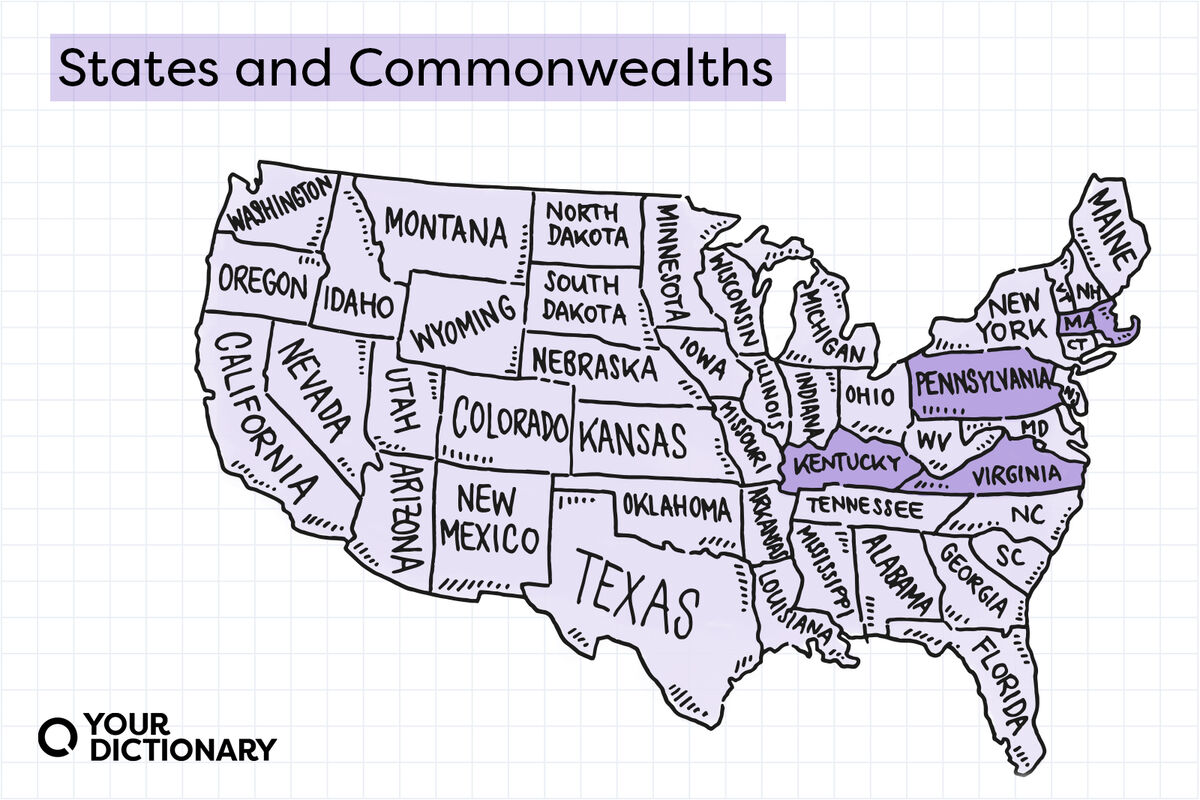
Within the United States, four states are officially referred to as “commonwealths”: Massachusetts, Pennsylvania, Virginia, and Kentucky. This designation largely stems from colonial-era terminology, reflecting an old English term for a political community founded for the common good. For these states, “Commonwealth” is merely a traditional name, a part of their formal title, and appears in their official documents and seals. It signifies a body politic where the populace is united by consent to achieve a common purpose. However, in contemporary legal and governmental terms, it carries no special powers, rights, or responsibilities beyond those of any other U.S. state. It’s a matter of nomenclature rather than a different tier of governance. For example, a resident of the Commonwealth of Massachusetts lives under the same federal laws and constitutional protections as a resident of the State of Florida.
Legal and Constitutional Similarities
Despite the varying titles, all 50 states within the United States operate under the same fundamental framework outlined by the U.S. Constitution. Each state, whether called a “state” or a “commonwealth,” is a sovereign entity within its defined powers, sharing a symmetrical relationship with the federal government. They all possess similar legislative, executive, and judicial branches, elect representatives to federal offices, and are bound by federal law. The “commonwealth” label does not grant unique constitutional privileges, nor does it impose distinct obligations that differ from those of a “state.” The legal powers and limitations derived from the Tenth Amendment to the U.S. Constitution apply equally to all. Therefore, any perceived difference between a “state” and a “commonwealth” within the U.S. is purely linguistic and historical, having no bearing on governmental function or individual rights and responsibilities.
Differentiating from U.S. Territories
Further compounding the confusion, the term “commonwealth” is also used to describe certain U.S. insular areas or territories, most notably Puerto Rico and the Northern Mariana Islands. These “commonwealths” have a distinctly different political relationship with the United States than the 50 states. While they are self-governing to a significant degree, they are not sovereign states, and their residents do not have full constitutional rights or representation in the U.S. Congress (e.g., voting representation). This status for territories reflects a unique compact with the federal government, distinct from both the four “commonwealth” states and the other U.S. states. It is critical to differentiate between the symbolic use of “commonwealth” for fully integrated states and its functional use for U.S. territories with a non-state status.
Florida’s Journey: From Territory to Sunshine State
Florida’s rich history is a mosaic of different influences and transitions, ultimately shaping its identity as a sovereign U.S. state. Understanding this historical progression clarifies why the “commonwealth” designation does not apply to it.
Early History and Spanish Influence
The land that would become Florida boasts a vibrant and complex past, beginning with millennia of indigenous inhabitation. Its modern history largely began with the arrival of Spanish explorers in the early 16th century, marking the first sustained European presence in what would become the United States. For centuries, Florida remained primarily under Spanish rule, with a brief period of British control, before eventually being ceded back to Spain. This era left an indelible mark on Florida’s culture, architecture, and place names, elements that continue to contribute to its unique lifestyle and appeal today. The constant shifting of imperial powers over its territory underscored its strategic importance but did not set it on a path to a “commonwealth” designation in the American sense. The path to American statehood began when Spain formally transferred Florida to the United States in 1819 through the Adams-Onís Treaty, effective 1821. It was then organized as the Florida Territory.
Statehood and Governmental Structure
Following decades as a U.S. territory, Florida achieved statehood on March 3, 1845, becoming the 27th state admitted to the Union. At the time of its admission, its founding documents, including the first Florida Constitution, clearly established it as the “State of Florida,” reflecting the common nomenclature for new entries into the United States. There was no historical or political impetus for Florida to adopt the “commonwealth” title, unlike the original four states that carried the colonial tradition forward. Its governmental structure, from its inception, mirrored that of other states, featuring a republican form of government with distinct executive, legislative, and judicial branches. This fundamental structure has remained consistent throughout its history, with subsequent revisions to the Florida Constitution reaffirming its status as a state. This unequivocal designation is a core component of Florida’s identity within the American federal system.
The “Sunshine State” Identity

Beyond its legal classification, Florida has forged a powerful identity rooted in its unique geography, vibrant culture, and robust economy. Known universally as the “Sunshine State,” its identity is characterized by its extensive coastlines, subtropical climate, and an abundance of natural beauty, including the Everglades and myriad springs. This natural endowment, combined with its diverse population—a blend of native Floridians, Southern traditions, Latin American influences, and retirees from across the globe—has cultivated a distinct lifestyle. From the bustling metropolitan energy of Miami and Orlando to the tranquil beaches of the Gulf Coast and the historical charm of St. Augustine, Florida’s appeal is multifaceted. Its economic drivers, including tourism, agriculture, aerospace, and international trade, further define its modern character. This self-defined identity, celebrated in its nicknames and cultural expressions, significantly overshadows any archaic legal nomenclature, positioning Florida firmly as a leading U.S. state in its own right.
Understanding Florida’s Governance and Its Impact on Lifestyle
The governmental structure of Florida, like any U.S. state, plays a pivotal role in shaping the daily lives and long-term prospects of its residents, influencing everything from economic opportunities to the quality of public services and the overall lifestyle.
A Republican Form of Government
As a state within the United States, Florida operates under a republican form of government, guaranteeing a system where the people exercise their power through elected representatives. The state capital, Tallahassee, is the seat of this governance, housing the legislative, executive, and judicial branches. The executive branch is headed by the Governor, responsible for implementing state laws. The legislative branch, composed of the Florida Senate and the Florida House of Representatives, is tasked with creating laws, managing the state budget, and overseeing state agencies. The judicial branch, led by the Florida Supreme Court, interprets state laws and ensures justice. This tripartite system, designed with checks and balances, ensures accountability and responsiveness to the populace. The consistent application of these governmental principles across all U.S. states ensures a predictable and stable environment, fostering confidence among citizens and businesses alike, irrespective of a “commonwealth” label.
Local Autonomy and State Regulations
While the state government sets the overarching legal framework, much of the direct impact on local lifestyle comes from the interplay of state regulations and local autonomy granted to cities and counties. Urban centers like Miami, Orlando, and Tampa, along with countless smaller communities, have their own municipal governments that enact ordinances governing everything from zoning and public safety to local taxes and environmental protection. These local laws, always subservient to state and federal law, significantly influence the character and livability of neighborhoods, the cost of living, and the range of services available to residents. For example, specific regulations regarding vacation rentals in South Florida or environmental protections around the Florida Keys are direct results of this multi-layered governance. This localized control, within the broader state framework, is a defining feature of the American system and contributes to the diverse lifestyles found across Florida’s regions.
Economic Landscape and Quality of Life
Florida’s governmental policies significantly contribute to its distinct economic landscape and the resulting quality of life. Notably, Florida is one of a handful of states without a state income tax, a policy decision that significantly impacts the financial well-being of its residents and serves as a major draw for individuals and businesses relocating to the state. This fiscal policy, alongside other regulatory frameworks, fosters a business-friendly environment that has attracted significant investment in sectors like technology, finance, and logistics, complementing its traditional strengths in tourism and agriculture. The state’s commitment to infrastructure development, education, and healthcare also shapes the daily experience of its population. The combination of a favorable tax environment, diverse job opportunities, and an attractive climate contributes to Florida’s reputation as a desirable place to live, retire, and conduct business, directly influencing the “lifestyle” aspect that resonates with so many.
Why Does the Distinction Matter (or Not)?
The question of whether Florida is a commonwealth or a state, while seemingly academic, touches upon public perception and the practical implications for those living within its borders or considering it as a destination.
Public Perception vs. Legal Reality
The query “Is Florida a commonwealth state?” often stems from a mixture of historical curiosity, a misunderstanding of U.S. governmental terminology, or confusion with U.S. territories that share the “commonwealth” designation. For the average person, the distinction between a “state” and a “commonwealth” can seem arcane. However, from a legal and constitutional standpoint within the United States, the term “commonwealth” for states like Massachusetts or Virginia is purely symbolic. It’s a historical relic that doesn’t confer any unique governmental powers, alter the rights of citizens, or change their relationship with the federal government. Florida has always been recognized as a “State” in its official capacity and founding documents, without ever adopting the “commonwealth” moniker. Therefore, the public perception that there might be a significant legal difference between these terms for states is generally at odds with the legal reality.
Practical Implications for Residents and Visitors
For residents of Florida, whether they live in Jacksonville, Tampa, or Key West, and for the millions of visitors who flock to its beaches and attractions annually, the legal classification of “state” versus “commonwealth” has virtually no practical implications. The rights, responsibilities, and legal protections afforded to individuals in Florida are identical to those in any other U.S. state, including the four commonwealths. State laws govern everything from driving regulations and property rights to business practices and consumer protection, but these laws are crafted within the same constitutional boundaries as in other states. There are no special commonwealth-specific legal provisions that would apply to a Floridian that wouldn’t apply to a Virginian, for example. Understanding this helps demystify the legal landscape and allows individuals to focus on the tangible aspects of life and travel in the state.

Embracing Florida’s Unique Identity
Ultimately, Florida’s identity is defined not by a legalistic label, but by its vibrant culture, diverse population, economic dynamism, and unparalleled natural beauty. It is the “Sunshine State,” a major global hub for tourism, agriculture, and innovation, known for its unique blend of Southern charm, Caribbean influences, and a forward-looking spirit. The lifestyle it offers—from relaxed beach living to bustling urban experiences, from world-class theme parks to serene natural parks—is a testament to its distinct character. The question of its commonwealth status, while a valid point of inquiry, ultimately reinforces that Florida stands proudly as one of the 50 sovereign states of the United States, shaped by its own rich history and distinct vision for the future. Embracing this identity is key to understanding what makes Florida such a captivating and influential part of the American fabric.
In conclusion, to definitively answer the question, no, Florida is not a commonwealth state. It is, and always has been, officially recognized as the “State of Florida.” While the term “commonwealth” holds historical significance for a few other states and denotes a specific political relationship for certain U.S. territories, it carries no functional legal difference for fully integrated states. Florida’s unique lifestyle, governance, and contributions to the United States are rooted in its well-established status as a sovereign state, a fact that underpins its enduring appeal and dynamic character.
LifeOutOfTheBox is a participant in the Amazon Services LLC Associates Program, an affiliate advertising program designed to provide a means for sites to earn advertising fees by advertising and linking to Amazon.com. Amazon, the Amazon logo, AmazonSupply, and the AmazonSupply logo are trademarks of Amazon.com, Inc. or its affiliates. As an Amazon Associate we earn affiliate commissions from qualifying purchases.