
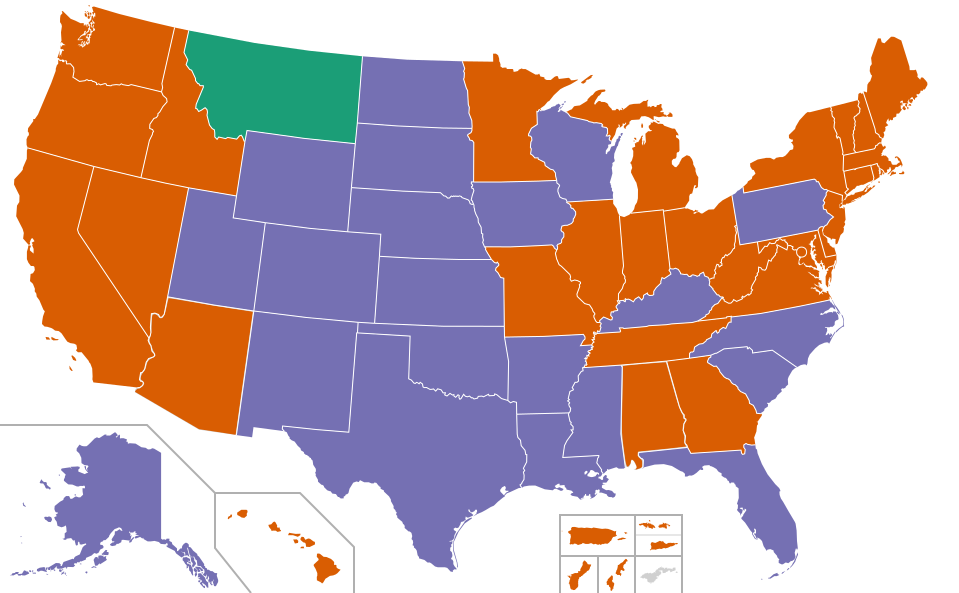
For anyone planning a visit to the Sunshine State or simply navigating its vibrant cities and scenic routes, understanding the local driving laws is paramount. Florida, a popular destination for tourists worldwide, has taken significant steps to enhance road safety, particularly concerning distracted driving. The unequivocal answer to whether Florida is a hands-free state is yes, but with specific nuances that every driver must comprehend. Enacted primarily to curb the dangers associated with cell phone use behind the wheel, Florida’s hands-free law makes holding a wireless communications device while driving in a designated school or work zone a primary offense, and it broadens the scope of what constitutes distracted driving across the entire state. This comprehensive guide will delve into the intricacies of these regulations, offering essential insights for travelers and residents alike to ensure a safe and compliant journey on Florida’s roads.
Understanding Florida’s Hands-Free Law
The journey to making Florida a safer place for motorists has seen a significant legislative evolution. Prior to 2019, texting while driving was a secondary offense, meaning law enforcement could only issue a citation if they stopped a driver for another infraction first. This changed dramatically with the passage of the Florida Wireless Communications While Driving Law (often referred to as the Hands-Free Law). This legislative shift signaled a serious commitment to combating distracted driving, aligning Florida with many other states that prioritize road safety through stricter cell phone use regulations.
Evolution of the Law: From Ban to Primary Enforcement
The initial ban on texting while driving, implemented in 2013, was a step in the right direction but proved challenging to enforce effectively as a secondary offense. Officers had difficulty proving a driver was texting rather than merely dialing a number or using GPS. Recognizing this limitation and the continuing rise in distracted driving accidents, lawmakers in Tallahassee pushed for stronger measures. In July 2019, the new law came into effect, elevating texting while driving to a primary offense. This crucial amendment empowers law enforcement officers to stop and ticket drivers solely for using their cell phones in a prohibited manner, without needing another reason for the stop.
Furthermore, a critical enhancement took effect on January 1, 2020: the complete prohibition of holding a wireless communications device in a handheld manner while driving in a designated school or work zone. This specific provision makes these zones unequivocally “hands-free” areas, reflecting the heightened risk to pedestrians, construction workers, and children in these vulnerable environments. The intent is clear: remove any incentive for drivers to physically interact with their phones when passing through areas demanding the utmost attention. This primary enforcement capability significantly enhances the ability of agencies like the Florida Highway Patrol to intervene and prevent dangerous behavior.
What “Hands-Free” Truly Means in Florida
For the vast majority of Florida’s roadways outside of school and work zones, the law primarily targets texting while driving. It makes sending or reading a text message a primary offense. However, the stricter “hands-free” rule applies explicitly to school zones and work zones. In these specific areas, it is illegal to operate a motor vehicle while “holding” or “physically touching” a wireless communications device. This means no holding your phone to talk, no looking at it for navigation (unless mounted), and certainly no texting or emailing. The intent is to ensure both hands remain on the wheel and the driver’s full attention is on the road.
This distinction is vital for drivers to grasp. While general hands-free practices are always encouraged throughout Florida for safety, it’s in school and work zones that the law becomes absolute regarding device handling. Outside these zones, using a phone for navigation or making a call is permissible, provided it does not involve manual text input or reading. However, any interaction that causes distraction can still be cited under broader careless driving statutes. The spirit of the law, even outside restricted zones, encourages minimizing interaction with devices.
Specific Devices and Activities Covered
The law broadly defines “wireless communications device” to include cell phones, smartphones, tablets, and any other handheld device capable of transmitting or receiving data, text messages, or calls. This expansive definition ensures that technological advancements don’t render the law obsolete.
Activities specifically prohibited in school and work zones (and texting/emailing prohibited everywhere as a primary offense) include:
- Sending or reading text-based communications: This covers SMS, instant messages, and emails.
- Physically holding the device: Even if you’re just holding it and not actively texting, if you’re in a school or work zone, this is prohibited.
- Scrolling through social media, watching videos, or browsing the internet: While not explicitly text-based, these activities involve significant manual interaction and visual distraction and would certainly fall under prohibited handheld use in restricted zones, and could lead to careless driving citations elsewhere.
There are certain exceptions, however. The law does permit the use of a wireless communications device for emergency purposes, such as reporting a crime, serious traffic crash, medical emergency, or fire. Additionally, in specific situations, such as receiving messages related to navigation functions or traffic alerts, drivers are not in violation if the device is not held or physically manipulated. Crucially, the law does not prohibit the use of a device with hands-free accessories, such as Bluetooth headsets, car speakerphones, or dashboard mounts, which allow a driver to interact with the device without physically holding it.
Implications for Travelers and Visitors
For the millions of tourists who flock to Florida each year, from the theme parks of Orlando to the beaches of Miami and the historic charm of Key West, understanding these laws is not just about compliance but also about ensuring a safe and enjoyable trip. Unfamiliar roads, new environments, and the excitement of a vacation can easily lead to distractions if not managed proactively.
Navigating Florida’s Roads Safely
Travelers often rely heavily on their smartphones for GPS navigation, finding attractions like Disney World or Universal Studios, and communicating with family and friends. While these tools are invaluable, their use must comply with Florida’s hands-free regulations. The best practice is to mount your phone securely to the dashboard or windshield, allowing for glanceable navigation without needing to hold the device. Inputting destinations should always be done before starting the journey or by a passenger. If a route change is necessary, pull over safely before interacting with your device. Remember that even with a mounted phone, excessive interaction, such as frequent scrolling or zooming, can still be considered distracted driving if it impairs your ability to operate the vehicle safely.
Avoiding Fines and Penalties
Violating Florida’s hands-free and texting while driving laws carries significant penalties. A first offense for texting while driving is a non-moving violation, usually resulting in a fine of $30, plus court costs. However, subsequent offenses are considered moving violations, adding three points to your driver’s license and incurring higher fines, typically $60 plus court costs. If the violation occurs in a school or work zone, it is also a moving violation, adding three points to your license, regardless of whether it’s a first or subsequent offense, and carries a higher fine of $60 plus court costs.
For out-of-state drivers, these points may not directly transfer to their home state license, but the violation will be reported. Repeated offenses can lead to significant financial burdens and potential increases in insurance premiums. The cost of a ticket, combined with the time lost dealing with a traffic stop or court appearance, can severely dampen a vacation experience. Furthermore, getting into an accident due to distracted driving can have far more severe consequences, including injuries, property damage, and legal liabilities. It’s simply not worth the risk.
The Importance of Preparedness for Road Trips

For those embarking on a Florida road trip, preparation is key. Before hitting the road, ensure your vehicle is equipped with the necessary hands-free accessories. Pre-program your GPS, download offline maps, and plan your stops in advance. If traveling with passengers, designate one person as the “co-pilot” to handle navigation, music, and communication tasks, allowing the driver to focus solely on the road. Familiarize yourself with common routes to popular destinations like Tampa, Jacksonville, or the drive down to the Everglades National Park. Being prepared significantly reduces the temptation to interact with your phone while driving.
Practical Tips for Staying Compliant
Adhering to Florida’s hands-free laws is straightforward with a few practical adjustments to your driving habits and vehicle setup. These tips are not only about legal compliance but also about adopting safer driving practices that benefit everyone on the road.
Essential Hands-Free Accessories
A good quality phone mount is arguably the most crucial accessory for hands-free driving. These mounts attach to your dashboard, windshield, or air vent and securely hold your smartphone in an easily viewable position without obstructing your view of the road. Look for mounts that are sturdy and allow for easy one-handed insertion and removal of the device when parked.
Bluetooth technology is another game-changer. Most modern vehicles come equipped with integrated Bluetooth, allowing for seamless connectivity with your smartphone for calls, navigation audio, and music playback, all controllable via steering wheel buttons or voice commands. For older vehicles without integrated Bluetooth, a portable Bluetooth speakerphone or a Bluetooth FM transmitter can provide similar functionality. A wired headset with an in-line microphone is also an option, provided it doesn’t impair your hearing of ambient traffic sounds.
Utilizing In-Car Infotainment Systems
Many contemporary vehicles feature sophisticated infotainment systems that integrate smartphone functionalities like Apple CarPlay or Android Auto. These systems project a simplified version of your phone’s interface onto the car’s display, allowing you to access navigation, make calls, send messages (via voice dictation), and control music using the car’s built-in controls or voice commands. This is arguably the safest and most compliant way to use smartphone features while driving, as it minimizes physical interaction with the phone itself. Familiarize yourself with your vehicle’s infotainment system before you start driving to maximize its utility and maintain focus on the road.
Planning Ahead: Navigation and Communication
The simplest way to avoid violating the hands-free law is to plan your route and communication needs before you put the car in drive. Set your GPS destination while parked. If you anticipate needing to make or receive calls, inform your contacts of your driving schedule or pull over to a safe location to handle conversations. If you’re expecting important messages, utilize voice-to-text features or simply wait until you reach your destination. Many apps now have a “do not disturb while driving” mode that can automatically silence notifications and send automated replies, further reducing temptation. This proactive approach significantly reduces the urge to pick up your phone and ensures your full attention remains on the road.
Beyond the Law: The Broader Safety Message
While specific laws and penalties are important deterrents, the underlying message behind Florida’s hands-free legislation is a profound commitment to public safety. Distracted driving is a global epidemic, and its consequences extend far beyond mere legal infractions.
The Dangers of Distracted Driving
Distracted driving encompasses any activity that diverts a driver’s attention from the primary task of driving. This includes not only cell phone use but also eating, drinking, interacting with passengers, adjusting radios, or engaging in intense thoughts. However, cell phone use, especially texting, is particularly dangerous because it combines visual, manual, and cognitive distractions. A driver looking down at a phone for just five seconds at 55 mph travels the length of a football field blindfolded. This “blindness” dramatically increases the risk of crashes, often with severe or fatal outcomes. The Department of Highway Safety and Motor Vehicles in Florida consistently highlights statistics showing that distracted driving is a leading cause of preventable accidents. By embracing hands-free practices, drivers contribute directly to reducing these tragic incidents.
Contributing to Safer Florida Roadways
Every driver has a role to play in fostering a culture of safety on Florida’s roads. Adhering to the hands-free law is a fundamental step. Beyond that, it involves being a responsible and attentive motorist at all times. This means maintaining a safe following distance, observing speed limits, being aware of your surroundings, and minimizing all potential distractions. When drivers collectively commit to these practices, the entire road environment becomes safer for everyone – pedestrians, cyclists, motorcyclists, and other vehicle occupants. As a state that welcomes millions, Florida relies on both its residents and visitors to prioritize safety.
Special Considerations for Different Driver Demographics
Tourists, for instance, may be unfamiliar with Florida’s specific traffic patterns, road signs, or local driving customs, making them more susceptible to distraction. For these drivers, extra vigilance and pre-planning are crucial. Young drivers, who often have less experience and may be more inclined to use their phones, need to be educated on the severe risks and legal consequences. Commercial drivers also have strict regulations regarding cell phone use, often exceeding those for private vehicles, underscoring the universal danger of distracted driving across all demographics. Ultimately, regardless of your driving background or purpose in Florida, the hands-free law serves as a reminder that safe driving is a universal responsibility.
Resources and Further Information
Staying informed is crucial, especially as traffic laws can evolve. Drivers should always be aware of the most current regulations to ensure full compliance.
Official Sources and Public Awareness Campaigns
The Florida Department of Highway Safety and Motor Vehicles (FLHSMV) is the primary official source for detailed information regarding Florida’s driving laws, including those related to distracted driving. Their website provides comprehensive guides, FAQs, and updates. The Florida Highway Patrol also plays a vital role in public education and enforcement, often running awareness campaigns to remind drivers of the dangers of distracted driving and the specifics of the hands-free law. These resources are invaluable for clarifying any ambiguities and ensuring drivers have accurate, up-to-date information.

Staying Updated on Future Changes
Laws can change, and Florida’s hands-free legislation may be subject to future amendments as technology evolves and new safety data emerges. It’s a good practice for both residents and frequent visitors to periodically check official state websites or reputable news sources for any updates to traffic laws. Subscribing to newsletters from state agencies or following their social media channels can be an effective way to stay informed about potential changes that could impact your driving habits. By remaining vigilant and committed to hands-free driving, everyone can contribute to making Florida’s roads safer and more enjoyable for all.
LifeOutOfTheBox is a participant in the Amazon Services LLC Associates Program, an affiliate advertising program designed to provide a means for sites to earn advertising fees by advertising and linking to Amazon.com. Amazon, the Amazon logo, AmazonSupply, and the AmazonSupply logo are trademarks of Amazon.com, Inc. or its affiliates. As an Amazon Associate we earn affiliate commissions from qualifying purchases.